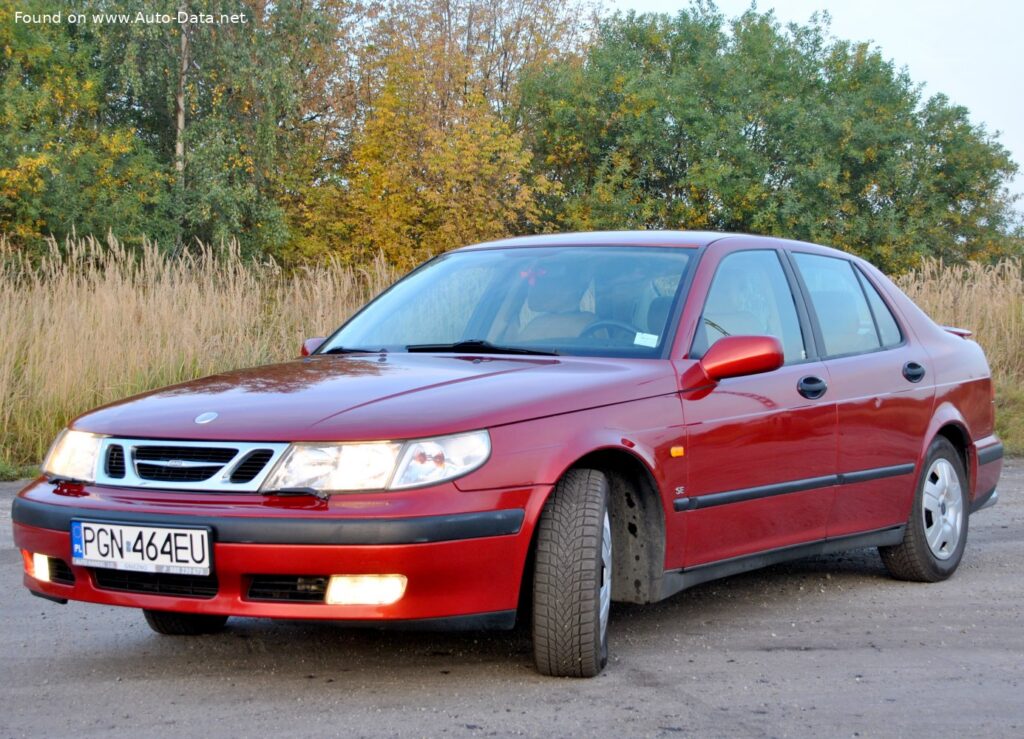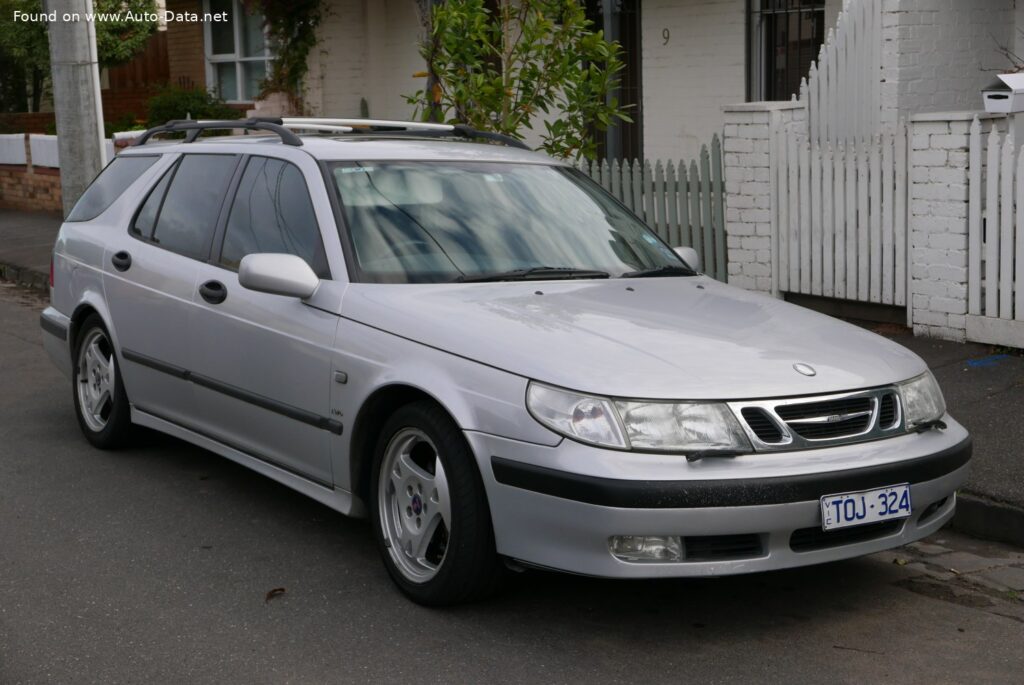
The Saab 9-5 Sport Combi 2.3 T (230 Hp) represents a compelling chapter in the history of the distinctive Swedish automaker, Saab. Introduced as part of the first-generation 9-5 lineup, specifically the Sport Combi (known as an estate car in Europe), this variant produced between 1999 and 2001 carved out a unique niche in the executive mid-size segment. While Saab vehicles, including the 9-5, had a dedicated following in North America, this particular high-output 2.3 T engine configuration often appealed to enthusiasts seeking a blend of spirited performance, practical utility, and the brand’s idiosyncratic approach to engineering and design. The 9-5 Sport Combi was not just a utilitarian wagon; it was a statement of individuality, offering a compelling alternative to more conventional German and Japanese luxury vehicles, emphasizing turbocharged power, advanced safety, and ergonomic excellence.
The Saab 9-5 Sport Combi: A Legacy of Innovation and Practicality
The Saab 9-5 Sport Combi, in its 2.3 T (230 Hp) guise, embodied the core values Saab championed throughout its automotive production. Originating from Trollhättan, Sweden, Saab cars were renowned for their aviation heritage, which translated into a focus on driver ergonomics, robust safety structures, and an almost obsessive attention to aerodynamics. The Sport Combi, with its sleek profile and substantial cargo capacity, perfectly encapsulated this ethos. It was designed for the discerning European buyer who required versatility without compromising on driving pleasure or sophisticated design. While the sedan offered a more traditional executive experience, the Sport Combi broadened the 9-5’s appeal significantly, providing an impressive 14.66 cubic feet of trunk space with the seats up, expanding to a cavernous 52.62 cubic feet when the rear seats were folded. This made it an ideal choice for families, adventurers, or anyone needing substantial hauling capability, all wrapped in a package that stood out from the crowd.
The first-generation 9-5, launched in 1997, replaced the venerable 9000, carrying the torch of Saab’s executive car offerings into the new millennium. The Sport Combi variant, arriving shortly after the sedan, quickly became a popular choice, particularly in its home markets and across Europe, where station wagons held a more prominent and less utilitarian image than in North America. Its production span for this specific engine variant, from 1999 to 2001, highlighted a period where Saab was still largely independent in its engineering philosophies, before deeper integration with General Motors began to dilute some of its unique characteristics. This era represents a sweet spot for many Saab aficionados, offering modern amenities and performance while retaining the distinctive Saab “feel.”
Powertrain and Performance Dynamics
At the heart of the Saab 9-5 Sport Combi 2.3 T (230 Hp) was a highly capable and characterful turbocharged inline-four engine, designated with the internal code B235R. This 2.3-liter (2290 cm³ or 139.74 cubic inches) powerplant was a testament to Saab’s long-standing expertise in turbocharging technology, delivering a robust 230 horsepower at 5500 rpm. What truly distinguished this engine, however, was its impressive torque output: a substantial 258.15 lb.-ft. (350 Nm) available from a remarkably low 1900 rpm. This low-end torque characteristic was a hallmark of Saab’s turbo engines, providing immediate and strong acceleration without the need to rev the engine excessively, making for effortless overtaking and a relaxed yet powerful driving experience in various conditions.
The engine featured a DOHC (Double Overhead Camshaft) valvetrain with four valves per cylinder, optimizing airflow for both power and efficiency. Fuel delivery was managed by a multi-port manifold injection system, while the turbocharger ensured a consistent supply of pressurized air, contributing to its strong performance figures. With a compression ratio of 9.3:1, the engine was designed for robust and reliable operation. Mated to a precise 5-speed manual transmission, this powertrain channeled its output to the front wheels, a typical configuration for Saab, emphasizing traction and predictable handling. The performance metrics for the Sport Combi 2.3 T were impressive for its class and era: a brisk 0-60 mph acceleration time of just 6.8 seconds and a top speed of 149.13 mph (240 km/h). These figures underscored its credentials as a genuine performance wagon, capable of holding its own against more overtly sporting sedans.
Despite its performance capabilities, the 9-5 Sport Combi also offered respectable fuel economy for its time and power output. It achieved an estimated 16.9 US mpg in urban driving conditions and a more efficient 32.7 US mpg on the highway, thanks in part to Saab’s sophisticated engine management and aerodynamic design. The vehicle’s weight-to-power ratio stood at 6.8 kg/Hp (or 147 Hp/tonne), reflecting a well-balanced combination of mass and motive force. The engine required 4.23 US quarts of engine oil and 7.82 US quarts of coolant, indicating a well-engineered thermal management system designed for longevity and performance.
Distinctive Design and Functional Features
The design of the Saab 9-5 Sport Combi was unmistakably Saab, characterized by smooth, flowing lines, a distinctive ‘clamshell’ hood, and signature lighting elements. At 189.29 inches long, 70.55 inches wide, and 58.94 inches tall, with a wheelbase of 106.42 inches, the Sport Combi presented a substantial yet elegant presence. Its five-door, five-seat station wagon body type offered a blend of executive comfort and practical utility, a hallmark of Saab’s design philosophy. The exterior styling was refined and aerodynamic, contributing to both fuel efficiency and reduced wind noise, enhancing comfort for occupants on long journeys.
Underneath its stylish exterior, the 9-5 Sport Combi featured a well-engineered chassis designed for both comfort and confident handling. It utilized a Spring Strut suspension system at both the front and rear, which provided a compliant ride while maintaining good body control. Braking duties were handled by ventilated discs at the front and solid discs at the rear, augmented by an Anti-lock Braking System (ABS), a crucial safety feature for the period that prevented wheel lock-up during hard braking. Steering was managed by a hydraulic rack and pinion system, offering direct and communicative feedback to the driver, a trait often praised by automotive journalists and enthusiasts alike. The vehicle rode on 215/55 R16 tires mounted on 6.5J x 16 wheel rims, a combination chosen to balance grip, ride comfort, and durability.
Inside, the 9-5 Sport Combi continued Saab’s tradition of driver-centric design. The cockpit was inspired by aircraft, with controls intuitively placed and instruments clearly legible. Ergonomics were a key focus, from the supportive seats to the “Night Panel” feature, which allowed the driver to dim all non-essential dashboard lights for less distraction during nighttime driving. While specific interior features varied by market and trim, the emphasis was consistently on safety, comfort, and unique functionality that set Saab apart. The substantial cargo volume, coupled with thoughtful touches like a flat load floor and numerous tie-down points, underscored its practicality. The overall design language, both inside and out, ensured the 9-5 Sport Combi remained a distinctive and highly functional vehicle, embodying the very essence of Saab’s innovative spirit.
Comprehensive Technical Specifications
| Brand | Saab |
| Model | 9-5 |
| Generation | 9-5 Sport Combi |
| Type (Engine) | 2.3 T (230 Hp) |
| Start of production | 1999 year |
| End of production | 2001 year |
| Powertrain Architecture | Internal Combustion engine |
| Body type | Station wagon (estate) |
| Seats | 5 |
| Doors | 5 |
| Fuel consumption (economy) – urban | 16.9 US mpg (13.9 l/100 km) |
| Fuel consumption (economy) – extra urban | 32.7 US mpg (7.2 l/100 km) |
| Fuel Type | Petrol (Gasoline) |
| Acceleration 0 – 60 mph | 6.8 sec |
| Maximum speed | 149.13 mph (240 km/h) |
| Weight-to-power ratio | 6.8 kg/Hp (147 Hp/tonne) |
| Weight-to-torque ratio | 4.5 kg/Nm (223.6 Nm/tonne) |
| Power | 230 Hp @ 5500 rpm |
| Power per litre | 100.4 Hp/l |
| Torque | 258.15 lb.-ft. @ 1900 rpm (350 Nm @ 1900 rpm) |
| Engine layout | Front, Transverse |
| Engine Model/Code | B235R |
| Engine displacement | 139.74 cu. in. (2290 cm3) |
| Number of cylinders | 4 |
| Engine configuration | Inline |
| Cylinder Bore | 3.54 in. (90 mm) |
| Piston Stroke | 3.54 in. (90 mm) |
| Compression ratio | 9.3:1 |
| Number of valves per cylinder | 4 |
| Fuel injection system | Multi-port manifold injection |
| Engine aspiration | Turbocharger |
| Valvetrain | DOHC |
| Engine oil capacity | 4.23 US qt (4 l) |
| Engine oil specification | Not specified in data |
| Coolant | 7.82 US qt (7.4 l) |
| Kerb Weight | 3450.23 lbs. (1565 kg) |
| Max. weight | 4806.08 lbs. (2180 kg) |
| Max load | 1355.84 lbs. (615 kg) |
| Trunk (boot) space – minimum | 14.66 cu. ft. (415 l) |
| Trunk (boot) space – maximum | 52.62 cu. ft. (1490 l) |
| Fuel tank capacity | 18.49 US gal (70 l) |
| Length | 189.29 in. (4808 mm) |
| Width | 70.55 in. (1792 mm) |
| Height | 58.94 in. (1497 mm) |
| Wheelbase | 106.42 in. (2703 mm) |
| Front track | 59.92 in. (1522 mm) |
| Rear (Back) track | 59.92 in. (1522 mm) |
| Drivetrain Architecture | The Internal combustion engine (ICE) drives the front wheels of the vehicle. |
| Drive wheel | Front wheel drive |
| Number of gears and type of gearbox | 5 gears, manual transmission |
| Front suspension | Spring Strut |
| Rear suspension | Spring Strut |
| Front brakes | Ventilated discs |
| Rear brakes | Disc |
| Assisting systems | ABS (Anti-lock braking system) |
| Steering type | Steering rack and pinion |
| Power steering | Hydraulic Steering |
| Tires size | 215/55 R16 |
| Wheel rims size | 6.5J x 16 |