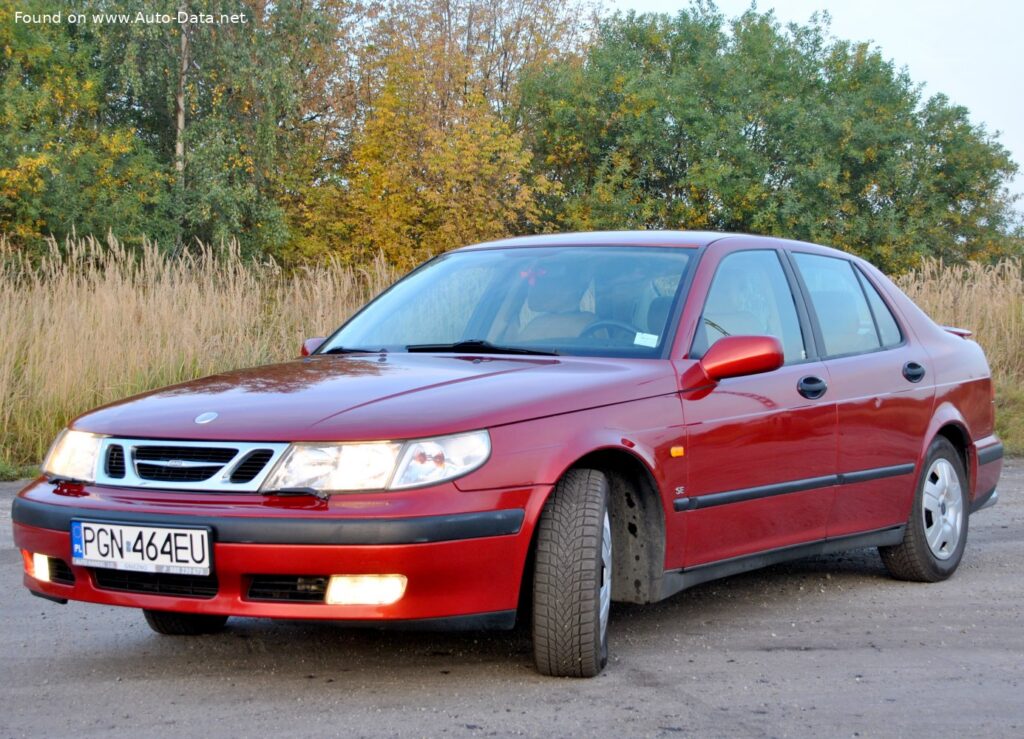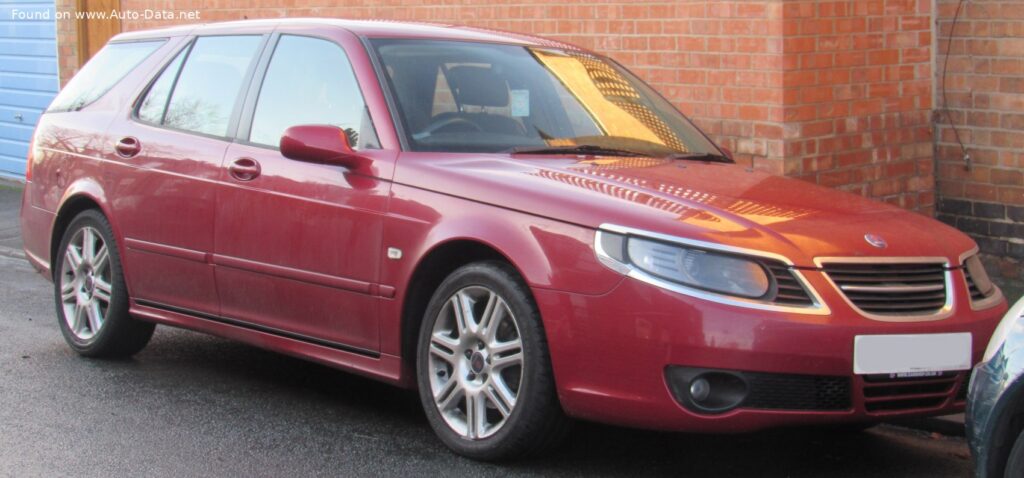
The Saab 9-5 Sport Combi (facelift 2005), specifically the 1.9 TiD (150 Hp) variant, represents a pivotal offering from the idiosyncratic Swedish automaker during its later years. Launched in 2005 as part of the comprehensively revised first-generation 9-5, this executive station wagon was a staple in the European market, where its blend of distinctive design, robust safety credentials, and practical utility found a dedicated following. Positioned as a stylish and safer alternative to more mainstream German and Japanese competitors, the 9-5 Sport Combi continued Saab’s tradition of offering turbocharged engines, though this particular iteration marked a significant embrace of diesel technology for improved fuel efficiency and torque, a crucial factor for European consumers. Produced until 2010, this generation of the 9-5 Sport Combi embodied Saab’s unique engineering philosophy, focusing on ergonomic design, advanced safety systems, and a driving experience that prioritized comfort and stability.
Engineering and Performance of the Saab 9-5 Sport Combi (facelift 2005)
At the heart of the Saab 9-5 Sport Combi (facelift 2005) 1.9 TiD model lies a thoroughly modern diesel powertrain designed to deliver a compelling balance of performance and economy. The 1.9-liter (116.56 cu. in.) inline four-cylinder engine, designated Z19DTH, generates a robust 150 horsepower at 4000 rpm. Its power-per-liter rating of 78.5 Hp/l was competitive for its era, showcasing efficient engine design. More notably for a diesel, it produces an impressive 236.02 lb.-ft. (320 Nm) of torque, available across a broad and usable range from 2000 to 2750 rpm. This substantial torque output is critical for everyday drivability, providing strong acceleration from low speeds and effortless highway cruising, especially when the vehicle is laden or towing.
The engine’s advanced architecture includes a DOHC (Double Overhead Camshaft) valvetrain with four valves per cylinder, optimizing airflow for combustion efficiency. Fuel delivery is managed by a sophisticated common rail direct injection system, which precisely controls fuel atomization and timing for cleaner and more efficient combustion. To further enhance performance and efficiency, the engine is equipped with a turbocharger and an intercooler. The turbocharger forces more air into the cylinders, significantly boosting power, while the intercooler cools this compressed air, making it denser and further improving combustion efficiency and power output. A particulate filter is also integrated into the system, contributing to the vehicle’s Euro 4 emission standard compliance, a testament to Saab’s commitment to environmental responsibility, even for a diesel engine in the mid-2000s.
Power is transmitted to the front wheels via a smooth-shifting 5-speed manual transmission, offering engaging control for the driver. This front-wheel-drive architecture is typical for Saab and contributes to predictable handling characteristics. In terms of outright performance, the 9-5 Sport Combi 1.9 TiD accelerates from 0 to 60 mph in a respectable 10.2 seconds, with a top speed of 127.38 mph (205 km/h). These figures underscore its capability as a competent long-distance cruiser and a practical family vehicle, rather than a sportscar.
Fuel economy was a key selling point for this diesel variant, especially in Europe. The combined NEDC (New European Driving Cycle) rating stands at an impressive 34.6 US mpg (6.8 l/100 km). Urban driving yields approximately 26.1 US mpg (9 l/100 km), while extra-urban (highway) driving can achieve a remarkable 42 US mpg (5.6 l/100 km). These figures highlight the inherent efficiency of the common rail diesel engine, making it an economical choice for motorists covering significant mileage. The CO2 emissions are rated at 184 g/km, reflecting its environmental footprint relative to its contemporaries.
Design, Features, and Practicality
The Saab 9-5 Sport Combi (facelift 2005) retained the distinctive and aerodynamically optimized design language that characterized the brand, even after its mid-cycle refresh. As a station wagon (or “estate” in European parlance), its five-door, five-seat configuration prioritizes practicality and versatility, making it an ideal vehicle for families and individuals requiring ample cargo space. The facelift introduced subtle refinements to the exterior, including revised front and rear styling elements, which modernized its appearance while preserving its unique Saab identity, often described as understated yet purposeful.
Dimensions of the Sport Combi are substantial, contributing to its commanding road presence and spacious interior. With an overall length of 190.59 inches (4841 mm), a width of 70.55 inches (1792 mm), and a height of 57.44 inches (1459 mm), the 9-5 offered generous interior room. The wheelbase of 106.42 inches (2703 mm) provided a stable ride and ample legroom for passengers. Saab’s commitment to thoughtful design is evident in details like the minimum turning circle of 35.43 feet (10.8 m), which aids maneuverability despite its size.
Inside, the Sport Combi was renowned for its ergonomic cockpit, airplane-inspired dashboard, and comfortable seating. Saab vehicles were always at the forefront of automotive safety, and the 9-5 Sport Combi was no exception. While specific passive safety features beyond the standard ABS (Anti-lock Braking System) are not detailed in the provided data, it’s well-established that Saab engineered its vehicles with robust chassis structures and comprehensive occupant protection systems, including multiple airbags, to achieve high safety ratings in its class. The braking system features ventilated discs at the front and solid discs at the rear, providing strong and consistent stopping power, further complemented by the ABS system.
The vehicle’s suspension system was engineered to deliver a comfortable yet composed ride. The front utilizes an independent McPherson strut setup with a transverse stabilizer, while the rear features an independent multi-link suspension, also with a transverse stabilizer. This combination ensures good road holding and minimizes body roll during cornering, contributing to a secure driving experience. Steering is managed by a hydraulic rack and pinion system, providing direct feedback and a traditional steering feel preferred by many enthusiasts.
Practicality is a hallmark of any station wagon, and the 9-5 Sport Combi excels in this regard. The trunk (boot) space is highly versatile, offering a minimum volume of 14.69 cu. ft. (416 liters) with the rear seats in place, which expands significantly to a cavernous 52.62 cu. ft. (1490 liters) when the rear seats are folded down. This generous cargo capacity makes it suitable for everything from grocery runs to transporting bulky items for hobbies or family trips. The vehicle also boasts a substantial fuel tank capacity of 19.81 US gallons (75 liters), providing an excellent cruising range, especially with the economical diesel engine. Furthermore, its towing capabilities are impressive, with a permitted trailer load of 3968.32 lbs. (1800 kg) with brakes, and 1653.47 lbs. (750 kg) without brakes, enhancing its utility for those needing to haul trailers or caravans. The available tire sizes (215/55 R16 or 225/45 R17) and corresponding wheel rim sizes (6.5J x 16 or 7J x 17) offer options for ride comfort or slightly sharper handling, depending on driver preference.
Technical Specifications
| Brand | Saab |
| Model | 9-5 |
| Generation | 9-5 Sport Combi (facelift 2005) |
| Type (Engine) | 1.9 TiD (150 Hp) |
| Start of production | 2005 year |
| End of production | 2010 year |
| Powertrain Architecture | Internal Combustion engine |
| Body type | Station wagon (estate) |
| Seats | 5 |
| Doors | 5 |
| Fuel consumption (economy) – urban (NEDC) | 26.1 US mpg (9 l/100 km) |
| Fuel consumption (economy) – extra urban (NEDC) | 42 US mpg (5.6 l/100 km) |
| Fuel consumption (economy) – combined (NEDC) | 34.6 US mpg (6.8 l/100 km) |
| CO2 emissions (NEDC) | 184 g/km |
| Fuel Type | Diesel |
| Acceleration 0 – 60 mph | 10.2 sec |
| Acceleration 0 – 100 km/h | 10.7 sec |
| Maximum speed | 127.38 mph (205 km/h) |
| Emission standard | Euro 4 |
| Power | 150 Hp @ 4000 rpm |
| Power per liter | 78.5 Hp/l |
| Torque | 236.02 lb.-ft. @ 2000-2750 rpm (320 Nm) |
| Engine layout | Front, Transverse |
| Engine Model/Code | Z19DTH |
| Engine displacement | 116.56 cu. in. (1910 cm3) |
| Number of cylinders | 4 |
| Engine configuration | Inline |
| Cylinder Bore | 3.23 in. (82 mm) |
| Piston Stroke | 3.56 in. (90.4 mm) |
| Number of valves per cylinder | 4 |
| Fuel injection system | Diesel Commonrail |
| Engine aspiration | Turbocharger, Intercooler |
| Valvetrain | DOHC |
| Engine oil capacity | 4.54 US qt (4.3 l) |
| Coolant | 7.82 US qt (7.4 l) |
| Engine systems | Particulate filter |
| Trunk (boot) space – minimum | 14.69 cu. ft. (416 l) |
| Trunk (boot) space – maximum | 52.62 cu. ft. (1490 l) |
| Fuel tank capacity | 19.81 US gal (75 l) |
| Max. roof load | 220.46 lbs. (100 kg) |
| Permitted trailer load with brakes (12%) | 3968.32 lbs. (1800 kg) |
| Permitted trailer load without brakes | 1653.47 lbs. (750 kg) |
| Length | 190.59 in. (4841 mm) |
| Width | 70.55 in. (1792 mm) |
| Width including mirrors | 81.5 in. (2070 mm) |
| Height | 57.44 in. (1459 mm) |
| Wheelbase | 106.42 in. (2703 mm) |
| Front track | 59.92 in. (1522 mm) |
| Rear (Back) track | 60.16 in. (1528 mm) |
| Front overhang | 40.59 in. (1031 mm) |
| Rear overhang | 43.54 in. (1106 mm) |
| Minimum turning circle (turning diameter) | 35.43 ft. (10.8 m) |
| Drivetrain Architecture | Internal combustion engine drives the front wheels |
| Drive wheel | Front wheel drive |
| Number of gears and type of gearbox | 5 gears, manual transmission |
| Front suspension | Independent type McPherson, Transverse stabilizer |
| Rear suspension | Independent multi-link suspension, Transverse stabilizer |
| Front brakes | Ventilated discs |
| Rear brakes | Disc |
| Assisting systems | ABS (Anti-lock braking system) |
| Steering type | Steering rack and pinion |
| Power steering | Hydraulic Steering |
| Tires size | 215/55 R16; 225/45 R17 |
| Wheel rims size | 6.5J x 16; 7J x 17 |