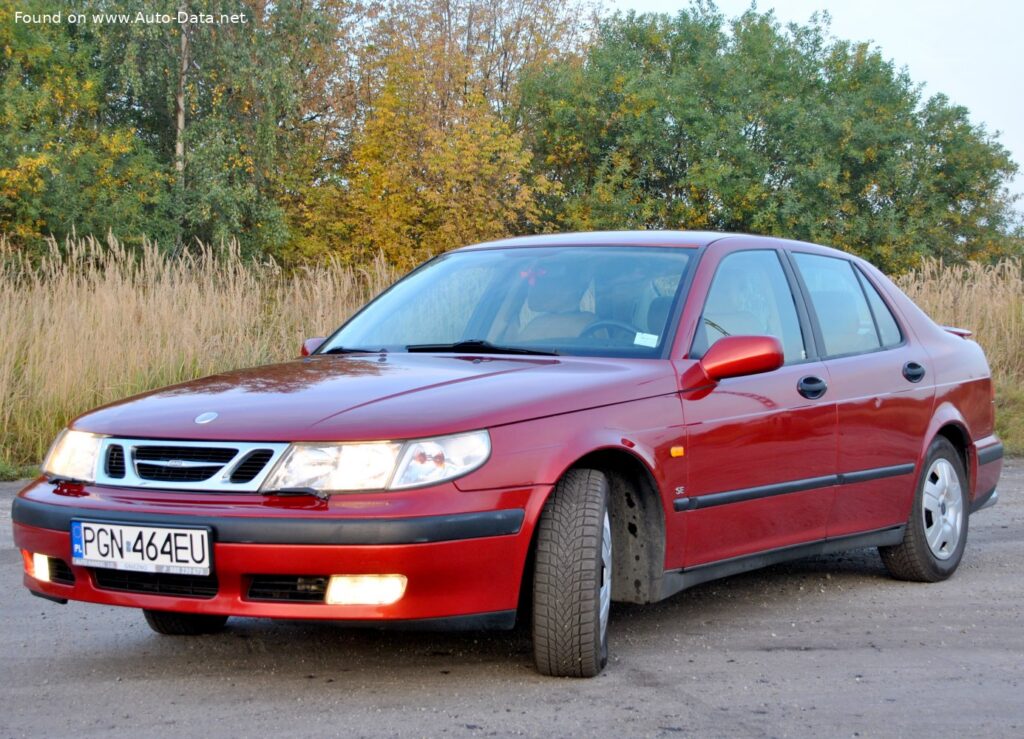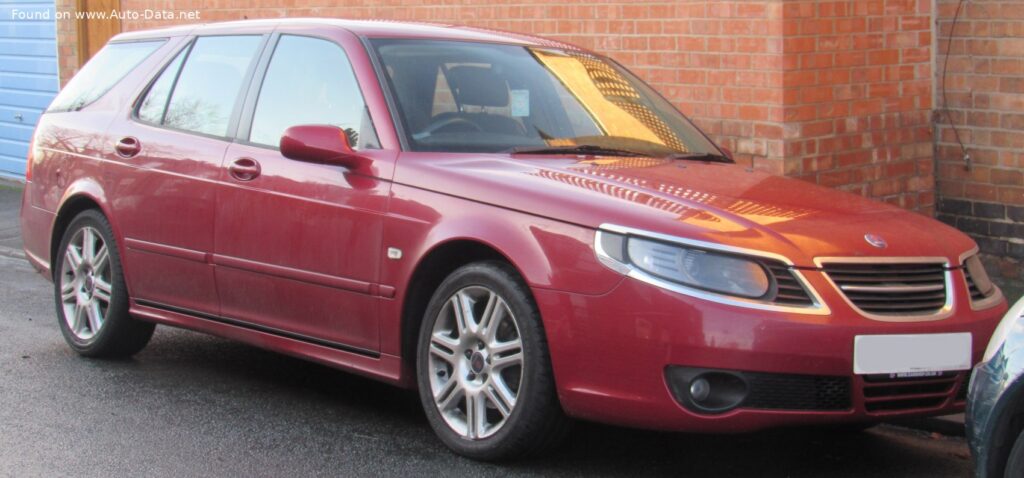
The Saab 9-5 Sport Combi, particularly the facelifted 2005 model with the 1.9 TiD (150 Hp) Automatic powertrain, represents a significant chapter in the history of the distinctive Swedish automaker. Produced from 2005 until 2010, this generation of the 9-5 Sport Combi stood as a testament to Saab’s unique blend of Scandinavian design, pragmatic utility, and a steadfast commitment to safety and driver engagement. While Saab vehicles, especially those equipped with diesel engines, were not as commonly sold in the United States as they were in Europe, this model played a crucial role in the brand’s European market strategy. In its primary markets across the Atlantic, the 9-5 Sport Combi competed in the executive mid-size station wagon segment, offering a compelling alternative to more conventional German rivals with its individualistic styling, aviation-inspired ergonomics, and robust engineering. The 2005 facelift brought a refreshed aesthetic and updated technological features, ensuring the 9-5 remained competitive in a rapidly evolving automotive landscape. This particular variant, powered by a 1.9-liter turbocharged diesel engine paired with an automatic transmission, was optimized for efficiency and torque, appealing to European buyers who valued fuel economy and long-distance comfort.
Powertrain and Performance of the Saab 9-5 Sport Combi
At the heart of the 2005 Saab 9-5 Sport Combi 1.9 TiD (150 Hp) Automatic lies a robust and efficient 1.9-liter turbocharged diesel engine, designated with the model code Z19DTH. This inline four-cylinder engine, positioned transversely at the front, features a double overhead camshaft (DOHC) valvetrain with four valves per cylinder, ensuring optimal airflow and combustion efficiency. With a displacement of 1910 cubic centimeters (116.56 cubic inches), the engine delivers a respectable 150 horsepower at 4000 rpm, translating to a power output of 78.5 horsepower per liter. More critically for a diesel engine, it generates a substantial 320 Newton-meters (236.02 lb.-ft.) of torque, available across a broad and usable range from 2000 to 2750 rpm. This ample torque, characteristic of modern diesel powertrains, provides strong acceleration and effortless cruising, particularly beneficial for highway driving and when the vehicle is loaded or towing.
The fuel injection system is a sophisticated Commonrail Diesel setup, which precisely meters fuel directly into the cylinders at high pressure, contributing to both power output and fuel efficiency. Augmenting this is a turbocharger coupled with an intercooler, which boosts engine performance by forcing more air into the cylinders, effectively increasing volumetric efficiency and power density. The powertrain is mated to a smooth 5-speed automatic transmission, which channels power to the front wheels, providing a balanced blend of comfort and responsiveness. In terms of performance, the 9-5 Sport Combi 1.9 TiD accelerates from 0 to 60 mph in a reasonable 11.1 seconds, with a top speed reaching 124.27 mph (200 km/h). These figures underscore its role as a capable and comfortable long-distance cruiser rather than an outright performance vehicle.
Environmental considerations were increasingly important during this period, and the 9-5 Sport Combi 1.9 TiD met the Euro 4 emission standard. Further enhancing its environmental profile, the engine was equipped with a particulate filter, a crucial component for reducing soot emissions common in diesel engines. Fuel economy, a primary draw for diesel powertrains, was impressive for its class. According to NEDC (New European Driving Cycle) figures, the vehicle achieved a combined fuel consumption of 7.6 liters per 100 kilometers, which translates to an estimated 30.9 US miles per gallon. Urban consumption was rated at 10.4 l/100 km (22.6 US mpg), while extra-urban driving saw figures as low as 5.9 l/100 km (39.9 US mpg), highlighting its efficiency on open roads. CO2 emissions were recorded at 204 grams per kilometer, reflecting the balance between performance and environmental responsibility for its era.
Design and Engineering of the Saab 9-5 Sport Combi
The 2005 Saab 9-5 Sport Combi embodies the distinctive design philosophy and engineering principles that defined the Saab brand. As a five-door, five-seat station wagon (or estate, as it’s known in Europe), it offered a compelling combination of elegant aesthetics and practical utility. The facelift introduced subtle but effective changes to the exterior, including redesigned front and rear fascias, updated lighting, and revised trim, giving the car a more contemporary and assertive stance while retaining its quintessential Saab identity. Key design elements such as the ‘clamshell’ hood, which integrated seamlessly into the fenders, and the unique ‘hockey stick’ window line, contributed to its instantly recognizable profile, distinguishing it from its competitors.
Measuring 190.59 inches (4841 mm) in length, 70.55 inches (1792 mm) in width (81.5 inches or 2070 mm including mirrors), and 57.44 inches (1459 mm) in height, the 9-5 Sport Combi offered a substantial road presence. Its generous 106.42-inch (2703 mm) wheelbase contributed to a stable ride and a spacious cabin. The vehicle’s engineering focused on providing a comfortable yet engaging driving experience. The front suspension utilized an independent McPherson strut setup with a transverse stabilizer, renowned for its balance of ride comfort and precise handling. At the rear, an independent multi-link suspension, also with a transverse stabilizer, further enhanced stability and road holding, ensuring that the wagon remained composed even when fully loaded.
Safety, a cornerstone of Saab’s brand identity, was paramount in the 9-5 Sport Combi. While specific features like the number of airbags aren’t detailed in the provided data, Saab vehicles of this vintage were typically equipped with a comprehensive suite of passive and active safety systems. The inclusion of ABS (Anti-lock Braking System) as a standard assisting system highlights its commitment to active safety, ensuring controlled braking in emergency situations. The braking system itself consisted of ventilated discs at the front and solid discs at the rear, providing robust stopping power. Steering was managed by a hydraulic rack and pinion system, offering tactile feedback and precise control that was characteristic of Saab’s driver-focused engineering. The vehicle was fitted with tire sizes ranging from 215/55 R16 to 225/45 R17 on corresponding wheel rims (6.5J x 16 or 7J x 17), providing a good balance between grip and ride comfort.
Inside, the 9-5 Sport Combi was designed with ergonomic excellence and practicality in mind. The cabin offered comfortable seating for five adults, with a focus on intuitive controls and high-quality materials, reflecting Saab’s premium aspirations. The true strength of the Sport Combi, however, lay in its versatility. The trunk (boot) space provided a minimum of 14.69 cubic feet (416 liters) with all seats in place, expanding dramatically to a cavernous 52.62 cubic feet (1490 liters) when the rear seats were folded down. This generous cargo capacity, combined with a maximum roof load of 220.46 pounds (100 kg) and substantial towing capabilities (up to 3968.32 pounds or 1800 kg with brakes), made the 9-5 Sport Combi an exceptionally practical vehicle for families and those with active lifestyles. The 19.81 US gallon (75-liter) fuel tank capacity further emphasized its long-distance touring credentials.
Saab 9-5 Sport Combi (facelift 2005) 1.9 TiD Automatic Technical Specifications
| Brand | Saab |
| Model | 9-5 |
| Generation | 9-5 Sport Combi (facelift 2005) |
| Type (Engine) | 1.9 TiD (150 Hp) Automatic |
| Start of production | 2005 year |
| End of production | 2010 year |
| Powertrain Architecture | Internal Combustion engine |
| Body type | Station wagon (estate) |
| Seats | 5 |
| Doors | 5 |
| Fuel consumption (economy) – urban (NEDC) | 10.4 l/100 km (22.6 US mpg) |
| Fuel consumption (economy) – extra urban (NEDC) | 5.9 l/100 km (39.9 US mpg) |
| Fuel consumption (economy) – combined (NEDC) | 7.6 l/100 km (30.9 US mpg) |
| CO2 emissions (NEDC) | 204 g/km |
| Fuel Type | Diesel |
| Acceleration 0 – 100 km/h | 11.7 sec |
| Acceleration 0 – 62 mph | 11.7 sec |
| Acceleration 0 – 60 mph (Calculated) | 11.1 sec |
| Maximum speed | 200 km/h (124.27 mph) |
| Emission standard | Euro 4 |
| Power | 150 Hp @ 4000 rpm |
| Power per liter | 78.5 Hp/l |
| Torque | 320 Nm @ 2000-2750 rpm (236.02 lb.-ft.) |
| Engine layout | Front, Transverse |
| Engine Model/Code | Z19DTH |
| Engine displacement | 1910 cm3 (116.56 cu. in.) |
| Number of cylinders | 4 |
| Engine configuration | Inline |
| Cylinder Bore | 82 mm (3.23 in.) |
| Piston Stroke | 90.4 mm (3.56 in.) |
| Number of valves per cylinder | 4 |
| Fuel injection system | Diesel Commonrail |
| Engine aspiration | Turbocharger, Intercooler |
| Valvetrain | DOHC |
| Engine oil capacity | 4.3 l (4.54 US qt) |
| Coolant | 7.4 l (7.82 US qt) |
| Engine systems | Particulate filter |
| Trunk (boot) space – minimum | 416 l (14.69 cu. ft.) |
| Trunk (boot) space – maximum | 1490 l (52.62 cu. ft.) |
| Fuel tank capacity | 75 l (19.81 US gal) |
| Max. roof load | 100 kg (220.46 lbs.) |
| Permitted trailer load with brakes (12%) | 1800 kg (3968.32 lbs.) |
| Permitted trailer load without brakes | 750 kg (1653.47 lbs.) |
| Length | 4841 mm (190.59 in.) |
| Width | 1792 mm (70.55 in.) |
| Width including mirrors | 2070 mm (81.5 in.) |
| Height | 1459 mm (57.44 in.) |
| Wheelbase | 2703 mm (106.42 in.) |
| Front track | 1522 mm (59.92 in.) |
| Rear (Back) track | 1528 mm (60.16 in.) |
| Front overhang | 1031 mm (40.59 in.) |
| Rear overhang | 1106 mm (43.54 in.) |
| Minimum turning circle (turning diameter) | 10.8 m (35.43 ft.) |
| Drivetrain Architecture | The Internal combustion engine (ICE) drives the front wheels of the vehicle. |
| Drive wheel | Front wheel drive |
| Number of gears and type of gearbox | 5 gears, automatic transmission |
| Front suspension | Independent type McPherson, Transverse stabilizer |
| Rear suspension | Independent multi-link suspension, Transverse stabilizer |
| Front brakes | Ventilated discs |
| Rear brakes | Disc |
| Assisting systems | ABS (Anti-lock braking system) |
| Steering type | Steering rack and pinion |
| Power steering | Hydraulic Steering |
| Tires size | 215/55 R16; 225/45 R17 |
| Wheel rims size | 6.5J x 16; 7J x 17 |