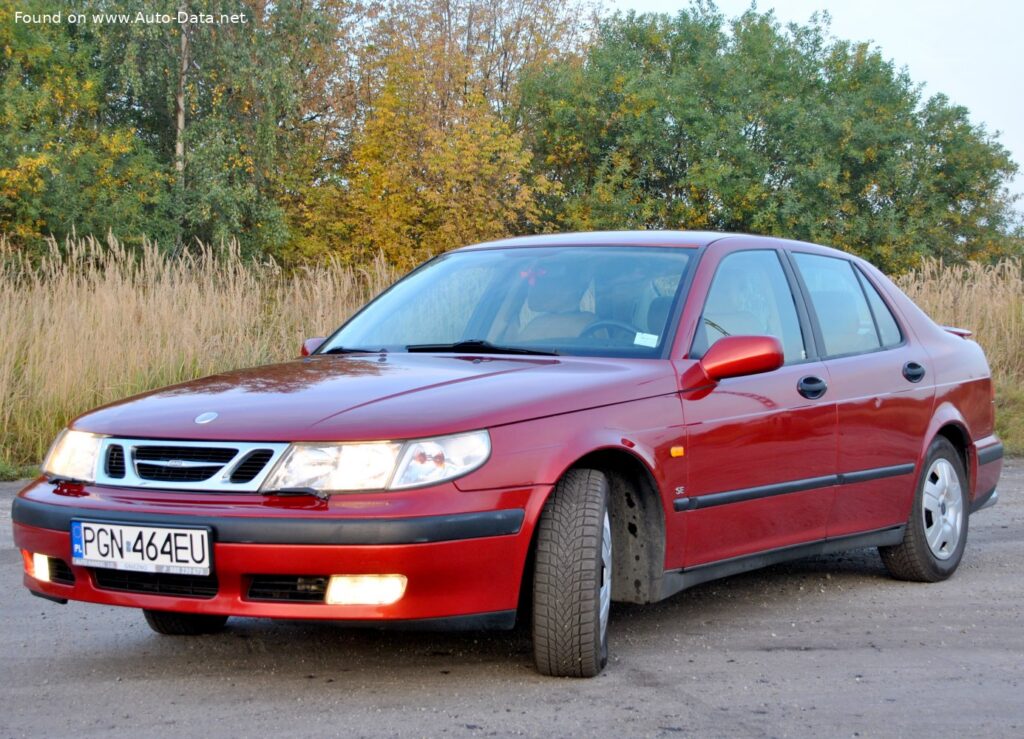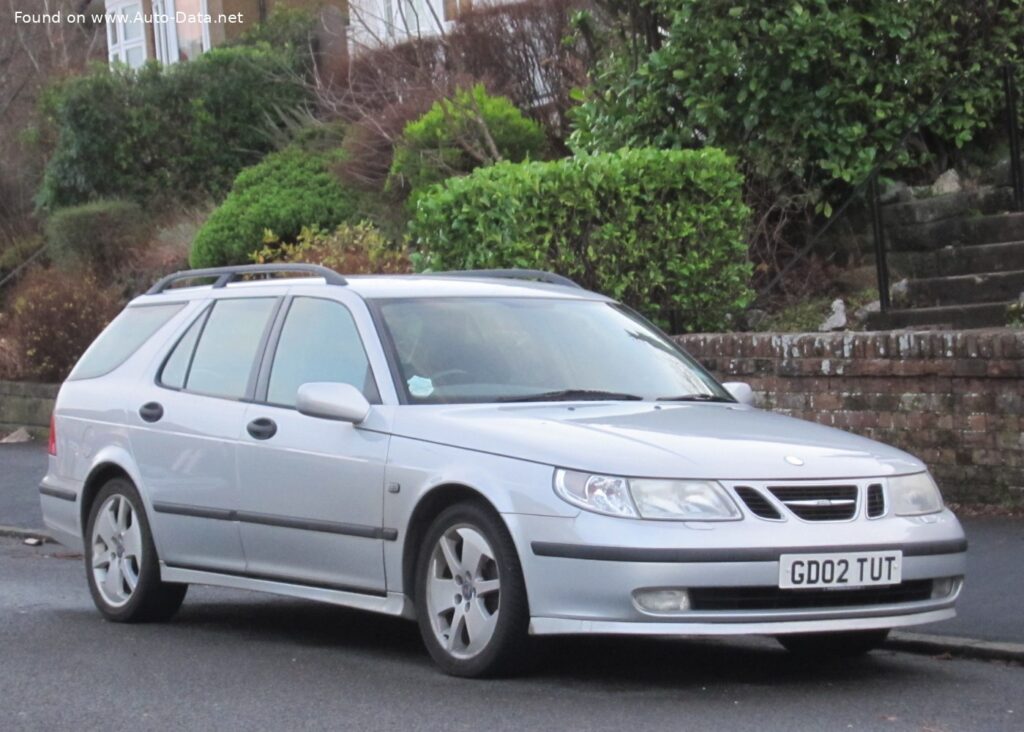
The Saab 9-5 Sport Combi (facelift 2001) represents a significant chapter in the history of Swedish automotive engineering, embodying Saab’s distinctive blend of aviation-inspired design, turbocharged performance, and unwavering commitment to safety and practicality. Launched as part of the first-generation 9-5 series, the Sport Combi, or estate as it is known in many markets, carved a niche in the executive station wagon segment, particularly appealing to discerning buyers in Europe who valued individuality and robust engineering over conventional luxury. The 2001 facelift introduced subtle yet impactful refinements, enhancing both the aesthetic appeal and driving dynamics of an already well-regarded platform. This particular variant, equipped with the 2.3t engine producing 185 horsepower, offered a compelling balance of spirited performance and everyday usability, making the Saab 9-5 Sport Combi (facelift 2001) a unique proposition in its class. Its enduring appeal lies in its distinctive character, ergonomic brilliance, and the inherent practicality of its Sport Combi body style, which seamlessly integrated cargo versatility with a refined driving experience, solidifying Saab’s reputation for building cars that were both intelligent and engaging.
The Saab 9-5 Sport Combi (facelift 2001): A Blend of Practicality and Performance
Engine and Performance Dynamics
At the heart of the Saab 9-5 Sport Combi (facelift 2001) 2.3t lies a robust 2.3-liter (2290 cm3 or 139.74 cu. in.) turbocharged inline-four engine, designated with the internal code B235E. This powerplant is a testament to Saab’s long-standing expertise in turbocharging technology, designed to deliver strong, accessible torque across a wide RPM range, a hallmark of Saab’s driving philosophy. The engine features a DOHC (Double Overhead Camshaft) valvetrain with four valves per cylinder, ensuring efficient breathing and optimal combustion. Fuel delivery is handled by a multi-port manifold injection system, precisely metering gasoline for both performance and fuel efficiency. The integration of a turbocharger and intercooler significantly boosts the engine’s output, allowing this relatively modest-sized four-cylinder to produce a substantial 185 horsepower at 5500 rpm. More impressively, the engine generates a generous 206.52 lb.-ft. of torque at a remarkably low 1800 rpm, providing excellent responsiveness and effortless acceleration from low speeds, a characteristic highly valued in daily driving scenarios.
Power is transmitted to the front wheels through a driver-engaging 5-speed manual transmission, offering precise control over the engine’s output. This drivetrain architecture, coupled with the engine’s strong torque delivery, allows the Sport Combi to accelerate from 0 to 60 mph in a brisk 8.4 seconds (0-100 km/h in 8.8 seconds), making it a surprisingly swift vehicle for its size and segment. The top speed is rated at 139.81 mph (225 km/h), demonstrating its capability for sustained high-speed cruising, particularly relevant for European autobahn driving. Despite its performance credentials, Saab also prioritized fuel economy. The 2.3t variant achieves an estimated 24.5 US mpg in combined driving conditions (9.6 l/100 km), with urban consumption at 18.1 US mpg (13 l/100 km) and extra-urban figures reaching 34.6 US mpg (6.8 l/100 km). These figures highlight Saab’s ability to extract both power and efficiency from its turbocharged engines. With a kerb weight of 3659.67 lbs (1660 kg), the vehicle maintains a respectable weight-to-power ratio of 9 kg/Hp and a weight-to-torque ratio of 5.9 kg/Nm, contributing to its balanced performance profile.
Design Philosophy and Features
The Saab 9-5 Sport Combi (facelift 2001) retained its distinctive and aerodynamic styling, which was further refined with the facelift. As a station wagon (or estate), it offered a practical and elegant alternative to sedans, characterized by its flowing lines and a design that prioritized both aesthetics and functionality. The body type features five doors and comfortable seating for five occupants, making it an ideal family vehicle or a capable companion for long-distance travel. The facelift brought subtle changes to the front fascia, headlamps, and rear lights, giving the car a more contemporary look while preserving its unique Saab identity. The vehicle’s dimensions, measuring 190.08 inches in length, 70.55 inches in width, and 59.09 inches in height, coupled with a 106.42-inch wheelbase, provided a spacious interior and a stable, comfortable ride.
Saab interiors are renowned for their ergonomic excellence and driver-centric design, and the 9-5 Sport Combi was no exception. The cabin featured high-quality materials and intuitive controls, including Saab’s iconic “Black Panel” function, which allowed the driver to turn off non-essential instrument illumination at night, reducing distraction and enhancing focus. Safety, a core Saab tenet, was paramount. While specific features like active head restraints or side airbags are not detailed in the raw data, the 9-5 generation was known for its robust passenger cell, comprehensive airbag systems, and advanced safety features for its time. The inclusion of ABS (Anti-lock Braking System) as standard underscored this commitment. The suspension system, utilizing spring struts at both the front and rear, was tuned to provide a comfortable ride while maintaining composed handling. Braking power was supplied by ventilated discs at the front and solid discs at the rear, ensuring confident stopping performance. Steering was managed by a hydraulic rack and pinion system, offering tactile feedback and precise control. One of the Sport Combi’s most significant advantages was its cargo versatility, offering a generous minimum trunk space of 14.69 cu. ft. (416 liters), which could expand to a substantial 52.62 cu. ft. (1490 liters) with the rear seats folded, making it highly adaptable for various hauling needs. The fuel tank capacity of 19.81 US gallons (75 liters) ensured an impressive cruising range, further enhancing its practicality for extended journeys.
Technical Specifications
| Brand | Saab |
| Model | 9-5 |
| Generation | 9-5 Sport Combi (facelift 2001) |
| Type (Engine) | 2.3 t (185 Hp) |
| Start of production | 2001 year |
| End of production | 2005 year |
| Powertrain Architecture | Internal Combustion engine |
| Body type | Station wagon (estate) |
| Seats | 5 |
| Doors | 5 |
| Fuel consumption (economy) – urban | 18.1 US mpg (13 l/100 km) |
| Fuel consumption (economy) – extra urban | 34.6 US mpg (6.8 l/100 km) |
| Fuel consumption (economy) – combined | 24.5 US mpg (9.6 l/100 km) |
| Fuel Type | Petrol (Gasoline) |
| Acceleration 0 – 60 mph (Calculated) | 8.4 sec |
| Acceleration 0 – 100 km/h | 8.8 sec |
| Maximum speed | 139.81 mph (225 km/h) |
| Weight-to-power ratio | 9 kg/Hp, 111.4 Hp/tonne |
| Weight-to-torque ratio | 5.9 kg/Nm, 168.7 Nm/tonne |
| Power | 185 Hp @ 5500 rpm |
| Power per liter | 80.8 Hp/l |
| Torque | 206.52 lb.-ft. @ 1800 rpm (280 Nm @ 1800 rpm) |
| Engine layout | Front, Transverse |
| Engine Model/Code | B235E |
| Engine displacement | 2.3 liters (2290 cm3, 139.74 cu. in.) |
| Number of cylinders | 4 |
| Engine configuration | Inline |
| Cylinder Bore | 3.54 in. (90 mm) |
| Piston Stroke | 3.54 in. (90 mm) |
| Compression ratio | 9.3:1 |
| Number of valves per cylinder | 4 |
| Fuel injection system | Multi-port manifold injection |
| Engine aspiration | Turbocharger, Intercooler |
| Valvetrain | DOHC |
| Engine oil capacity | 4.23 US qt (4 l) |
| Engine oil specification | Not specified |
| Coolant capacity | 7.82 US qt (7.4 l) |
| Kerb Weight | 3659.67 lbs (1660 kg) |
| Max. weight (Gross Vehicle Weight) | 4695.85 lbs (2130 kg) |
| Max load | 1036.17 lbs (470 kg) |
| Trunk (boot) space – minimum | 14.69 cu. ft. (416 l) |
| Trunk (boot) space – maximum | 52.62 cu. ft. (1490 l) |
| Fuel tank capacity | 19.81 US gal (75 l) |
| Length | 190.08 in. (4828 mm) |
| Width | 70.55 in. (1792 mm) |
| Height | 59.09 in. (1501 mm) |
| Wheelbase | 106.42 in. (2703 mm) |
| Front track | 59.92 in. (1522 mm) |
| Rear (Back) track | 59.92 in. (1522 mm) |
| Drivetrain Architecture | Internal combustion engine (ICE) drives the front wheels |
| Drive wheel | Front wheel drive |
| Number of gears and type of gearbox | 5 gears, manual transmission |
| Front suspension | Spring Strut |
| Rear suspension | Spring Strut |
| Front brakes | Ventilated discs |
| Rear brakes | Disc |
| Assisting systems | ABS (Anti-lock braking system) |
| Steering type | Steering rack and pinion |
| Power steering | Hydraulic Steering |
| Tires size | 205/65 R15 |
| Wheel rims size | 15 inches |