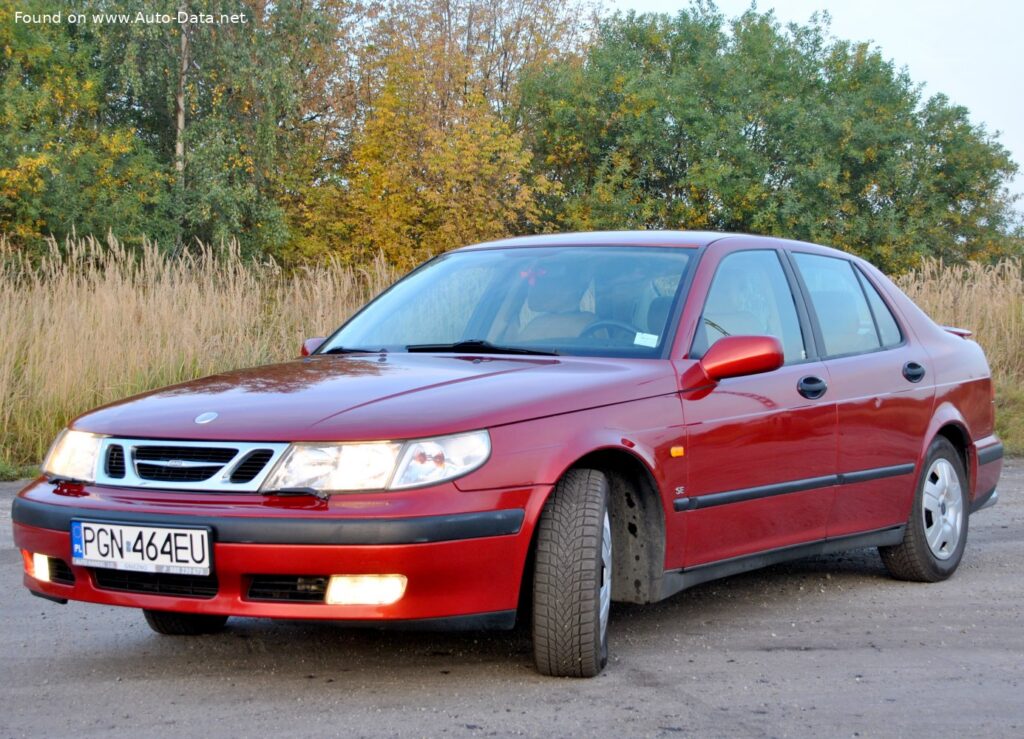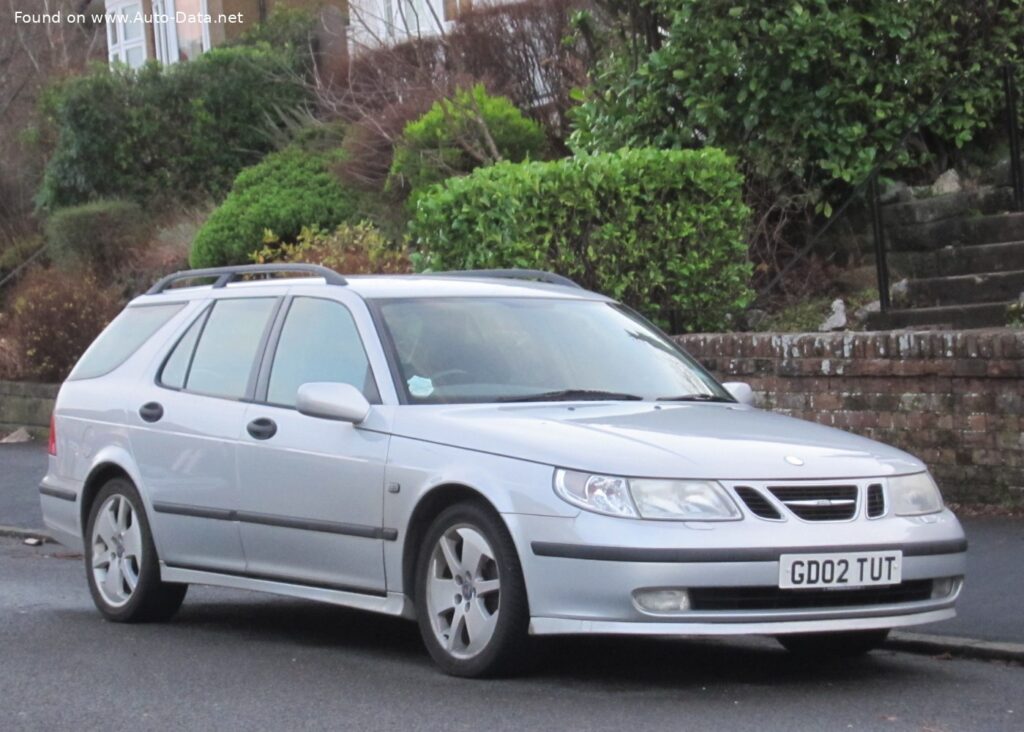
The Saab 9-5 Sport Combi, particularly the facelifted model introduced in 2001, represents a significant chapter in the history of the Swedish automaker, Saab Automobile AB. Positioned as a premium mid-size executive car, the Saab 9-5 Sport Combi (facelift 2001) offered a distinctive blend of Scandinavian design, advanced turbocharging technology, and practical versatility. This generation, spanning from 2001 to 2005 for the Sport Combi variant, continued Saab’s tradition of producing vehicles that appealed to a discerning clientele seeking an alternative to more conventional German and Japanese luxury offerings. The Sport Combi, or estate wagon as it’s known in many markets, was especially popular in Europe for its expansive cargo capacity and comfortable long-distance cruising capabilities, while still maintaining a niche following in North America for its unique character and performance. The 2.3t (185 Hp) Automatic model, the focus of this detailed review, exemplifies the brand’s commitment to turbocharged power delivery and a refined driving experience, even with its four-speed automatic transmission.
Engine & Performance of the Saab 9-5 Sport Combi (facelift 2001)
At the heart of the Saab 9-5 Sport Combi (facelift 2001) 2.3t (185 Hp) Automatic lies a meticulously engineered turbocharged inline-four engine, designated with the internal code B235E. This 2.3-liter (2290 cm3 or 139.74 cu. in.) powerplant is a testament to Saab’s long-standing expertise in forced induction, a technology deeply rooted in its aviation heritage. The engine features a double overhead camshaft (DOHC) valvetrain with four valves per cylinder, optimizing airflow for both power and efficiency. Fuel delivery is managed by a multi-port manifold injection system, ensuring precise fuel metering across the rev range.
The key to the B235E’s robust performance is its turbocharger, coupled with an intercooler. This setup significantly boosts engine output by compressing the intake air, leading to a denser charge and, consequently, more power. The intercooler then cools this compressed air, further increasing its density and preventing premature detonation, especially under demanding conditions. With a compression ratio of 9.3:1, the engine delivers a respectable 185 horsepower at 5500 rpm. What truly sets this engine apart, however, is its torque output: a substantial 206.52 lb.-ft. (280 Nm) available at a remarkably low 1800 rpm. This broad and accessible torque band is a hallmark of Saab’s turbocharged engines, providing excellent off-the-line acceleration and strong mid-range pull, making for effortless overtaking and a relaxed cruising experience.
Power is transmitted to the front wheels via a 4-speed automatic transmission, a common choice for comfort and convenience in its era. Despite the relatively limited number of gears compared to modern transmissions, the system was tuned to work harmoniously with the engine’s torque curve, providing smooth shifts. The performance figures for the 2.3t model reflect its capable powertrain: it accelerates from 0 to 60 mph in a brisk 8.4 seconds (0-100 km/h in 8.8 seconds) and can reach a top speed of 139.81 mph (225 km/h). These figures placed it competitively within its segment, offering a compelling blend of performance and practicality.
In terms of efficiency, the Saab 9-5 Sport Combi (facelift 2001) adhered to the Euro 4 emission standard, demonstrating Saab’s commitment to environmental considerations even two decades ago. Fuel consumption figures, while varying with driving conditions, were rated at a combined 24.5 US mpg (9.6 l/100 km), with urban consumption at 18.1 US mpg (13 l/100 km) and extra-urban at 34.6 US mpg (6.8 l/100 km). These figures were considered reasonable for a turbocharged vehicle of its size and performance at the time, offering a decent balance between power and economy for daily driving and longer journeys.
Design & Features
The Saab 9-5 Sport Combi (facelift 2001) maintained Saab’s distinctive design language, characterized by clean lines, aerodynamic efficiency, and a purposeful stance. As a station wagon (often referred to as an “estate” in Europe), its primary design objective was to combine elegant aesthetics with exceptional utility. The facelift introduced subtle but effective updates, including revised front and rear fascias, new lighting elements, and refreshed interior accents, giving the car a more contemporary look without straying from its core identity. The vehicle’s dimensions, with a length of 190.08 inches, a width of 70.55 inches, and a height of 59.09 inches, underscore its substantial road presence and interior volume.
The five-door, five-seat configuration of the Sport Combi emphasized practicality. Saab’s approach to interior design was always driver-centric, drawing inspiration from aircraft cockpits. The dashboard was ergonomically laid out, with controls intuitively placed for ease of use. Materials were selected for durability and a premium feel, contributing to a comfortable and inviting cabin environment. A particular highlight was the “Night Panel” feature, which allowed drivers to dim all non-essential instrument illumination, reducing distraction during nighttime driving – a nod to aviation safety principles.
Space and versatility were paramount for the Sport Combi. The trunk (boot) space offered a substantial 14.69 cu. ft. (416 liters) with all seats in place, expanding to an impressive 52.62 cu. ft. (1490 liters) when the rear seats were folded down. This cavernous cargo area, combined with a maximum load capacity of 1036.17 lbs. (470 kg), made the 9-5 Sport Combi an ideal vehicle for families, outdoor enthusiasts, or anyone requiring significant hauling capability without sacrificing driving dynamics or comfort. The fuel tank capacity of 19.81 US gallons (75 liters) ensured a good cruising range, further enhancing its suitability for long-distance travel.
Safety was a cornerstone of Saab’s philosophy, and the 9-5 Sport Combi was no exception. It featured a robust body structure designed to absorb impact energy, along with comprehensive passive safety systems. Active safety was enhanced by standard features such as ABS (Anti-lock Braking System), which helped maintain steering control during emergency braking. The braking system itself comprised ventilated discs at the front and solid discs at the rear, providing reliable stopping power. The suspension system, utilizing spring struts at both the front and rear, was tuned to offer a comfortable ride while maintaining composed handling. Steering was managed by a hydraulic rack and pinion system, providing direct feedback and a connected feel to the road. The vehicle rode on 205/65 R15 tires, mounted on 15-inch wheel rims, a specification chosen for a balance of ride comfort, grip, and durability.
Technical Specifications
| General Information | |
| Brand | Saab |
| Model | 9-5 |
| Generation | 9-5 Sport Combi (facelift 2001) |
| Type (Engine) | 2.3 t (185 Hp) Automatic |
| Start of production | 2001 year |
| End of production | 2005 year |
| Powertrain Architecture | Internal Combustion engine |
| Body type | Station wagon (estate) |
| Seats | 5 |
| Doors | 5 |
| Performance Specs | |
| Fuel consumption (economy) – urban | 18.1 US mpg (13 l/100 km) |
| Fuel consumption (economy) – extra urban | 34.6 US mpg (6.8 l/100 km) |
| Fuel consumption (economy) – combined | 24.5 US mpg (9.6 l/100 km) |
| Fuel Type | Petrol (Gasoline) |
| Acceleration 0 – 60 mph | 8.4 sec |
| Maximum speed | 139.81 mph (225 km/h) |
| Emission standard | Euro 4 |
| Weight-to-power ratio | 9 kg/Hp, 111.4 Hp/tonne |
| Weight-to-torque ratio | 5.9 kg/Nm, 168.7 Nm/tonne |
| Engine Specs | |
| Power | 185 Hp @ 5500 rpm. |
| Power per liter | 80.8 Hp/l |
| Torque | 206.52 lb.-ft. (280 Nm) @ 1800 rpm. |
| Engine layout | Front, Transverse |
| Engine Model/Code | B235E |
| Engine displacement | 2.3 L (2290 cm3, 139.74 cu. in.) |
| Number of cylinders | 4 |
| Engine configuration | Inline |
| Cylinder Bore | 3.54 in. (90 mm) |
| Piston Stroke | 3.54 in. (90 mm) |
| Compression ratio | 9.3:1 |
| Number of valves per cylinder | 4 |
| Fuel injection system | Multi-port manifold injection |
| Engine aspiration | Turbocharger, Intercooler |
| Valvetrain | DOHC |
| Engine oil capacity | 4.23 US qt (4 l) |
| Coolant | 7.82 US qt (7.4 l) |
| Space, Volume and Weights | |
| Kerb Weight | 3659.67 lbs. (1660 kg) |
| Max. weight | 4695.85 lbs. (2130 kg) |
| Max load | 1036.17 lbs. (470 kg) |
| Trunk (boot) space – minimum | 14.69 cu. ft. (416 l) |
| Trunk (boot) space – maximum | 52.62 cu. ft. (1490 l) |
| Fuel tank capacity | 19.81 US gal (75 l) |
| Dimensions | |
| Length | 190.08 in. (4828 mm) |
| Width | 70.55 in. (1792 mm) |
| Height | 59.09 in. (1501 mm) |
| Wheelbase | 106.42 in. (2703 mm) |
| Front track | 59.92 in. (1522 mm) |
| Rear (Back) track | 59.92 in. (1522 mm) |
| Drivetrain, Brakes and Suspension Specs | |
| Drivetrain Architecture | The Internal combustion engine (ICE) drives the front wheels of the vehicle. |
| Drive wheel | Front wheel drive |
| Number of gears and type of gearbox | 4 gears, automatic transmission |
| Front suspension | Spring Strut |
| Rear suspension | Spring Strut |
| Front brakes | Ventilated discs |
| Rear brakes | Disc |
| Assisting systems | ABS (Anti-lock braking system) |
| Steering type | Steering rack and pinion |
| Power steering | Hydraulic Steering |
| Tires size | 205/65 R15 |
| Wheel rims size | 15 |