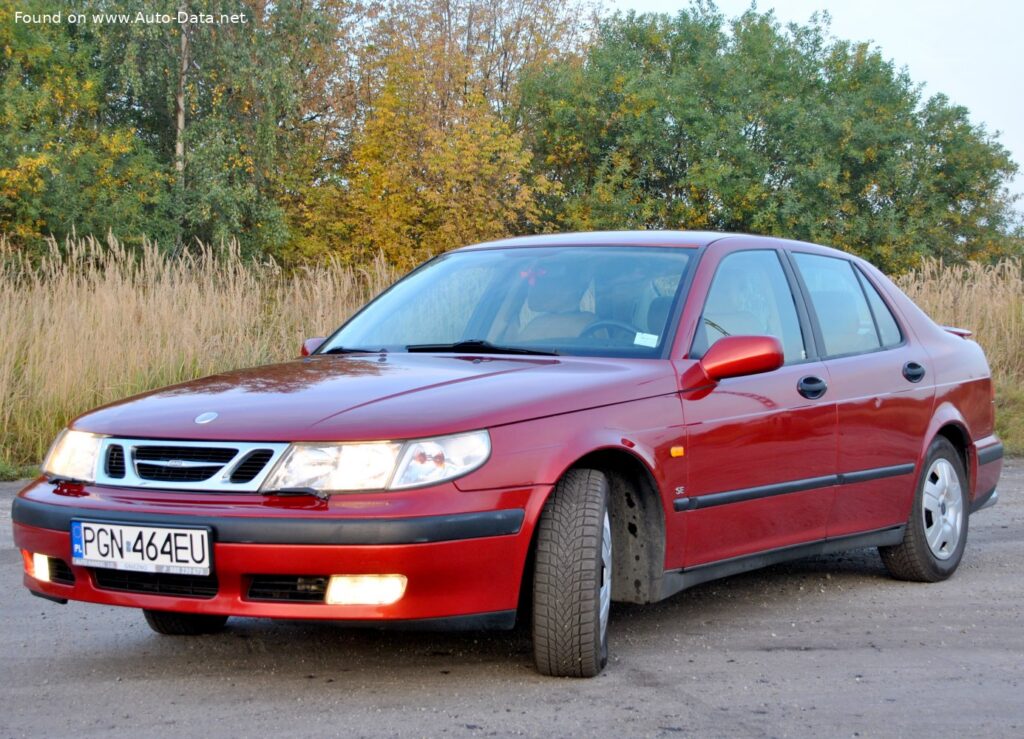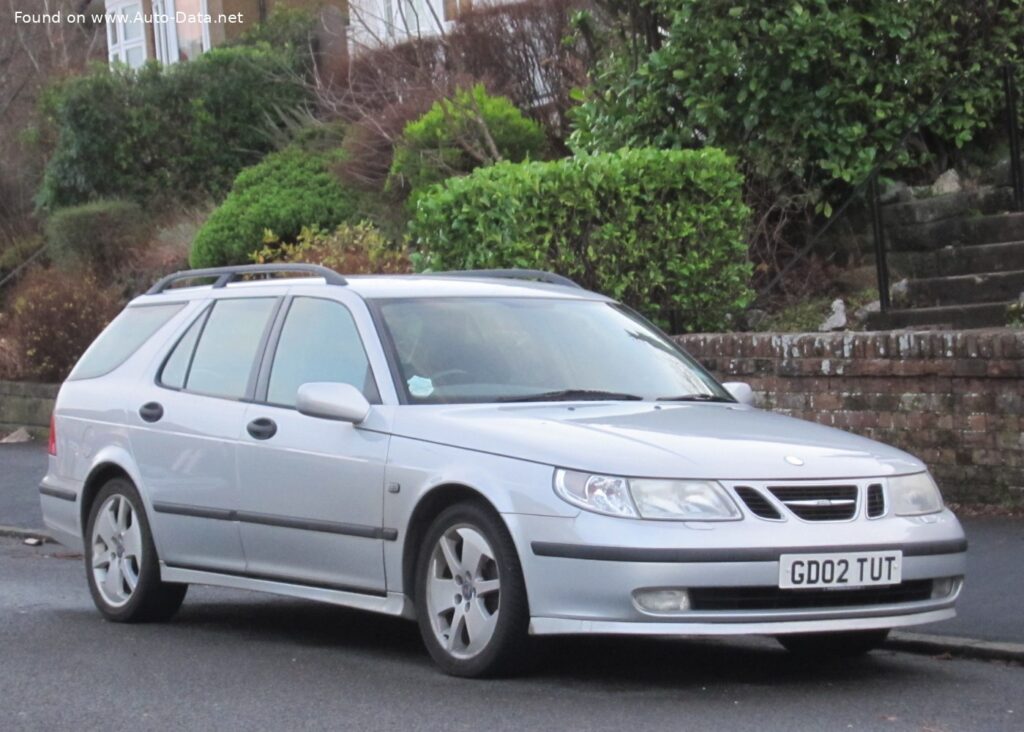
The Saab 9-5 Sport Combi, particularly the facelifted model introduced in 2001, represents a significant chapter in the history of the distinctive Swedish automaker. This generation of the 9-5, produced from 2001 to 2005, continued Saab’s tradition of combining unique design, advanced turbocharging technology, and a steadfast commitment to safety and practicality. Positioned in the premium mid-size executive segment, the 9-5 Sport Combi catered to buyers seeking a blend of performance, utility, and a characteristically unconventional Scandinavian aesthetic. The variant under review, the Saab 9-5 Sport Combi (facelift 2001) 2.3 T (250 Hp) Automatic, embodied the pinnacle of the range for many markets, offering a potent powertrain coupled with an accommodating station wagon body style, making it a compelling choice for discerning drivers who valued individuality over mainstream luxury. While Saab’s market presence in the United States was always niche compared to German rivals, the 9-5 Sport Combi carved out a loyal following, celebrated for its robust engineering and driver-focused experience.
Engineering and Performance of the Saab 9-5 Sport Combi (facelift 2001)
At the heart of the Saab 9-5 Sport Combi (facelift 2001) 2.3 T (250 Hp) Automatic lies a meticulously engineered powertrain, a hallmark of Saab’s commitment to turbocharged performance. The engine, designated B235R, is a 2.3-liter (2290 cm3 or 139.74 cu. in.) inline four-cylinder unit, featuring a Dual Overhead Camshaft (DOHC) valvetrain with four valves per cylinder. This configuration, combined with multi-port manifold injection, allowed for precise fuel delivery and efficient combustion. The key to its impressive output was the intercooled turbocharger, a technology Saab pioneered and perfected over decades. This forced induction system enabled the relatively small displacement engine to generate a robust 250 horsepower at 5300 rpm, translating to a substantial power-per-liter figure of 109.2 Hp/l.
More critically for real-world driving, the engine delivered a formidable 350 Nm (258.15 lb.-ft.) of torque, available from a remarkably low 1900 rpm. This broad and accessible torque band was a signature characteristic of Saab’s turbocharged engines, providing strong, effortless acceleration across the rev range without the need to constantly downshift. The power was channeled through a 5-speed automatic transmission, contributing to a smooth and refined driving experience. Performance figures were competitive for its class, with the 9-5 Sport Combi accelerating from 0 to 60 mph in a swift 6.9 seconds and reaching a maximum speed of 152.24 mph (245 km/h). The weight-to-power ratio stood at 6.6 kg/Hp (150.6 Hp/tonne), while the weight-to-torque ratio was 4.7 kg/Nm (210.8 Nm/tonne), indicating a well-balanced power delivery for its curb weight of 3659.67 lbs (1660 kg).
Fuel economy, while not the primary focus of a performance-oriented executive wagon from this era, was respectable given its output. The combined cycle consumption was rated at 9 l/100 km, equating to approximately 26.1 US mpg. Urban driving saw consumption rise to 12.9 l/100 km (18.2 US mpg), while extra-urban cruising improved to 6.7 l/100 km (35.1 US mpg). The engine’s compression ratio of 9.3:1 was optimized for its turbocharged nature, and the use of petrol (gasoline) as fuel was standard. The front, transverse engine layout contributed to the vehicle’s front-wheel-drive architecture, which provided predictable handling characteristics, especially in adverse weather conditions, a crucial consideration for its original Swedish market.
Design and Features of the Saab 9-5 Sport Combi (facelift 2001)
The Saab 9-5 Sport Combi (facelift 2001) continued Saab’s distinctive design philosophy, characterized by a blend of aerodynamic efficiency, functional practicality, and understated elegance. As a station wagon (or estate, as it’s known in Europe), the Sport Combi offered significant versatility without sacrificing style. The facelift introduced subtle but effective changes, modernizing the front fascia with revised headlamps, grilles, and bumpers, while maintaining the flowing lines that gave the 9-5 its unique silhouette. The five-door, five-seat body type provided ample space for both passengers and cargo, making it an ideal choice for families or individuals requiring substantial carrying capacity.
Measuring 190.08 inches (4828 mm) in length, 70.55 inches (1792 mm) in width, and 59.09 inches (1501 mm) in height, with a wheelbase of 106.42 inches (2703 mm), the 9-5 Sport Combi commanded a strong presence on the road while retaining a manageable footprint for urban environments. The front and rear track measurements of 59.92 inches (1522 mm) contributed to a stable and composed ride. Inside, Saab’s aviation heritage was evident in the “cockpit-like” driver-centric layout, with controls intuitively placed and instrumentation designed for clarity. High-quality materials and thoughtful ergonomics defined the cabin experience, reflecting its premium segment positioning.
Practicality was a cornerstone of the Sport Combi’s design. The trunk (boot) space was generous, offering a minimum of 14.69 cu. ft. (416 liters) with all seats in place. Folding down the rear seats expanded this volume dramatically to a cavernous 52.62 cu. ft. (1490 liters), making it highly capable for transporting large items. The maximum permissible load was 1036.17 lbs (470 kg), underscoring its utility. Safety, a paramount concern for Saab, was well-addressed. The vehicle featured an Anti-lock Braking System (ABS) as standard, enhancing control during emergency braking. The braking system itself comprised ventilated discs at the front and solid discs at the rear, providing strong and consistent stopping power. The suspension system, utilizing spring struts at both the front and rear, was tuned to deliver a comfortable ride without compromising too much on handling dynamics. Hydraulic power steering with a rack and pinion setup offered direct feedback and precise control, contributing to a confident driving feel. The 225/45 R17 tires mounted on 6.5J x 17 wheel rims further enhanced grip and complemented the vehicle’s sporty yet refined character.
Technical Specifications
| Brand | Saab |
| Model | 9-5 |
| Generation | 9-5 Sport Combi (facelift 2001) |
| Type (Engine) | 2.3 T (250 Hp) Automatic |
| Start of production | 2001 year |
| End of production | 2005 year |
| Powertrain Architecture | Internal Combustion engine |
| Body type | Station wagon (estate) |
| Seats | 5 |
| Doors | 5 |
| Fuel consumption (economy) – urban | 12.9 l/100 km (18.2 US mpg) |
| Fuel consumption (economy) – extra urban | 6.7 l/100 km (35.1 US mpg) |
| Fuel consumption (economy) – combined | 9 l/100 km (26.1 US mpg) |
| Fuel Type | Petrol (Gasoline) |
| Acceleration 0 – 100 km/h | 7.3 sec |
| Acceleration 0 – 62 mph | 7.3 sec |
| Acceleration 0 – 60 mph (Calculated) | 6.9 sec |
| Maximum speed | 245 km/h (152.24 mph) |
| Weight-to-power ratio | 6.6 kg/Hp (150.6 Hp/tonne) |
| Weight-to-torque ratio | 4.7 kg/Nm (210.8 Nm/tonne) |
| Power | 250 Hp @ 5300 rpm |
| Power per litre | 109.2 Hp/l |
| Torque | 350 Nm @ 1900 rpm (258.15 lb.-ft. @ 1900 rpm) |
| Engine layout | Front, Transverse |
| Engine Model/Code | B235R |
| Engine displacement | 2290 cm3 (139.74 cu. in.) |
| Number of cylinders | 4 |
| Engine configuration | Inline |
| Cylinder Bore | 90 mm (3.54 in.) |
| Piston Stroke | 90 mm (3.54 in.) |
| Compression ratio | 9.3:1 |
| Number of valves per cylinder | 4 |
| Fuel injection system | Multi-port manifold injection |
| Engine aspiration | Turbocharger, Intercooler |
| Valvetrain | DOHC |
| Engine oil capacity | 4 l (4.23 US qt) |
| Coolant | 7.4 l (7.82 US qt) |
| Kerb Weight | 1660 kg (3659.67 lbs) |
| Max. weight | 2130 kg (4695.85 lbs) |
| Max load | 470 kg (1036.17 lbs) |
| Trunk (boot) space – minimum | 416 l (14.69 cu. ft.) |
| Trunk (boot) space – maximum | 1490 l (52.62 cu. ft.) |
| Fuel tank capacity | 70 l (18.49 US gal) |
| Length | 4828 mm (190.08 in.) |
| Width | 1792 mm (70.55 in.) |
| Height | 1501 mm (59.09 in.) |
| Wheelbase | 2703 mm (106.42 in.) |
| Front track | 1522 mm (59.92 in.) |
| Rear (Back) track | 1522 mm (59.92 in.) |
| Drivetrain Architecture | The Internal combustion engine (ICE) drives the front wheels of the vehicle. |
| Drive wheel | Front wheel drive |
| Number of gears and type of gearbox | 5 gears, automatic transmission |
| Front suspension | Spring Strut |
| Rear suspension | Spring Strut |
| Front brakes | Ventilated discs |
| Rear brakes | Disc |
| Assisting systems | ABS (Anti-lock braking system) |
| Steering type | Steering rack and pinion |
| Power steering | Hydraulic Steering |
| Tires size | 225/45 R17 |
| Wheel rims size | 6.5J x 17 |