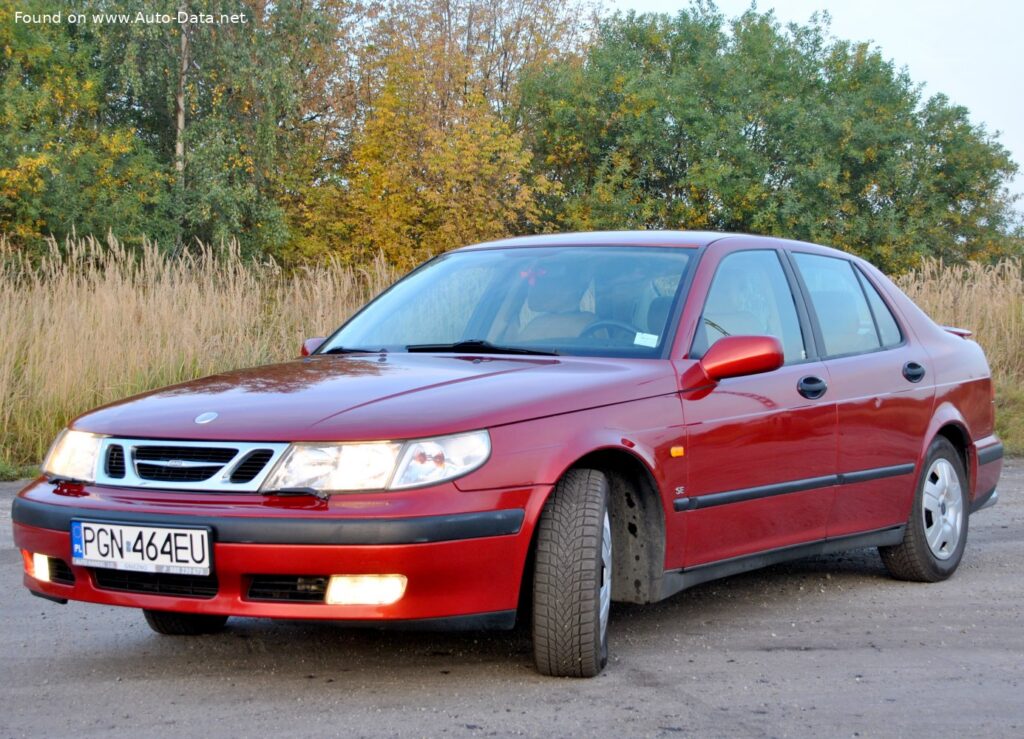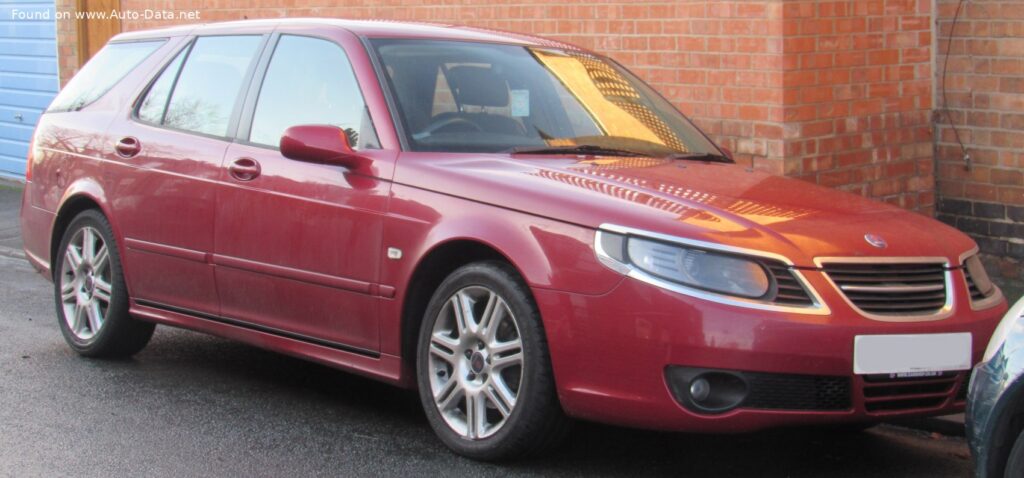
The Saab 9-5 Sport Combi (facelift 2005) emerged as a refined and updated iteration of the Swedish automaker’s executive-class station wagon, cementing its position in the competitive European premium segment. This particular generation, spanning from 2005 to 2010, embodied Saab’s distinctive design philosophy and commitment to turbocharged performance and practical utility. While Saab models had a loyal following in the United States, this facelifted Sport Combi with the 2.3t (185 Hp) Sentronic powertrain was a quintessential European offering, renowned for its unique blend of Scandinavian sensibility, robust engineering, and driver-centric features. It continued the brand’s legacy of offering a compelling alternative to more conventional German rivals, emphasizing safety, ergonomic design, and a spirited driving experience.
Powertrain and Driving Dynamics of the Saab 9-5 Sport Combi (facelift 2005)
At the heart of the Saab 9-5 Sport Combi (facelift 2005) 2.3t (185 Hp) Sentronic lies a potent and characterful B235E engine, a 2.3-liter (2290 cm3 or 139.74 cubic inches) inline-four cylinder unit. This powerplant is a testament to Saab’s long-standing expertise in turbocharging technology, featuring a turbocharger with an intercooler to boost performance and efficiency. The engine’s configuration is front-transverse, driving the front wheels, a hallmark of Saab’s engineering approach. With a bore and stroke of 90 mm (3.54 inches) each, it’s a square engine, suggesting a balance between torque and revving capability. Each cylinder benefits from four valves, managed by a DOHC (Double Overhead Camshaft) valvetrain, ensuring optimal airflow and combustion efficiency. Fuel delivery is handled by a multi-port manifold injection system, precisely metering gasoline into the cylinders.
The 2.3t engine generates a respectable 185 horsepower at 5500 rpm, translating to a power output of 80.8 horsepower per liter. More impressive for everyday driving, however, is the torque output: a substantial 280 Nm, or approximately 206.52 lb.-ft., available across a broad rev range from 1800 to 3500 rpm. This wide torque band is characteristic of turbocharged engines and provides excellent responsiveness and effortless acceleration, particularly in mid-range speeds. The power is managed by a 5-speed Sentronic automatic transmission. This gearbox, designed for smooth shifts and driver engagement, allows for manual gear selection, giving the driver more control when desired. This combination enables the Sport Combi to accelerate from 0 to 60 mph in a brisk 9.4 seconds (calculated by Auto-Data.net), reaching 100 km/h in 9.9 seconds, and achieving a top speed of 220 km/h (136.7 mph). For a family-oriented station wagon, these figures underscore its capability as a competent and enjoyable long-distance cruiser.
Despite its performance, the 9-5 Sport Combi aimed for a balance of power and efficiency for its time. Fuel economy figures, measured under the NEDC cycle, indicate a combined consumption of 10.3 liters per 100 kilometers, which translates to an estimated 22.8 US miles per gallon. Urban driving resulted in 15.1 l/100 km (15.6 US mpg), while extra-urban cruising yielded 7.6 l/100 km (30.9 US mpg). The vehicle met the Euro 4 emission standard, with CO2 emissions rated at 246 g/km, reflecting the environmental considerations of its era. The engine has an oil capacity of 4 liters (4.23 US quarts) and a coolant capacity of 7.4 liters (7.82 US quarts), indicating robust thermal management for the turbocharged unit.
Distinctive Design and Practicality of the Saab 9-5 Sport Combi (facelift 2005)
The exterior design of the Saab 9-5 Sport Combi (facelift 2005) featured a refreshed aesthetic that maintained Saab’s distinctive identity while incorporating contemporary styling cues. As a station wagon (or estate, as it’s often called in Europe), it offered a compelling blend of sleek lines and functional space. The facelift introduced revised front and rear fascias, giving the car a more assertive and modern look, yet it retained its characteristic “clamshell” hood and aircraft-inspired design elements. With a length of 4841 mm (190.59 inches), a width of 1792 mm (70.55 inches) (2070 mm or 81.5 inches including mirrors), and a height of 1459 mm (57.44 inches), the 9-5 Sport Combi projected a substantial and confident presence on the road. The 2703 mm (106.42 inches) wheelbase contributed to both ride comfort and interior spaciousness, while a minimum turning circle of 10.8 meters (35.43 feet) ensured reasonable maneuverability for its size.
Inside, the Saab 9-5 Sport Combi upheld the brand’s reputation for ergonomic excellence and thoughtful design. It featured five comfortable seats and five doors, making it an ideal family vehicle. Saab’s interiors were known for their logical layout, high-quality materials, and unique features like the “Night Panel” function, which dimmed all dashboard lights except the speedometer for reduced distraction during nighttime driving. Practicality was a strong suit, with a generous minimum trunk space of 416 liters (14.69 cubic feet), expanding to an impressive 1490 liters (52.62 cubic feet) with the rear seats folded down. This adaptability made it exceptionally versatile for carrying cargo, sports equipment, or luggage for extended trips. Further enhancing its utility, the vehicle had a maximum roof load of 100 kg (220.46 lbs.) and could tow trailers with brakes up to 1800 kg (3968.32 lbs.) or 750 kg (1653.47 lbs.) without brakes, highlighting its robust engineering.
Underneath, the 9-5 Sport Combi was engineered for a sophisticated ride. It featured an independent McPherson type front suspension with a transverse stabilizer, paired with an independent multi-link rear suspension, also with a transverse stabilizer. This setup provided a comfortable yet controlled ride, characteristic of European executive cars. Braking performance was assured by ventilated discs measuring 308 mm at the front and solid discs measuring 286 mm at the rear, complemented by an Anti-lock Braking System (ABS) for enhanced safety during emergency stops. The hydraulic power steering system, employing a rack and pinion setup, offered precise feedback and a connected feel to the road. Standard tire sizes included 215/55 R16 on 6.5J x 16 wheel rims, with an option for 225/45 R17 tires on 7J x 17 rims, providing choices for different driving preferences and aesthetics. The 75-liter (19.81 US gallon) fuel tank ensured a respectable cruising range, further cementing its credentials as a capable and practical long-distance tourer.
Technical Specifications
| Brand | Saab |
| Model | 9-5 |
| Generation | 9-5 Sport Combi (facelift 2005) |
| Type (Engine) | 2.3t (185 Hp) Sentronic |
| Start of production | 2005 year |
| End of production | 2010 year |
| Powertrain Architecture | Internal Combustion engine |
| Body type | Station wagon (estate) |
| Seats | 5 |
| Doors | 5 |
| Fuel consumption (economy) – urban (NEDC) | 15.1 l/100 km (15.6 US mpg) |
| Fuel consumption (economy) – extra urban (NEDC) | 7.6 l/100 km (30.9 US mpg) |
| Fuel consumption (economy) – combined (NEDC) | 10.3 l/100 km (22.8 US mpg) |
| CO2 emissions (NEDC) | 246 g/km |
| Fuel Type | Petrol (Gasoline) |
| Acceleration 0 – 100 km/h | 9.9 sec |
| Acceleration 0 – 62 mph | 9.9 sec |
| Acceleration 0 – 60 mph (Calculated) | 9.4 sec |
| Maximum speed | 220 km/h (136.7 mph) |
| Emission standard | Euro 4 |
| Power | 185 Hp @ 5500 rpm |
| Power per litre | 80.8 Hp/l |
| Torque | 280 Nm @ 1800-3500 rpm (206.52 lb.-ft.) |
| Engine layout | Front, Transverse |
| Engine Model/Code | B235E |
| Engine displacement | 2290 cm3 (139.74 cu. in.) |
| Number of cylinders | 4 |
| Engine configuration | Inline |
| Cylinder Bore | 90 mm (3.54 in.) |
| Piston Stroke | 90 mm (3.54 in.) |
| Number of valves per cylinder | 4 |
| Fuel injection system | Multi-port manifold injection |
| Engine aspiration | Turbocharger, Intercooler |
| Valvetrain | DOHC |
| Engine oil capacity | 4 l (4.23 US qt) |
| Coolant | 7.4 l (7.82 US qt) |
| Trunk (boot) space – minimum | 416 l (14.69 cu. ft.) |
| Trunk (boot) space – maximum | 1490 l (52.62 cu. ft.) |
| Fuel tank capacity | 75 l (19.81 US gal) |
| Max. roof load | 100 kg (220.46 lbs.) |
| Permitted trailer load with brakes (12%) | 1800 kg (3968.32 lbs.) |
| Permitted trailer load without brakes | 750 kg (1653.47 lbs.) |
| Length | 4841 mm (190.59 in.) |
| Width | 1792 mm (70.55 in.) |
| Width including mirrors | 2070 mm (81.5 in.) |
| Height | 1459 mm (57.44 in.) |
| Wheelbase | 2703 mm (106.42 in.) |
| Front track | 1522 mm (59.92 in.) |
| Rear (Back) track | 1528 mm (60.16 in.) |
| Front overhang | 1031 mm (40.59 in.) |
| Rear overhang | 1106 mm (43.54 in.) |
| Minimum turning circle (turning diameter) | 10.8 m (35.43 ft.) |
| Drivetrain Architecture | The Internal combustion engine (ICE) drives the front wheels of the vehicle. |
| Drive wheel | Front wheel drive |
| Number of gears and type of gearbox | 5 gears, automatic transmission Sentronic |
| Front suspension | Independent type McPherson, Transverse stabilizer |
| Rear suspension | Independent multi-link suspension, Transverse stabilizer |
| Front brakes | Ventilated discs, 308 mm |
| Rear brakes | Disc, 286 mm |
| Assisting systems | ABS (Anti-lock braking system) |
| Steering type | Steering rack and pinion |
| Power steering | Hydraulic Steering |
| Tires size | 215/55 R16; 225/45 R17 |
| Wheel rims size | 6.5J x 16; 7J x 17 |