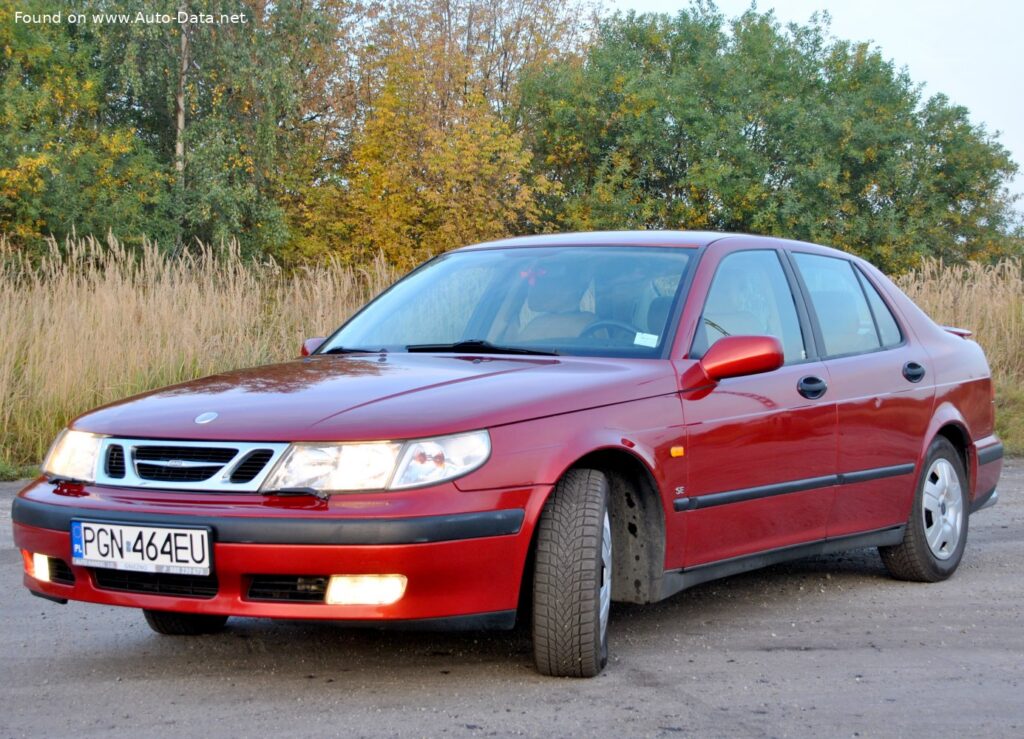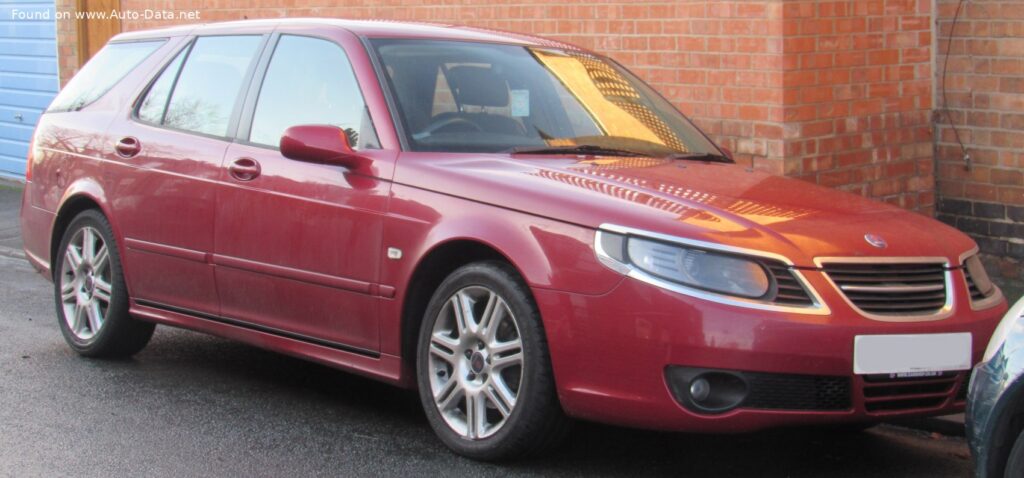
The Saab 9-5 Sport Combi (facelift 2005) represents a significant iteration in the lineage of Saab’s flagship executive car, a vehicle renowned for its unique blend of Scandinavian design, advanced turbocharged powertrains, and an unwavering commitment to safety. Primarily marketed in Europe and other international markets where Saab maintained a loyal following, the 9-5 Sport Combi stood out in the premium mid-size station wagon segment. This facelifted model, produced from 2005 to 2007, brought a refreshed aesthetic and subtle enhancements to a platform that had already established itself as a quirky yet compelling alternative to mainstream luxury offerings. The Sport Combi variant, or station wagon as it’s known in the U.S., offered enhanced practicality without compromising the driving dynamics and distinctive character that enthusiasts had come to expect from the Swedish marque. At its core, the Saab 9-5 Sport Combi (facelift 2005) continued to embody the brand’s engineering philosophy, focusing on intelligent design, driver-centric ergonomics, and robust performance, particularly through its well-regarded turbocharged engines.
The Evolution and Market Positioning of the Saab 9-5 Sport Combi (facelift 2005)
The Saab 9-5, first introduced in 1997, succeeded the long-running Saab 9000. Its second major refresh in 2005, often referred to as the “Griffin” facelift due to its distinctive headlight and grille design, aimed to modernize the vehicle’s appearance and keep it competitive in a fiercely contested market segment. While never achieving the sales volumes of its German rivals in the U.S., the 9-5 Sport Combi carved out a niche for buyers seeking something different – a car that prioritized thoughtful engineering and functional design over overt luxury. In its primary European markets, the station wagon body style was particularly popular, offering a compelling blend of cargo capacity and dynamic driving characteristics suitable for both family duties and long-distance touring. The 2005 facelift was crucial in extending the appeal of the first-generation 9-5, bridging the gap until its eventual replacement. This era saw Saab, under General Motors’ ownership, attempt to refine its brand identity while retaining its core values of innovation and safety, with the 9-5 Sport Combi serving as a prime example of this delicate balance.
Powertrain and Performance Characteristics
Under the hood, the Saab 9-5 Sport Combi (facelift 2005) 2.3T (220 Hp) featured a highly characteristic Saab engine: a turbocharged 2.3-liter inline-four, designated with the engine code B235L. This robust powerplant was longitudinally mounted at the front, driving the front wheels, a common configuration for Saab. It delivered a substantial 220 horsepower at 5500 rpm and a generous 228.64 lb.-ft. of torque, available across a broad rev range from 1800 to 4500 rpm. This wide torque band was a hallmark of Saab’s turbocharged engines, providing strong, effortless acceleration in real-world driving conditions, rather than just peak power figures. The engine utilized a Multi-port manifold injection system and featured a DOHC (Double Overhead Camshaft) valvetrain with four valves per cylinder, ensuring efficient combustion and responsive performance. The turbocharger, coupled with an intercooler, was instrumental in achieving its impressive power output from a relatively modest displacement, yielding a power-per-liter figure of 96.1 Hp/l.
Performance figures for the 2.3T model were competitive for its class. The Sport Combi could accelerate from 0 to 60 mph in a brisk 7.9 seconds, with 0-100 km/h achieved in 8.3 seconds. Its maximum speed was rated at 142.92 mph (230 km/h), demonstrating its capability as a comfortable and competent long-distance cruiser. Fuel efficiency, while not class-leading by modern standards, was reasonable for a turbocharged vehicle of its size and era. The combined NEDC cycle reported an economy of 8.9 liters per 100 km, which translates to approximately 26.4 US mpg. Urban consumption stood at 12.4 l/100 km (19 US mpg), while extra-urban driving yielded 6.8 l/100 km (34.6 US mpg). The vehicle met the Euro 4 emission standard, with CO2 emissions of 214 g/km. Power was transmitted to the front wheels via a precise 5-speed manual transmission, offering an engaging driving experience for those who preferred direct control over gear selection. The combination of a powerful, flexible engine and a well-sorted manual gearbox underscored the 9-5 Sport Combi’s appeal to drivers who appreciated a more involved connection with their vehicle.
Design Philosophy and Functional Features
The Saab 9-5 Sport Combi (facelift 2005) continued Saab’s tradition of designing vehicles that were both distinctive and highly functional. The station wagon body type, with its five doors and seating for five occupants, emphasized practicality and versatility. The facelift brought a cleaner, more aerodynamic front fascia, often referred to as the “Snorkel” or “Griffin” nose, characterized by a revised grille and headlights that gave the car a more modern and assertive look. Despite the updates, the 9-5 retained its characteristic Saab design cues, such as the “hockey stick” waistline and the wrap-around windshield, which contributed to excellent visibility.
Beyond aesthetics, the Sport Combi excelled in its functional design. Cargo capacity was a significant strength, offering a minimum trunk space of 14.69 cubic feet (416 liters), which could expand to an impressive 52.62 cubic feet (1490 liters) with the rear seats folded down. This made it a highly practical vehicle for families and those needing ample cargo room. The maximum roof load capacity was 220.46 lbs (100 kg), further enhancing its utility. For towing needs, the vehicle was rated for a permitted trailer load with brakes (12%) of 3968.32 lbs (1800 kg) and 1653.47 lbs (750 kg) without brakes.
Dimensions of the vehicle were substantial, contributing to its stable road presence and spacious interior: a length of 190.59 inches (4841 mm), a width of 70.55 inches (1792 mm) (81.5 inches or 2070 mm including mirrors), and a height of 57.44 inches (1459 mm). The wheelbase measured 106.42 inches (2703 mm), ensuring a comfortable ride. Despite its size, the minimum turning circle of 35.43 feet (10.8 meters) made it surprisingly maneuverable in urban environments. Safety, a paramount concern for Saab, was addressed through features like an Anti-lock Braking System (ABS), standard across the range. The braking system comprised ventilated discs measuring 308 mm at the front and solid discs of 286 mm at the rear, providing strong and consistent stopping power. The suspension system, featuring an independent McPherson type with a transverse stabilizer at the front and an independent multi-link suspension with a transverse stabilizer at the rear, provided a balanced ride that combined comfort with capable handling. The steering was a hydraulic rack and pinion system, offering tactile feedback to the driver. The car rode on 225/45 R17 tires mounted on 7J x 17 wheel rims, contributing to both its aesthetic appeal and roadholding capabilities. The 75-liter (19.81 US gal) fuel tank provided an ample range for long journeys, reinforcing its character as a capable touring vehicle.
Detailed Technical Specifications
The following table provides a comprehensive overview of the technical specifications for the Saab 9-5 Sport Combi (facelift 2005) 2.3T (220 Hp), detailing its general characteristics, performance metrics, engine particulars, dimensions, capacities, and drivetrain components.
| Brand | Saab |
| Model | 9-5 |
| Generation | 9-5 Sport Combi (facelift 2005) |
| Type (Engine) | 2.3T (220 Hp) |
| Start of production | 2005 year |
| End of production | 2007 year |
| Powertrain Architecture | Internal Combustion engine |
| Body type | Station wagon (estate) |
| Seats | 5 |
| Doors | 5 |
| Fuel consumption (economy) – urban (NEDC) | 12.4 l/100 km (19 US mpg, 22.8 UK mpg, 8.1 km/l) |
| Fuel consumption (economy) – extra urban (NEDC) | 6.8 l/100 km (34.6 US mpg, 41.5 UK mpg, 14.7 km/l) |
| Fuel consumption (economy) – combined (NEDC) | 8.9 l/100 km (26.4 US mpg, 31.7 UK mpg, 11.2 km/l) |
| CO2 emissions (NEDC) | 214 g/km |
| Fuel Type | Petrol (Gasoline) |
| Acceleration 0 – 100 km/h | 8.3 sec |
| Acceleration 0 – 62 mph | 8.3 sec |
| Acceleration 0 – 60 mph (Calculated by Auto-Data.net) | 7.9 sec |
| Maximum speed | 230 km/h (142.92 mph) |
| Emission standard | Euro 4 |
| Power | 220 Hp @ 5500 rpm. |
| Power per litre | 96.1 Hp/l |
| Torque | 310 Nm @ 1800-4500 rpm (228.64 lb.-ft. @ 1800-4500 rpm) |
| Engine layout | Front, Transverse |
| Engine Model/Code | B235L |
| Engine displacement | 2290 cm3 (139.74 cu. in.) |
| Number of cylinders | 4 |
| Engine configuration | Inline |
| Cylinder Bore | 90 mm (3.54 in.) |
| Piston Stroke | 90 mm (3.54 in.) |
| Compression ratio | 9.3:1 |
| Number of valves per cylinder | 4 |
| Fuel injection system | Multi-port manifold injection |
| Engine aspiration | Turbocharger, Intercooler |
| Valvetrain | DOHC |
| Engine oil capacity | 4 l (4.23 US qt | 3.52 UK qt) |
| Coolant | 7.4 l (7.82 US qt | 6.51 UK qt) |
| Trunk (boot) space – minimum | 416 l (14.69 cu. ft.) |
| Trunk (boot) space – maximum | 1490 l (52.62 cu. ft.) |
| Fuel tank capacity | 75 l (19.81 US gal | 16.5 UK gal) |
| Max. roof load | 100 kg (220.46 lbs.) |
| Permitted trailer load with brakes (12%) | 1800 kg (3968.32 lbs.) |
| Permitted trailer load without brakes | 750 kg (1653.47 lbs.) |
| Length | 4841 mm (190.59 in.) |
| Width | 1792 mm (70.55 in.) |
| Width including mirrors | 2070 mm (81.5 in.) |
| Height | 1459 mm (57.44 in.) |
| Wheelbase | 2703 mm (106.42 in.) |
| Front track | 1522 mm (59.92 in.) |
| Rear (Back) track | 1528 mm (60.16 in.) |
| Front overhang | 1031 mm (40.59 in.) |
| Rear overhang | 1106 mm (43.54 in.) |
| Minimum turning circle (turning diameter) | 10.8 m (35.43 ft.) |
| Drivetrain Architecture | The Internal combustion engine (ICE) drives the front wheels of the vehicle. |
| Drive wheel | Front wheel drive |
| Number of gears and type of gearbox | 5 gears, manual transmission |
| Front suspension | Independent type McPherson, Transverse stabilizer |
| Rear suspension | Independent multi-link suspension, Transverse stabilizer |
| Front brakes | Ventilated discs, 308 mm |
| Rear brakes | Disc, 286 mm |
| Assisting systems | ABS (Anti-lock braking system) |
| Steering type | Steering rack and pinion |
| Power steering | Hydraulic Steering |
| Tires size | 225/45 R17 |
| Wheel rims size | 7J x 17 |