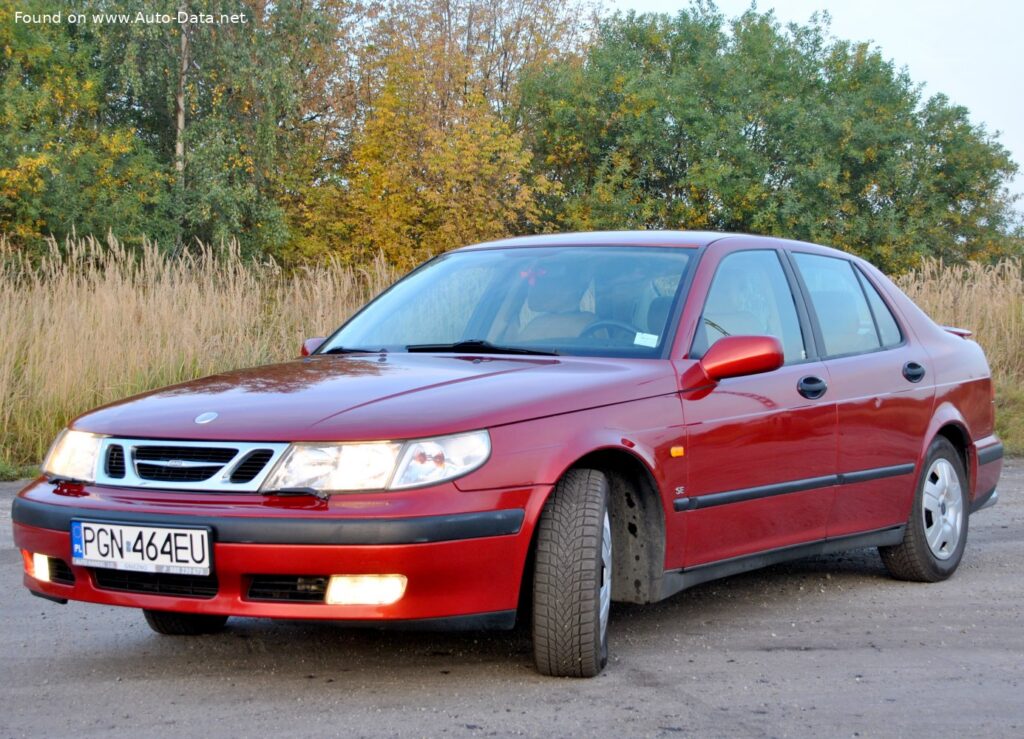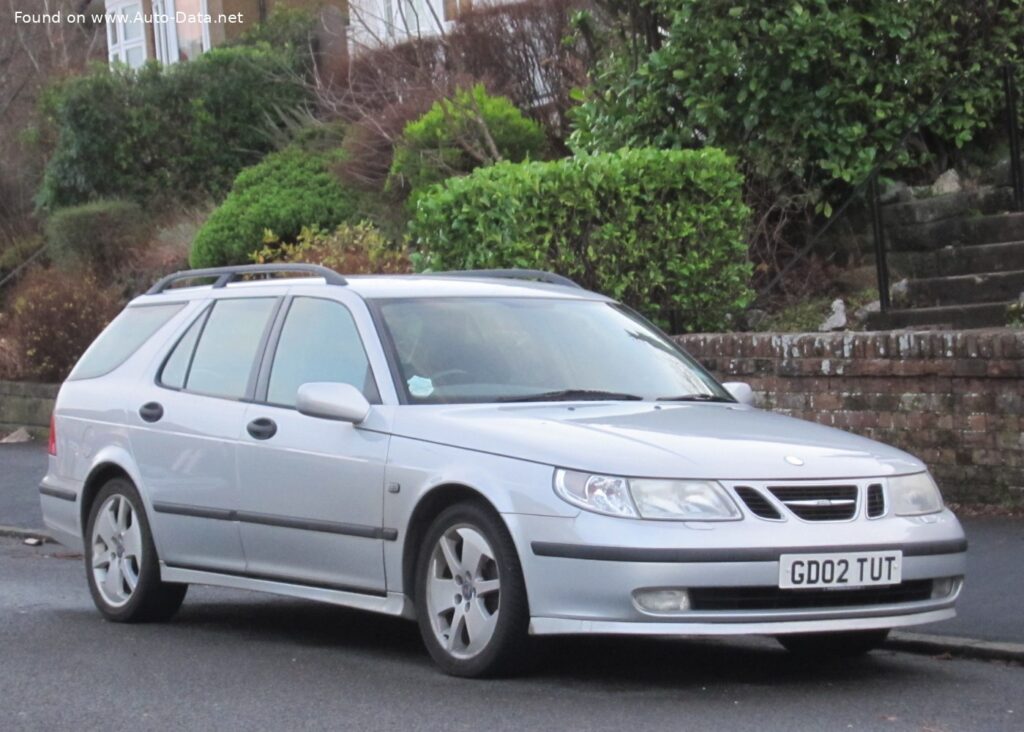
The Saab 9-5 Sport Combi (facelift 2001) represents a significant chapter in the history of the distinctive Swedish automaker, embodying Saab’s unique blend of avant-garde design, practical utility, and a strong emphasis on safety and turbocharged performance. This particular iteration, produced from 2001 to 2005, was a refreshed version of the first-generation 9-5, which initially debuted in 1997. Positioned as a premium executive car, the 9-5 Sport Combi competed in the highly contested European luxury station wagon segment, offering an alternative to more conventional German rivals with its individualistic styling and aviation-inspired engineering philosophy. While Saab had a dedicated following in the United States, this specific 3.0 TiD diesel variant was primarily targeted at European markets, where diesel powertrains held a substantial share of the passenger car segment due to their superior fuel economy and torque characteristics.
Engineering and Performance of the Saab 9-5 Sport Combi (facelift 2001)
At the heart of the 2001 Saab 9-5 Sport Combi 3.0 TiD lies a robust 3.0-liter V6 turbodiesel engine, designated with the internal code D308L. This powertrain was a testament to Saab’s commitment to offering diverse and efficient engine options, particularly for its European clientele. With a displacement of 2959 cubic centimeters (approximately 180.57 cubic inches), this V-engine configuration featured six cylinders and an overhead camshaft (OHC) valvetrain with four valves per cylinder, optimizing both airflow and combustion efficiency. The engine was equipped with a sophisticated common rail diesel fuel injection system, a cutting-edge technology for its era that allowed for precise fuel delivery and improved refinement, reducing the characteristic diesel clatter often associated with older indirect injection systems.
Further enhancing its performance and efficiency, the 3.0 TiD engine benefited from a turbocharger coupled with an intercooler. This combination significantly boosted the engine’s power output and torque delivery by compressing the intake air, allowing for more oxygen and thus a more potent combustion process. The intercooler, in turn, cooled the compressed air, increasing its density and preventing premature detonation, leading to a more consistent and reliable power curve. This setup allowed the engine to produce a respectable 176 horsepower at 4400 rpm, translating to a power-to-liter ratio of 59.5 Hp/l. More impressively for a diesel, it delivered a substantial 258.15 lb.-ft. of torque from a low 1800 rpm, which was crucial for effortless acceleration and strong pulling power, especially when the vehicle was fully loaded or towing.
The power was efficiently managed through a 5-speed manual transmission, driving the front wheels. This drivetrain architecture, combining a front-transverse engine layout with front-wheel drive, was typical for Saab and contributed to predictable handling and good traction in varied conditions. Performance figures for the 9-5 Sport Combi 3.0 TiD were competitive for its class, with an acceleration time from 0 to 60 mph recorded at a brisk 8.9 seconds. The vehicle could reach a maximum speed of 142.92 mph, showcasing its autobahn-cruising capabilities. Despite its performance, the diesel engine offered commendable fuel economy for a vehicle of its size and power. Official figures indicated an extra-urban consumption of 29 US mpg and an urban consumption of 23.5 US mpg, highlighting the inherent efficiency of diesel technology in the early 2000s. With a 18.49 US gallon fuel tank, the 9-5 Sport Combi offered a significant cruising range, making it an ideal choice for long-distance European travel.
Design and Features of the Saab 9-5 Sport Combi (facelift 2001)
The 2001 facelift brought subtle yet effective enhancements to the Saab 9-5 Sport Combi’s exterior and interior, maintaining its distinctive identity while modernizing its appeal. The Sport Combi, Saab’s designation for its station wagon (or estate) body style, was renowned for its sophisticated and aerodynamic silhouette. Unlike many of its contemporaries, Saab’s design language was less about overt aggression and more about understated elegance and functional aesthetics, heavily influenced by the brand’s aviation heritage. The facelift typically included revised front fascias, updated lighting signatures, and new wheel designs, all contributing to a fresher look without deviating from the established Saab aesthetic. The five-door, five-seat configuration underscored its practicality, offering ample space for passengers and cargo, a hallmark of the station wagon segment.
Inside, the 9-5 Sport Combi continued Saab’s tradition of ergonomic and driver-focused cabins. The dashboard layout, often described as “cockpit-like,” placed all essential controls within easy reach of the driver. Materials were generally of high quality, and the fit and finish were designed to withstand the rigors of daily use. While the 2001 model predates many of the advanced infotainment systems found in modern vehicles, it featured a comprehensive array of standard and optional amenities for its time. These would have included climate control, a premium audio system, and power-operated features. Saab was also a pioneer in vehicular safety, and the 9-5 Sport Combi was no exception. It came equipped with a robust safety cage, multiple airbags, and advanced seatbelt systems. The inclusion of ABS (Anti-lock Braking System) as standard was a critical safety feature, ensuring stable braking performance even under emergency conditions.
The practical nature of the Sport Combi body style was evident in its cargo capacity. With all five seats in place, the trunk offered a generous 14.66 cubic feet of space, sufficient for daily errands and luggage. When the rear seats were folded down, the cargo volume expanded dramatically to an impressive 52.62 cubic feet, transforming the vehicle into a highly versatile hauler capable of accommodating larger items. This flexibility, combined with its comfortable ride and performance, made the 9-5 Sport Combi a popular choice among European families and professionals who required both executive refinement and practical utility. The car’s dimensions, with a length of 189.29 inches, a width of 70.55 inches, and a wheelbase of 106.42 inches, provided a stable platform for both dynamic driving and passenger comfort, further enhanced by a well-tuned suspension system featuring spring struts at both the front and rear.
Technical Specifications
| Brand | Saab |
| Model | 9-5 Sport Combi (facelift 2001) |
| Type (Engine) | 3.0 TiD (176 Hp) |
| Start of Production | 2001 year |
| End of Production | 2005 year |
| Body Type | Station wagon (estate) |
| Seats | 5 |
| Doors | 5 |
| Fuel Type | Diesel |
| Fuel Consumption (Urban) | 23.5 US mpg |
| Fuel Consumption (Extra Urban) | 29 US mpg |
| Acceleration 0 – 60 mph | 8.9 sec |
| Maximum Speed | 142.92 mph |
| Power | 176 Hp @ 4400 rpm |
| Torque | 258.15 lb.-ft. @ 1800 rpm |
| Engine Layout | Front, Transverse |
| Engine Model/Code | D308L |
| Engine Displacement | 180.57 cu. in. (2959 cm3) |
| Number of Cylinders | 6 |
| Engine Configuration | V-engine |
| Cylinder Bore | 3.44 in. (87.5 mm) |
| Piston Stroke | 3.23 in. (82 mm) |
| Compression Ratio | 18:1 |
| Valves per Cylinder | 4 |
| Fuel Injection System | Diesel Commonrail |
| Engine Aspiration | Turbocharger, Intercooler |
| Valvetrain | OHC |
| Engine Oil Capacity | 7.71 US qt (7.3 l) |
| Coolant Capacity | 8.56 US qt (8.1 l) |
| Kerb Weight | 3670.7 lbs. (1665 kg) |
| Max. Weight | 4850.17 lbs. (2200 kg) |
| Max Load | 1179.47 lbs. (535 kg) |
| Trunk (boot) Space – Minimum | 14.66 cu. ft. (415 l) |
| Trunk (boot) Space – Maximum | 52.62 cu. ft. (1490 l) |
| Fuel Tank Capacity | 18.49 US gal (70 l) |
| Length | 189.29 in. (4808 mm) |
| Width | 70.55 in. (1792 mm) |
| Height | 58.94 in. (1497 mm) |
| Wheelbase | 106.42 in. (2703 mm) |
| Front Track | 59.92 in. (1522 mm) |
| Rear (Back) Track | 59.92 in. (1522 mm) |
| Drive Wheel | Front wheel drive |
| Number of Gears and Type of Gearbox | 5 gears, manual transmission |
| Front Suspension | Spring Strut |
| Rear Suspension | Spring Strut |
| Front Brakes | Ventilated discs |
| Rear Brakes | Disc |
| Assisting Systems | ABS (Anti-lock braking system) |
| Steering Type | Steering rack and pinion |
| Power Steering | Hydraulic Steering |
| Tires Size | 215/55 R16 |
| Wheel Rims Size | 16 inch |