
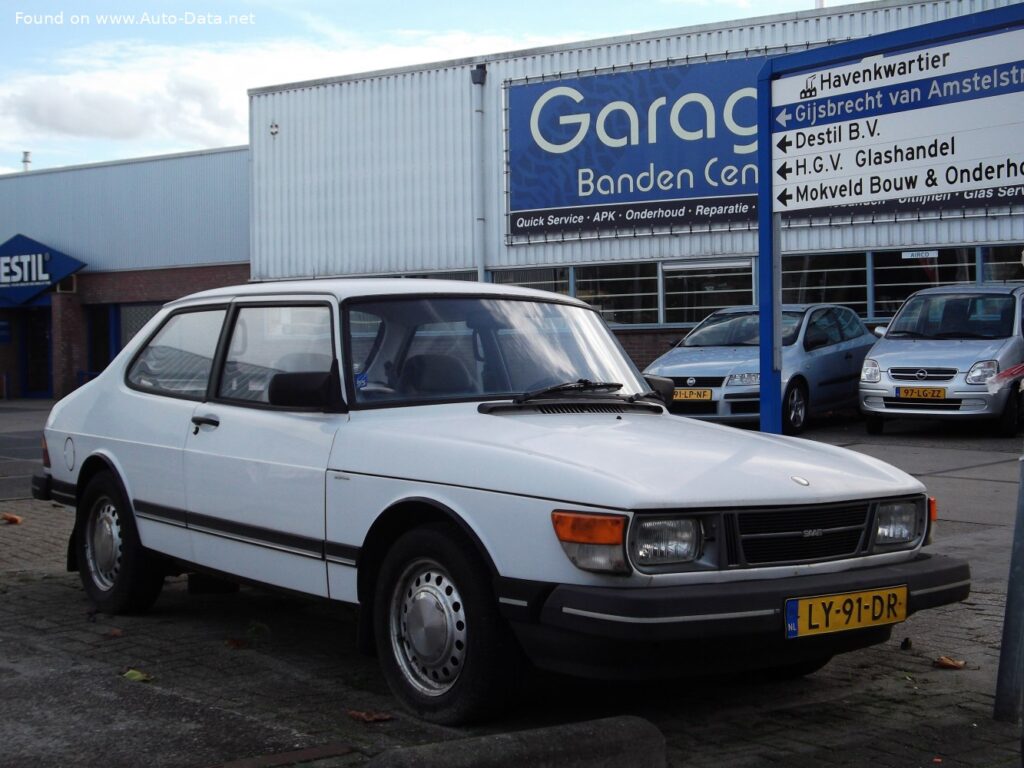
The Saab 90 was a compact sedan produced by the Swedish manufacturer Saab between 1984 and 1987. Positioned as an entry-level model, the 90 aimed to broaden Saab’s appeal beyond its traditionally more expensive and technologically advanced offerings. While not widely exported to the United States, the 90 was significant in the European market as a more affordable and practical alternative within the premium compact segment. It represented a shift towards greater cost-effectiveness for Saab, utilizing a simpler design and powertrain compared to its 900 series counterpart. The 90’s relatively short production run and limited market presence contribute to its status as a somewhat obscure, yet interesting, chapter in Saab’s history.
Saab 90 2.0: Overview and Market Position
The Saab 90, powered by a 2.0-liter engine producing 100 horsepower, occupied a unique space in the early-to-mid 1980s automotive landscape. It was designed to compete with mainstream European sedans like the Ford Escort and Opel Kadett, but with the added benefit of Saab’s reputation for safety and quirky design. The car was primarily sold in Europe, where its compact size and fuel efficiency were well-suited to the prevailing market conditions. Unlike the more complex and often turbocharged Saab 900, the 90 offered a simpler, more conventional driving experience. This focus on practicality and affordability was a deliberate strategy by Saab to attract a wider customer base.
Engine & Performance
At the heart of the Saab 90 2.0 lay the B201, a 1.985-liter inline-four cylinder engine. This naturally aspirated engine produced 100 horsepower at 5200 rpm and 161 Nm (118.75 lb.-ft.) of torque at 3500 rpm. While not a performance powerhouse, the engine provided adequate power for everyday driving. The power-to-weight ratio of 104.7 Hp/tonne and torque-to-weight ratio of 168.6 Nm/tonne contributed to a reasonably responsive driving experience, especially considering the car’s modest weight of 955 kg (2105.41 lbs.). The engine featured a carburettor fuel injection system and a double overhead camshaft (DOHC) valvetrain with two valves per cylinder. The engine’s 9.2:1 compression ratio was typical for the era. The B201 engine, while not particularly innovative, was known for its reliability and ease of maintenance. It was paired with a four-speed manual transmission, delivering power to the front wheels.
Design & Features
The Saab 90 featured a traditional two-door sedan body style, offering seating for five passengers. Its design, while functional, was relatively understated compared to the more distinctive styling of the Saab 900. The car’s exterior was characterized by clean lines and a practical, no-nonsense aesthetic. Inside, the 90 offered a simple and functional interior, prioritizing practicality over luxury. Safety was a key consideration in Saab’s design philosophy, and the 90 included features such as disc brakes on all four wheels, which were relatively advanced for a car in its class during the 1980s. The car’s dimensions – 4344 mm (171.02 in.) in length, 1675 mm (65.94 in.) in width, and 1429 mm (56.26 in.) in height – positioned it squarely within the compact sedan segment. The 46.8-liter (12.36 US gal) fuel tank provided a reasonable driving range. The 90’s tires were sized 155/80 R15, mounted on 4.5J x 15 steel wheels.
Technical Specifications
| Brand | Saab |
| Model | 90 |
| Generation | 90 |
| Type (Engine) | 2.0 (100 Hp) |
| Start of production | 1984 |
| End of production | 1987 |
| Powertrain Architecture | Internal Combustion engine |
| Body type | Sedan |
| Seats | 5 |
| Doors | 2 |
| Fuel Type | Petrol (Gasoline) |
| Weight-to-power ratio | 9.6 kg/Hp, 104.7 Hp/tonne |
| Weight-to-torque ratio | 5.9 kg/Nm, 168.6 Nm/tonne |
| Power | 100 Hp @ 5200 rpm |
| Power per litre | 50.4 Hp/l |
| Torque | 161 Nm @ 3500 rpm / 118.75 lb.-ft. @ 3500 rpm |
| Engine layout | Front, Transverse |
| Engine Model/Code | B201 |
| Engine displacement | 1985 cm3 / 121.13 cu. in. |
| Number of cylinders | 4 |
| Engine configuration | Inline |
| Cylinder Bore | 90 mm / 3.54 in. |
| Piston Stroke | 78 mm / 3.07 in. |
| Compression ratio | 9.2:1 |
| Number of valves per cylinder | 2 |
| Fuel injection system | Carburettor |
| Engine aspiration | Naturally aspirated engine |
| Valvetrain | DOHC |
| Engine oil capacity | 3.8 l / 4.02 US qt | 3.34 UK qt |
| Kerb Weight | 955 kg / 2105.41 lbs |
| Fuel tank capacity | 46.8 l / 12.36 US gal | 10.29 UK gal |
| Length | 4344 mm / 171.02 in. |
| Width | 1675 mm / 65.94 in. |
| Height | 1429 mm / 56.26 in. |
| Drivetrain Architecture | The Internal combustion engine (ICE) drives the front wheels of the vehicle. |
| Drive wheel | Front wheel drive |
| Number of gears and type of gearbox | 4 gears, manual transmission |
| Front brakes | Disc |
| Rear brakes | Disc |
| Tires size | 155/80 R15 |
| Wheel rims size | 4.5J x 15 |
The Saab 90, though a relatively short-lived model, represents an important step in Saab’s history. It demonstrated the company’s willingness to adapt to changing market demands and offer a more affordable alternative to its established lineup. While it may not have achieved widespread recognition, the 90 remains a fondly remembered car among Saab enthusiasts, appreciated for its simplicity, practicality, and the inherent qualities that defined the Saab brand.
