
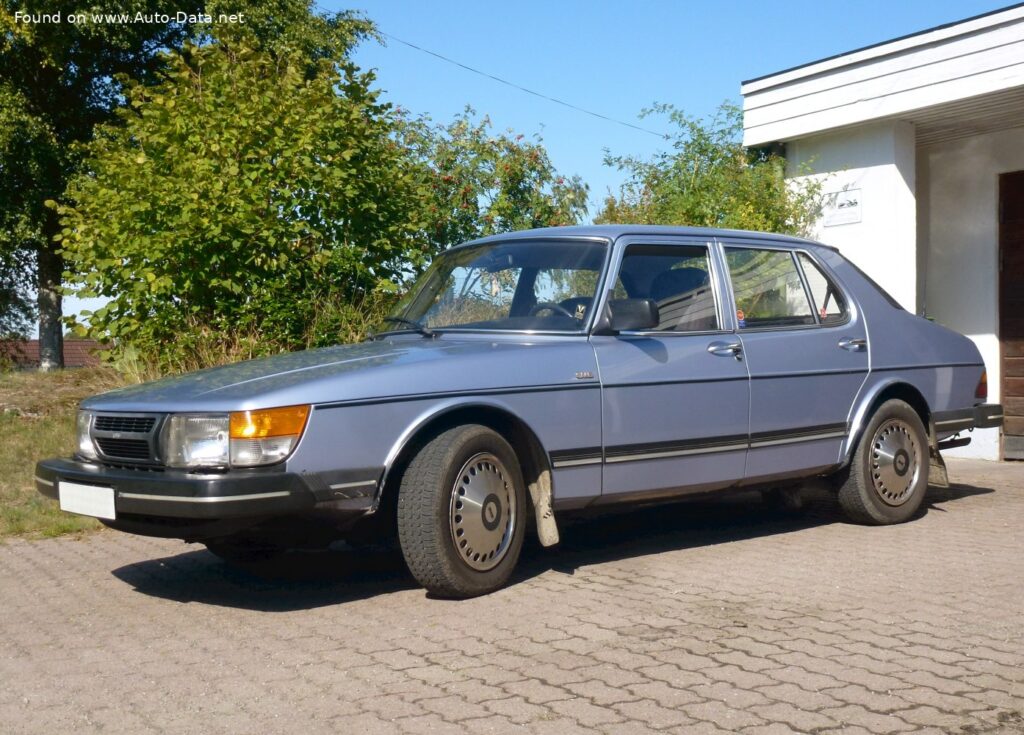
The Saab 900 I 2.0 EMS, produced between 1978 and 1980, represents the initial iteration of Saab’s hugely successful and influential compact car. This model, a four-door sedan, was a pivotal vehicle for Saab, establishing many of the design and engineering philosophies that would define the brand for decades. The 900 was designed to replace the Saab 96, offering a more modern and spacious package while retaining the quirky character and focus on driver safety that Saab was becoming known for. Initially sold primarily in Europe, the 900 I laid the groundwork for Saab’s eventual, albeit limited, entry into the North American market.
The Saab 900 I 2.0 EMS: A Legacy of Innovation
The first generation Saab 900, designated the 900 I, was a significant departure from its predecessor. While the 96 was based on a pre-war design, the 900 featured a completely new platform, offering improved comfort, handling, and safety. The “EMS” designation refers to the Bosch electronic fuel injection system, a relatively advanced feature for the time, contributing to improved performance and fuel efficiency compared to earlier carbureted models. The 900 I quickly gained a reputation for its robust build quality, distinctive styling, and a loyal following among enthusiasts who appreciated its unique character.
Engine & Performance
The heart of the Saab 900 I 2.0 EMS is a 1.985-liter (121.13 cubic inches) inline-four cylinder engine. This naturally aspirated engine, identified by the code BI 20, produces 118 horsepower at 5500 rpm and 167 Nm (123.17 lb.-ft.) of torque at 3700 rpm. The engine features a dual overhead camshaft (DOHC) valvetrain with two valves per cylinder. Power is delivered to the front wheels via a four-speed manual transmission. The 900 I’s front-wheel-drive configuration, while not uncommon today, was still relatively novel in the late 1970s, contributing to its distinctive handling characteristics. The car achieves a maximum speed of 169 km/h (105.01 mph). The weight-to-power ratio is 9.9 kg/Hp, and the weight-to-torque ratio is 7 kg/Nm. The engine’s power per liter is a respectable 59.4 Hp/l for the era.
Design & Features
The Saab 900 I’s design was instantly recognizable, characterized by its aerodynamic shape and distinctive front grille. The body style is a traditional four-door sedan, offering seating for five passengers. Safety was a paramount concern for Saab, and the 900 I incorporated several features designed to protect occupants. These included a reinforced safety cage, energy-absorbing crumple zones, and a column-mounted gear lever (intended to reduce knee injuries in a collision). The interior was functional and driver-focused, with a clear instrument panel and comfortable seating. While not lavishly equipped by modern standards, the 900 I offered features such as a heater, ventilation system, and basic instrumentation. The car’s relatively large fuel tank, with a capacity of 58 liters (15.32 US gallons), provided a reasonable driving range. The 185/65 R15 tires, mounted on 15-inch wheels, provided adequate grip and ride comfort for the time.
Technical Specifications
| Brand | Saab |
| Model | 900 |
| Generation | 900 I |
| Type (Engine) | 2.0 EMS (118 Hp) |
| Start of production | 1978 |
| End of production | 1980 |
| Powertrain Architecture | Internal Combustion engine |
| Body type | Sedan |
| Seats | 5 |
| Doors | 4 |
| Fuel Type | Petrol (Gasoline) |
| Maximum speed | 169 km/h (105.01 mph) |
| Weight-to-power ratio | 9.9 kg/Hp |
| Weight-to-torque ratio | 7 kg/Nm |
| Power | 118 Hp @ 5500 rpm |
| Power per litre | 59.4 Hp/l |
| Torque | 167 Nm @ 3700 rpm (123.17 lb.-ft. @ 3700 rpm) |
| Engine layout | Front, Transverse |
| Engine Model/Code | BI 20 |
| Engine displacement | 1985 cm3 (121.13 cu. in.) |
| Number of cylinders | 4 |
| Engine configuration | Inline |
| Cylinder Bore | 90 mm (3.54 in.) |
| Piston Stroke | 78 mm (3.07 in.) |
| Compression ratio | 9.2:1 |
| Number of valves per cylinder | 2 |
| Fuel injection system | Carburettor |
| Engine aspiration | Naturally aspirated engine |
| Valvetrain | DOHC |
| Engine oil capacity | 3.8 l (4.02 US qt | 3.34 UK qt) |
| Coolant | 10 l (10.57 US qt | 8.8 UK qt) |
| Kerb Weight | 1174 kg (2588.23 lbs.) |
| Fuel tank capacity | 58 l (15.32 US gal | 12.76 UK gal) |
| Length | 4941 mm (194.53 in.) |
| Width | 1690 mm (66.54 in.) |
| Height | 1422 mm (55.98 in.) |
| Wheelbase | 2525 mm (99.41 in.) |
| Front track | 1420 mm (55.91 in.) |
| Rear (Back) track | 1430 mm (56.3 in.) |
| Drivetrain Architecture | The Internal combustion engine (ICE) drives the front wheels of the vehicle. |
| Drive wheel | Front wheel drive |
| Number of gears and type of gearbox | 4 gears, manual transmission |
| Tires size | 185/65 R15 92 V |
| Wheel rims size | 15 |
The Saab 900 I 2.0 EMS, while a product of its time, established Saab as a manufacturer of innovative and thoughtfully designed automobiles. Its blend of practicality, safety, and distinctive styling ensured its success and paved the way for the continued evolution of the 900 model line, which would remain in production, with numerous updates and revisions, for over a decade.
