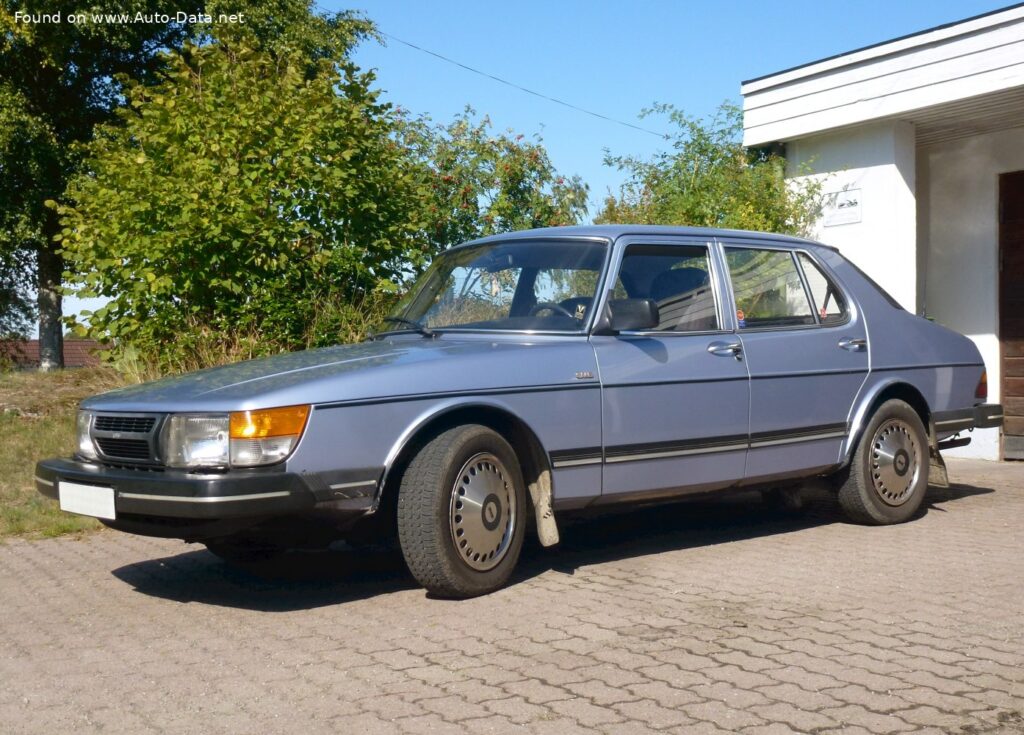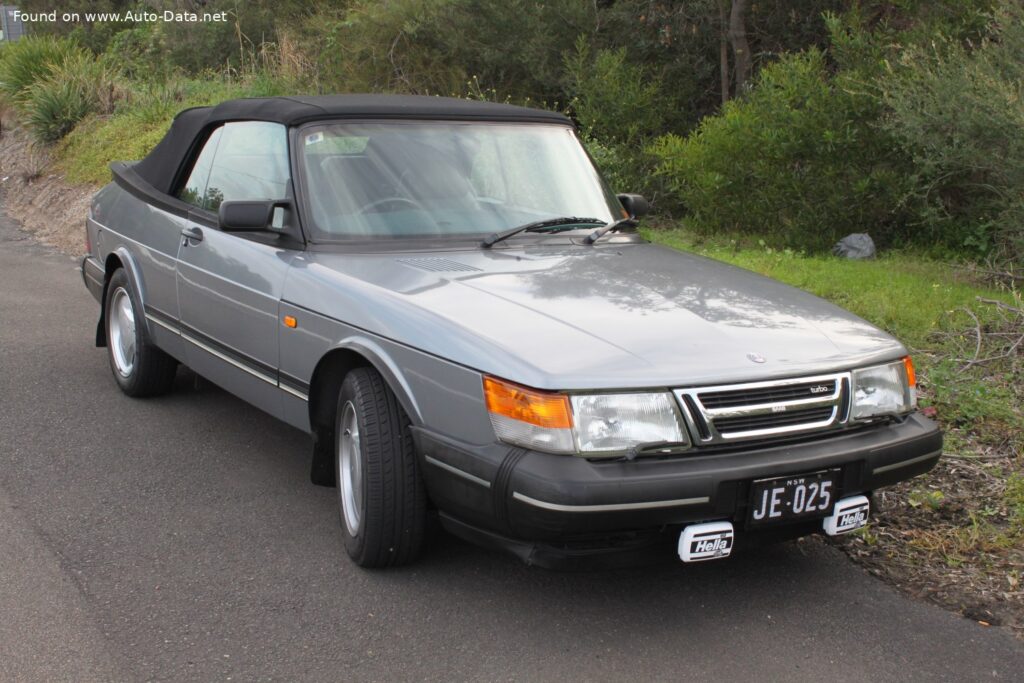
The Saab 900 I Cabriolet 2.0 i 16V Turbo, produced between 1990 and 1993, represents a significant chapter in Saab’s history, particularly as an early foray into the premium open-top market. Building upon the success of the original 900 series, the Cabriolet offered a unique blend of Scandinavian design, turbocharged performance, and a focus on driver enjoyment. While not officially sold in large numbers in the United States during its initial production run, the 900 gained a dedicated following among enthusiasts who appreciated its distinctive character and engineering. The Cabriolet specifically aimed to capitalize on the growing demand for stylish and practical convertibles, offering a more refined alternative to some of its competitors.
The Saab 900 I Cabriolet: A Legacy of Innovation
The first-generation Saab 900, launched in 1978, established a reputation for safety, reliability, and a somewhat unconventional approach to automotive design. The Cabriolet version, introduced later in the model cycle, extended this ethos to the convertible segment. Saab’s commitment to aerodynamic efficiency and driver-focused ergonomics were central to the 900’s appeal. The 2.0 i 16V Turbo variant, with its 141 horsepower engine, represented a performance-oriented option within the Cabriolet range, offering a spirited driving experience. The Cabriolet was initially developed in cooperation with coachbuilder Bertone, highlighting Saab’s willingness to collaborate to bring innovative designs to market.
Engine & Performance
The heart of the Saab 900 I Cabriolet 2.0 i 16V Turbo is its 1985 cc (121.13 cu. in.) inline-four cylinder engine. This engine, designated the B202i, features a turbocharger and multi-port fuel injection, producing 141 horsepower at 5600 rpm and 202 Nm (148.99 lb.-ft.) of torque at 3800 rpm. The turbocharger significantly enhances performance, providing a noticeable boost in power and responsiveness. Power per liter is a respectable 71 hp/l. The engine is transversely mounted at the front of the vehicle, driving the front wheels. Power is delivered through a 3-speed automatic transmission. Acceleration from 0 to 100 km/h (0-62 mph) takes approximately 13 seconds, while 0 to 60 mph is achieved in around 12.4 seconds. The top speed is rated at 185 km/h (114.95 mph). The weight-to-power ratio of 8.4 kg/Hp and weight-to-torque ratio of 5.9 kg/Nm contribute to a reasonably engaging driving experience, despite the automatic transmission.
Design & Features
The Saab 900 I Cabriolet is a two-door, four-seater convertible. Its design is characterized by clean lines, a relatively high waistline, and a distinctive wrap-around windshield. The Cabriolet’s soft top provides open-air driving enjoyment, while also offering reasonable weather protection. The interior is functional and ergonomically designed, reflecting Saab’s commitment to driver comfort. Safety features, while limited by the standards of the early 1990s, included an Anti-lock Braking System (ABS). The trunk offers a surprisingly generous amount of space, ranging from 650 liters (22.95 cu. ft.) with the top up to 1500 liters (52.97 cu. ft.) with the top down. The hydraulic power steering provides ease of maneuverability, and the suspension – featuring wishbone front suspension and coil springs in the rear – aims to balance ride comfort with handling stability. The car rides on 15-inch wheels with 185/65 R15 tires.
Technical Specifications
| Brand | Saab |
| Model | 900 |
| Generation | 900 I Cabriolet |
| Type (Engine) | 2.0 i 16V Turbo (141 Hp) Automatic |
| Start of production | 1990 |
| End of production | 1993 |
| Powertrain Architecture | Internal Combustion engine |
| Body type | Cabriolet |
| Seats | 4 |
| Doors | 2 |
| Fuel consumption (urban) | 13.1 l/100 km (18 US mpg, 21.6 UK mpg, 7.6 km/l) |
| Fuel consumption (extra urban) | 8.7 l/100 km (27 US mpg, 32.5 UK mpg, 11.5 km/l) |
| Fuel consumption (combined) | 11.8 l/100 km (19.9 US mpg, 23.9 UK mpg, 8.5 km/l) |
| Fuel Type | Petrol (Gasoline) |
| Acceleration 0 – 100 km/h | 13 sec |
| Acceleration 0 – 62 mph | 13 sec |
| Acceleration 0 – 60 mph | 12.4 sec |
| Maximum speed | 185 km/h (114.95 mph) |
| Weight-to-power ratio | 8.4 kg/Hp |
| Weight-to-torque ratio | 5.9 kg/Nm |
| Power | 141 Hp @ 5600 rpm |
| Power per litre | 71 Hp/l |
| Torque | 202 Nm @ 3800 rpm (148.99 lb.-ft. @ 3800 rpm) |
| Engine layout | Front, Transverse |
| Engine Model/Code | B202i |
| Engine displacement | 1985 cm3 (121.13 cu. in.) |
| Number of cylinders | 4 |
| Engine configuration | Inline |
| Cylinder Bore | 90 mm (3.54 in.) |
| Piston Stroke | 78 mm (3.07 in.) |
| Compression ratio | 9:1 |
| Number of valves per cylinder | 4 |
| Fuel injection system | Multi-port manifold injection |
| Engine aspiration | Turbocharger |
| Engine oil capacity | 4 l (4.23 US qt | 3.52 UK qt) |
| Coolant | 10 l (10.57 US qt | 8.8 UK qt) |
| Kerb Weight | 1190 kg (2623.5 lbs.) |
| Trunk (boot) space – minimum | 650 l (22.95 cu. ft.) |
| Trunk (boot) space – maximum | 1500 l (52.97 cu. ft.) |
| Fuel tank capacity | 63 l (16.64 US gal | 13.86 UK gal) |
| Length | 4680 mm (184.25 in.) |
| Width | 1690 mm (66.54 in.) |
| Height | 1420 mm (55.91 in.) |
| Wheelbase | 2515 mm (99.02 in.) |
| Front track | 1430 mm (56.3 in.) |
| Rear (Back) track | 1440 mm (56.69 in.) |
| Drivetrain Architecture | Front wheel drive |
| Number of gears and type of gearbox | 3 gears, automatic transmission |
| Front suspension | Wishbone |
| Rear suspension | Coil spring |
| Front brakes | Ventilated discs |
| Rear brakes | Disc |
| Assisting systems | ABS (Anti-lock braking system) |
| Steering type | Steering rack and pinion |
| Power steering | Hydraulic Steering |
| Tires size | 185/65 R15 |
| Wheel rims size | 15 |
The Saab 900 I Cabriolet 2.0 i 16V Turbo remains a desirable classic car, appreciated for its unique character, turbocharged performance, and Scandinavian design. It represents a pivotal moment in Saab’s history, demonstrating the brand’s ability to innovate and offer compelling alternatives in the competitive automotive market.