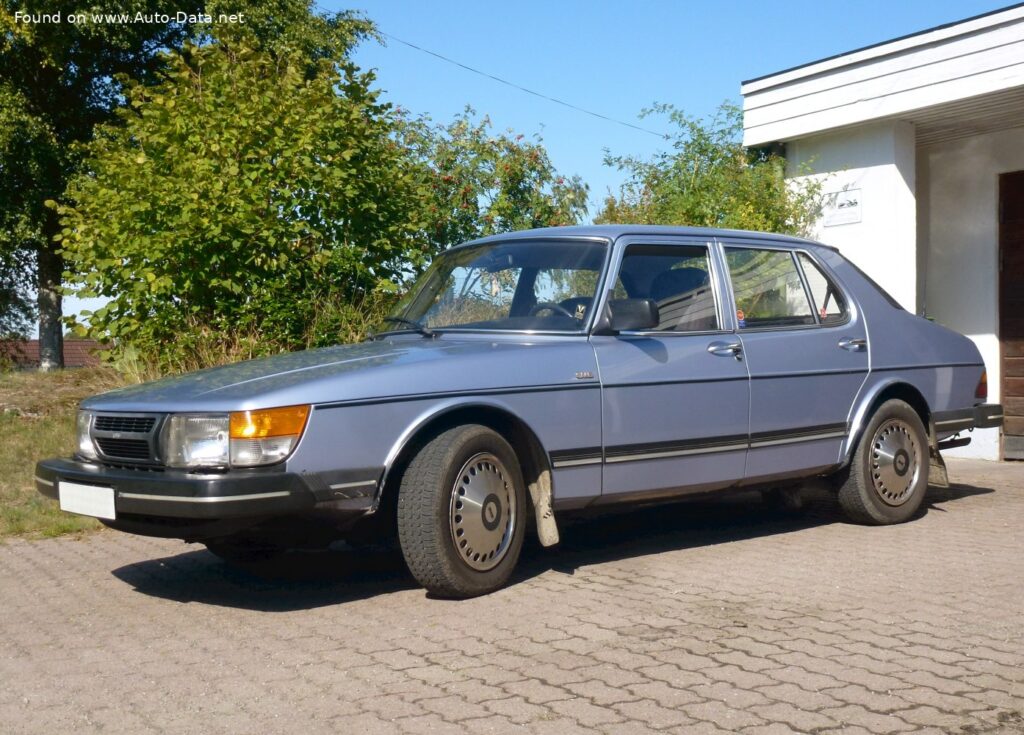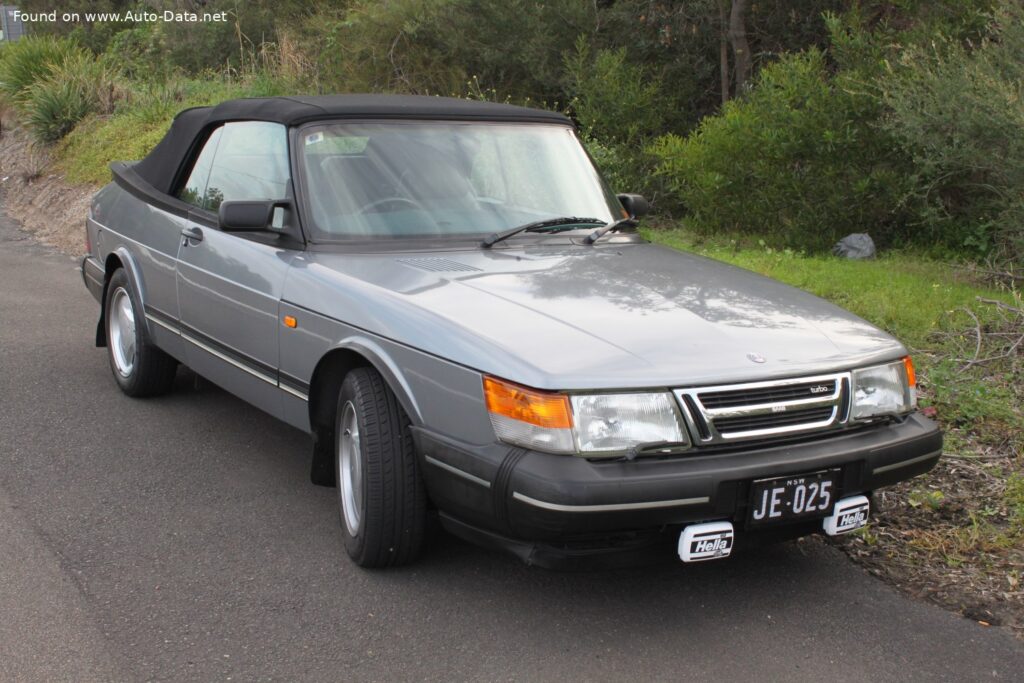
The Saab 900 I Cabriolet 2.0i 16V, produced between 1990 and 1994, represents a significant chapter in Saab’s history, particularly as an open-top offering. Building upon the success of the original Saab 900, the Cabriolet version broadened the model’s appeal, offering a stylish and practical alternative in the compact car segment. While Saab was a Swedish manufacturer, the 900 found a niche following in the United States, appreciated for its unique design, robust engineering, and a loyal customer base. This generation of the 900 Cabriolet was a key player in establishing Saab’s reputation for innovative and somewhat unconventional automobiles.
The Saab 900 I Cabriolet: A Legacy of Scandinavian Design
The 900 I Cabriolet was the first open-top version of the 900, launched to compete with other European convertibles. It quickly became a popular choice for drivers seeking a blend of practicality and open-air enjoyment. The Cabriolet distinguished itself with its distinctive styling, characterized by clean lines and a focus on aerodynamic efficiency. The car’s design prioritized both form and function, reflecting Saab’s commitment to user-centric engineering. The 900 Cabriolet wasn’t just about aesthetics; it was designed to be a comfortable and reliable vehicle for everyday use.
Engine & Performance
The 900 I Cabriolet 2.0i 16V was powered by a 2.0-liter inline-four cylinder engine, designated the B202. This engine produced 126 horsepower at 6000 rpm and 170 Nm (125.39 lb.-ft.) of torque at 3000 rpm. The engine featured multi-port fuel injection and a 10:1 compression ratio, contributing to its relatively efficient operation. Power was delivered to the front wheels via a three-speed automatic transmission. While not a performance car in the modern sense, the 900 Cabriolet offered adequate acceleration, achieving 0-60 mph in approximately 13.3 seconds and a top speed of 105.63 mph (170 km/h). The weight-to-power ratio of 9.5 kg/Hp and a weight-to-torque ratio of 7.1 kg/Nm provided a reasonable driving experience for its time. Fuel economy figures were 21.2 US mpg combined (11.1 l/100 km), with 27.4 US mpg on the highway (8.6 l/100 km) and 18.4 US mpg in the city (12.8 l/100 km).
Design & Features
The Saab 900 I Cabriolet is a two-door, four-seater convertible. Its body style was a key selling point, offering the freedom of open-air driving without sacrificing practicality. The convertible top was manually operated, adding to the driver’s engagement with the vehicle. Inside, the 900 Cabriolet offered a comfortable and functional cabin, typical of Saab’s design philosophy. Safety features for the era included an Anti-lock Braking System (ABS), which was becoming increasingly common in European vehicles. The trunk offered a surprisingly generous amount of space, ranging from 22.95 to 52.97 cubic feet with the rear seats folded down. The car’s dimensions were 184.25 inches in length, 66.54 inches in width, and 55.91 inches in height, with a wheelbase of 99.02 inches. The kerb weight of the vehicle was 2645.55 lbs (1200 kg), increasing to a maximum weight of 3615.58 lbs (1640 kg).
Technical Specifications
| Brand | Saab |
| Model | 900 |
| Generation | 900 I Cabriolet |
| Type (Engine) | 2.0i 16V (126 Hp) Automatic |
| Start of production | 1990 |
| End of production | 1994 |
| Powertrain Architecture | Internal Combustion engine |
| Body type | Cabriolet |
| Seats | 4 |
| Doors | 2 |
| Fuel consumption (urban) | 12.8 l/100 km (18.4 US mpg, 22.1 UK mpg, 7.8 km/l) |
| Fuel consumption (extra urban) | 8.6 l/100 km (27.4 US mpg, 32.8 UK mpg, 11.6 km/l) |
| Fuel consumption (combined) | 11.1 l/100 km (21.2 US mpg, 25.4 UK mpg, 9 km/l) |
| Fuel Type | Petrol (Gasoline) |
| Acceleration 0 – 100 km/h | 14 sec |
| Acceleration 0 – 62 mph | 14 sec |
| Acceleration 0 – 60 mph | 13.3 sec |
| Maximum speed | 170 km/h (105.63 mph) |
| Weight-to-power ratio | 9.5 kg/Hp |
| Weight-to-torque ratio | 7.1 kg/Nm |
| Power | 126 Hp @ 6000 rpm |
| Power per litre | 63.5 Hp/l |
| Torque | 170 Nm @ 3000 rpm (125.39 lb.-ft. @ 3000 rpm) |
| Engine layout | Front, Transverse |
| Engine Model/Code | B202 |
| Engine displacement | 1985 cm3 (121.13 cu. in.) |
| Number of cylinders | 4 |
| Engine configuration | Inline |
| Cylinder Bore | 90 mm (3.54 in.) |
| Piston Stroke | 78 mm (3.07 in.) |
| Compression ratio | 10:1 |
| Number of valves per cylinder | 4 |
| Fuel injection system | Multi-port manifold injection |
| Engine aspiration | Naturally aspirated engine |
| Engine oil capacity | 4 l (4.23 US qt | 3.52 UK qt) |
| Coolant | 10 l (10.57 US qt | 8.8 UK qt) |
| Kerb Weight | 1200 kg (2645.55 lbs.) |
| Max. weight | 1640 kg (3615.58 lbs.) |
| Max load | 440 kg (970.03 lbs.) |
| Trunk (boot) space – minimum | 650 l (22.95 cu. ft.) |
| Trunk (boot) space – maximum | 1500 l (52.97 cu. ft.) |
| Fuel tank capacity | 63 l (16.64 US gal | 13.86 UK gal) |
| Length | 4680 mm (184.25 in.) |
| Width | 1690 mm (66.54 in.) |
| Height | 1420 mm (55.91 in.) |
| Wheelbase | 2515 mm (99.02 in.) |
| Front track | 1430 mm (56.3 in.) |
| Rear (Back) track | 1440 mm (56.69 in.) |
| Drivetrain Architecture | Front wheel drive |
| Number of gears and type of gearbox | 3 gears, automatic transmission |
| Front suspension | Wishbone |
| Rear suspension | Coil spring |
| Front brakes | Ventilated discs |
| Rear brakes | Disc |
| Assisting systems | ABS (Anti-lock braking system) |
| Steering type | Steering rack and pinion |
| Power steering | Hydraulic Steering |
| Tires size | 185/65 TR15 |
| Wheel rims size | 15 |
The Saab 900 I Cabriolet 2.0i 16V remains a cherished classic, representing a unique blend of Scandinavian design, engineering, and a touch of individuality. Its enduring appeal lies in its ability to offer a distinctive driving experience and a connection to a brand known for its innovative spirit.