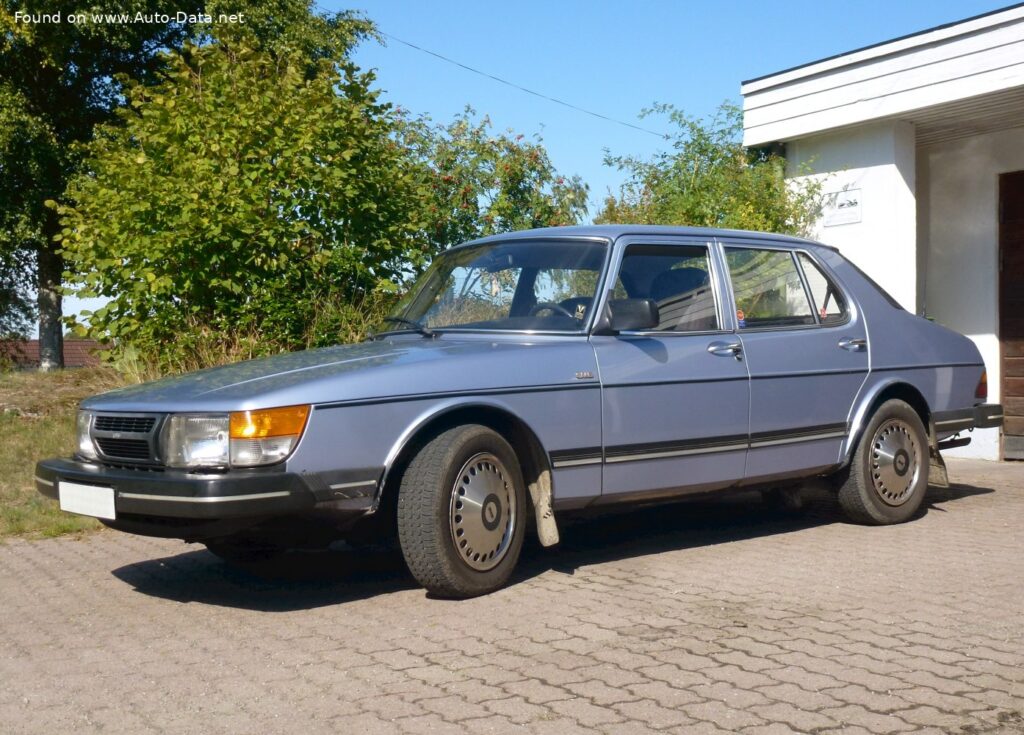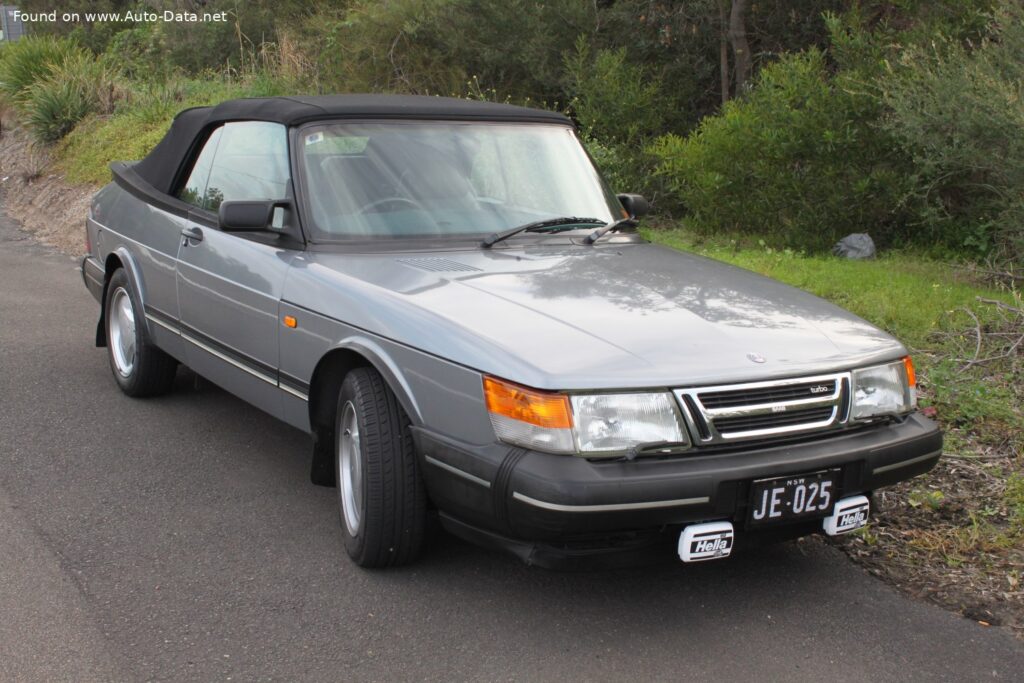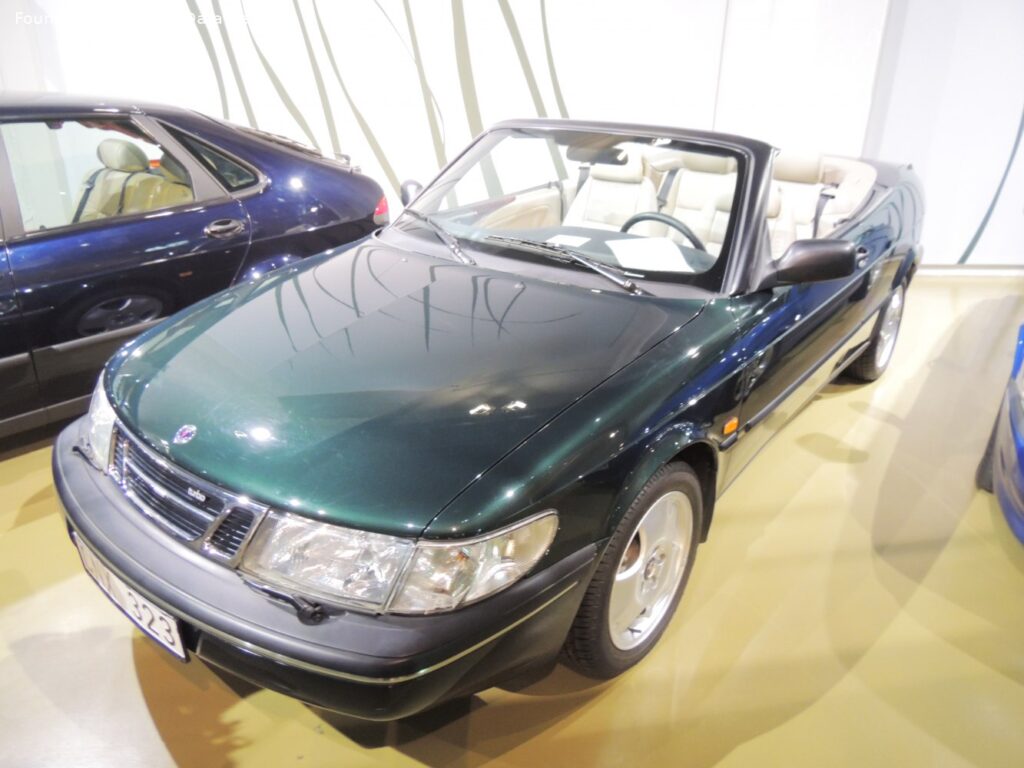
The Saab 900 II Cabriolet 2.0 16V Turbo, produced between 1993 and 1998, represents a significant evolution of the original Saab 900. This open-top variant of the 900 series was a key model for Saab, particularly in European markets, offering a blend of Scandinavian design, turbocharged performance, and a distinctive driving experience. While Saab never achieved the same sales volume as mainstream manufacturers, the 900 Cabriolet cultivated a loyal following attracted to its individuality and engineering. The 2.0 16V Turbo engine provided a substantial power upgrade over earlier models, enhancing both acceleration and cruising ability.
Saab 900 II Cabriolet: A Legacy of Innovation
The 900 II, launched in 1993, was a comprehensive redesign of the original 900, which had been in production since 1978. While retaining the core Saab values of safety and practicality, the 900 II incorporated modern engineering and styling cues. The Cabriolet version, introduced alongside the coupe and sedan, capitalized on the growing demand for open-top motoring. It distinguished itself with a robust, well-engineered convertible top mechanism and a focus on maintaining structural rigidity. The 2.0 16V Turbo model, with its 185 horsepower output, was positioned as the performance-oriented choice within the Cabriolet range.
Engine & Performance
The heart of the Saab 900 II Cabriolet 2.0 16V Turbo is its 1985 cc (121.13 cu. in.) inline-four cylinder engine, designated the B206i. This engine features a sophisticated 16-valve dual overhead camshaft (DOHC) valvetrain and, crucially, a turbocharger with multi-port fuel injection. This combination allows the engine to produce 185 horsepower at 5500 rpm and 263 Nm (193.98 lb.-ft.) of torque at 2100 rpm. The turbocharger significantly enhances low-end torque, providing responsive acceleration. Power per liter is an impressive 93.2 hp/l. The engine is transversely mounted at the front of the vehicle, driving the front wheels through a five-speed manual transmission. Performance figures include a 0-100 km/h (0-62 mph) time of 8.5 seconds and a 0-60 mph time of 8.1 seconds, with a maximum speed of 230 km/h (142.92 mph). The weight-to-power ratio of 7.5 kg/Hp and weight-to-torque ratio of 5.3 kg/Nm contribute to a lively driving experience.
Design & Features
The Saab 900 II Cabriolet is a two-door, four-seater convertible. Its design is characterized by clean lines, a sloping roofline when the top is up, and a relatively long wheelbase. The Cabriolet’s convertible top is a multi-layered construction designed for both weather protection and noise insulation. Safety was a key consideration in the design of the 900 II, and the Cabriolet incorporates reinforced A-pillars and a robust chassis structure to maintain rigidity after the roof is lowered. Standard features included power steering, ventilated front disc brakes, and anti-lock braking system (ABS). The interior is functional and ergonomically designed, reflecting Saab’s commitment to driver comfort. Trunk space ranges from 295 liters (10.42 cu. ft.) to 378 liters (13.35 cu. ft.) depending on the position of the convertible top. The vehicle’s dimensions are: length 4637 mm (182.56 in.), width 1711 mm (67.36 in.), and height 1435 mm (56.5 in.).
Technical Specifications
| Brand | Saab |
| Model | 900 |
| Generation | 900 II Cabriolet |
| Type (Engine) | 2.0 16V Turbo (185 Hp) |
| Start of production | 1993 |
| End of production | 1998 |
| Powertrain Architecture | Internal Combustion engine |
| Body type | Cabriolet |
| Seats | 4 |
| Doors | 2 |
| Fuel consumption (combined) | 8.5 l/100 km |
| Fuel consumption (US mpg) | 27.7 US mpg |
| Fuel consumption (UK mpg) | 33.2 UK mpg |
| Fuel consumption (km/l) | 11.8 km/l |
| Fuel Type | Petrol (Gasoline) |
| Acceleration 0 – 100 km/h | 8.5 sec |
| Acceleration 0 – 62 mph | 8.5 sec |
| Acceleration 0 – 60 mph | 8.1 sec |
| Maximum speed | 230 km/h (142.92 mph) |
| Weight-to-power ratio | 7.5 kg/Hp |
| Weight-to-torque ratio | 5.3 kg/Nm |
| Power | 185 Hp @ 5500 rpm |
| Power per litre | 93.2 Hp/l |
| Torque | 263 Nm @ 2100 rpm (193.98 lb.-ft. @ 2100 rpm) |
| Engine layout | Front, Transverse |
| Engine Model/Code | B206i |
| Engine displacement | 1985 cm3 (121.13 cu. in.) |
| Number of cylinders | 4 |
| Engine configuration | Inline |
| Cylinder Bore | 90 mm (3.54 in.) |
| Piston Stroke | 78 mm (3.07 in.) |
| Compression ratio | 9.2:1 |
| Number of valves per cylinder | 4 |
| Fuel injection system | Multi-port manifold injection |
| Engine aspiration | Turbocharger |
| Valvetrain | DOHC |
| Engine oil capacity | 5 l (5.28 US qt | 4.4 UK qt) |
| Coolant capacity | 8.5 l (8.98 US qt | 7.48 UK qt) |
| Kerb Weight | 1390 kg (3064.43 lbs.) |
| Max. weight | 1800 kg (3968.32 lbs.) |
| Max load | 410 kg (903.9 lbs.) |
| Trunk (boot) space – minimum | 295 l (10.42 cu. ft.) |
| Trunk (boot) space – maximum | 378 l (13.35 cu. ft.) |
| Fuel tank capacity | 68 l (17.96 US gal | 14.96 UK gal) |
| Length | 4637 mm (182.56 in.) |
| Width | 1711 mm (67.36 in.) |
| Height | 1435 mm (56.5 in.) |
| Wheelbase | 2600 mm (102.36 in.) |
| Front track | 1446 mm (56.93 in.) |
| Rear (Back) track | 1443 mm (56.81 in.) |
| Drivetrain Architecture | Front wheel drive |
| Number of gears and type of gearbox | 5 gears, manual transmission |
| Front suspension | Wishbone |
| Rear suspension | Suspension with traction connecting levers |
| Front brakes | Ventilated discs |
| Rear brakes | Disc |
| Assisting systems | ABS (Anti-lock braking system) |
| Steering type | Steering rack and pinion |
| Power steering | Hydraulic Steering |
| Tires size | 195/60 R15 |
| Wheel rims size | 15 |