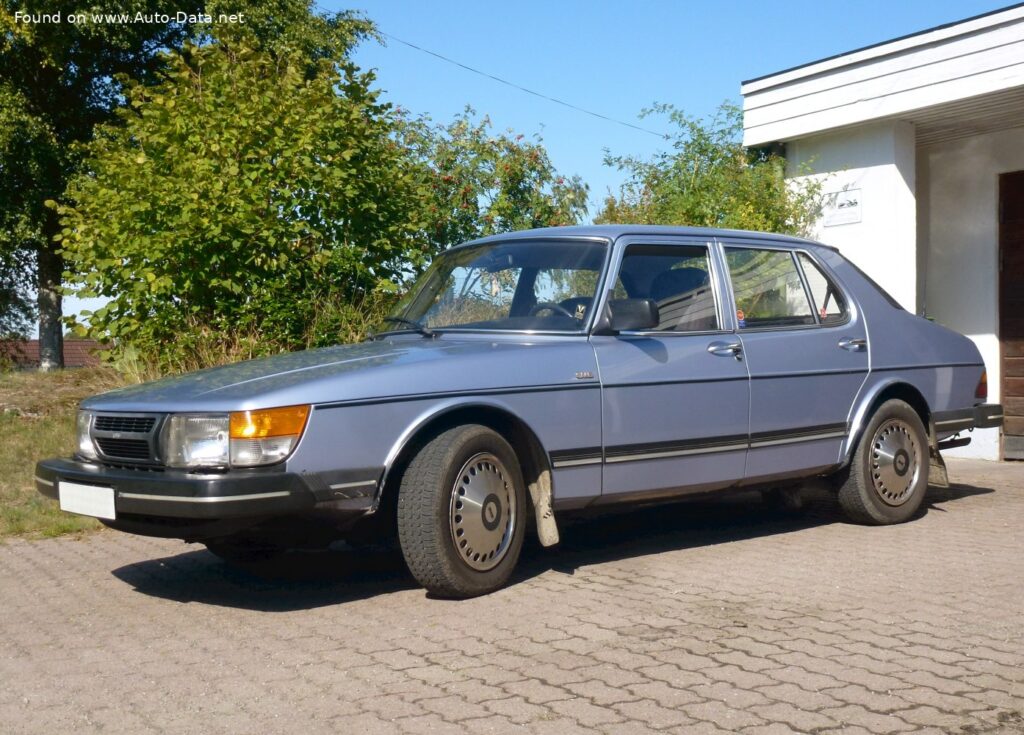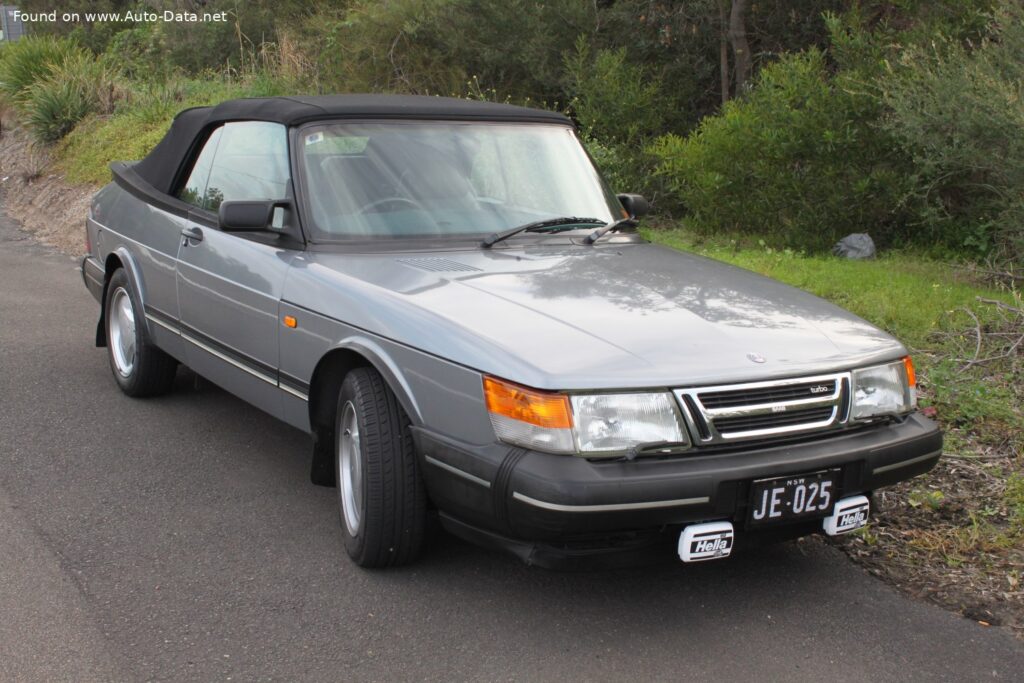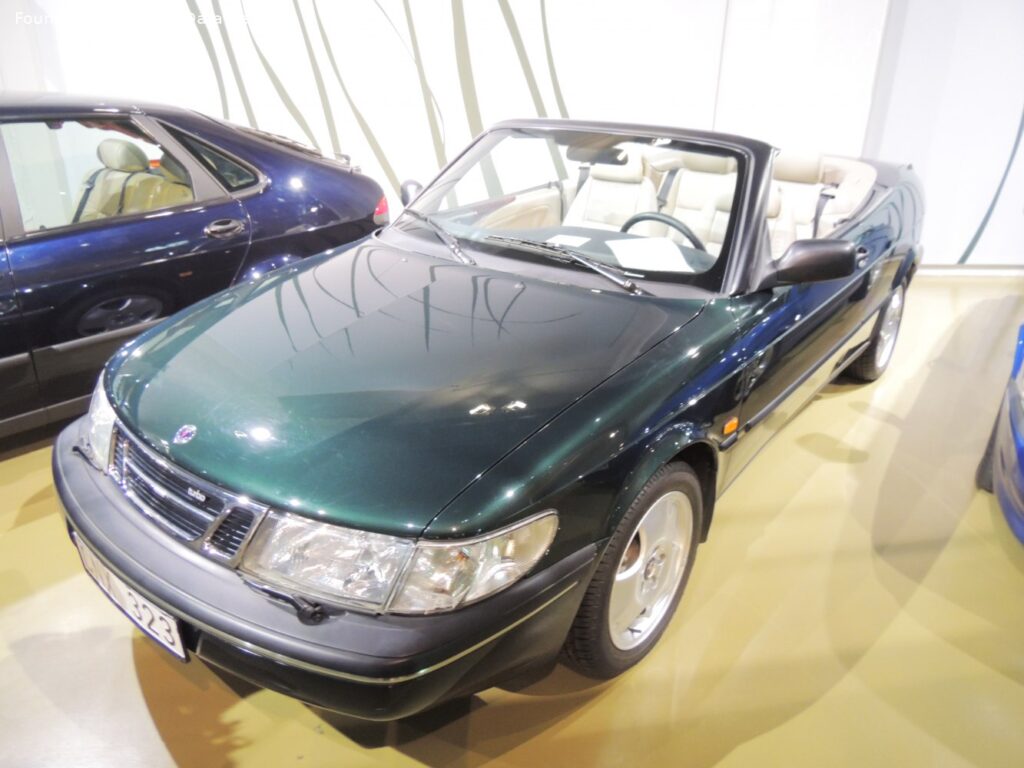
The Saab 900 II Cabriolet 2.0i, produced between 1993 and 1998, represents a significant evolution of the original Saab 900. This open-top variant of the 900 series was a key model for Saab, particularly in European markets, offering a blend of Scandinavian design, practicality, and a unique driving experience. While Saab never achieved the mainstream sales volumes of its German competitors, the 900 Cabriolet cultivated a loyal following attracted to its distinctive character and engineering. The 2.0i designation refers to the 2.0-liter fuel-injected engine producing 131 horsepower.
Saab 900 II Cabriolet 2.0i: A Detailed Overview
The 900 II, launched in 1993, was a heavily revised version of the original 900, which debuted in 1978. The Cabriolet version, introduced alongside the updated sedan and hatchback, capitalized on the growing popularity of open-top motoring. It offered a more refined and safer convertible experience than its predecessor, incorporating improvements in chassis rigidity and safety features. The Cabriolet was not officially sold in the United States during this generation, but the earlier 900 convertible enjoyed a dedicated following there.
Engine & Performance
The Saab 900 II Cabriolet 2.0i is powered by the B206i inline-four cylinder engine, displacing 1,985 cubic centimeters (121.13 cubic inches). This naturally aspirated engine delivers 131 horsepower at 6,100 rpm and 177 Nm (130.55 lb.-ft.) of torque at 4,300 rpm. The engine utilizes multi-port fuel injection and a double overhead camshaft (DOHC) valvetrain, contributing to its relatively smooth power delivery. Acceleration from 0 to 100 km/h (0-62 mph) takes approximately 11 seconds, while 0 to 60 mph is achieved in around 10.5 seconds. The car boasts a maximum speed of 200 km/h (124.27 mph). The power-to-weight ratio is 95.6 horsepower per tonne, and the torque-to-weight ratio is 129.2 Nm per tonne. Fuel consumption is rated at 9.3 liters per 100 kilometers (25.3 US mpg, 30.4 UK mpg, 10.8 km/l).
Design & Features
The Saab 900 II Cabriolet is a two-door, four-seater convertible. Its design retains the distinctive Saab aesthetic, characterized by a wraparound dashboard, a sloping nose, and a generally aerodynamic profile. The Cabriolet features a fully automatic, electrically operated soft top with a glass rear window. Safety was a key consideration in the 900 II’s design. The Cabriolet incorporates reinforced A-pillars and a strengthened chassis to enhance structural rigidity and occupant protection in the event of a rollover. Standard features included power steering, ventilated front disc brakes, and an anti-lock braking system (ABS). The interior is functional and driver-focused, with ergonomically designed seats and a clear instrument panel. Trunk space ranges from 295 liters (10.42 cu. ft.) with the top up to 378 liters (13.35 cu. ft.) with the top down. The fuel tank capacity is 68 liters (17.96 US gal, 14.96 UK gal).
Technical Specifications
| Brand | Saab |
| Model | 900 |
| Generation | 900 II Cabriolet |
| Type (Engine) | 2.0i (131 Hp) |
| Start of production | 1993 |
| End of production | 1998 |
| Powertrain Architecture | Internal Combustion engine |
| Body type | Cabriolet |
| Seats | 4 |
| Doors | 2 |
| Fuel consumption (combined) | 9.3 l/100 km |
| Fuel consumption (US mpg) | 25.3 US mpg |
| Fuel consumption (UK mpg) | 30.4 UK mpg |
| Fuel consumption (km/l) | 10.8 km/l |
| Fuel Type | Petrol (Gasoline) |
| Acceleration 0 – 100 km/h | 11 sec |
| Acceleration 0 – 62 mph | 11 sec |
| Acceleration 0 – 60 mph | 10.5 sec |
| Maximum speed | 200 km/h (124.27 mph) |
| Weight-to-power ratio | 10.5 kg/Hp |
| Weight-to-torque ratio | 7.7 kg/Nm |
| Power | 131 Hp @ 6100 rpm |
| Power per litre | 66 Hp/l |
| Torque | 177 Nm @ 4300 rpm (130.55 lb.-ft. @ 4300 rpm) |
| Engine layout | Front, Transverse |
| Engine Model/Code | B206i |
| Engine displacement | 1985 cm3 (121.13 cu. in.) |
| Number of cylinders | 4 |
| Engine configuration | Inline |
| Cylinder Bore | 90 mm (3.54 in.) |
| Piston Stroke | 78 mm (3.07 in.) |
| Compression ratio | 10.1:1 |
| Number of valves per cylinder | 4 |
| Fuel injection system | Multi-port manifold injection |
| Engine aspiration | Naturally aspirated engine |
| Valvetrain | DOHC |
| Engine oil capacity | 5 l (5.28 US qt | 4.4 UK qt) |
| Coolant capacity | 8.5 l (8.98 US qt | 7.48 UK qt) |
| Kerb Weight | 1370 kg (3020.33 lbs.) |
| Max. weight | 1770 kg (3902.18 lbs.) |
| Max load | 400 kg (881.85 lbs.) |
| Trunk (boot) space – minimum | 295 l (10.42 cu. ft.) |
| Trunk (boot) space – maximum | 378 l (13.35 cu. ft.) |
| Fuel tank capacity | 68 l (17.96 US gal | 14.96 UK gal) |
| Length | 4637 mm (182.56 in.) |
| Width | 1711 mm (67.36 in.) |
| Height | 1435 mm (56.5 in.) |
| Wheelbase | 2600 mm (102.36 in.) |
| Front track | 1446 mm (56.93 in.) |
| Rear (Back) track | 1443 mm (56.81 in.) |
| Drivetrain Architecture | Front wheel drive |
| Number of gears and type of gearbox | 5 gears, manual transmission |
| Front suspension | Wishbone |
| Rear suspension | Suspension with traction connecting levers |
| Front brakes | Ventilated discs |
| Rear brakes | Disc |
| Assisting systems | ABS (Anti-lock braking system) |
| Steering type | Steering rack and pinion |
| Power steering | Hydraulic Steering |
| Tires size | 185/65 R15 |
| Wheel rims size | 15 |
The Saab 900 II Cabriolet 2.0i, while not a high-volume seller, remains a cherished classic among Saab enthusiasts. Its unique blend of Scandinavian design, practical features, and engaging driving experience continues to appeal to those seeking an alternative to more mainstream convertibles.