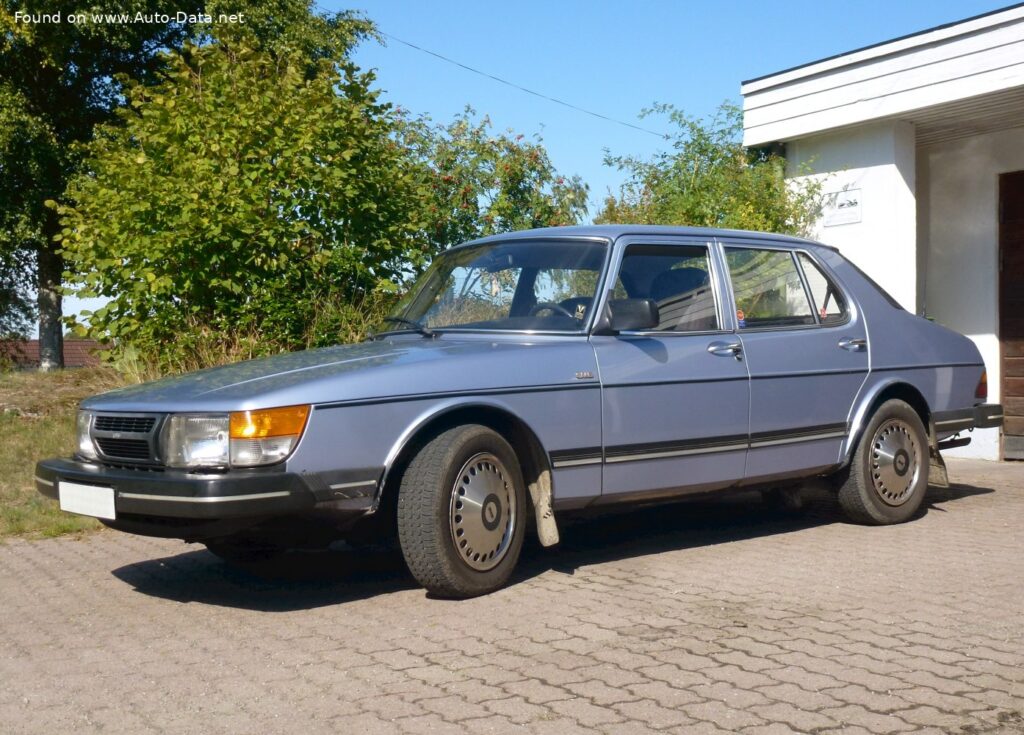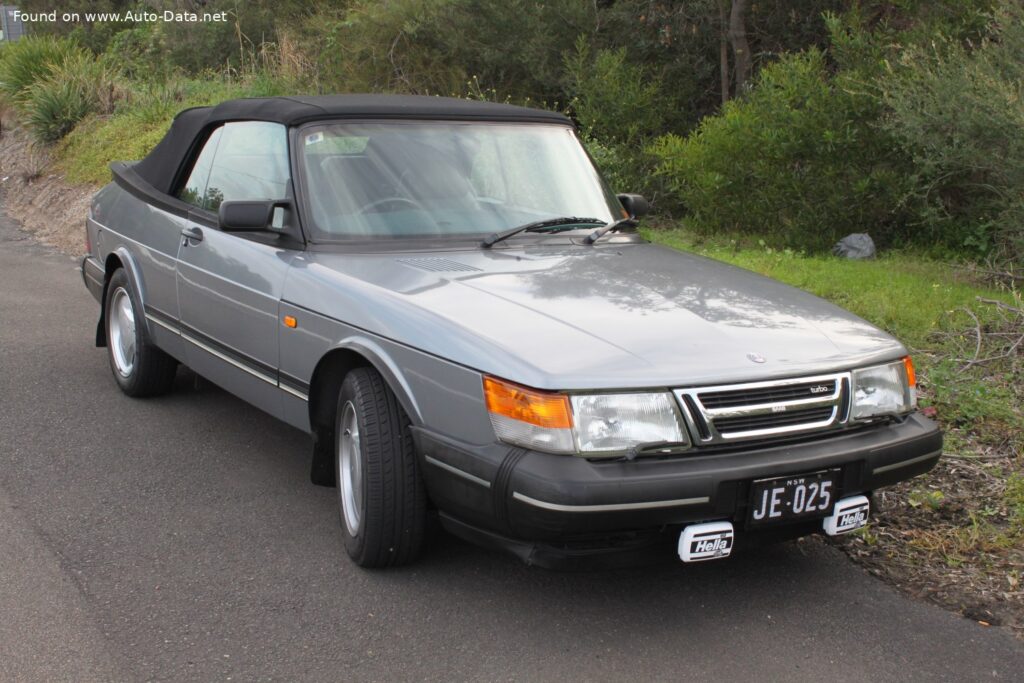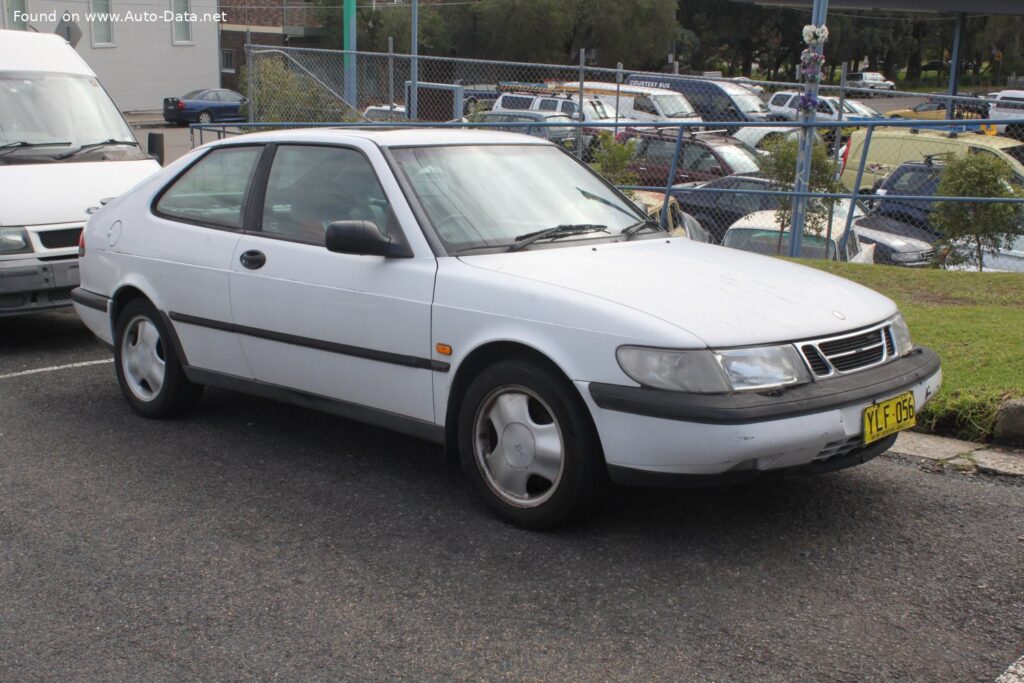
The Saab 900 II Combi Coupe 2.0 16V Turbo, produced between 1993 and 1998, represents a significant evolution of the original Saab 900. This model, a liftback variant, was a key offering in the compact executive car segment, particularly in Europe where Saab cultivated a loyal following. While never officially a high-volume seller in the United States, the 900 series, including the Combi Coupe, gained a dedicated enthusiast base attracted to its unique blend of Scandinavian design, robust engineering, and turbocharged performance. The “Combi Coupe” designation highlights its practical, wagon-like versatility combined with a sleek, coupe-inspired profile.
Saab 900 II Combi Coupe: A Legacy of Innovation
The 900 II, launched in 1993, was a comprehensive redesign of the original 900, which had been in production since 1978. While retaining the core Saab values of safety and driver focus, the 900 II incorporated modern engineering and design elements. The Combi Coupe body style offered increased cargo capacity compared to the traditional three-door hatchback, making it a popular choice for families and those requiring greater practicality. The 2.0 16V Turbo engine was a flagship offering, providing a substantial power boost and enhancing the car’s overall driving experience. It’s important to note that Saab, throughout its history, prioritized a unique driving experience and a strong sense of driver connection, setting it apart from more mainstream automotive brands.
Engine & Performance
The heart of the Saab 900 II Combi Coupe 2.0 16V Turbo is its 1985 cc (121.13 cu. in.) inline-four cylinder engine. This powerplant, designated the B206i, utilizes a multi-port fuel injection system and, crucially, a turbocharger to deliver a potent 185 horsepower at 5500 rpm and 263 Nm (193.98 lb.-ft.) of torque at 2100 rpm. This configuration results in a power-to-liter ratio of 93.2 hp/l. The turbocharger significantly enhances performance, allowing for brisk acceleration. The car could sprint from 0 to 100 km/h (0-62 mph) in 8.5 seconds, and 0-60 mph in a calculated 8.1 seconds, reaching a top speed of 230 km/h (142.92 mph). The engine’s relatively light weight contributes to a favorable weight-to-power ratio of 7.1 kg/Hp and a weight-to-torque ratio of 5 kg/Nm. The engine requires 5 liters (5.28 US qt | 4.4 UK qt) of oil and 8.5 liters (8.98 US qt | 7.48 UK qt) of coolant.
Design & Features
The Saab 900 II Combi Coupe is characterized by its distinctive liftback design, offering a large rear hatch for easy access to the cargo area. The body style provides a practical and versatile space, with a minimum trunk capacity of 494 liters (17.45 cu. ft.) expanding to 897 liters (31.68 cu. ft.) with the rear seats folded down. The car seats five passengers comfortably. Safety was a key consideration in the 900 II’s design, and it featured an Anti-lock Braking System (ABS) as standard equipment. The chassis utilizes a front transverse engine layout with front-wheel drive. Suspension consists of a wishbone setup at the front and a suspension with traction connecting levers at the rear, providing a balanced ride and handling characteristics. Steering is rack and pinion with hydraulic power assistance. The vehicle rides on 15-inch wheels fitted with 195/60 R15 tires.
Technical Specifications
| Brand | Saab |
| Model | 900 |
| Generation | 900 II Combi Coupe |
| Type (Engine) | 2.0 16V Turbo (185 Hp) |
| Start of production | 1993 |
| End of production | 1998 |
| Powertrain Architecture | Internal Combustion engine |
| Body type | Liftback |
| Seats | 5 |
| Doors | 3 |
| Fuel consumption (combined) | 8.5 l/100 km |
| Fuel consumption (US mpg) | 27.7 US mpg |
| Fuel consumption (UK mpg) | 33.2 UK mpg |
| Fuel consumption (km/l) | 11.8 km/l |
| Fuel Type | Petrol (Gasoline) |
| Acceleration 0 – 100 km/h | 8.5 sec |
| Acceleration 0 – 62 mph | 8.5 sec |
| Acceleration 0 – 60 mph | 8.1 sec |
| Maximum speed | 230 km/h (142.92 mph) |
| Weight-to-power ratio | 7.1 kg/Hp |
| Weight-to-torque ratio | 5 kg/Nm |
| Power | 185 Hp @ 5500 rpm |
| Power per litre | 93.2 Hp/l |
| Torque | 263 Nm @ 2100 rpm (193.98 lb.-ft. @ 2100 rpm) |
| Engine layout | Front, Transverse |
| Engine Model/Code | B206i |
| Engine displacement | 1985 cm3 (121.13 cu. in.) |
| Number of cylinders | 4 |
| Engine configuration | Inline |
| Cylinder Bore | 90 mm (3.54 in.) |
| Piston Stroke | 78 mm (3.07 in.) |
| Compression ratio | 9.2:1 |
| Number of valves per cylinder | 4 |
| Fuel injection system | Multi-port manifold injection |
| Engine aspiration | Turbocharger |
| Valvetrain | DOHC |
| Engine oil capacity | 5 l (5.28 US qt | 4.4 UK qt) |
| Coolant | 8.5 l (8.98 US qt | 7.48 UK qt) |
| Kerb Weight | 1310 kg (2888.06 lbs.) |
| Max. weight | 1820 kg (4012.41 lbs.) |
| Max load | 510 kg (1124.36 lbs.) |
| Trunk (boot) space – minimum | 494 l (17.45 cu. ft.) |
| Trunk (boot) space – maximum | 897 l (31.68 cu. ft.) |
| Fuel tank capacity | 68 l (17.96 US gal | 14.96 UK gal) |
| Length | 4637 mm (182.56 in.) |
| Width | 1711 mm (67.36 in.) |
| Height | 1435 mm (56.5 in.) |
| Wheelbase | 2600 mm (102.36 in.) |
| Front track | 1446 mm (56.93 in.) |
| Rear (Back) track | 1443 mm (56.81 in.) |
| Drivetrain Architecture | Front wheel drive |
| Number of gears and type of gearbox | 5 gears, manual transmission |
| Front suspension | Wishbone |
| Rear suspension | Suspension with traction connecting levers |
| Front brakes | Ventilated discs |
| Rear brakes | Disc |
| Assisting systems | ABS (Anti-lock braking system) |
| Steering type | Steering rack and pinion |
| Power steering | Hydraulic Steering |
| Tires size | 195/60 R15 |
| Wheel rims size | 15 |
The Saab 900 II Combi Coupe 2.0 16V Turbo remains a sought-after vehicle among enthusiasts, appreciated for its unique character, robust build quality, and engaging driving experience. While Saab as a brand is no longer in production, the 900 series continues to represent a high point in the company’s history, embodying its commitment to innovation and driver satisfaction.