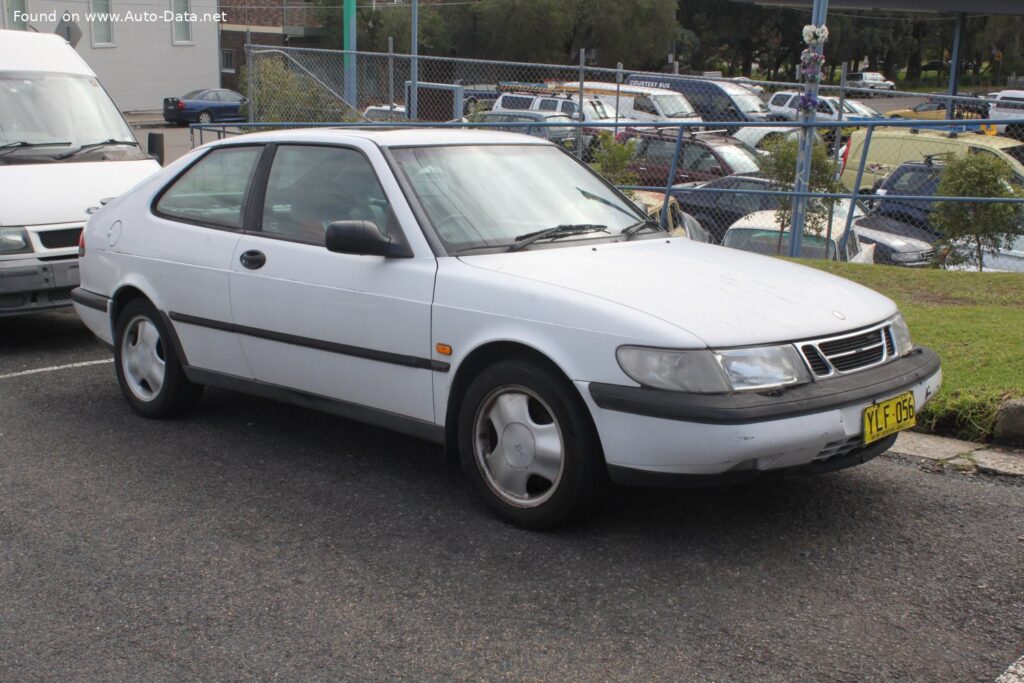
The Saab 900 II Combi Coupe 2.0i, produced from 1993 to 1998, represents a significant evolution of the original Saab 900. This liftback, a practical and stylish offering from the Swedish automaker, was primarily marketed in Europe as a versatile, all-weather vehicle appealing to families and those seeking a blend of practicality and distinctive design. While never officially sold in large numbers in the United States after Saab’s withdrawal in 1994, the 900 II continued the brand’s reputation for innovative engineering and a loyal following. The “Combi Coupe” designation highlights its blend of coupe-like styling with the functionality of a station wagon, offering a spacious interior and generous cargo capacity within a relatively compact footprint.
Saab 900 II Combi Coupe: A Legacy of Practicality and Design
The 900 II was a crucial model for Saab, bridging the gap between the classic 900 and the later, more mainstream 9-3. It retained the core Saab values of safety, functionality, and driver-focused design, but with a more refined and modern approach. The Combi Coupe body style, in particular, was a popular choice, offering a compelling alternative to traditional sedans and hatchbacks. It was known for its robust build quality and distinctive Scandinavian aesthetic, setting it apart from many of its competitors.
Engine & Performance
The 2.0i variant of the Saab 900 II Combi Coupe is powered by the B206i inline-four cylinder engine, displacing 1,985 cubic centimeters (121.13 cubic inches). This naturally aspirated engine produces 131 horsepower at 6,100 rpm and 177 Newton-meters (130.55 lb.-ft.) of torque at 4,300 rpm. The engine features multi-port fuel injection and a double overhead camshaft (DOHC) valvetrain, contributing to its relatively smooth operation and respectable power output for its time. Power per liter is rated at 66 horsepower per liter. The engine is transversely mounted at the front of the vehicle, driving the front wheels.
Performance figures indicate a 0-100 km/h (0-62 mph) acceleration time of 11 seconds, and a 0-60 mph time of approximately 10.5 seconds. The top speed is recorded at 200 km/h (124.27 mph). The weight-to-power ratio of 9.9 kg/Hp and a weight-to-torque ratio of 7.3 kg/Nm demonstrate a reasonable balance between power and weight, providing adequate performance for everyday driving. The vehicle is equipped with a 5-speed manual transmission, offering drivers a direct and engaging driving experience.
Design & Features
The Saab 900 II Combi Coupe boasts a distinctive liftback design, characterized by a sloping rear window and a large tailgate, providing easy access to the spacious cargo area. The body style offers a practical solution for carrying larger items, while maintaining a sleek and aerodynamic profile. The interior is designed with a focus on ergonomics and functionality, featuring comfortable seating for five passengers.
Safety was a key consideration in the design of the 900 II. The vehicle is equipped with an Anti-lock Braking System (ABS) as standard, enhancing braking performance and stability, particularly in adverse conditions. The robust chassis and crumple zones were designed to provide occupant protection in the event of a collision. The hydraulic power steering provides responsive and precise handling, while the wishbone front suspension and traction-connecting lever rear suspension contribute to a comfortable and controlled ride. The vehicle rides on 15-inch wheels with 185/65 R15 tires.
Technical Specifications
| Brand | Saab |
| Model | 900 |
| Generation | 900 II Combi Coupe |
| Type (Engine) | 2.0i (131 Hp) |
| Start of production | 1993 |
| End of production | 1998 |
| Powertrain Architecture | Internal Combustion engine |
| Body type | Liftback |
| Seats | 5 |
| Doors | 3 |
| Fuel consumption (combined) | 9.3 l/100 km |
| Fuel consumption (US mpg) | 25.3 US mpg |
| Fuel consumption (UK mpg) | 30.4 UK mpg |
| Fuel consumption (km/l) | 10.8 km/l |
| Fuel Type | Petrol (Gasoline) |
| Acceleration 0 – 100 km/h | 11 sec |
| Acceleration 0 – 62 mph | 11 sec |
| Acceleration 0 – 60 mph | 10.5 sec |
| Maximum speed | 200 km/h (124.27 mph) |
| Weight-to-power ratio | 9.9 kg/Hp |
| Weight-to-torque ratio | 7.3 kg/Nm |
| Power | 131 Hp @ 6100 rpm |
| Torque | 177 Nm @ 4300 rpm (130.55 lb.-ft. @ 4300 rpm) |
| Engine layout | Front, Transverse |
| Engine Model/Code | B206i |
| Engine displacement | 1985 cm3 (121.13 cu. in.) |
| Number of cylinders | 4 |
| Engine configuration | Inline |
| Cylinder Bore | 90 mm (3.54 in.) |
| Piston Stroke | 78 mm (3.07 in.) |
| Compression ratio | 10.1:1 |
| Number of valves per cylinder | 4 |
| Fuel injection system | Multi-port manifold injection |
| Engine aspiration | Naturally aspirated engine |
| Valvetrain | DOHC |
| Engine oil capacity | 5 l (5.28 US qt | 4.4 UK qt) |
| Coolant capacity | 8.5 l (8.98 US qt | 7.48 UK qt) |
| Kerb Weight | 1295 kg (2854.99 lbs.) |
| Max. weight | 1790 kg (3946.27 lbs.) |
| Max load | 495 kg (1091.29 lbs.) |
| Trunk (boot) space – minimum | 494 l (17.45 cu. ft.) |
| Trunk (boot) space – maximum | 897 l (31.68 cu. ft.) |
| Fuel tank capacity | 68 l (17.96 US gal | 14.96 UK gal) |
| Length | 4637 mm (182.56 in.) |
| Width | 1711 mm (67.36 in.) |
| Height | 1436 mm (56.54 in.) |
| Wheelbase | 2600 mm (102.36 in.) |
| Front track | 1446 mm (56.93 in.) |
| Rear (Back) track | 1443 mm (56.81 in.) |
| Drivetrain Architecture | Front wheel drive |
| Number of gears and type of gearbox | 5 gears, manual transmission |
| Front suspension | Wishbone |
| Rear suspension | Suspension with traction connecting levers |
| Front brakes | Ventilated discs |
| Rear brakes | Disc |
| Assisting systems | ABS (Anti-lock braking system) |
| Steering type | Steering rack and pinion |
| Power steering | Hydraulic Steering |
| Tires size | 185/65 R15 |
| Wheel rims size | 15 |
The Saab 900 II Combi Coupe 2.0i remains a sought-after classic, appreciated for its unique character, practicality, and the enduring appeal of the Saab brand. It represents a high point in Saab’s engineering and design philosophy, offering a compelling blend of Scandinavian functionality and driving enjoyment.