
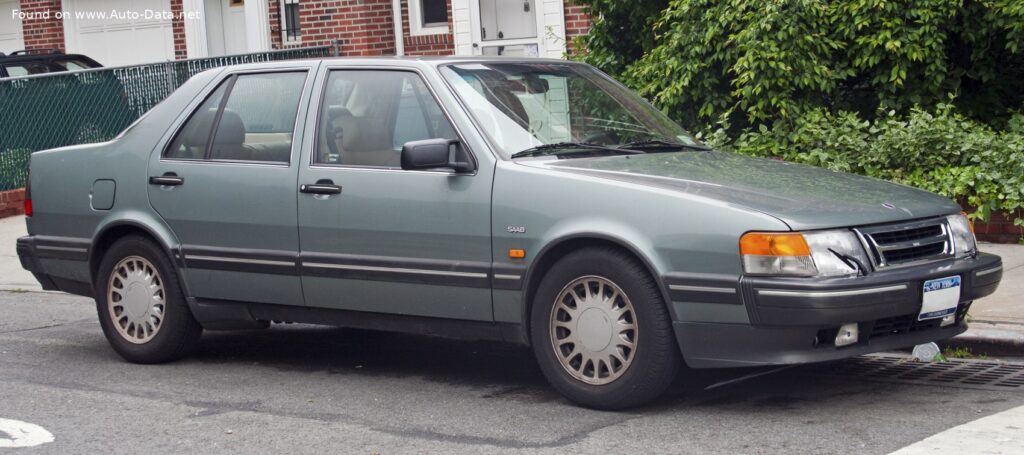
The Saab 9000 2.3 16V Automatic, produced between 1990 and 1993, represents a significant evolution in Saab’s model lineup. Positioned as a larger, more comfortable alternative to the Saab 900, the 9000 aimed to compete in the executive car segment, offering a blend of Scandinavian design, innovative safety features, and turbocharged performance – though the 2.3 16V model focused on naturally aspirated efficiency. While not initially a major sales success in the United States, the 9000 gained a loyal following among those seeking a distinctive and well-engineered vehicle. This model, with its 146 horsepower engine and automatic transmission, provided a refined driving experience for its time.
Saab 9000 2.3 16V: A Detailed Overview
The Saab 9000 was a pivotal model for the Swedish automaker, marking a departure from its smaller, more utilitarian offerings. Introduced in 1984, it was designed to appeal to a broader audience and establish Saab as a contender in the premium car market. The 2.3 16V variant, launched in 1990, offered a balance between performance and fuel economy, utilizing a naturally aspirated four-cylinder engine with sixteen valves for improved breathing and power delivery. The automatic transmission provided ease of use, making it a popular choice for daily commuting and long-distance travel.
Engine & Performance
The heart of the Saab 9000 2.3 16V is its 2.3-liter inline four-cylinder engine, designated the B234. This engine produces 146 horsepower at 6000 rpm and 207 Nm (152.68 lb.-ft.) of torque at 3800 rpm. While not as powerful as the turbocharged versions of the 9000, the naturally aspirated 2.3 16V offered smooth and predictable power delivery. The engine features multi-port fuel injection and a double overhead camshaft (DOHC) valvetrain, contributing to its efficiency and responsiveness. The engine’s power-to-liter ratio is a respectable 63.8 horsepower per liter. Acceleration from 0 to 60 mph is achieved in approximately 11.9 seconds, and 0 to 100 km/h takes 12.5 seconds. The car boasts a maximum speed of 205 km/h (127.38 mph). Fuel consumption is rated at 10.5 l/100 km (22.4 US mpg) combined, with 12.7 l/100 km (18.5 US mpg) in urban settings and 7.7 l/100 km (30.5 US mpg) on the open road.
Design & Features
The Saab 9000 is a four-door sedan with a distinctive, aerodynamic profile. Its design, while understated, incorporates Saab’s signature styling cues, including a wraparound dashboard and a focus on driver ergonomics. The interior is spacious and comfortable, offering seating for five passengers. The trunk provides a generous 625 liters (22.07 cu. ft.) of space, expandable to 1600 liters (56.5 cu. ft.) with the rear seats folded down. Safety was a key consideration in the 9000’s design, and it featured standard anti-lock brakes (ABS). The car’s hydraulic power steering provides responsive and precise handling. The 9000’s design prioritized practicality and comfort, making it a suitable vehicle for families and long-distance travelers. The vehicle’s dimensions are 4794 mm (188.74 in.) in length, 1764 mm (69.45 in.) in width, and 1420 mm (55.91 in.) in height, with a wheelbase of 2672 mm (105.2 in.).
Technical Specifications
| Brand | Saab |
| Model | 9000 |
| Generation | 9000 |
| Type (Engine) | 2.3 16V (146 Hp) Automatic |
| Start of production | 1990 |
| End of production | 1993 |
| Powertrain Architecture | Internal Combustion engine |
| Body type | Sedan |
| Seats | 5 |
| Doors | 4 |
| Fuel consumption (urban) | 12.7 l/100 km (18.5 US mpg) |
| Fuel consumption (extra urban) | 7.7 l/100 km (30.5 US mpg) |
| Fuel consumption (combined) | 10.5 l/100 km (22.4 US mpg) |
| Fuel Type | Petrol (Gasoline) |
| Acceleration 0 – 100 km/h | 12.5 sec |
| Acceleration 0 – 62 mph | 12.5 sec |
| Acceleration 0 – 60 mph | 11.9 sec |
| Maximum speed | 205 km/h (127.38 mph) |
| Power | 146 Hp @ 6000 rpm |
| Torque | 207 Nm @ 3800 rpm (152.68 lb.-ft. @ 3800 rpm) |
| Engine layout | Front, Transverse |
| Engine Model/Code | B234 |
| Engine displacement | 2290 cm3 (139.74 cu. in.) |
| Number of cylinders | 4 |
| Engine configuration | Inline |
| Cylinder Bore | 90 mm (3.54 in.) |
| Piston Stroke | 90 mm (3.54 in.) |
| Compression ratio | 10.1:1 |
| Number of valves per cylinder | 4 |
| Fuel injection system | Multi-port manifold injection |
| Engine aspiration | Naturally aspirated |
| Valvetrain | DOHC |
| Engine oil capacity | 4.3 l (4.54 US qt | 3.78 UK qt) |
| Coolant capacity | 9 l (9.51 US qt | 7.92 UK qt) |
| Trunk (boot) space – minimum | 625 l (22.07 cu. ft.) |
| Trunk (boot) space – maximum | 1600 l (56.5 cu. ft.) |
| Fuel tank capacity | 66 l (17.44 US gal | 14.52 UK gal) |
| Length | 4794 mm (188.74 in.) |
| Width | 1764 mm (69.45 in.) |
| Height | 1420 mm (55.91 in.) |
| Wheelbase | 2672 mm (105.2 in.) |
| Front track | 1522 mm (59.92 in.) |
| Rear track | 1492 mm (58.74 in.) |
| Drivetrain Architecture | ICE, Front Wheel Drive |
| Drive wheel | Front wheel drive |
| Number of gears | 4 |
| Gearbox type | Automatic transmission |
| Front suspension | Wishbone |
| Rear suspension | Suspension with traction connecting levers |
| Front brakes | Ventilated discs |
| Rear brakes | Disc |
| Assisting systems | ABS (Anti-lock braking system) |
| Steering type | Steering rack and pinion |
| Power steering | Hydraulic |
The Saab 9000 2.3 16V Automatic, while perhaps not the most powerful or technologically advanced car of its era, offered a compelling package of comfort, safety, and distinctive Scandinavian design. It remains a popular choice among Saab enthusiasts and collectors, appreciated for its unique character and enduring quality.
