
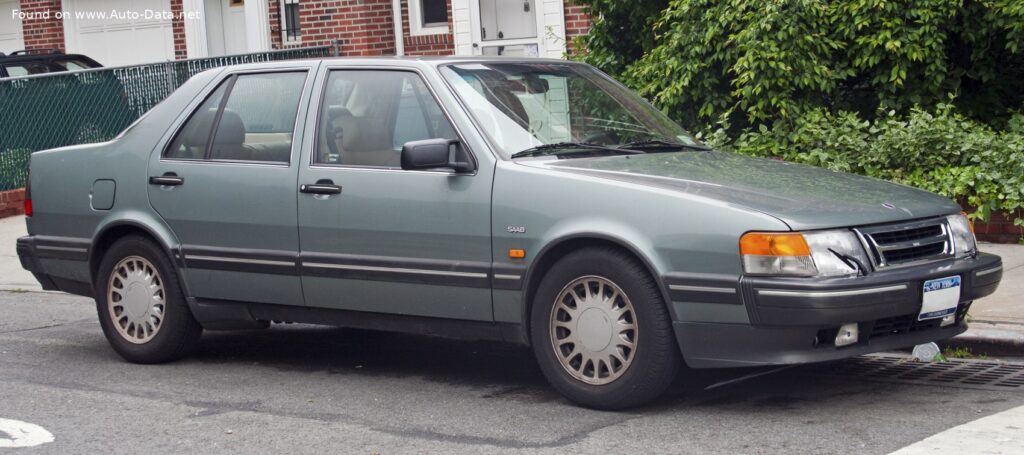
The Saab 9000 2.3 16V Turbo, produced between 1990 and 1993, represents a significant evolution in Saab’s model lineup. Positioned as a larger, more sophisticated alternative to the Saab 900, the 9000 aimed to compete directly with executive cars from German manufacturers like BMW and Audi. This front-wheel-drive sedan offered a blend of Scandinavian practicality, innovative safety features, and a surprisingly potent turbocharged engine, establishing a loyal following, particularly in Europe. While never a massive seller in the United States, the 9000 showcased Saab’s commitment to engineering and distinctive design.
Saab 9000 2.3 16V Turbo: A Detailed Overview
The 9000 series, launched in 1984, was Saab’s first entirely in-house designed model since the Saab 99. The 2.3 16V Turbo variant, introduced in 1990, represented a performance upgrade within the range. It combined a larger displacement engine with a 16-valve cylinder head and a turbocharger to deliver increased power and torque. This model year also saw refinements to the interior and exterior styling, further enhancing the 9000’s appeal as a comfortable and capable grand tourer.
Engine & Performance
At the heart of the Saab 9000 2.3 16V Turbo lies the B234L inline-four cylinder engine. Displacing 2.3 liters (2290 cm3 or 139.74 cu. in.), this engine utilizes a multi-port fuel injection system and a turbocharger to produce 195 horsepower at 5000 rpm and 323 Nm (238.23 lb.-ft.) of torque at 2000 rpm. This configuration provides a broad torque curve, making the car responsive in everyday driving situations. The engine’s power-to-liter ratio is an impressive 85.2 hp/l. The engine is transversely mounted, contributing to a favorable weight distribution. Acceleration from 0 to 100 km/h (0-62 mph) takes approximately 8 seconds, while the 0-60 mph sprint is achieved in a calculated 7.6 seconds. The 9000 2.3 16V Turbo boasts a top speed of 230 km/h (142.92 mph).
Power is delivered to the front wheels via a 5-speed manual transmission. The weight-to-power ratio of 6.8 kg/Hp and a weight-to-torque ratio of 4.1 kg/Nm contribute to the car’s spirited performance. Fuel economy figures are rated at 12.5 l/100 km (18.8 US mpg, 22.6 UK mpg, 8 km/l) in urban driving, 7 l/100 km (33.6 US mpg, 40.4 UK mpg, 14.3 km/l) on the extra-urban cycle, and 9 l/100 km (26.1 US mpg, 31.4 UK mpg, 11.1 km/l) combined.
Design & Features
The Saab 9000 is a four-door sedan with a distinctive, aerodynamic profile. Its design, while understated, is characterized by clean lines and a focus on functionality. The car seats five passengers comfortably and offers a generous trunk capacity ranging from 625 liters (22.07 cu. ft.) with the rear seats up to 1600 liters (56.5 cu. ft.) with them folded down.
Saab was renowned for its commitment to safety, and the 9000 was no exception. It featured an Anti-lock Braking System (ABS) as standard equipment, a relatively advanced feature for its time. The chassis utilizes wishbone suspension at the front and a suspension with traction connecting levers at the rear, providing a comfortable ride and predictable handling. Hydraulic power steering further enhances the driving experience. The car rides on 205/55 R16 tires mounted on 16-inch wheel rims. Interior features focused on ergonomics and practicality, with a driver-centric layout and durable materials. The 9000’s interior was designed to minimize driver fatigue on long journeys.
Technical Specifications
| Brand | Saab |
| Model | 9000 |
| Generation | 9000 |
| Type (Engine) | 2.3 16V Turbo (195 Hp) |
| Start of production | 1990 |
| End of production | 1993 |
| Powertrain Architecture | Internal Combustion engine |
| Body type | Sedan |
| Seats | 5 |
| Doors | 4 |
| Fuel consumption (urban) | 12.5 l/100 km (18.8 US mpg, 22.6 UK mpg, 8 km/l) |
| Fuel consumption (extra urban) | 7 l/100 km (33.6 US mpg, 40.4 UK mpg, 14.3 km/l) |
| Fuel consumption (combined) | 9 l/100 km (26.1 US mpg, 31.4 UK mpg, 11.1 km/l) |
| Fuel Type | Petrol (Gasoline) |
| Acceleration 0 – 100 km/h | 8 sec |
| Acceleration 0 – 62 mph | 8 sec |
| Acceleration 0 – 60 mph | 7.6 sec |
| Maximum speed | 230 km/h (142.92 mph) |
| Weight-to-power ratio | 6.8 kg/Hp |
| Weight-to-torque ratio | 4.1 kg/Nm |
| Power | 195 Hp @ 5000 rpm |
| Power per litre | 85.2 Hp/l |
| Torque | 323 Nm @ 2000 rpm (238.23 lb.-ft. @ 2000 rpm) |
| Engine layout | Front, Transverse |
| Engine Model/Code | B234L |
| Engine displacement | 2290 cm3 (139.74 cu. in.) |
| Number of cylinders | 4 |
| Engine configuration | Inline |
| Cylinder Bore | 90 mm (3.54 in.) |
| Piston Stroke | 90 mm (3.54 in.) |
| Compression ratio | 8.5:1 |
| Number of valves per cylinder | 4 |
| Fuel injection system | Multi-port manifold injection |
| Engine aspiration | Turbocharger |
| Valvetrain | DOHC |
| Engine oil capacity | 4.3 l (4.54 US qt | 3.78 UK qt) |
| Coolant | 9 l (9.51 US qt | 7.92 UK qt) |
| Kerb Weight | 1335 kg (2943.17 lbs.) |
| Max. weight | 1960 kg (4321.06 lbs.) |
| Max load | 625 kg (1377.89 lbs.) |
| Trunk (boot) space – minimum | 625 l (22.07 cu. ft.) |
| Trunk (boot) space – maximum | 1600 l (56.5 cu. ft.) |
| Fuel tank capacity | 66 l (17.44 US gal | 14.52 UK gal) |
| Length | 4794 mm (188.74 in.) |
| Width | 1764 mm (69.45 in.) |
| Height | 1420 mm (55.91 in.) |
| Wheelbase | 2672 mm (105.2 in.) |
| Front track | 1522 mm (59.92 in.) |
| Rear (Back) track | 1492 mm (58.74 in.) |
| Drivetrain Architecture | Front wheel drive |
| Number of gears and type of gearbox | 5 gears, manual transmission |
| Front suspension | Wishbone |
| Rear suspension | Suspension with traction connecting levers |
| Front brakes | Ventilated discs |
| Rear brakes | Disc |
| Assisting systems | ABS (Anti-lock braking system) |
| Steering type | Steering rack and pinion |
| Power steering | Hydraulic Steering |
| Tires size | 205/55 R16 |
| Wheel rims size | 16 |
The Saab 9000 2.3 16V Turbo, while not a mainstream success in all markets, remains a respected and fondly remembered vehicle. It embodies Saab’s unique approach to automotive engineering, prioritizing safety, comfort, and a distinctive driving experience. Its turbocharged engine and refined chassis continue to appeal to enthusiasts who appreciate its blend of performance and practicality.
