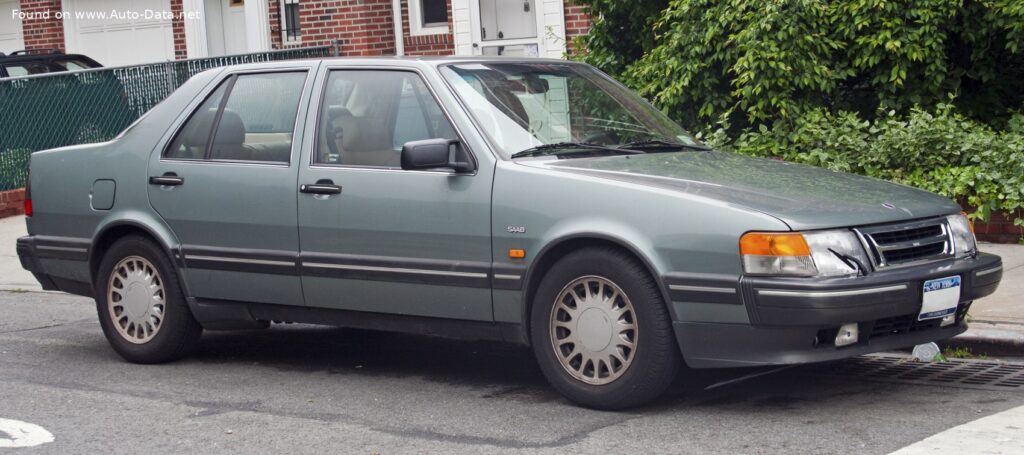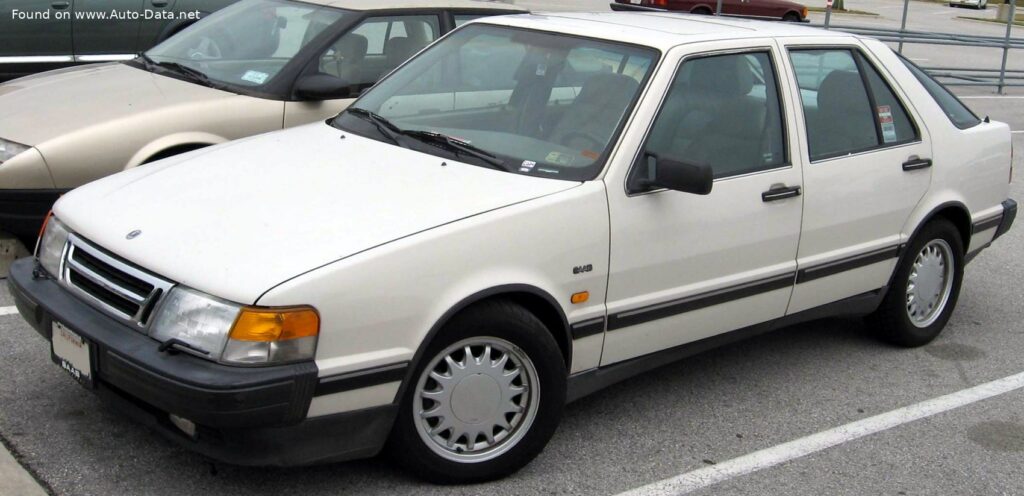
The Saab 9000 Hatchback, specifically the 2.0 16V ND Turbo variant produced between 1993 and 1998, represents a significant evolution in Saab’s model lineup. Positioned as a larger, more comfortable alternative to the Saab 900, the 9000 aimed to compete in the executive car segment, offering a blend of Scandinavian practicality, innovative safety features, and turbocharged performance. While never a massive seller in the United States, the 9000 cultivated a loyal following among those seeking a distinctive and well-engineered vehicle. This model, with its 150 horsepower turbocharged engine, offered a compelling combination of efficiency and spirited driving.
Saab 9000 Hatchback 2.0 16V ND Turbo: An Overview
The 9000 series, launched in 1984, was Saab’s first entirely in-house designed model since the Saab 99. It moved away from the more compact offerings of the past and embraced a more spacious and modern design. The hatchback body style, popular in Europe, provided enhanced practicality and cargo versatility. The “ND” designation within the 2.0 16V Turbo range signifies a specific engine refinement, focusing on improved torque delivery and overall drivability. The 16-valve cylinder head contributed to increased power output and responsiveness compared to earlier 8-valve versions. This generation of the 9000 was known for its robust build quality and distinctive styling, setting it apart from more mainstream competitors.
Engine & Performance
At the heart of the Saab 9000 2.0 16V ND Turbo lies a 1985 cc (121.13 cubic inches) inline-four cylinder engine. This engine is equipped with a turbocharger and multi-port fuel injection, producing 150 horsepower at 5500 rpm and 215 Nm (158.58 lb.-ft.) of torque at 2500 rpm. This configuration delivers a power-to-liter ratio of 75.6 hp/l. Power is delivered to the front wheels via a 5-speed manual transmission. The engine’s transverse mounting contributes to efficient packaging within the front-wheel-drive layout. Performance figures include a 0-100 km/h (0-62 mph) acceleration time of 9.5 seconds and a maximum speed of 210 km/h (130.49 mph). The weight-to-power ratio of 9.2 kg/Hp and weight-to-torque ratio of 6.4 kg/Nm indicate a reasonably responsive and balanced driving experience. Fuel consumption is rated at 8.7 l/100 km (27 US mpg, 32.5 UK mpg).
Design & Features
The Saab 9000 Hatchback features a five-door body style with seating for five passengers. Its design, while functional, is characterized by clean lines and a distinctive front end incorporating Saab’s signature grille and headlight design. The hatchback configuration provides a practical cargo area, offering 488 liters (17.23 cubic feet) of space with the rear seats up and expanding to 883 liters (31.18 cubic feet) when folded down. Safety was a key consideration in the 9000’s design, and it included features such as ABS (Anti-lock Braking System) as standard equipment. The interior is designed with a focus on ergonomics and driver comfort, reflecting Saab’s commitment to human-centered design. Hydraulic power steering and wishbone front suspension, coupled with a rear suspension featuring traction connecting levers, contribute to a comfortable and controlled ride. The vehicle rides on 15-inch wheels with 195/65 R15 tires.
Technical Specifications
| Brand | Saab |
| Model | 9000 |
| Generation | 9000 Hatchback |
| Type (Engine) | 2.0 16V ND Turbo (150 Hp) |
| Start of production | 1993 |
| End of production | 1998 |
| Powertrain Architecture | Internal Combustion engine |
| Body type | Hatchback |
| Seats | 5 |
| Doors | 5 |
| Fuel consumption (combined) | 8.7 l/100 km |
| Fuel consumption (US mpg) | 27 US mpg |
| Fuel consumption (UK mpg) | 32.5 UK mpg |
| Fuel Type | Petrol (Gasoline) |
| Acceleration 0 – 100 km/h | 9.5 sec |
| Acceleration 0 – 62 mph | 9.5 sec |
| Acceleration 0 – 60 mph | 9 sec |
| Maximum speed | 210 km/h (130.49 mph) |
| Weight-to-power ratio | 9.2 kg/Hp |
| Weight-to-torque ratio | 6.4 kg/Nm |
| Power | 150 Hp @ 5500 rpm |
| Power per litre | 75.6 Hp/l |
| Torque | 215 Nm @ 2500 rpm (158.58 lb.-ft. @ 2500 rpm) |
| Engine layout | Front, Transverse |
| Engine Model/Code | B202 |
| Engine displacement | 1985 cm3 (121.13 cu. in.) |
| Number of cylinders | 4 |
| Engine configuration | Inline |
| Cylinder Bore | 90 mm (3.54 in.) |
| Piston Stroke | 78 mm (3.07 in.) |
| Compression ratio | 9.2:1 |
| Number of valves per cylinder | 4 |
| Fuel injection system | Multi-port manifold injection |
| Engine aspiration | Turbocharger |
| Valvetrain | DOHC |
| Engine oil capacity | 4.2 l (4.44 US qt | 3.7 UK qt) |
| Coolant capacity | 9 l (9.51 US qt | 7.92 UK qt) |
| Kerb Weight | 1375 kg (3031.36 lbs.) |
| Max. weight | 1930 kg (4254.92 lbs.) |
| Max load | 555 kg (1223.57 lbs.) |
| Trunk (boot) space – minimum | 488 l (17.23 cu. ft.) |
| Trunk (boot) space – maximum | 883 l (31.18 cu. ft.) |
| Fuel tank capacity | 66 l (17.44 US gal | 14.52 UK gal) |
| Length | 4761 mm (187.44 in.) |
| Width | 1778 mm (70 in.) |
| Height | 1420 mm (55.91 in.) |
| Wheelbase | 2672 mm (105.2 in.) |
| Front track | 1522 mm (59.92 in.) |
| Rear track | 1492 mm (58.74 in.) |
| Drivetrain Architecture | Front wheel drive |
| Number of gears | 5 gears, manual transmission |
| Front suspension | Wishbone |
| Rear suspension | Suspension with traction connecting levers |
| Front brakes | Ventilated discs |
| Rear brakes | Disc |
| Assisting systems | ABS (Anti-lock braking system) |
| Steering type | Steering rack and pinion |
| Power steering | Hydraulic Steering |
| Tires size | 195/65 R15 |
| Wheel rims size | 15 |
The Saab 9000 2.0 16V ND Turbo, while discontinued in 1998, remains a respected vehicle among enthusiasts. Its blend of Scandinavian design, turbocharged performance, and practical hatchback layout continues to appeal to those seeking a unique and well-engineered automobile.