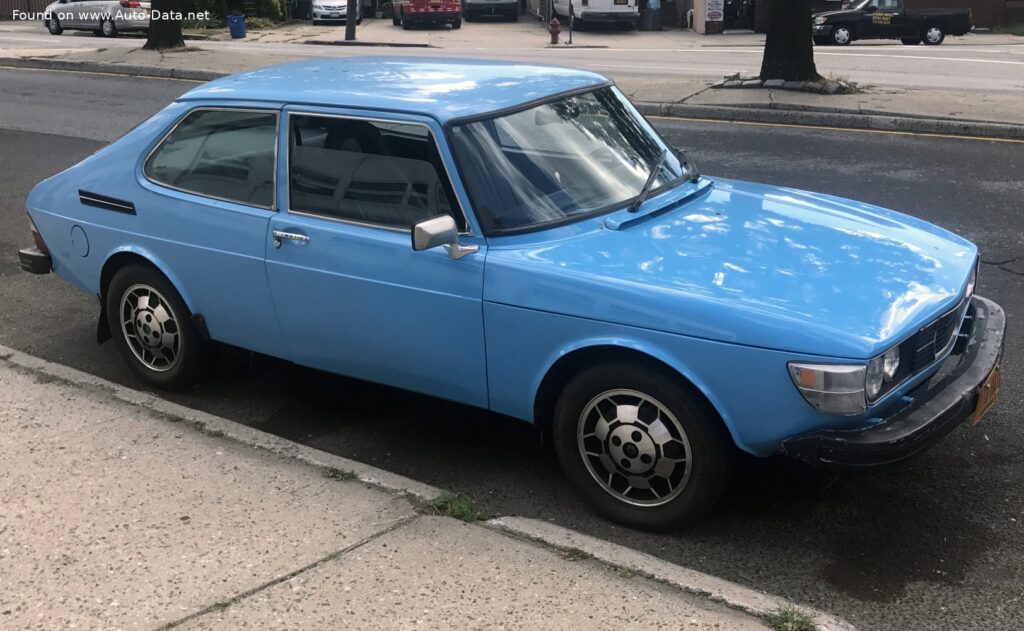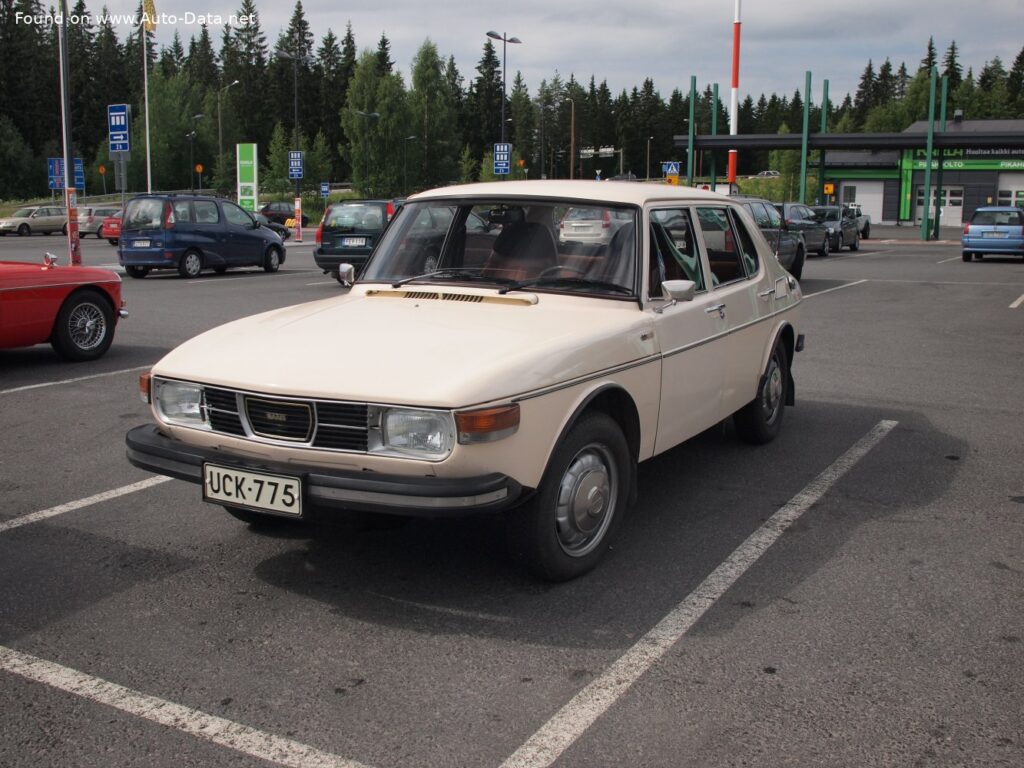
The Saab 99 1.8S represents a pivotal moment in automotive history, marking Saab’s transition from aircraft manufacturer to a recognized car producer. Introduced in 1967 and continuing in production through 1972, the 99 was Saab’s first monocoque (unibody) design and a significant departure from their earlier, more utilitarian models. This compact sedan, designed with a focus on safety and driver comfort, established many of the design cues and engineering philosophies that would define Saab for decades. While not initially a massive sales success, the 99 laid the groundwork for Saab’s future and gained a loyal following, particularly in Europe. The 1.8S variant, with its 87 horsepower engine, was a popular choice, offering a balance of performance and economy for the era.
The Saab 99 1.8S: A Pioneering Sedan
The Saab 99 wasn’t simply a new car; it was a statement of intent. Saab, already renowned for its innovative aircraft designs, applied that same engineering mindset to the automotive world. The 99 was conceived as a modern, safe, and comfortable vehicle, and it delivered on those promises. Its aerodynamic shape, though subtle by today’s standards, was ahead of its time, and its focus on interior space and visibility was noteworthy. The 1.8S model, specifically, offered a refined driving experience for its time, combining a relatively powerful engine with a nimble chassis. It was a car designed for the discerning driver who valued innovation and practicality.
Engine & Performance
The heart of the Saab 99 1.8S is its 1.8-liter (1855 cm3 or 113.2 cu. in.) inline-four cylinder engine. This engine, producing 87 horsepower at 5000 rpm and 146 Nm (107.68 lb.-ft.) of torque at 3000 rpm, was a significant upgrade over Saab’s previous offerings. The engine’s transverse mounting – a relatively uncommon configuration at the time – contributed to the car’s compact dimensions and improved handling. Power per liter was a respectable 46.9 Hp/l for the late 1960s. The engine utilized a carburetor fuel injection system and a compression ratio of 9:1. The naturally aspirated engine allowed the 99 1.8S to achieve a maximum speed of 153 km/h (95.07 mph). The weight-to-power ratio of 12.6 kg/Hp and a weight-to-torque ratio of 7.5 kg/Nm contributed to a surprisingly lively driving experience. The four-speed manual transmission provided precise control, and the front-wheel-drive configuration offered good traction in various conditions.
Design & Features
The Saab 99 1.8S is a four-door sedan with a distinctively Scandinavian aesthetic. Its clean lines and relatively uncluttered design emphasized functionality and practicality. The car’s interior was designed with the driver in mind, featuring a spacious cabin and excellent visibility. Safety was a paramount concern for Saab, and the 99 incorporated several innovative safety features for its time, including a reinforced passenger compartment and a collapsible steering column. While not standard on all models, Saab was a pioneer in safety features and would continue to innovate in this area. The 99’s dimensions – 4530 mm (178.35 in.) in length, 1680 mm (66.14 in.) in width, and 1450 mm (57.09 in.) in height – positioned it as a compact family car. The wheelbase measured 2470 mm (97.24 in.), providing a stable and comfortable ride. The front and rear tracks were 1390 mm (54.72 in.) and 1400 mm (55.12 in.) respectively. The kerb weight of 1097 kg (2418.47 lbs.) contributed to the car’s nimble handling.
Technical Specifications
| Brand | Saab |
| Model | 99 |
| Generation | 99 |
| Type (Engine) | 1.8S (87 Hp) |
| Start of production | 1967 |
| End of production | 1972 |
| Powertrain Architecture | Internal Combustion engine |
| Body type | Sedan |
| Seats | 5 |
| Doors | 4 |
| Fuel Type | Petrol (Gasoline) |
| Maximum speed | 153 km/h (95.07 mph) |
| Weight-to-power ratio | 12.6 kg/Hp |
| Weight-to-torque ratio | 7.5 kg/Nm |
| Power | 87 Hp @ 5000 rpm |
| Power per litre | 46.9 Hp/l |
| Torque | 146 Nm @ 3000 rpm (107.68 lb.-ft. @ 3000 rpm) |
| Engine layout | Front, Transverse |
| Engine displacement | 1855 cm3 (113.2 cu. in.) |
| Number of cylinders | 4 |
| Engine configuration | V-engine |
| Cylinder Bore | 87 mm (3.43 in.) |
| Piston Stroke | 78 mm (3.07 in.) |
| Compression ratio | 9:1 |
| Number of valves per cylinder | 2 |
| Fuel injection system | Carburettor |
| Engine aspiration | Naturally aspirated engine |
| Engine oil capacity | 3.5 l (3.7 US qt | 3.08 UK qt) |
| Kerb Weight | 1097 kg (2418.47 lbs.) |
| Length | 4530 mm (178.35 in.) |
| Width | 1680 mm (66.14 in.) |
| Height | 1450 mm (57.09 in.) |
| Wheelbase | 2470 mm (97.24 in.) |
| Front track | 1390 mm (54.72 in.) |
| Rear (Back) track | 1400 mm (55.12 in.) |
| Drivetrain Architecture | Internal Combustion engine (ICE) drives the front wheels |
| Drive wheel | Front wheel drive |
| Number of gears and type of gearbox | 4 gears, manual transmission |
| Steering type | Steering rack and pinion |
The Saab 99 1.8S, while a relatively modest car in terms of outright performance, was a significant achievement for Saab. It established the company as a serious automotive manufacturer and paved the way for future innovations in safety, design, and engineering. Its legacy continues to be felt in the automotive world today, and the 99 remains a cherished classic among Saab enthusiasts.