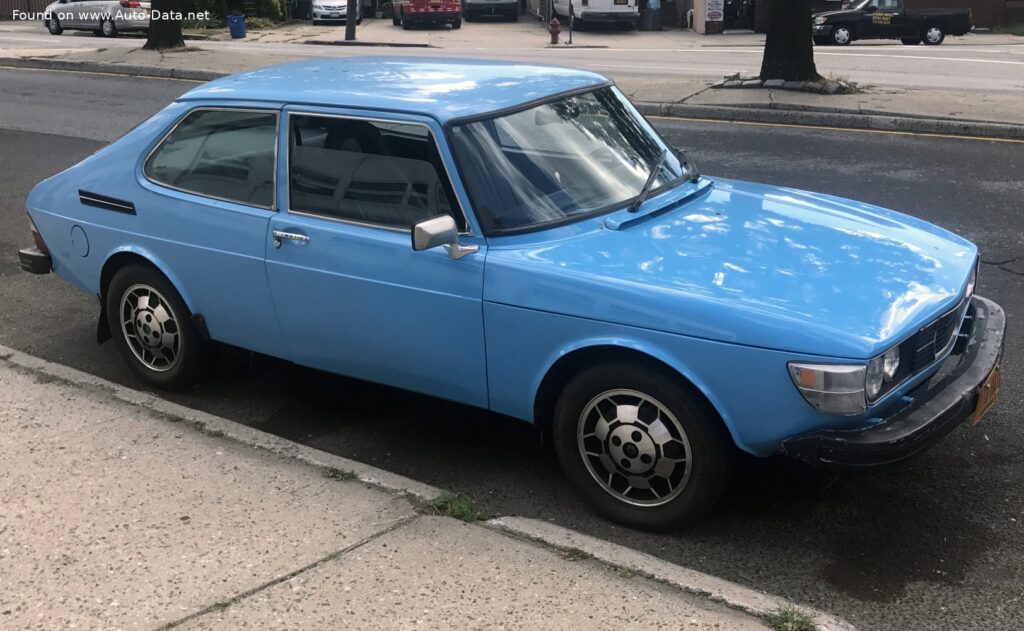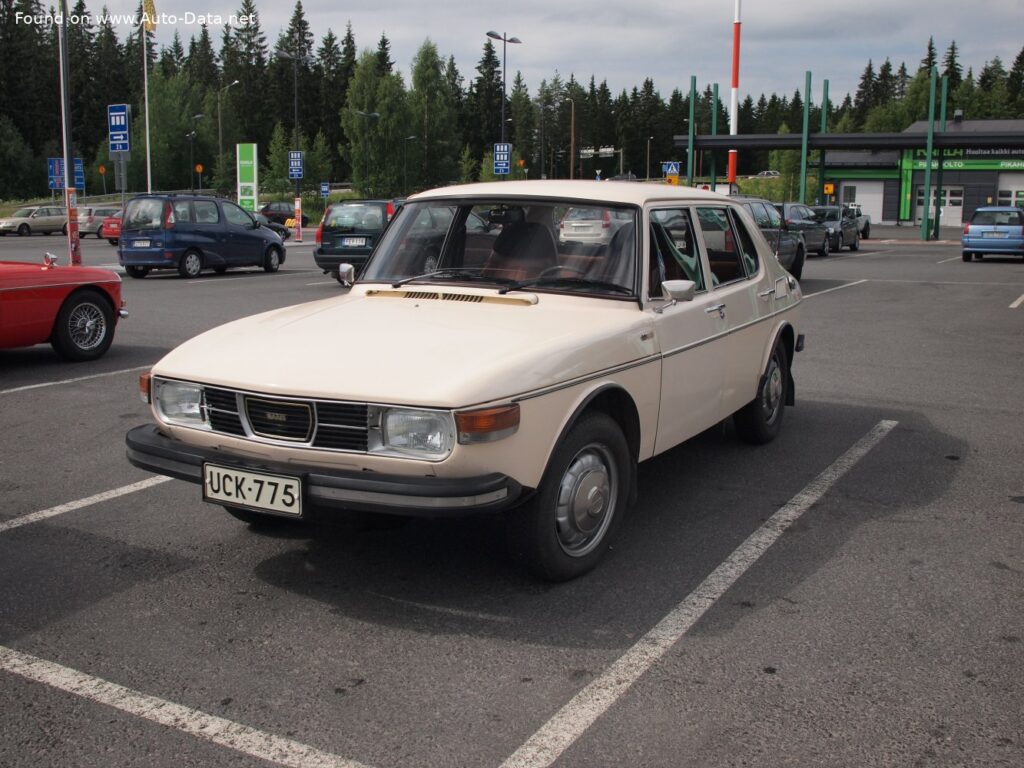
The Saab 99 2.0 EMS, produced between 1974 and 1978, represents a pivotal moment in the history of the Swedish automaker. This compact sedan wasn’t merely a new model; it was Saab’s first foray into high-volume production, moving the company beyond its niche reputation for innovative but low-production aircraft-inspired automobiles. The 99 established many of the design and engineering hallmarks that would define Saab for decades, including a focus on safety, aerodynamic efficiency, and a distinctive, functional aesthetic. The 2.0 EMS variant, equipped with a 2.0-liter engine producing 118 horsepower, was a significant upgrade over earlier models, offering improved performance and refinement. It was primarily sold in European markets, becoming a popular choice for drivers seeking a practical, yet uniquely styled, family car.
Saab 99 2.0 EMS: A Landmark Vehicle
The Saab 99 was a groundbreaking vehicle for its time. Prior to its introduction, Saab was known for its relatively small production runs and somewhat eccentric designs. The 99 was designed to be a more mainstream offering, appealing to a wider audience while still retaining the core Saab values of innovation and safety. The EMS designation denoted an enhanced specification, typically including fuel injection (though the 2.0 EMS retained a carburetor) and other refinements aimed at improving performance and driveability. The model played a crucial role in establishing Saab as a credible competitor in the European automotive landscape.
Engine & Performance
The heart of the Saab 99 2.0 EMS is its 1985 cc (121.13 cu. in.) inline-four cylinder engine, designated the B20. This naturally aspirated engine produced 118 horsepower at 5500 rpm and 167 Nm (123.17 lb.-ft.) of torque at 3700 rpm. While not a powerhouse by modern standards, this output provided a respectable level of performance for a car of its size and weight. The engine featured a compression ratio of 9.2:1 and a dual overhead camshaft (DOHC) valvetrain with two valves per cylinder. Despite the “EMS” designation suggesting fuel injection, this particular variant utilized a carburetor for fuel delivery. The front-engine, transverse layout contributed to the car’s balanced handling characteristics. The 99 2.0 EMS could achieve a maximum speed of 153 km/h (95.07 mph). The weight-to-power ratio of 9.8 kg/Hp and a weight-to-torque ratio of 7 kg/Nm provided a reasonably responsive driving experience.
Design & Features
The Saab 99’s design was distinctly Saab, characterized by a clean, functional aesthetic. Its aerodynamic shape, though not overtly sporty, was ahead of its time and contributed to improved fuel efficiency. The 99 was a four-door sedan with seating for five passengers. A key feature of the 99 was its emphasis on safety. Saab had a long-standing commitment to safety engineering, stemming from its aviation roots, and the 99 incorporated numerous safety features for the era. These included a reinforced passenger compartment, crumple zones, and a steering column designed to collapse in the event of a collision. The interior was designed with practicality in mind, offering a comfortable and functional space for both driver and passengers. The car’s relatively large windows provided good visibility. The 99’s front-wheel-drive layout freed up interior space compared to traditional rear-wheel-drive designs.
Technical Specifications
| Brand | Saab |
| Model | 99 |
| Generation | 99 |
| Type (Engine) | 2.0 EMS (118 Hp) |
| Start of production | 1974 |
| End of production | 1978 |
| Powertrain Architecture | Internal Combustion engine |
| Body type | Sedan |
| Seats | 5 |
| Doors | 4 |
| Fuel Type | Petrol (Gasoline) |
| Maximum speed | 153 km/h (95.07 mph) |
| Weight-to-power ratio | 9.8 kg/Hp |
| Weight-to-torque ratio | 7 kg/Nm |
| Power | 118 Hp @ 5500 rpm |
| Power per litre | 59.4 Hp/l |
| Torque | 167 Nm @ 3700 rpm (123.17 lb.-ft. @ 3700 rpm) |
| Engine layout | Front, Transverse |
| Engine Model/Code | B20 |
| Engine displacement | 1985 cm3 (121.13 cu. in.) |
| Number of cylinders | 4 |
| Engine configuration | Inline |
| Cylinder Bore | 90 mm (3.54 in.) |
| Piston Stroke | 78 mm (3.07 in.) |
| Compression ratio | 9.2:1 |
| Number of valves per cylinder | 2 |
| Fuel injection system | Carburettor |
| Engine aspiration | Naturally aspirated engine |
| Valvetrain | DOHC |
| Engine oil capacity | 3.5 l (3.7 US qt | 3.08 UK qt) |
| Coolant | 8 l (8.45 US qt | 7.04 UK qt) |
| Kerb Weight | 1161 kg (2559.57 lbs.) |
| Fuel tank capacity | 55 l (14.53 US gal | 12.1 UK gal) |
| Length | 4420 mm (174.02 in.) |
| Width | 1690 mm (66.54 in.) |
| Height | 1435 mm (56.5 in.) |
| Wheelbase | 2477 mm (97.52 in.) |
| Front track | 1403 mm (55.24 in.) |
| Rear (Back) track | 1430 mm (56.3 in.) |
| Drivetrain Architecture | ICE drives front wheels |
| Drive wheel | Front wheel drive |
| Number of gears and type of gearbox | 4 gears, manual transmission |
| Front brakes | Disc |
| Rear brakes | Disc |
| Steering type | Steering rack and pinion |
The Saab 99 2.0 EMS, while not a high-performance sports car, was a well-engineered and thoughtfully designed vehicle that played a significant role in the evolution of the Saab brand. Its blend of practicality, safety, and distinctive styling made it a popular choice for drivers in Europe, and it laid the foundation for the Saab models that would follow. The 99’s legacy continues to be appreciated by Saab enthusiasts today, who recognize it as a pivotal moment in the company’s history.