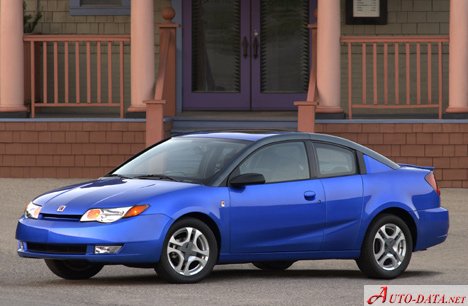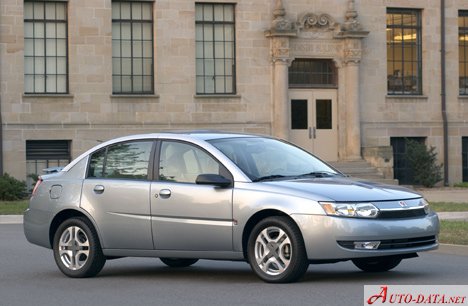
The Saturn ION 2.4 i 16V, produced from 2002 to 2007, was a compact sedan marketed by Saturn, General Motors’ now-defunct division. Positioned as an entry-level vehicle, the ION aimed to offer affordability and practicality within the North American automotive landscape. It represented Saturn’s continued effort to differentiate itself through unique design and a customer-focused sales experience. The 2.4i model, equipped with a 173 horsepower engine, was a key variant within the ION lineup, offering a balance of performance and fuel economy for the time.
Saturn ION 2.4 i 16V: Overview and Market Position
The Saturn ION was intended to replace the aging Saturn SL and SC models, offering a more modern and competitive package. It was part of a broader GM strategy to revitalize the Saturn brand, which had initially gained traction with its polymer body panels and no-haggle pricing. The ION, however, faced increasing competition from established rivals like the Honda Civic and Toyota Corolla. While it didn’t achieve the sales success of those competitors, the ION represented a significant step forward for Saturn in terms of design and engineering. The 2.4-liter engine option provided a noticeable performance upgrade over the base 2.2-liter engine, making it a popular choice for buyers seeking a more responsive driving experience.
Engine & Performance
The heart of the Saturn ION 2.4 i 16V is a 2.4-liter inline four-cylinder engine, designated the LE5. This naturally aspirated engine produces 173 horsepower at 6200 rpm and 220 Nm (162.26 lb.-ft.) of torque at 5000 rpm. The engine features multi-port fuel injection and a compression ratio of 10.5:1. Power delivery is adequate for everyday driving, and the engine is known for its relative reliability. The ION 2.4i could accelerate from 0 to 60 mph in approximately 9.7 seconds, and achieve a top speed of 175 km/h (108.74 mph). The engine’s power-to-weight ratio is 7.4 kg/Hp, and its torque-to-weight ratio is 5.8 kg/Nm. The engine is transversely mounted at the front of the vehicle and is paired with a four-speed automatic transmission, which directs power to the front wheels.
Design & Features
The Saturn ION is a four-door sedan with a relatively spacious interior for its class. The design, while not groundbreaking, was considered modern for its time, featuring a distinctive front fascia and a sloping roofline. The interior prioritized functionality and offered seating for five passengers. Standard features included air conditioning, power windows and locks, and an AM/FM stereo. Available options included a CD player, cruise control, and upgraded upholstery. Safety features, while limited by the standards of today, included anti-lock brakes (ABS). The ION’s trunk offered 454 liters (16.03 cubic feet) of cargo space, providing ample room for luggage and groceries. The vehicle’s overall dimensions are 4686 mm (184.49 in) in length, 1707 mm (67.2 in) in width, and 1458 mm (57.4 in) in height, with a wheelbase of 2621 mm (103.19 in).
Technical Specifications
| Brand | Saturn |
| Model | ION |
| Generation | ION |
| Type (Engine) | 2.4 i 16V (173 Hp) |
| Start of production | 2002 |
| End of production | March, 2007 |
| Powertrain Architecture | Internal Combustion engine |
| Body type | Sedan |
| Seats | 5 |
| Doors | 4 |
| Fuel Type | Petrol (Gasoline) |
| Acceleration 0 – 100 km/h | 10.2 sec |
| Acceleration 0 – 62 mph | 10.2 sec |
| Acceleration 0 – 60 mph | 9.7 sec |
| Maximum speed | 175 km/h (108.74 mph) |
| Weight-to-power ratio | 7.4 kg/Hp |
| Weight-to-torque ratio | 5.8 kg/Nm |
| Power | 173 Hp @ 6200 rpm |
| Power per litre | 72.6 Hp/l |
| Torque | 220 Nm @ 5000 rpm (162.26 lb.-ft. @ 5000 rpm) |
| Engine layout | Front, Transverse |
| Engine Model/Code | LE5 |
| Engine displacement | 2384 cm3 (145.48 cu. in.) |
| Number of cylinders | 4 |
| Engine configuration | Inline |
| Cylinder Bore | 88 mm (3.46 in.) |
| Piston Stroke | 98 mm (3.86 in.) |
| Compression ratio | 10.5:1 |
| Number of valves per cylinder | 4 |
| Fuel injection system | Multi-port manifold injection |
| Engine aspiration | Naturally aspirated engine |
| Engine oil capacity | 4.7 l (4.97 US qt | 4.14 UK qt) |
| Kerb Weight | 1280 kg (2821.92 lbs.) |
| Trunk (boot) space – minimum | 454 l (16.03 cu. ft.) |
| Fuel tank capacity | 50 l (13.21 US gal | 11 UK gal) |
| Length | 4686 mm (184.49 in.) |
| Width | 1707 mm (67.2 in.) |
| Height | 1458 mm (57.4 in.) |
| Wheelbase | 2621 mm (103.19 in.) |
| Front track | 1494 mm (58.82 in.) |
| Rear (Back) track | 1483 mm (58.39 in.) |
| Drivetrain Architecture | The Internal combustion engine (ICE) drives the front wheels of the vehicle. |
| Drive wheel | Front wheel drive |
| Number of gears and type of gearbox | 4 gears, automatic transmission |
| Front suspension | Coil spring |
| Rear suspension | Coil spring |
| Front brakes | Ventilated discs |
| Rear brakes | Drum |
| Assisting systems | ABS (Anti-lock braking system) |
| Steering type | Steering rack and pinion |
| Power steering | Hydraulic Steering |
| Tires size | 205/55 R15 |
The Saturn ION, while ultimately discontinued, served as an important model for the brand during a period of transition. The 2.4i variant offered a competitive level of performance and features within the compact sedan segment, appealing to buyers seeking a practical and affordable vehicle. Its legacy lies in its contribution to Saturn’s design evolution and its attempt to carve out a unique niche in the crowded North American automotive market.