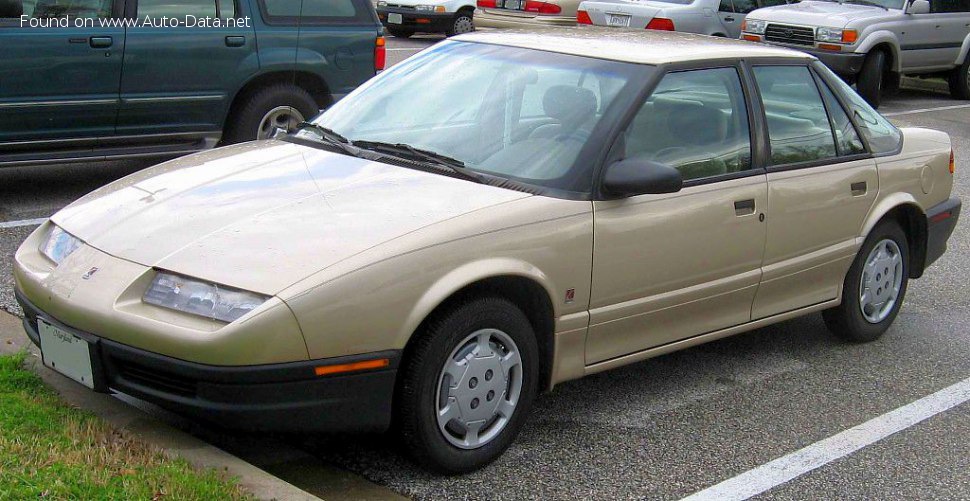
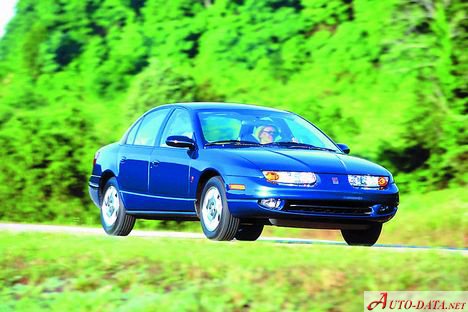
The Saturn SL, specifically the 55-Type variant with the 1.9i engine producing 100 horsepower, represents a significant chapter in the history of General Motors’ attempt to revolutionize the American automotive market. Produced from 1995 to 2003, the SL was a compact sedan designed to compete with established Japanese imports, offering a unique blend of affordability, distinctive styling, and a customer-focused sales experience. The SL was the cornerstone of the Saturn brand, embodying its initial promise of a “different kind of car company.” This model, while not a performance leader, provided reliable transportation and a comfortable ride for a broad range of consumers, and played a key role in establishing Saturn’s identity before the brand’s eventual discontinuation.
Saturn SL (55-Type) 1.9i: A Detailed Overview
The Saturn SL (55-Type) 1.9i was the initial offering from Saturn, and it quickly became known for its polymer body panels – a departure from traditional steel construction. This innovative approach, while intended to reduce corrosion and ease repairs, also presented unique challenges in terms of paint adhesion and dent resistance. The SL aimed to provide a practical and economical option for families and commuters, prioritizing fuel efficiency and ease of maintenance. The “55-Type” designation refers to an internal GM code, indicating a specific iteration of the SL platform. The 1.9i engine, while modest in output by modern standards, was designed for reliability and fuel economy, making it a popular choice for everyday driving.
Engine & Performance
The Saturn SL 1.9i is powered by a 1.9-liter inline four-cylinder engine, designated the L24. This naturally aspirated engine produces 100 horsepower at 5000 rpm and 155 Nm (114.32 lb.-ft.) of torque at 2400 rpm. The engine features a multi-port fuel injection system and an overhead camshaft (OHC) valvetrain with two valves per cylinder. Power delivery is managed through a four-speed automatic transmission, driving the front wheels. The engine’s power-to-weight ratio is 94.5 horsepower per tonne, and its torque-to-weight ratio is 146.5 Nm per tonne. Fuel economy figures are respectable for its era, achieving approximately 8.7 l/100 km (27 US mpg) in urban driving, 6.4 l/100 km (36.8 US mpg) on the highway, and a combined consumption of 6.9 l/100 km (34.1 US mpg). The engine’s displacement is 1901 cm³ (116.01 cu. in.), with a bore of 82 mm (3.23 in.) and a stroke of 90 mm (3.54 in.). Compression ratio is set at 9.3:1. The engine requires 3.8 liters (4.02 US qt / 3.34 UK qt) of engine oil and 6.5 liters (6.87 US qt / 5.72 UK qt) of coolant.
Design & Features
The Saturn SL is a four-door sedan with a relatively simple and functional design. Its most distinctive feature is its plastic body panels, which were designed to be dent-resistant and rustproof. The interior offers seating for five passengers and provides a reasonable amount of space for a compact sedan. Safety features for the time included an Anti-lock Braking System (ABS), which was becoming increasingly common in the mid-1990s. The SL’s design prioritized practicality and affordability over luxury or sporty aesthetics. The trunk offers a minimum capacity of 343 liters (12.11 cu. ft.). The vehicle’s dimensions are: length 4524 mm (178.11 in.), width 1687 mm (66.42 in.), and height 1397 mm (55 in.). The wheelbase measures 2601 mm (102.4 in.), with a front track of 1443 mm (56.81 in.) and a rear track of 1422 mm (55.98 in.). The SL rides on 14-inch wheel rims with tire size 185/65 R14. Steering is rack and pinion with hydraulic power assistance.
Technical Specifications
| Brand | Saturn |
| Model | SL |
| Generation | SL (55-Type) |
| Type (Engine) | 1.9i (100 Hp) Automatic |
| Start of production | 1995 |
| End of production | 2003 |
| Powertrain Architecture | Internal Combustion engine |
| Body type | Sedan |
| Seats | 5 |
| Doors | 4 |
| Fuel consumption (urban) | 8.7 l/100 km (27 US mpg) |
| Fuel consumption (extra urban) | 6.4 l/100 km (36.8 US mpg) |
| Fuel consumption (combined) | 6.9 l/100 km (34.1 US mpg) |
| Fuel Type | Petrol (Gasoline) |
| Weight-to-power ratio | 10.6 kg/Hp |
| Weight-to-torque ratio | 6.8 kg/Nm |
| Power | 100 Hp @ 5000 rpm |
| Torque | 155 Nm @ 2400 rpm (114.32 lb.-ft. @ 2400 rpm) |
| Engine layout | Front, Transverse |
| Engine Model/Code | L24 |
| Engine displacement | 1901 cm³ (116.01 cu. in.) |
| Number of cylinders | 4 |
| Engine configuration | Inline |
| Cylinder Bore | 82 mm (3.23 in.) |
| Piston Stroke | 90 mm (3.54 in.) |
| Compression ratio | 9.3:1 |
| Number of valves per cylinder | 2 |
| Fuel injection system | Multi-port manifold injection |
| Engine aspiration | Naturally aspirated |
| Valvetrain | OHC |
| Engine oil capacity | 3.8 l (4.02 US qt | 3.34 UK qt) |
| Coolant | 6.5 l (6.87 US qt | 5.72 UK qt) |
| Kerb Weight | 1058 kg (2332.49 lbs.) |
| Trunk (boot) space | 343 l (12.11 cu. ft.) |
| Fuel tank capacity | 46 l (12.15 US gal | 10.12 UK gal) |
| Length | 4524 mm (178.11 in.) |
| Width | 1687 mm (66.42 in.) |
| Height | 1397 mm (55 in.) |
| Wheelbase | 2601 mm (102.4 in.) |
| Front track | 1443 mm (56.81 in.) |
| Rear track | 1422 mm (55.98 in.) |
| Drivetrain Architecture | Front wheel drive |
| Number of gears | 4 |
| Gearbox type | Automatic transmission |
| Front suspension | Coil spring |
| Rear suspension | Coil spring |
| Front brakes | Ventilated discs |
| Rear brakes | Drum |
| Assisting systems | ABS (Anti-lock braking system) |
| Steering type | Steering rack and pinion |
| Power steering | Hydraulic |
| Tires size | 185/65 R14 |
| Wheel rims size | 14 |