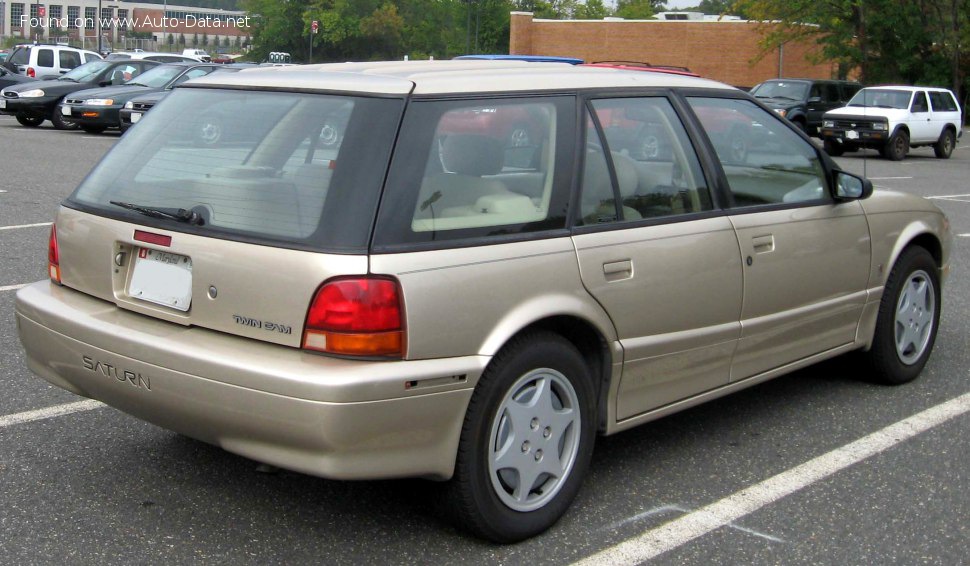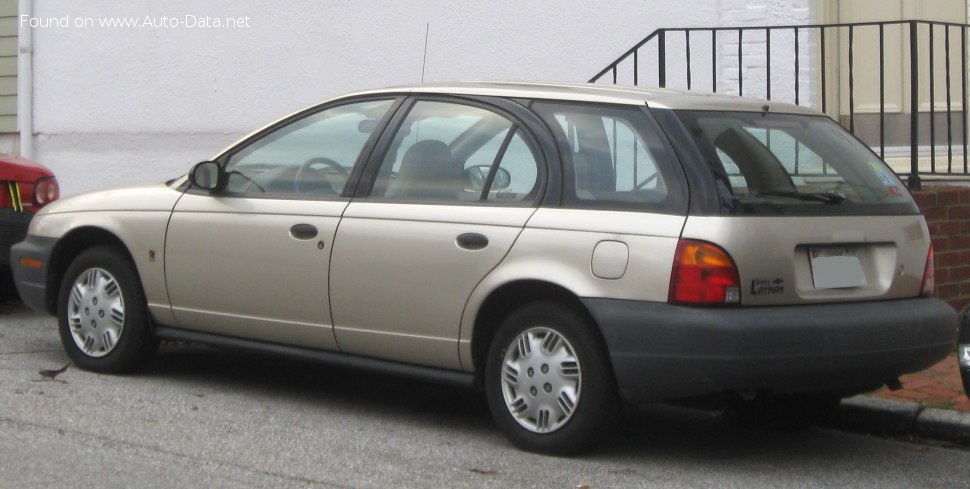
The Saturn SW, specifically the 85-type 1.9i model producing 100 horsepower, represents a unique chapter in American automotive history. Produced from 1995 to 2003, this station wagon (estate) was a key offering from the then-nascent Saturn Corporation, General Motors’ attempt to create a brand focused on a different ownership experience. While Saturn ultimately ceased operations in 2010, the SW, and particularly this 1.9i variant, holds a place as a practical and relatively efficient family vehicle of its era. The SW competed in the compact station wagon segment, offering an alternative to imports and more traditional American offerings.
Saturn SW (85-type) 1.9i: A Detailed Overview
The Saturn SW was designed to appeal to buyers seeking a no-haggle purchasing experience and a community-focused dealership network. The “85-type” designation refers to an internal Saturn coding system, indicating a specific iteration of the SW model. The 1.9i variant, powered by a 1.9-liter inline four-cylinder engine, was a mainstay of the SW lineup, balancing affordability with acceptable performance. It was never a high-performance vehicle, but it provided reliable transportation for families and individuals.
Engine & Performance
The heart of the Saturn SW 1.9i is a 1.9-liter (1901 cm3 or 116.01 cu. in.) inline four-cylinder engine. This naturally aspirated engine produces 100 horsepower at 5000 rpm and 155 Nm (114.32 lb.-ft.) of torque at 2400 rpm. The engine features a multi-port fuel injection system and an overhead camshaft (OHC) valvetrain with two valves per cylinder. Power per liter is rated at 52.6 hp/l. The engine’s transverse front-wheel-drive layout was common for compact cars of the period, contributing to efficient packaging. Acceleration from 0 to 100 km/h (0-62 mph) takes 10.5 seconds, while 0-60 mph is achieved in approximately 10 seconds. The SW 1.9i has a maximum speed of 150 km/h (93.21 mph). The weight-to-power ratio is 10.7 kg/Hp, and the weight-to-torque ratio is 6.9 kg/Nm.
Design & Features
The Saturn SW is a five-door station wagon (estate) designed to maximize interior space and practicality. It seats five passengers comfortably and offers a generous cargo area for its class. The SW’s exterior styling was relatively conservative for the 1990s and early 2000s, prioritizing functionality over flamboyant design. Key features included a relatively spacious interior, a user-friendly dashboard layout, and a focus on safety. The SW came standard with an anti-lock braking system (ABS), which was becoming increasingly common on vehicles of this era. The suspension utilizes a spring strut setup in the front and a double wishbone configuration in the rear, providing a comfortable ride. Steering is rack and pinion with hydraulic power assistance. The vehicle rides on 175/70 R14 tires. The SW’s plastic body panels, a hallmark of early Saturn models, were designed to be dent-resistant and easy to repair, contributing to lower insurance costs.
Technical Specifications
| Brand | Saturn |
| Model | SW |
| Generation | SW (85 -type) |
| Type (Engine) | 1.9i (100 Hp) |
| Start of production | 1995 |
| End of production | 2003 |
| Powertrain Architecture | Internal Combustion engine |
| Body type | Station wagon (estate) |
| Seats | 5 |
| Doors | 5 |
| Fuel consumption (urban) | 8.1 l/100 km (29 US mpg, 34.9 UK mpg, 12.3 km/l) |
| Fuel consumption (extra urban) | 5.9 l/100 km (39.9 US mpg, 47.9 UK mpg, 16.9 km/l) |
| Fuel consumption (combined) | 6.9 l/100 km (34.1 US mpg, 40.9 UK mpg, 14.5 km/l) |
| Fuel Type | Petrol (Gasoline) |
| Acceleration 0 – 100 km/h | 10.5 sec |
| Acceleration 0 – 62 mph | 10.5 sec |
| Acceleration 0 – 60 mph | 10 sec |
| Maximum speed | 150 km/h (93.21 mph) |
| Weight-to-power ratio | 10.7 kg/Hp |
| Weight-to-torque ratio | 6.9 kg/Nm |
| Power | 100 Hp @ 5000 rpm |
| Torque | 155 Nm @ 2400 rpm (114.32 lb.-ft. @ 2400 rpm) |
| Engine layout | Front, Transverse |
| Engine Model/Code | L24 |
| Engine displacement | 1901 cm3 (116.01 cu. in.) |
| Number of cylinders | 4 |
| Engine configuration | Inline |
| Cylinder Bore | 82 mm (3.23 in.) |
| Piston Stroke | 90 mm (3.54 in.) |
| Compression ratio | 9.3:1 |
| Number of valves per cylinder | 2 |
| Fuel injection system | Multi-port manifold injection |
| Engine aspiration | Naturally aspirated engine |
| Valvetrain | OHC |
| Engine oil capacity | 3.8 l (4.02 US qt | 3.34 UK qt) |
| Coolant capacity | 6.5 l (6.87 US qt | 5.72 UK qt) |
| Kerb Weight | 1074 kg (2367.76 lbs.) |
| Fuel tank capacity | 49 l (12.94 US gal | 10.78 UK gal) |
| Length | 4478 mm (176.3 in.) |
| Width | 1718 mm (67.64 in.) |
| Height | 1364 mm (53.7 in.) |
| Wheelbase | 2601 mm (102.4 in.) |
| Front track | 1443 mm (56.81 in.) |
| Rear track | 1422 mm (55.98 in.) |
| Drivetrain Architecture | Front wheel drive |
| Number of gears and type of gearbox | 5 gears, manual transmission |
| Front suspension | Spring Strut |
| Rear suspension | Double wishbone |
| Front brakes | Ventilated discs |
| Rear brakes | Drum |
| Assisting systems | ABS (Anti-lock braking system) |
| Steering type | Steering rack and pinion |
| Power steering | Hydraulic Steering |
| Tires size | 175/70 R14 |
The Saturn SW 1.9i, while not a groundbreaking vehicle in terms of performance or technology, represented a unique approach to car sales and ownership. Its practicality, combined with the Saturn brand’s focus on customer service, made it a popular choice for families seeking a reliable and affordable station wagon during its production run.