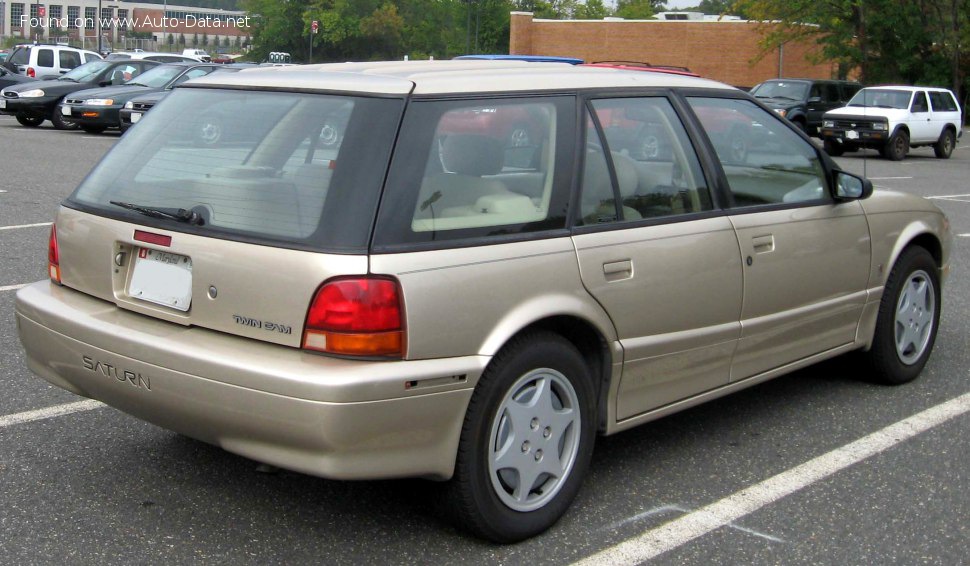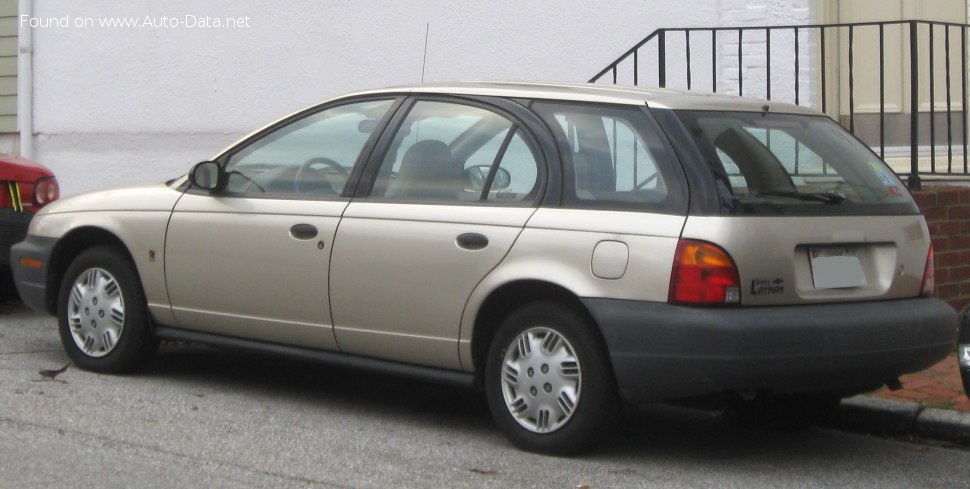
The Saturn SW, specifically the 85-type model produced between 1995 and 2003, represents a unique chapter in American automotive history. As a compact station wagon, or estate as it’s known in Europe, the SW was a key offering in Saturn’s lineup, a brand established by General Motors with a distinct sales and service philosophy. While not a high-performance vehicle, the SW aimed to provide practical, reliable transportation with a focus on customer satisfaction. The 1.9i variant, equipped with a 100 horsepower engine and automatic transmission, was a common configuration, designed for everyday commuting and family use. The Saturn SW competed with other compact wagons like the Dodge Caravan, Toyota Corolla Wagon, and Ford Escort Wagon, offering a different approach to the segment with its polymer body panels and no-haggle pricing.
Saturn SW (85-type) 1.9i: A Detailed Overview
The Saturn SW (85-type) was a five-door, five-seat station wagon built on a front-wheel-drive platform. It was part of Saturn’s initial model range, designed to challenge established automotive norms. The “85-type” designation refers to internal updates and refinements made during the model’s production run. The SW’s most notable feature was its use of polymer (plastic) body panels bonded to a steel space frame. This construction method, while innovative, aimed to reduce corrosion and simplify repairs. The 1.9i model, powered by a 1.9-liter inline-four engine, was positioned as the entry-level offering, prioritizing fuel efficiency and affordability.
Engine & Performance
The heart of the Saturn SW 1.9i is a 1.9-liter (1901 cm3 or 116.01 cu. in.) inline-four cylinder engine. This naturally aspirated engine produces 100 horsepower at 5000 rpm and 155 Nm (114.32 lb.-ft.) of torque at 2400 rpm. The engine utilizes a multi-port fuel injection system and an overhead camshaft (OHC) valvetrain with two valves per cylinder. While not particularly powerful, the engine provides adequate performance for daily driving. Acceleration from 0 to 100 km/h (0-62 mph) takes approximately 11.5 seconds, and 0 to 60 mph is achieved in around 10.9 seconds. The SW 1.9i has a maximum speed of 150 km/h (93.21 mph). The engine’s power-to-weight ratio is 93.1 Hp/tonne, and the torque-to-weight ratio is 144.3 Nm/tonne. Fuel economy is a strong point, with combined fuel consumption rated at 6.9 l/100 km (34.1 US mpg or 40.9 UK mpg). The engine requires 3.8 liters (4.02 US qt) of engine oil and 6.5 liters (6.87 US qt) of coolant.
Design & Features
The Saturn SW’s design prioritized practicality and functionality. Its station wagon body style offered a generous cargo area, making it suitable for families and those needing to transport larger items. The polymer body panels, while visually distinct, were chosen for their durability and resistance to rust. Inside, the SW offered a relatively simple and functional interior. Safety features for the era included an Anti-lock Braking System (ABS), which was becoming increasingly common in the mid-1990s. The SW featured a hydraulic power steering system and a four-speed automatic transmission. The suspension consisted of a spring strut setup at the front and a double wishbone arrangement at the rear, providing a comfortable ride. The vehicle rides on 14-inch wheel rims with 175/70 R14 tires. The SW’s dimensions are 4478 mm (176.3 in) in length, 1718 mm (67.64 in) in width, and 1364 mm (53.7 in) in height, with a wheelbase of 2601 mm (102.4 in).
Technical Specifications
| Brand | Saturn |
| Model | SW |
| Generation | SW (85 -type) |
| Type | 1.9i (100 Hp) Automatic |
| Start of production | 1995 |
| End of production | 2003 |
| Powertrain Architecture | Internal Combustion engine |
| Body type | Station wagon (estate) |
| Seats | 5 |
| Doors | 5 |
| Fuel consumption (urban) | 8.7 l/100 km (27 US mpg, 32.5 UK mpg, 11.5 km/l) |
| Fuel consumption (extra urban) | 6.4 l/100 km (36.8 US mpg, 44.1 UK mpg, 15.6 km/l) |
| Fuel consumption (combined) | 6.9 l/100 km (34.1 US mpg, 40.9 UK mpg, 14.5 km/l) |
| Fuel Type | Petrol (Gasoline) |
| Acceleration 0 – 100 km/h | 11.5 sec |
| Acceleration 0 – 62 mph | 11.5 sec |
| Acceleration 0 – 60 mph | 10.9 sec |
| Maximum speed | 150 km/h (93.21 mph) |
| Weight-to-power ratio | 10.7 kg/Hp |
| Weight-to-torque ratio | 6.9 kg/Nm |
| Power | 100 Hp @ 5000 rpm |
| Torque | 155 Nm @ 2400 rpm (114.32 lb.-ft. @ 2400 rpm) |
| Engine layout | Front, Transverse |
| Engine Model/Code | L24 |
| Engine displacement | 1901 cm3 (116.01 cu. in.) |
| Number of cylinders | 4 |
| Engine configuration | Inline |
| Cylinder Bore | 82 mm (3.23 in.) |
| Piston Stroke | 90 mm (3.54 in.) |
| Compression ratio | 9.3:1 |
| Number of valves per cylinder | 2 |
| Fuel injection system | Multi-port manifold injection |
| Engine aspiration | Naturally aspirated engine |
| Valvetrain | OHC |
| Engine oil capacity | 3.8 l (4.02 US qt | 3.34 UK qt) |
| Coolant | 6.5 l (6.87 US qt | 5.72 UK qt) |
| Kerb Weight | 1074 kg (2367.76 lbs.) |
| Fuel tank capacity | 49 l (12.94 US gal | 10.78 UK gal) |
| Length | 4478 mm (176.3 in.) |
| Width | 1718 mm (67.64 in.) |
| Height | 1364 mm (53.7 in.) |
| Wheelbase | 2601 mm (102.4 in.) |
| Front track | 1443 mm (56.81 in.) |
| Rear track | 1422 mm (55.98 in.) |
| Drivetrain Architecture | Front wheel drive |
| Number of gears | 4 |
| Gearbox type | Automatic transmission |
| Front suspension | Spring Strut |
| Rear suspension | Double wishbone |
| Front brakes | Ventilated discs |
| Rear brakes | Drum |
| Assisting systems | ABS (Anti-lock braking system) |
| Steering type | Steering rack and pinion |
| Power steering | Hydraulic Steering |
| Tires size | 175/70 R14 |
| Wheel rims size | 14 |
The Saturn SW, while ultimately discontinued, remains a noteworthy vehicle for its innovative construction and its role in challenging conventional automotive practices. It offered a practical and affordable option for families seeking a compact station wagon, and its unique design continues to attract attention from automotive enthusiasts.