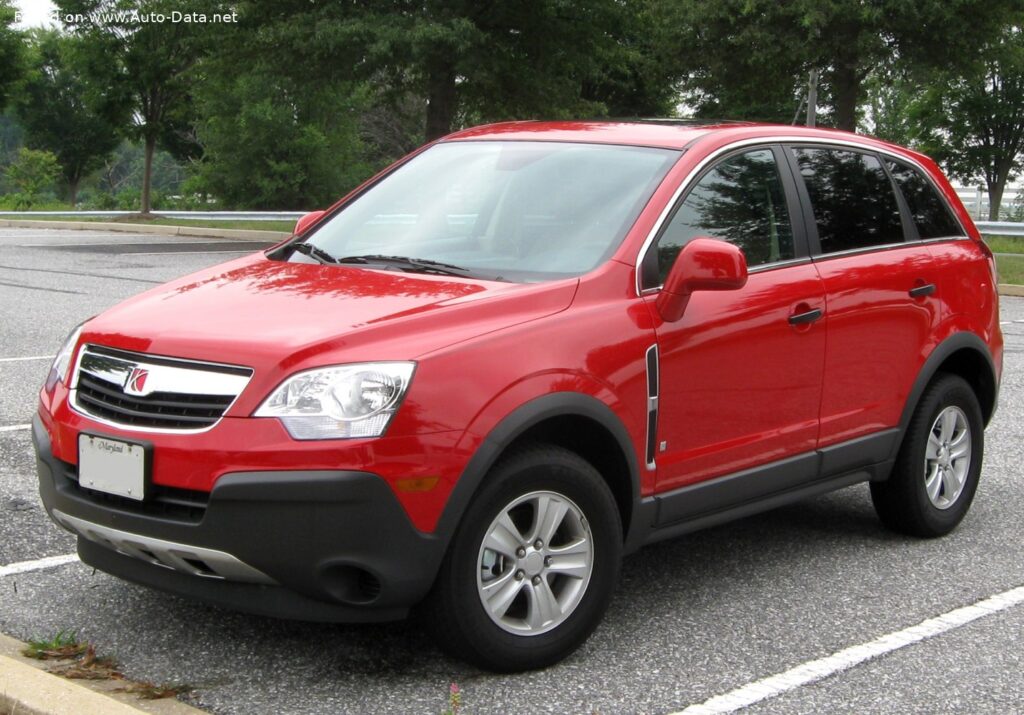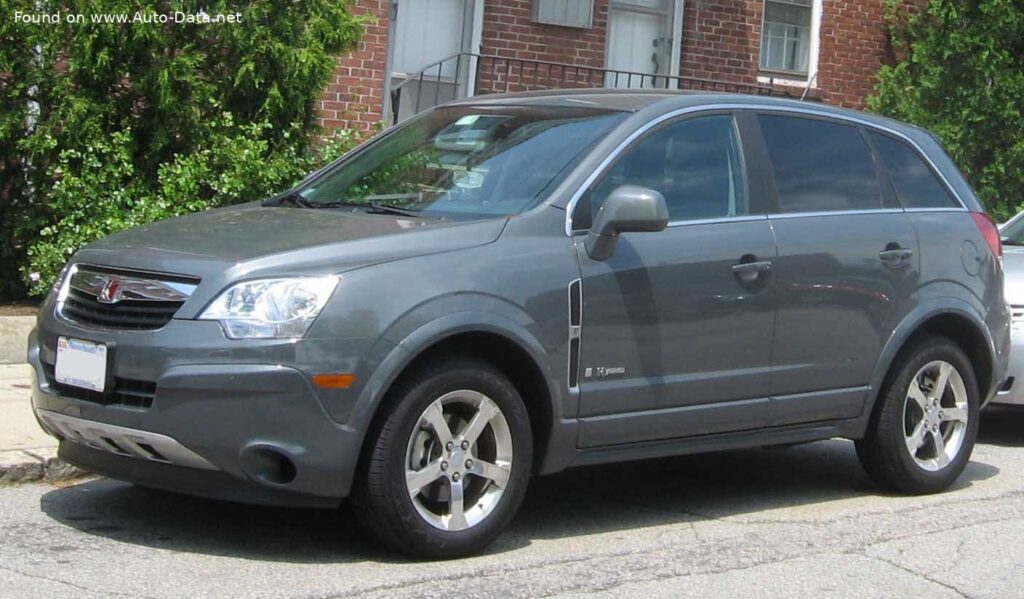
The Saturn VUE II 2.4i Hybrid Automatic, produced between 2007 and 2009, represents a significant step in Saturn’s attempt to offer a fuel-efficient and technologically advanced compact crossover SUV. As a product of General Motors, the VUE II was designed to compete in the burgeoning crossover market, offering an alternative to traditional SUVs with a focus on hybrid technology. While Saturn as a brand ultimately ceased operations in 2010, the VUE II remains a notable example of early 21st-century hybrid vehicle engineering and design within the American automotive landscape. It was never sold outside of North America.
Saturn VUE II: A Hybrid Pioneer
The VUE II was the second generation of the VUE model, and it marked a departure from the first generation’s more unconventional styling. The introduction of the 2.4i Hybrid variant was particularly important, as it showcased GM’s commitment to developing hybrid technology and offering consumers more fuel-efficient options. The VUE II aimed to blend the practicality of a small SUV with the benefits of a hybrid powertrain, appealing to environmentally conscious buyers seeking versatility and economy.
Engine & Performance
The Saturn VUE II 2.4i Hybrid utilizes a Full Hybrid Electric Vehicle (FHEV) powertrain. At its heart is a 2.4-liter inline four-cylinder gasoline engine, designated the LAT engine code, producing 173 horsepower at 6200 rpm and 220 Newton-meters (162.26 lb.-ft.) of torque at 5000 rpm. This engine features multi-port fuel injection, a double overhead camshaft (DOHC) valvetrain with variable valve timing (VVT), and a compression ratio of 10.5:1. Complementing the gasoline engine is a 74 horsepower electric motor positioned between the engine and the automatic transmission. The electric motor draws power from a 300-volt nickel-metal hydride (NiMH) battery pack located under the rear seats. The powertrain operates in a blended mode, seamlessly switching between gasoline, electric, or a combination of both, optimizing for fuel efficiency and performance. The vehicle is equipped with a four-speed automatic transmission, delivering power to the front wheels. The weight-to-power ratio is 9.9 kg/Hp, and the weight-to-torque ratio is 7.8 kg/Nm, indicating a reasonable power-to-weight balance for its class.
Design & Features
The Saturn VUE II is a five-door, five-seat crossover SUV, characterized by its relatively conservative and practical design. Compared to the first-generation VUE, the second generation adopted a more mainstream aesthetic, aiming for broader appeal. The body style is that of a compact off-road vehicle, though it’s primarily designed for on-road use. Key features of the VUE II include a spacious interior with a flexible cargo area, offering 827 liters (29.21 cu. ft.) of space with the rear seats up and expanding to 1597 liters (56.4 cu. ft.) with the seats folded down. Safety features, typical for vehicles of this era, include an Anti-lock Braking System (ABS). The VUE II also features electric power steering and 17-inch wheel rims. The vehicle’s dimensions are 4574 mm (180.08 in.) in length, 1849 mm (72.8 in.) in width, and 1701 mm (66.97 in.) in height, with a wheelbase of 2707 mm (106.57 in.).
Technical Specifications
| Brand | Saturn |
| Model | VUE |
| Generation | VUE II |
| Type (Engine) | 2.4i (173 Hp) Hybrid Automatic |
| Start of production | 2007 |
| End of production | 2009 |
| Powertrain Architecture | FHEV (Full Hybrid Electric Vehicle) |
| Body type | Off-road vehicle |
| Seats | 5 |
| Doors | 5 |
| Fuel consumption (urban) | 9.4 l/100 km (25 US mpg) |
| Fuel consumption (extra urban) | 7.4 l/100 km (31.8 US mpg) |
| Fuel Type | Petrol (Gasoline) |
| Weight-to-power ratio | 9.9 kg/Hp |
| Weight-to-torque ratio | 7.8 kg/Nm |
| Battery voltage | 300 V |
| Battery technology | Nickel-metal hydride (NiMH) |
| Battery location | Under the rear seats |
| Electric motor power | 74 Hp |
| Electric motor location | Between the combustion engine and the transmission |
| Power | 173 Hp @ 6200 rpm |
| Torque | 220 Nm @ 5000 rpm (162.26 lb.-ft. @ 5000 rpm) |
| Engine layout | Front, Transverse |
| Engine Model/Code | LAT |
| Engine displacement | 2384 cm3 (145.48 cu. in.) |
| Number of cylinders | 4 |
| Engine configuration | Inline |
| Cylinder Bore | 88 mm (3.46 in.) |
| Piston Stroke | 98 mm (3.86 in.) |
| Compression ratio | 10.5:1 |
| Number of valves per cylinder | 4 |
| Fuel injection system | Multi-port manifold injection |
| Engine aspiration | Naturally aspirated engine |
| Valvetrain | DOHC, VVT |
| Engine oil capacity | 4.7 l (4.97 US qt | 4.14 UK qt) |
| Coolant | 9 l (9.51 US qt | 7.92 UK qt) |
| Kerb Weight | 1718 kg (3787.54 lbs.) |
| Trunk (boot) space – minimum | 827 l (29.21 cu. ft.) |
| Trunk (boot) space – maximum | 1597 l (56.4 cu. ft.) |
| Fuel tank capacity | 68 l (17.96 US gal | 14.96 UK gal) |
| Permitted trailer load with brakes (12%) | 1588 kg (3500.94 lbs.) |
| Length | 4574 mm (180.08 in.) |
| Width | 1849 mm (72.8 in.) |
| Height | 1701 mm (66.97 in.) |
| Wheelbase | 2707 mm (106.57 in.) |
| Front track | 1560 mm (61.42 in.) |
| Rear (Back) track | 1570 mm (61.81 in.) |
| Drivetrain Architecture | Front wheel drive. FHEV. ICE and electric motor drive front wheels. |
| Drive wheel | Front wheel drive |
| Number of gears and type of gearbox | 4 gears, automatic transmission |
| Front suspension | Independent type McPherson, Transverse stabilizer |
| Rear suspension | Transverse stabilizer, Trailing arm |
| Front brakes | Ventilated discs |
| Rear brakes | Disc |
| Assisting systems | ABS (Anti-lock braking system) |
| Steering type | Steering rack and pinion |
| Power steering | Electric Steering |
| Wheel rims size | 17 |