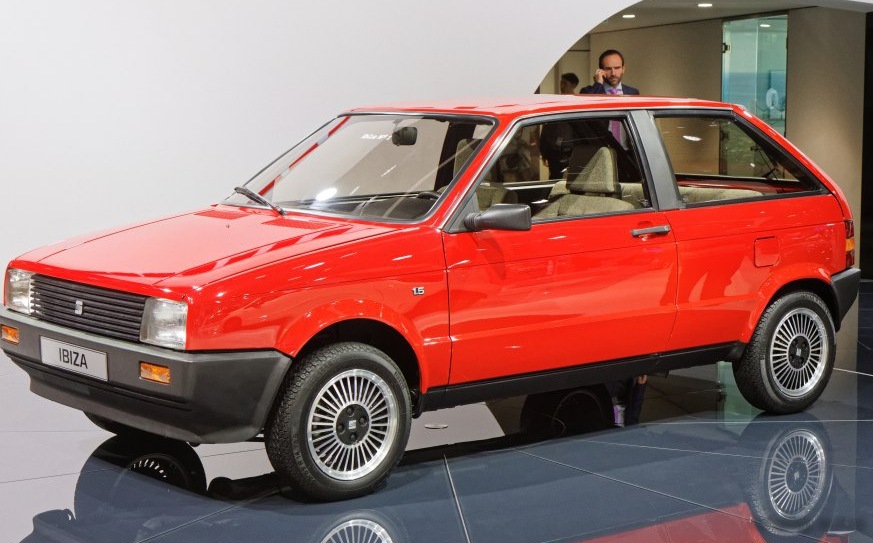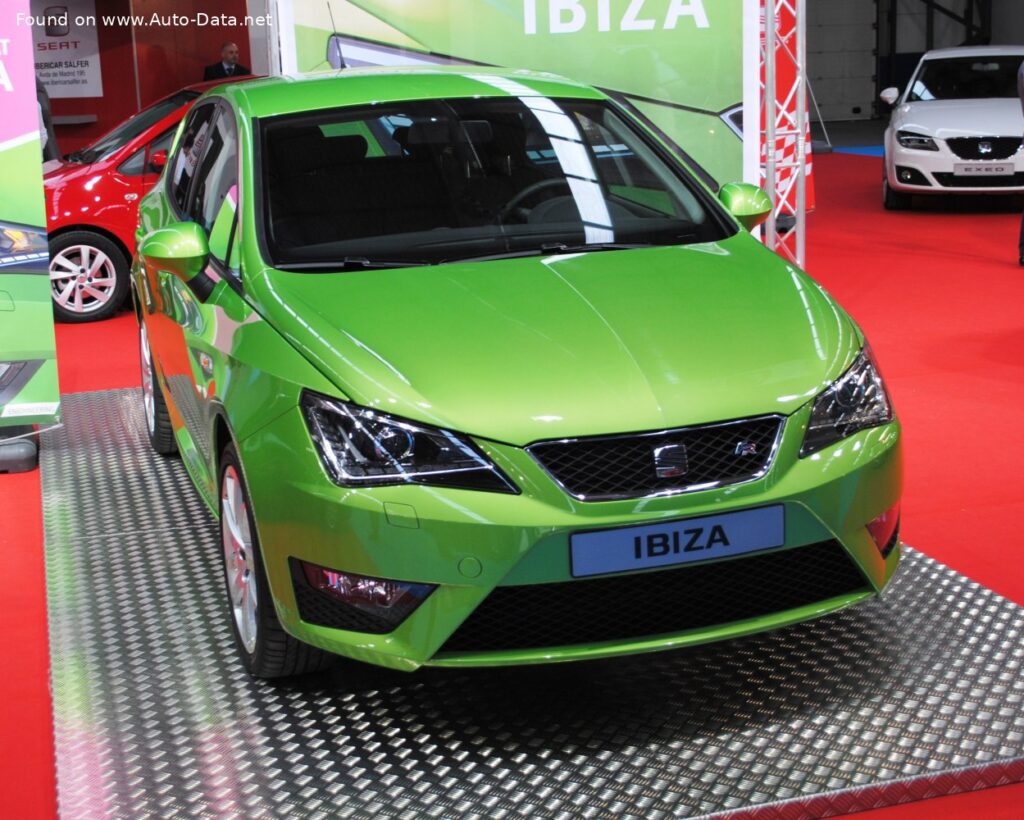
The Seat Ibiza IV (facelift 2012) 1.2 TDI (75 Hp) Start/Stop: A European Supermini Champion
The Seat Ibiza IV (facelift 2012) 1.2 TDI (75 Hp) start/stop represents a significant iteration of Seat’s highly successful supermini, a staple in the European automotive market. Unveiled in 2012, this refreshed fourth-generation Ibiza solidified its position as a stylish, practical, and fuel-efficient option within the fiercely competitive B-segment. As a brand under the Volkswagen Group umbrella, Seat leveraged shared platforms and powertrains, allowing the Ibiza to offer compelling technology and engineering at an accessible price point. This particular variant, equipped with the 1.2-liter TDI diesel engine and a start/stop system, was specifically tailored to address the growing demand for low emissions and exceptional fuel economy in its primary European markets, where diesel engines held a strong presence, particularly in urban and commuter roles.
While the Seat brand itself is not officially sold in the United States, the Ibiza’s mechanical underpinnings and market positioning offer valuable insights into global automotive trends. It competed directly with European stalwarts like the Volkswagen Polo (its platform sibling), Ford Fiesta, Renault Clio, and Peugeot 208, carving out its niche with a sportier design aesthetic often associated with the Spanish marque. The 2012 facelift brought subtle but effective styling updates, enhancing its contemporary appeal and ensuring its relevance against newer rivals.
Engine and Performance: The Economical 1.2 TDI in the Seat Ibiza IV
At the heart of this particular Seat Ibiza IV model lies the 1.2-liter TDI (Turbocharged Direct Injection) diesel engine, a three-cylinder unit designed for efficiency and compact packaging. This powerplant, internally designated CFWA, delivers 75 horsepower (Hp) at 4200 revolutions per minute (rpm) and a robust 132.76 pound-feet (lb.-ft.) of torque at a low 2000 rpm. The inclusion of a turbocharger and an intercooler was crucial for extracting usable power and torque from such a small displacement engine, making it feel more responsive than its modest horsepower figure might suggest, especially in city driving.
The engine’s front, transverse layout and inline configuration are typical for a front-wheel-drive supermini, optimizing interior space and handling dynamics. With a compression ratio of 16.5:1 and a common rail fuel injection system, the 1.2 TDI was engineered for precise fuel delivery and optimal combustion, directly contributing to its impressive fuel economy figures. The cylinder bore of 3.13 inches and piston stroke of 3.17 inches indicate a nearly square engine design, balancing torque and revving capability.
Performance-wise, the Ibiza 1.2 TDI was not built for outright speed but for practical everyday driving. It accelerates from 0 to 60 miles per hour (mph) in a calculated 13.2 seconds, with a top speed of 107.5 mph. These figures are perfectly adequate for urban commutes and highway cruising in Europe. The standard five-speed manual transmission worked in harmony with the engine, allowing drivers to maximize its torque band for efficient driving. Crucially, the integration of a Start & Stop System and a Particulate Filter underscored Seat’s commitment to environmental responsibility, helping the vehicle achieve a remarkably low CO2 emission rating of 89 grams per kilometer and compliance with the Euro 5 emission standard. This technology automatically shuts off the engine when the vehicle is stationary (e.g., at a traffic light) and restarts it seamlessly, significantly reducing fuel consumption and emissions in stop-and-go traffic.
Design and Features: Practicality Meets Sporty European Style
The Seat Ibiza IV (facelift 2012) retained the sharp, dynamic styling that characterized the fourth generation, but with subtle refinements. The facelift introduced revised headlights, a redesigned front bumper with a larger grille, and updated alloy wheel designs, lending it a fresher, more assertive appearance. As a 5-door hatchback, it offered a practical and versatile body type, appealing to a broad demographic from young drivers to small families. The five-door configuration ensured easy access to the rear seats, enhancing its utility.
Measuring 159.88 inches in length, 66.65 inches in width, and 56.89 inches in height, the Ibiza was perfectly sized for navigating crowded European city streets and tight parking spaces. Its wheelbase of 97.2 inches contributed to a stable ride, while the minimum turning circle of 34.38 feet made it highly maneuverable. The interior, while not luxurious, was well-appointed for its segment, featuring logical ergonomics and durable materials. Standard features for the era would have included power steering (electric, for efficiency), an anti-lock braking system (ABS) for enhanced safety, and various comfort amenities depending on the trim level.
The car’s suspension setup, featuring an independent McPherson strut system with coil springs and an anti-roll bar at the front, and hydraulic elements at the rear, provided a comfortable yet engaging ride quality. Ventilated disc brakes at the front and drum brakes at the rear offered reliable stopping power. The trunk space of 10.31 cubic feet was competitive for the class, offering enough room for groceries or weekend luggage, further emphasizing its practicality. The 185/60 R15 tires on 6J x 15-inch wheel rims provided a good balance of grip, comfort, and rolling resistance, contributing to the car’s overall efficiency.
Technical Specifications: Seat Ibiza IV (facelift 2012) 1.2 TDI (75 Hp) Start/Stop
| Category | Specification | Metric Units | US English Units |
|---|---|---|---|
| General Information | |||
| Brand | Seat | ||
| Model | Ibiza | ||
| Generation | Ibiza IV (facelift 2012) | ||
| Type (Engine) | 1.2 TDI (75 Hp) start/stop | ||
| Start of Production | 2012 year | ||
| End of Production | 2015 year | ||
| Powertrain Architecture | Internal Combustion engine | ||
| Body Type | Hatchback | ||
| Seats | 5 | ||
| Doors | 5 | ||
| Performance Specifications | |||
| Fuel Consumption (Urban) | 4.1 l/100 km | 4.1 l/100 km | 57.4 US mpg |
| Fuel Consumption (Extra Urban) | 3 l/100 km | 3 l/100 km | 78.4 US mpg |
| Fuel Consumption (Combined) | 3.4 l/100 km | 3.4 l/100 km | 69.2 US mpg |
| CO2 Emissions | 89 g/km | 89 g/km | |
| Fuel Type | Diesel | ||
| Acceleration 0 – 60 mph | 13.2 sec | 13.2 sec | |
| Acceleration 0 – 100 km/h | 13.9 sec | 13.9 sec | |
| Maximum Speed | 173 km/h | 173 km/h | 107.5 mph |
| Emission Standard | Euro 5 | ||
| Weight-to-Power Ratio | 15.3 kg/Hp | 15.3 kg/Hp | 33.7 lbs/Hp |
| Weight-to-Torque Ratio | 6.4 kg/Nm | 6.4 kg/Nm | 4.7 lbs/lb.-ft. |
| Engine Specifications | |||
| Power | 75 Hp @ 4200 rpm | 75 Hp @ 4200 rpm | 75 Hp @ 4200 rpm |
| Power per Liter | 62.6 Hp/l | 62.6 Hp/l | 62.6 Hp/l |
| Torque | 180 Nm @ 2000 rpm | 180 Nm @ 2000 rpm | 132.76 lb.-ft. @ 2000 rpm |
| Engine Layout | Front, Transverse | ||
| Engine Model/Code | CFWA | ||
| Engine Displacement | 1199 cm3 | 1199 cm3 | 73.17 cu. in. |
| Number of Cylinders | 3 | ||
| Engine Configuration | Inline | ||
| Cylinder Bore | 79.5 mm | 79.5 mm | 3.13 in. |
| Piston Stroke | 80.5 mm | 80.5 mm | 3.17 in. |
| Compression Ratio | 16.5:1 | ||
| Number of Valves per Cylinder | 4 | ||
| Fuel Injection System | Diesel Commonrail | ||
| Engine Aspiration | Turbocharger, Intercooler | ||
| Engine Oil Capacity | 4.3 l | 4.3 l | 4.54 US qt |
| Coolant Capacity | 8 l | 8 l | 8.45 US qt |
| Engine Systems | Start & Stop System, Particulate filter | ||
| Space, Volume, and Weights | |||
| Kerb Weight | 1150 kg | 1150 kg | 2535.32 lbs. |
| Max. Weight (GVWR) | 1620 kg | 1620 kg | 3571.49 lbs. |
| Max Load | 470 kg | 470 kg | 1036.17 lbs. |
| Trunk (Boot) Space – Minimum | 292 l | 292 l | 10.31 cu. ft. |
| Fuel Tank Capacity | 45 l | 45 l | 11.89 US gal |
| Dimensions | |||
| Length | 4061 mm | 4061 mm | 159.88 in. |
| Width | 1693 mm | 1693 mm | 66.65 in. |
| Height | 1445 mm | 1445 mm | 56.89 in. |
| Wheelbase | 2469 mm | 2469 mm | 97.2 in. |
| Front Track | 1465 mm | 1465 mm | 57.68 in. |
| Rear (Back) Track | 1457 mm | 1457 mm | 57.36 in. |
| Minimum Turning Circle | 10.48 m | 10.48 m | 34.38 ft. |
| Drivetrain, Brakes, and Suspension Specifications | |||
| Drivetrain Architecture | The Internal combustion engine (ICE) drives the front wheels of the vehicle. | ||
| Drive Wheel | Front wheel drive | ||
| Number of Gears and Type of Gearbox | 5 gears, manual transmission | ||
| Front Suspension | Independent, type McPherson with coil spring and anti-roll bar | ||
| Rear Suspension | Hydraulic elements | ||
| Front Brakes | Ventilated discs | ||
| Rear Brakes | Drum | ||
| Assisting Systems | ABS (Anti-lock braking system) | ||
| Steering Type | Steering rack and pinion | ||
| Power Steering | Electric Steering | ||
| Tires Size | 185/60 R15 | ||
| Wheel Rims Size | 6J x 15 | ||
Legacy and Market Impact of the Seat Ibiza IV
The Seat Ibiza, particularly the fourth generation and its 2012 facelift, played a pivotal role in Seat’s strategy to expand its market share in Europe. As a brand often positioned as the “sportier” alternative within the Volkswagen Group, the Ibiza successfully combined reliable German engineering with a more emotive Spanish design flair. This combination resonated strongly with a demographic seeking a car that was both practical and engaging to drive, without breaking the bank. The 1.2 TDI (75 Hp) start/stop variant was particularly important in markets with high fuel prices and stringent emissions regulations, offering a compelling blend of low running costs and environmental consciousness.
In its primary European markets, the Ibiza IV faced fierce competition from a multitude of established players. Key rivals included its platform-mate, the Volkswagen Polo, which offered a more conservative and refined image; the Ford Fiesta, renowned for its agile handling; the Renault Clio, known for its comfort and distinctive French styling; and the Peugeot 208, which emphasized design and a premium feel. Despite this crowded field, the Ibiza carved out a significant niche, consistently ranking among the best-selling cars in countries like Spain, Germany, and the UK. Its reputation was built on reliability, affordability, and a youthful, dynamic appeal.
The legacy of the Seat Ibiza IV (facelift 2012) 1.2 TDI (75 Hp) start/stop lies in its contribution to making advanced efficiency technologies, such as start/stop systems and highly economical diesel engines, accessible to the mainstream supermini segment. It demonstrated that small cars could deliver impressive fuel economy and low emissions without sacrificing style or everyday usability. For Seat, the Ibiza continued to be a cornerstone model, underpinning the brand’s image and sales volume. Its success paved the way for future generations of the Ibiza and reinforced Seat’s position as a vibrant, design-led brand within the highly competitive European automotive landscape, proving that a well-engineered, efficient, and attractively styled compact car could achieve widespread appeal.