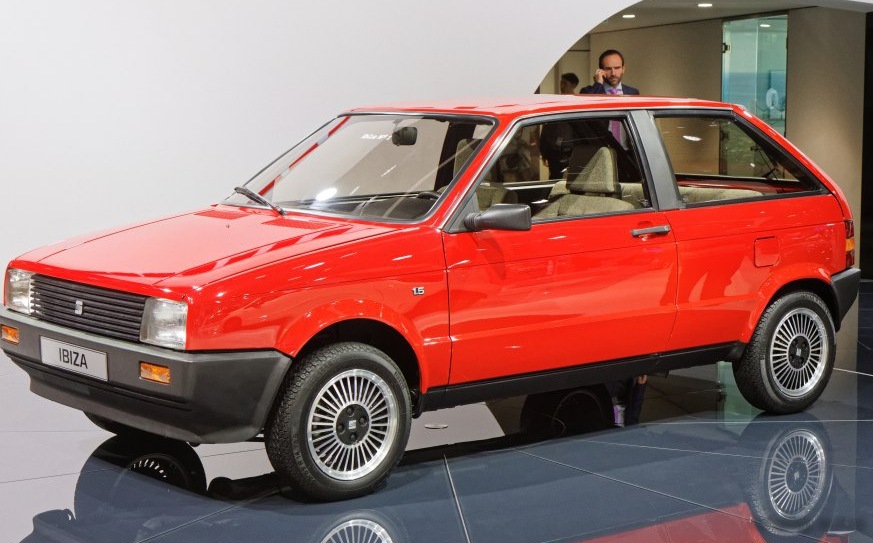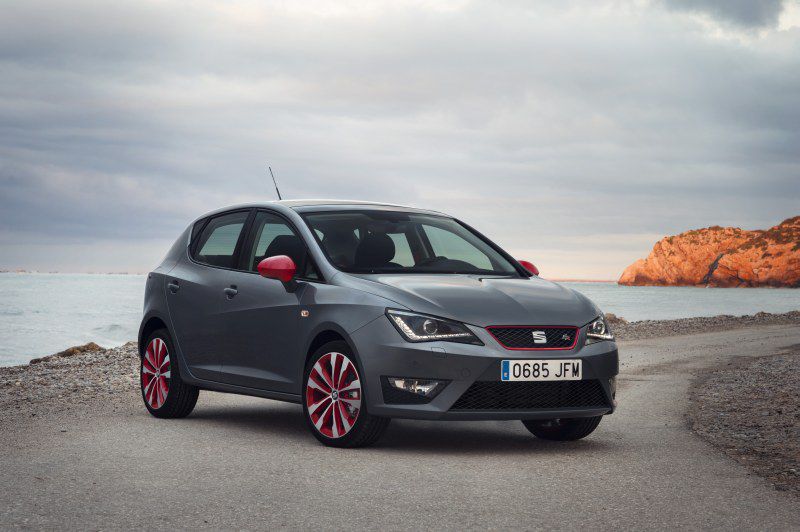
Seat Ibiza IV (facelift 2015) 1.4 TDI (90 Hp) DSG: A European Subcompact Powerhouse
The Seat Ibiza IV (facelift 2015) represents a significant iteration of the Spanish automaker’s popular subcompact car, or supermini, as it’s known in its primary European market. Produced by SEAT, S.A., a subsidiary of the Volkswagen Group, the Ibiza has long been a cornerstone of the brand’s lineup, known for its youthful styling, agile handling, and practical packaging. While SEAT vehicles are not officially sold in the United States, the Ibiza is a highly recognizable and competitive model across Europe, Latin America, and other international markets. This particular variant, the 1.4 TDI (90 Hp) DSG, was a key offering during its production run from May 2015 to 2017, emphasizing fuel efficiency and urban maneuverability with the convenience of an automatic transmission. This article delves into the technical prowess and market standing of this specific model, highlighting its role in the competitive European B-segment.
Engine & Performance: The Efficient 1.4 TDI Powertrain
At the heart of the Seat Ibiza IV (facelift 2015) 1.4 TDI (90 Hp) DSG lies a robust and remarkably efficient 1.4-liter, three-cylinder turbocharged diesel engine. This unit, designated with the engine code CUSB, showcases Volkswagen Group’s expertise in developing compact, high-torque diesel powerplants. The inline-three configuration, while sometimes associated with vibrations, was engineered to deliver a surprisingly smooth and refined driving experience for its class, especially when paired with the advanced DSG transmission.
The engine produces a respectable 90 horsepower at 3500 rpm, a figure that might seem modest on paper but is more than adequate for the Ibiza’s lightweight chassis and urban-focused role. More importantly, the torque output is a significant highlight: 230 Nm, or approximately 169.64 lb-ft, available across a broad rev range from 1750 to 2500 rpm. This low-end torque is crucial for responsive acceleration in city traffic and effortless highway cruising, making the car feel more potent than its horsepower rating might suggest. Power density stands at 63.3 Hp per liter, indicating a highly optimized engine design.
Mated to this frugal diesel engine is a sophisticated 7-speed DSG (Direct-Shift Gearbox) automatic transmission. This dual-clutch unit is renowned for its rapid, seamless gear changes, contributing significantly to both the car’s performance and its exceptional fuel economy. The combination allows the Ibiza 1.4 TDI to accelerate from 0 to 60 mph in a swift 10.4 seconds, with a top speed of 113.09 mph (182 km/h). These figures demonstrate a well-balanced performance profile, offering sufficient dynamism for daily driving while prioritizing efficiency.
The true star of this powertrain, however, is its fuel efficiency. With a combined fuel consumption rating of just 3.7 liters per 100 kilometers, which translates to an impressive 63.6 US mpg, the Ibiza 1.4 TDI was a class leader in thriftiness. This was complemented by exceptionally low CO2 emissions of 97 g/km, allowing the vehicle to meet stringent Euro 6 emission standards. The inclusion of a particulate filter further underscored its commitment to environmental responsibility, a critical factor in the European market. The engine’s aspiration system includes both a turbocharger and an intercooler, ensuring optimal air charge density for efficient combustion and power delivery.
Design & Features: Practicality Meets Spanish Flair
The Seat Ibiza IV (facelift 2015) retained the sharp, angular design language that defined the fourth generation, but introduced subtle yet impactful updates to keep it fresh and competitive. As a 5-door hatchback, it offered a practical and versatile body style, appealing to a wide demographic from young professionals to small families. The exterior design, characterized by its distinctive “arrow” grille and sharp lines, conveyed a sense of sportiness and dynamism, a hallmark of the SEAT brand’s identity within the Volkswagen Group.
Dimensions for the Ibiza IV facelift were compact yet maximized interior space. It measured 159.88 inches (4061 mm) in length, 66.65 inches (1693 mm) in width, and 56.89 inches (1445 mm) in height, with a wheelbase of 97.2 inches (2469 mm). These proportions contributed to its agility and ease of parking in congested urban environments, while still providing a surprisingly spacious cabin for five occupants. The minimum turning circle of 32.81 feet (10 meters) further enhanced its city-friendly credentials.
Inside, the facelift brought improvements in material quality and technology. While specific infotainment details are not provided, the 2015 model typically featured an updated touchscreen system, offering enhanced connectivity options such as Bluetooth and USB integration, a crucial aspect for modern drivers. Practicality was evident in the trunk space, which offered a respectable 10.31 cubic feet (292 liters) of cargo capacity, expandable by folding down the rear seats. The 11.89 US gallon (45 liter) fuel tank, combined with the diesel engine’s economy, provided an impressive driving range between fill-ups.
Safety features for the era included standard ABS (Anti-lock Braking System), a fundamental technology for preventing wheel lock-up during hard braking. The front suspension utilized an independent McPherson strut setup with coil springs and an anti-roll bar, providing a good balance of comfort and handling precision. The rear featured a semi-independent setup with coil springs, a cost-effective and space-efficient solution common in this segment. Braking performance was handled by ventilated discs at the front and drum brakes at the rear, a typical configuration for subcompacts prioritizing cost and efficiency. Various tire and wheel size options, ranging from 175/70 R14 to 215/40 R17, allowed for customization of ride and handling characteristics.
Technical Specifications
| Category | Specification | US Equivalent (where applicable) |
|---|---|---|
| Brand | Seat | |
| Model | Ibiza | |
| Generation | Ibiza IV (facelift 2015) | |
| Type (Engine) | 1.4 TDI (90 Hp) DSG | |
| Start of production | May, 2015 year | |
| End of production | 2017 year | |
| Powertrain Architecture | Internal Combustion engine | |
| Body type | Hatchback | |
| Seats | 5 | |
| Doors | 5 | |
| Performance Specs | ||
| Fuel consumption (combined) | 3.7 l/100 km | 63.6 US mpg |
| CO2 emissions | 97 g/km | |
| Fuel Type | Diesel | |
| Acceleration 0 – 60 mph | 10.4 sec | |
| Maximum speed | 182 km/h | 113.09 mph |
| Emission standard | Euro 6 | |
| Weight-to-power ratio | 12.1 kg/Hp | |
| Weight-to-torque ratio | 4.7 kg/Nm | |
| Engine Specs | ||
| Power | 90 Hp @ 3500 rpm | |
| Power per liter | 63.3 Hp/l | |
| Torque | 230 Nm @ 1750-2500 rpm | 169.64 lb.-ft. @ 1750-2500 rpm |
| Engine layout | Front, Transverse | |
| Engine Model/Code | CUSB | |
| Engine displacement | 1422 cm3 | 86.78 cu. in. |
| Number of cylinders | 3 | |
| Engine configuration | Inline | |
| Cylinder Bore | 79.5 mm | 3.13 in. |
| Piston Stroke | 95.5 mm | 3.76 in. |
| Compression ratio | 16.2:1 | |
| Number of valves per cylinder | 4 | |
| Fuel injection system | Diesel Commonrail | |
| Engine aspiration | Turbocharger, Intercooler | |
| Engine oil capacity | 4.1 l | 4.33 US qt |
| Coolant | 8 l | 8.45 US qt |
| Engine systems | Particulate filter | |
| Space, Volume and Weights | ||
| Kerb Weight | 1090 kg | 2403.04 lbs. |
| Max. weight | 1670 kg | 3681.72 lbs. |
| Max load | 580 kg | 1278.68 lbs. |
| Trunk (boot) space – minimum | 292 l | 10.31 cu. ft. |
| Fuel tank capacity | 45 l | 11.89 US gal |
| Dimensions | ||
| Length | 4061 mm | 159.88 in. |
| Width | 1693 mm | 66.65 in. |
| Height | 1445 mm | 56.89 in. |
| Wheelbase | 2469 mm | 97.2 in. |
| Front track | 1465 mm | 57.68 in. |
| Rear (Back) track | 1457 mm | 57.36 in. |
| Minimum turning circle | 10 m | 32.81 ft. |
| Drivetrain, Brakes and Suspension Specs | ||
| Drivetrain Architecture | Front wheel drive, Internal Combustion engine | |
| Drive wheel | Front wheel drive | |
| Number of gears and type of gearbox | 7 gears, automatic transmission DSG | |
| Front suspension | Independent, type McPherson with coil spring and anti-roll bar | |
| Rear suspension | Semi-independent, coil spring | |
| Front brakes | Ventilated discs | |
| Rear brakes | Drum | |
| Assisting systems | ABS (Anti-lock braking system) | |
| Steering type | Steering rack and pinion | |
| Tires size | 175/70 R14; 185/60 R15; 215/45 R16; 215/40 R17 | |
| Wheel rims size | 14; 15; 16; 17 | |
Legacy & Market Impact of the Seat Ibiza IV (facelift 2015)
The Seat Ibiza IV (facelift 2015), particularly in its 1.4 TDI (90 Hp) DSG configuration, solidified the model’s reputation as a strong contender in the fiercely competitive European supermini segment. As a member of the Volkswagen Group, SEAT positioned the Ibiza as a more emotionally charged and youthful alternative to its platform siblings, such as the Volkswagen Polo and Skoda Fabia. While sharing fundamental underpinnings and powertrains, the Ibiza distinguished itself with its distinctive design language and a slightly sportier driving dynamic, appealing to buyers looking for a blend of practicality, style, and efficiency.
In its primary markets, the Ibiza competed head-to-head with best-sellers like the Ford Fiesta, Renault Clio, Peugeot 208, and Opel Corsa. The 1.4 TDI DSG variant was particularly impactful, catering to a significant portion of the European market where diesel engines were still highly favored for their superior fuel economy and torque, especially for longer commutes or drivers covering high mileage. The combination of the frugal diesel engine and the smooth, quick-shifting DSG automatic transmission offered a compelling package, delivering low running costs and a relaxed driving experience, a critical selling point in regions with high fuel prices.
The Ibiza’s legacy is built on its consistent performance as a volume seller for SEAT. It has been instrumental in shaping the brand’s image as a producer of stylish, well-engineered, and accessible vehicles. The 2015 facelift ensured the model remained visually fresh and technologically relevant against newer rivals, incorporating subtle design tweaks and interior enhancements that improved its perceived quality and user experience. The 1.4 TDI engine, being part of the VW Group’s highly developed TDI family, contributed to the Ibiza’s reputation for reliability and durability, further enhancing its market appeal.
Overall, the Seat Ibiza IV (facelift 2015) 1.4 TDI (90 Hp) DSG was more than just a car; it was a testament to SEAT’s ability to combine Spanish passion with German engineering precision. It offered a practical, efficient, and engaging option for European consumers, demonstrating how a compact car could deliver a sophisticated driving experience without compromising on economy or everyday usability. Its success helped pave the way for future generations of the Ibiza and reinforced SEAT’s standing as a vital brand within the global automotive landscape, even if its presence was primarily outside of North America.