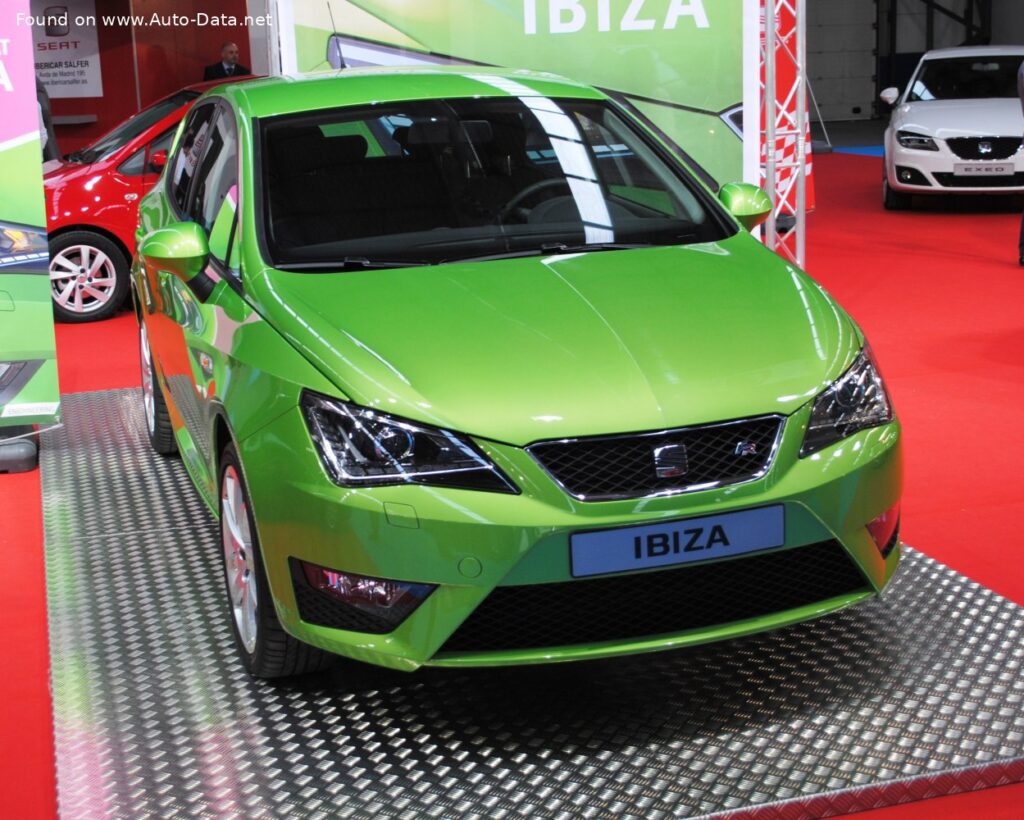
The Seat Ibiza IV (facelift 2012) 1.4 TSI (140 Hp) ACT: A European Compact Powerhouse
The Seat Ibiza, a cornerstone of the Spanish automaker Seat’s lineup, has long been a significant player in the competitive European B-segment (subcompact) market. The particular variant under scrutiny, the Seat Ibiza IV (facelift 2012) 1.4 TSI (140 Hp) ACT, represents a compelling blend of performance, efficiency, and sharp styling that characterized Seat models during its production run from October 2013 to 2015. As a brand within the Volkswagen Group, Seat often serves as the group’s more youthful and sporty offering, and the Ibiza IV, especially in this turbocharged guise, perfectly embodies that philosophy. While not officially sold in the United States, understanding its role and technical prowess provides valuable insight into the diverse global automotive landscape, showcasing European priorities in compact car design and engineering.
This fourth-generation Ibiza, introduced in 2008 and facelifted in 2012, cemented its reputation as a stylish and dynamic alternative to its Volkswagen Group siblings, the VW Polo and Skoda Fabia. The 2012 facelift brought subtle but effective updates, refining its exterior aesthetics and interior ergonomics, while the introduction of the 1.4 TSI with Active Cylinder Technology (ACT) engine in late 2013 marked a significant technological advancement, pushing the boundaries of efficiency and power in its class.
Engine & Performance: The Innovative 1.4 TSI with ACT for the Seat Ibiza IV (facelift 2012)
At the heart of this particular Seat Ibiza IV (facelift 2012) 1.4 TSI (140 Hp) ACT model lies a sophisticated 1.4-liter (1395 cm³ or 85.13 cu. in.) turbocharged inline-four gasoline engine, designated with the code CPTA. This powerplant is a prime example of Volkswagen Group’s commitment to “downsizing” – achieving impressive power and torque from smaller displacement engines through forced induction. It delivers a robust 140 horsepower between 4500 and 6000 rpm, translating to a specific output of 100.4 horsepower per liter, a commendable figure for a non-performance-oriented compact car. More notably, it generates a substantial 184.39 lb.-ft. (250 Nm) of torque available across a broad rev range, from a low 1500 rpm up to 3500 rpm. This wide torque band ensures responsive acceleration and flexible driving characteristics, making it adept for both urban commuting and spirited highway driving.
The standout feature of this engine is its Active Cylinder Technology (ACT) system. This innovative system allows the engine to deactivate two of its four cylinders under light to moderate loads, effectively transforming the engine into a two-cylinder unit. This intelligent management of cylinder operation significantly reduces fuel consumption and CO2 emissions, particularly during cruising. When the driver demands more power, the deactivated cylinders seamlessly re-engage, providing full four-cylinder performance without any perceptible interruption. This technology, combined with direct fuel injection and an intercooler for the turbocharger, positions the Ibiza 1.4 TSI ACT as a remarkably efficient performer.
Power is delivered to the front wheels via a precise 6-speed manual transmission, offering engaging control for the driver. This powertrain combination enables the Ibiza to accelerate from 0 to 60 mph in a brisk 7.4 seconds (0-100 km/h in 7.8 seconds) and reach a top speed of 130.49 mph (210 km/h). Fuel economy figures are equally impressive, with a combined rating of 50 US mpg (4.7 l/100 km), an urban rating of 39.9 US mpg (5.9 l/100 km), and an extra-urban rating of 58.8 US mpg (4 l/100 km). These figures underscore the effectiveness of the ACT system in real-world driving conditions, allowing the vehicle to meet Euro 5 emission standards with CO2 emissions of just 109 g/km.
Design & Features: The Practicality of the Ibiza Hatchback
The Seat Ibiza IV (facelift 2012) 1.4 TSI (140 Hp) ACT is presented as a practical 5-door hatchback, a highly popular body style in European markets due to its versatility and compact footprint. With seating for five occupants, it offers a blend of maneuverability and interior space suitable for small families or individuals. The 2012 facelift subtly sharpened the Ibiza’s “Arrow Design” front end, giving it a more aggressive and modern look, characterized by angular headlights and a prominent grille. Its overall dimensions are compact yet well-proportioned: 160.71 inches (4082 mm) in length, 66.65 inches (1693 mm) in width, and 56.73 inches (1441 mm) in height, with a wheelbase of 97.2 inches (2469 mm). These dimensions contribute to a minimum turning circle of 34.38 feet (10.48 m), highlighting its agility in tight urban environments.
Inside, the Ibiza offers a functional and driver-focused cabin. While specific interior features are not detailed in the provided data, typical for its segment and era, it would have included standard amenities like air conditioning, power windows, and an infotainment system. The trunk space is a respectable 10.03 cubic feet (284 liters), expandable by folding down the rear seats, enhancing its utility for carrying luggage or groceries. Safety features include an Anti-lock Braking System (ABS), a standard offering across most European vehicles of this period, ensuring stable braking performance. The car features a front MacPherson strut suspension with coil springs and an anti-roll bar, paired with hydraulic elements at the rear, providing a balanced ride and handling. Braking is handled by ventilated discs at the front and solid discs at the rear. Electric power steering makes maneuvering effortless, and the car rides on 215/40 R17 tires mounted on 7J x 17-inch wheel rims, contributing to its sporty stance and roadholding capabilities.
Technical Specifications
| Category | Specification | US Equivalent / Notes |
|---|---|---|
| General Information | ||
| Brand | Seat | |
| Model | Ibiza | |
| Generation | Ibiza IV (facelift 2012) | |
| Type (Engine) | 1.4 TSI (140 Hp) ACT | |
| Start of production | October, 2013 year | |
| End of production | 2015 year | |
| Powertrain Architecture | Internal Combustion engine | |
| Body type | Hatchback | |
| Seats | 5 | |
| Doors | 5 | |
| Performance Specs | ||
| Fuel consumption (economy) – urban | 5.9 l/100 km | 39.9 US mpg |
| Fuel consumption (economy) – extra urban | 4 l/100 km | 58.8 US mpg |
| Fuel consumption (economy) – combined | 4.7 l/100 km | 50 US mpg |
| CO2 emissions | 109 g/km | |
| Fuel Type | Petrol (Gasoline) | |
| Acceleration 0 – 100 km/h | 7.8 sec | |
| Acceleration 0 – 62 mph | 7.8 sec | |
| Acceleration 0 – 60 mph | 7.4 sec | (Calculated by Auto-Data.net) |
| Maximum speed | 210 km/h | 130.49 mph |
| Emission standard | Euro 5 | |
| Weight-to-power ratio | 8.3 kg/Hp | 120 Hp/tonne |
| Weight-to-torque ratio | 4.7 kg/Nm | 214.2 Nm/tonne |
| Engine Specs | ||
| Power | 140 Hp @ 4500-6000 rpm | |
| Power per liter | 100.4 Hp/l | |
| Torque | 250 Nm @ 1500-3500 rpm | 184.39 lb.-ft. |
| Engine layout | Front, Transverse | |
| Engine Model/Code | CPTA | |
| Engine displacement | 1395 cm³ | 1.4 Liters / 85.13 cu. in. |
| Number of cylinders | 4 | |
| Engine configuration | Inline | |
| Cylinder Bore | 74.5 mm | 2.93 in. |
| Piston Stroke | 80 mm | 3.15 in. |
| Compression ratio | 10.5:1 | |
| Number of valves per cylinder | 4 | |
| Fuel injection system | Direct injection | |
| Engine aspiration | Turbocharger, Intercooler | |
| Engine oil capacity | 4 l | 4.23 US qt / 3.52 UK qt |
| Coolant | 8 l | 8.45 US qt / 7.04 UK qt |
| Engine Systems | ||
| Cylinder deactivation system | Yes (ACT) | |
| Space, Volume and Weights | ||
| Kerb Weight | 1167 kg | 2572.79 lbs. |
| Max. weight | 1630 kg | 3593.53 lbs. |
| Max load | 463 kg | 1020.74 lbs. |
| Trunk (boot) space – minimum | 284 l | 10.03 cu. ft. |
| Fuel tank capacity | 45 l | 11.89 US gal / 9.9 UK gal |
| Dimensions | ||
| Length | 4082 mm | 160.71 in. |
| Width | 1693 mm | 66.65 in. |
| Height | 1441 mm | 56.73 in. |
| Wheelbase | 2469 mm | 97.2 in. |
| Front track | 1449 mm | 57.05 in. |
| Rear (Back) track | 1441 mm | 56.73 in. |
| Minimum turning circle (turning diameter) | 10.48 m | 34.38 ft. |
| Drivetrain, Brakes and Suspension Specs | ||
| Drivetrain Architecture | Internal combustion engine drives the front wheels | Front-wheel drive |
| Drive wheel | Front wheel drive | |
| Number of gears and type of gearbox | 6 gears, manual transmission | |
| Front suspension | Independent, type McPherson with coil spring and anti-roll bar | |
| Rear suspension | Hydraulic elements | |
| Front brakes | Ventilated discs | |
| Rear brakes | Disc | |
| Assisting systems | ABS (Anti-lock braking system) | |
| Steering type | Steering rack and pinion | |
| Power steering | Electric Steering | |
| Tires size | 215/40 R17 | |
| Wheel rims size | 7J x 17 | |
Legacy & Market Impact of the Seat Ibiza IV (facelift 2012)
The Seat Ibiza IV (facelift 2012) 1.4 TSI (140 Hp) ACT carved out a distinct niche in the highly competitive European B-segment. Its primary competitors included the segment-leading Volkswagen Polo (with which it shared its platform), the Ford Fiesta, Renault Clio, Peugeot 208, and Opel Corsa. What set the Ibiza apart was its distinctive design language, often perceived as more passionate and less conservative than its German and French rivals, coupled with a reputation for a sportier driving experience. Seat, as the Volkswagen Group’s “emotion” brand, consistently aimed to inject a sense of dynamism into its vehicles, and the Ibiza delivered on that promise.
The introduction of the 1.4 TSI ACT engine further enhanced its appeal, offering a blend of performance and efficiency that few competitors could match at the time. This engine showcased Seat’s commitment to adopting cutting-edge technology from the broader VW Group, making advanced features like cylinder deactivation accessible in a mainstream compact car. This technological edge, combined with its sharp handling and attractive pricing, solidified the Ibiza’s position as a smart choice for European buyers seeking a spirited yet economical daily driver.
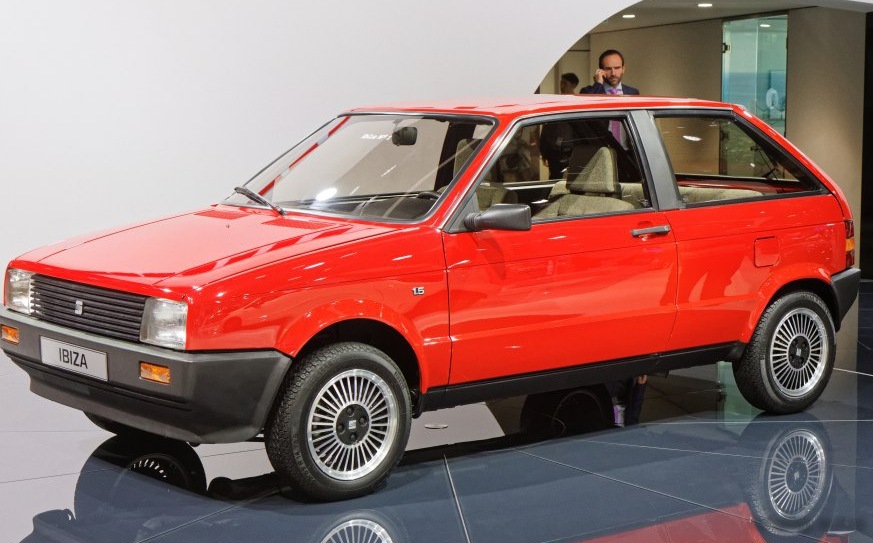
Historically, the Ibiza has been Seat’s best-selling model and a key pillar of the brand’s identity since its inception in 1984. The fourth generation, particularly after its 2012 facelift and with engines like the 1.4 TSI ACT, represented a mature and refined iteration of this iconic model. It contributed significantly to Seat’s brand image, helping to position the Spanish automaker as a credible and desirable alternative to more established players in the subcompact segment. While its absence from the North American market means it’s not a familiar sight on US roads, its impact on European automotive trends and its demonstration of efficient, performance-oriented compact car engineering are undeniable and contribute to its global automotive significance.