The Seat Ibiza IV (facelift 2012) 1.6 GLP: A European Subcompact with Dual-Fuel Savvy
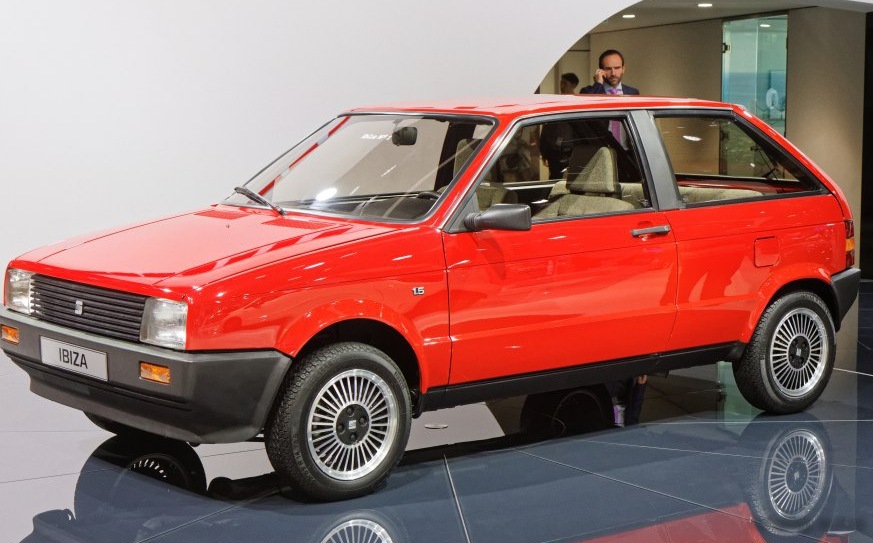
The Seat Ibiza IV, specifically the facelifted model introduced in 2012, represents a significant iteration of Seat’s long-standing B-segment (subcompact) contender. As a key model for the Spanish automaker, a subsidiary of the Volkswagen Group, the Ibiza has consistently blended stylish design with practical functionality and a touch of sporting flair. The particular variant under scrutiny, the 1.6 (81 Hp) GLP, stands out due to its innovative dual-fuel capability, allowing it to run on both gasoline and Liquefied Petroleum Gas (LPG). Produced from 2012 to 2015, this five-door hatchback was engineered primarily for the European market, where its compact dimensions, efficiency, and alternative fuel option made it a compelling choice for urban dwellers and cost-conscious consumers.
The fourth-generation Ibiza, internally designated “6J,” debuted in 2008 and received a substantial refresh in 2012. This facelift brought updated exterior styling, a revised interior, and a host of mechanical refinements to keep the model competitive in a fiercely contested segment. While the Seat brand is not officially sold in the United States, the Ibiza is a prime example of the sophisticated and diverse offerings available in the European automotive landscape, embodying the continent’s emphasis on fuel efficiency, practical design, and increasingly, alternative fuel technologies.
Engine & Performance of the Seat Ibiza IV (facelift 2012) 1.6 GLP
At the heart of the Seat Ibiza IV (facelift 2012) 1.6 GLP lies a robust and efficient 1.6-liter (1,598 cm³) naturally aspirated inline-four engine, designated with the code CNKA. This powerplant delivers a respectable 81 horsepower (Hp) at a broad range of 4000-6000 revolutions per minute (rpm), making it a flexible engine for daily driving. Torque output stands at 106.95 pound-feet (lb.-ft.) at 3800 rpm, providing adequate pulling power for city traffic and comfortable cruising on the highway.
A distinctive feature of this particular Ibiza variant is its dual-fuel system, allowing it to operate on both traditional gasoline and Liquefied Petroleum Gas (LPG). This GLP (Gasolina y GLP in Spanish) configuration offers a significant advantage in terms of running costs and environmental impact, especially in European markets where LPG is often cheaper than gasoline and benefits from lower taxation. When running on gasoline, the engine’s multi-port manifold injection system ensures efficient fuel delivery. The transition between fuels is typically seamless, managed by an electronic control unit, offering drivers the flexibility to choose based on fuel availability and cost.
Power is sent to the front wheels via a smooth-shifting 5-speed manual transmission, a common and reliable setup for vehicles in this class. In terms of performance, the Ibiza 1.6 GLP accelerates from 0 to 60 mph in a calculated 11.6 seconds, with a top speed of 108.12 mph (174 km/h). While not a performance leader, these figures are entirely adequate for a subcompact hatchback designed for economy and practicality. The vehicle’s weight-to-power ratio is 14.1 kg/Hp (70.9 Hp/tonne), reflecting its modest power output in relation to its curb weight of 2,519.88 lbs (1143 kg).
Fuel economy is a strong suit, particularly with the dual-fuel system. On gasoline, the combined fuel consumption is rated at 39.2 US mpg (6.0 l/100 km). When operating on LPG, the combined consumption rises slightly to 7.6 l/100 km, reflecting the lower energy density of LPG compared to gasoline. However, this is often offset by the lower price per liter of LPG. CO2 emissions are also reduced when running on LPG, dropping from 139 g/km on gasoline to 123 g/km, adhering to the Euro 5 F emission standard—a significant factor for European environmental regulations.
Design & Features
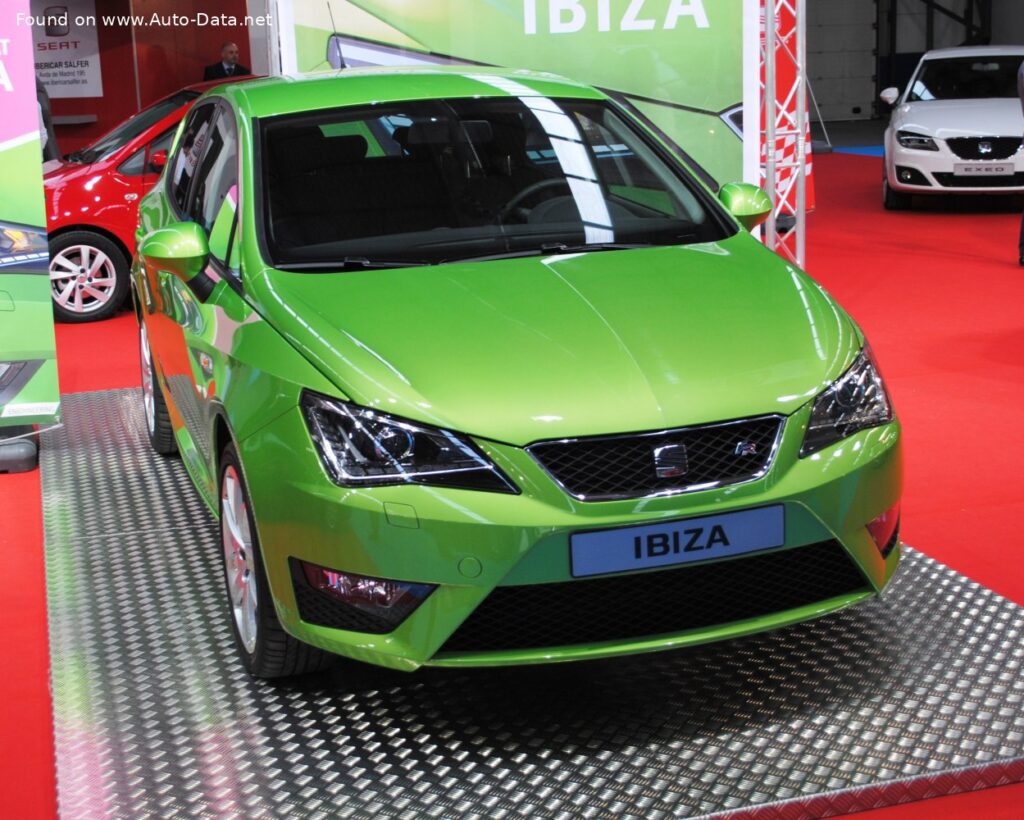
The Seat Ibiza IV (facelift 2012) retained the sharp, dynamic styling that has become a hallmark of the Seat brand, but with subtle yet effective updates. The body type is a practical 5-door hatchback, offering easy access for passengers and cargo. The facelift introduced a redesigned front fascia, featuring more angular headlights with integrated LED daytime running lights (where equipped), a revised grille, and a sportier bumper. These changes gave the Ibiza a more aggressive and contemporary look, aligning it with Seat’s evolving design language.
Measuring 159.88 inches (4061 mm) in length, 66.65 inches (1693 mm) in width, and 56.89 inches (1445 mm) in height, the Ibiza is perfectly sized for urban environments, offering nimble maneuverability and easy parking. Its wheelbase of 97.2 inches (2469 mm) contributes to a stable ride for its class. The interior, while primarily focused on ergonomics and functionality, also received updates, including new upholstery options and revised trim materials to enhance perceived quality. The cabin comfortably accommodates five occupants, making it suitable for small families or groups. Trunk space is a respectable 7.84 cubic feet (222 liters), which can be expanded by folding down the rear seats.
Standard features for the era included power steering with a rack and pinion system, providing responsive handling. Safety features, critical for any modern vehicle, included an Anti-lock Braking System (ABS) as standard, complementing the front ventilated disc brakes (256×22 mm) and rear drum brakes (200×40 mm). The suspension setup features an independent McPherson strut system with coil springs and an anti-roll bar at the front, paired with a semi-independent coil spring system at the rear, offering a balance of comfort and dynamic handling. Various tire and wheel options were available, ranging from 175/70 R14 to 215/40 R17, allowing for personalization and different levels of grip and ride comfort.
The dual-fuel GLP system required an additional LPG tank, which for the Ibiza was typically located in the spare wheel well, thus slightly impacting the overall cargo area’s usability, though the primary trunk volume was maintained. The LPG tank capacity was 52.8 liters, augmenting the standard 11.89 US gallon (45 liter) gasoline tank, significantly extending the vehicle’s range between fill-ups.
Technical Specifications
| Category | Specification |
|---|---|
General Information |
|
| Brand | Seat |
| Model | Ibiza |
| Generation | Ibiza IV (facelift 2012) |
| Type (Engine) | 1.6 (81 Hp) GLP |
| Production Start | 2012 |
| Production End | 2015 |
| Powertrain Architecture | Internal Combustion engine |
| Body type | Hatchback |
| Seats | 5 |
| Doors | 5 |
Performance Specs |
|
| Fuel consumption (economy) – urban (Gasoline) | 8.1 l/100 km (29 US mpg) |
| Fuel consumption (economy) – urban (LPG) | 10.4 l/100 km |
| Fuel consumption (economy) – extra urban (Gasoline) | 4.8 l/100 km (49 US mpg) |
| Fuel consumption (economy) – extra urban (LPG) | 6.0 l/100 km |
| Fuel consumption (economy) – combined (Gasoline) | 6.0 l/100 km (39.2 US mpg) |
| Fuel consumption (economy) – combined (LPG) | 7.6 l/100 km |
| CO2 emissions (Gasoline) | 139 g/km |
| CO2 emissions (LPG) | 123 g/km |
| Fuel Type | Petrol / LPG |
| Acceleration 0 – 60 mph | 11.6 sec |
| Maximum speed | 108.12 mph (174 km/h) |
| Emission standard | Euro 5 F |
| Weight-to-power ratio | 14.1 kg/Hp (70.9 Hp/tonne) |
| Weight-to-torque ratio | 7.9 kg/Nm (126.9 Nm/tonne) |
Engine Specs |
|
| Power | 81 Hp @ 4000-6000 rpm |
| Power per liter | 50.7 Hp/l |
| Torque | 106.95 lb.-ft. (145 Nm) @ 3800 rpm |
| Engine layout | Front, Transverse |
| Engine Model/Code | CNKA |
| Engine displacement | 1.6 liters (1598 cm³, 97.52 cu. in.) |
| Number of cylinders | 4 |
| Engine configuration | Inline |
| Cylinder Bore | 3.01 in. (76.5 mm) |
| Piston Stroke | 3.42 in. (86.9 mm) |
| Compression ratio | 10.5:1 |
| Number of valves per cylinder | 4 |
| Fuel injection system | Multi-port manifold injection |
| Engine aspiration | Naturally aspirated engine |
| Engine oil capacity | 3.8 US qt (3.6 l) |
| Coolant capacity | 5.92 US qt (5.6 l) |
Space, Volume and Weights |
|
| Kerb Weight | 2519.88 lbs (1143 kg) |
| Max. weight | 3549.44 lbs (1610 kg) |
| Max load | 1029.56 lbs (467 kg) |
| Trunk (boot) space – minimum | 7.84 cu. ft. (222 l) |
| Fuel tank capacity (Gasoline) | 11.89 US gal (45 l) |
| Fuel tank capacity (LPG) | 52.8 l |
| Permitted trailer load with brakes (12%) | 2204.62 lbs (1000 kg) |
Dimensions |
|
| Length | 159.88 in. (4061 mm) |
| Width | 66.65 in. (1693 mm) |
| Height | 56.89 in. (1445 mm) |
| Wheelbase | 97.2 in. (2469 mm) |
| Front track | 57.68 in. (1465 mm) |
| Rear (Back) track | 57.36 in. (1457 mm) |
| Minimum turning circle (turning diameter) | 34.38 ft. (10.48 m) |
Drivetrain, Brakes and Suspension Specs |
|
| Drivetrain Architecture | The Internal combustion engine (ICE) drives the front wheels of the vehicle. |
| Drive wheel | Front wheel drive |
| Number of gears and type of gearbox | 5 gears, manual transmission |
| Front suspension | Independent, type McPherson with coil spring and anti-roll bar |
| Rear suspension | Semi-independent, coil spring |
| Front brakes | Ventilated discs, 256×22 mm |
| Rear brakes | Drum, 200×40 mm |
| Assisting systems | ABS (Anti-lock braking system) |
| Steering type | Steering rack and pinion |
| Tires size | 175/70 R14; 185/60 R15; 215/45 R16; 215/40 R17 |
| Wheel rims size | 5.0J x 14; 6.0J x 15; 7.0J x 16; 7.0J x 17 |
Legacy & Market Impact
The Seat Ibiza has consistently been a cornerstone of the Spanish brand’s lineup since its introduction in 1984, and the fourth generation, particularly the facelifted 2012 model, continued this legacy. Positioned as a stylish and dynamic alternative within the highly competitive European B-segment, the Ibiza successfully carved out its niche. Its primary competitors included segment stalwarts like the Volkswagen Polo (with which it shared its PQ25 platform), Ford Fiesta, Renault Clio, Peugeot 208, and its Volkswagen Group stablemate, the Skoda Fabia. The Ibiza distinguished itself with a more youthful and sporty design aesthetic, appealing to a demographic that valued driving engagement alongside practicality.
The introduction of the 1.6 GLP variant underscored Seat’s commitment to offering efficient and environmentally conscious options. In many European countries, LPG infrastructure is well-established, and the fuel often carries a lower price point and reduced tax burden compared to gasoline or diesel. This made the GLP model particularly attractive to fleet buyers, taxi operators, and private individuals seeking to minimize running costs and reduce their carbon footprint without sacrificing range or convenience. The dual-fuel capability effectively mitigated range anxiety, allowing drivers to switch to gasoline if LPG was unavailable.
The 2012 facelift played a crucial role in maintaining the Ibiza’s competitiveness. The updated styling kept the car looking fresh and modern, while interior refinements addressed feedback from previous iterations. Mechanically, the Ibiza benefited from the robust engineering of the Volkswagen Group, sharing components and platforms with other successful models, which contributed to its reputation for reliability and solid build quality. Its MacPherson strut front and semi-independent rear suspension provided a balanced ride, capable of handling varied European road conditions with confidence.
Overall, the Seat Ibiza IV (facelift 2012) 1.6 GLP contributed to the Ibiza’s status as a top seller for Seat. It was recognized for its appealing design, practical five-door hatchback body, and the significant cost-saving potential offered by its dual-fuel system. While it never reached American shores, it represents a strong example of how European automakers adapted to market demands for efficiency, affordability, and ecological responsibility within the popular subcompact segment, reinforcing Seat’s identity as a manufacturer of passionate, practical, and progressive vehicles.