The Seat Ibiza IV (facelift 2012) 1.6 TDI (105 Hp): A European Subcompact Stalwart
The Seat Ibiza, a nameplate synonymous with urban agility and spirited driving in Europe, received a significant refresh in 2012, marking the mid-cycle update for its fourth generation (6J series). Among the various powertrain options, the Seat Ibiza IV (facelift 2012) 1.6 TDI (105 Hp) stood out as a particularly compelling choice for its blend of performance and exceptional fuel efficiency. Produced by the Spanish automaker Seat, a subsidiary of the Volkswagen Group, this model was a key player in the highly competitive European B-segment, often referred to as the subcompact class in the United States, despite never officially being sold in the North American market. The facelifted Ibiza, available from 2012 to 2015, sought to modernize its design, refine its driving dynamics, and enhance its technological offerings, solidifying its position as a youthful and dynamic alternative to its Volkswagen Polo platform sibling.
Engine & Performance: Efficient Diesel Power for the Seat Ibiza IV (facelift 2012)
At the heart of the Seat Ibiza IV (facelift 2012) 1.6 TDI (105 Hp) was a robust and highly efficient 1.6-liter (1598 cm³) inline four-cylinder turbodiesel engine, identified by the CLNA engine code. This powertrain architecture, typical of modern internal combustion engines, was mounted transversely at the front, driving the front wheels. It delivered a respectable 105 horsepower at 4400 rpm, a substantial output for a vehicle of its size and class. More impressive, however, was its torque figure: a robust 184.39 lb.-ft. (250 Nm), available across a broad and usable rev range from 1500 to 2500 rpm. This low-end torque was crucial for urban drivability and effortless cruising, allowing the car to feel responsive without needing to constantly downshift.
The engine featured a modern diesel common rail fuel injection system, ensuring precise fuel delivery and optimal combustion. Coupled with a turbocharger and intercooler, it not only boosted power but also improved efficiency and reduced emissions. With a compression ratio of 16.5:1 and four valves per cylinder, the engine was designed for both performance and longevity. Power was channeled through a slick-shifting 5-speed manual transmission, a common setup for economy-focused vehicles in this segment. This combination allowed the Ibiza 1.6 TDI to accelerate from 0 to 60 mph in a brisk 10 seconds, reaching a maximum speed of 116.82 mph (188 km/h). These figures positioned it as a sprightly performer within its class, capable of handling both city traffic and highway speeds with confidence.
Where the 1.6 TDI truly shone was in its fuel economy. The official figures were outstanding for its time: an urban consumption of 46.1 US mpg, an extra-urban (highway) figure of 65.3 US mpg, and a combined average of 56 US mpg (4.2 l/100 km). These figures, combined with CO2 emissions of just 109 g/km, meant the Ibiza was compliant with Euro 5 emission standards and offered incredibly low running costs, a significant factor for European buyers. The inclusion of a particulate filter was standard, further reducing harmful emissions.
Design & Features: A Sharper Look and Practicality
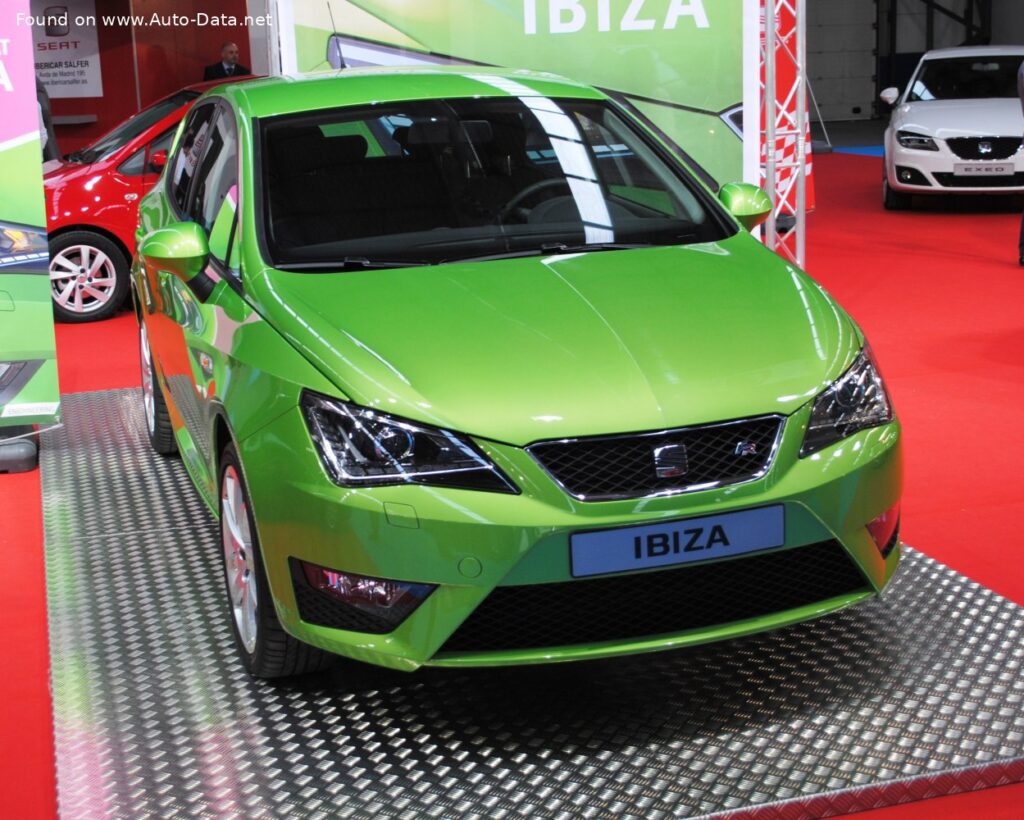
The 2012 facelift brought a refreshed aesthetic to the Seat Ibiza IV, enhancing its already sporty and youthful appeal. The body type remained a practical 5-door hatchback, offering seating for five occupants. The designers at Seat focused on sharpening the car’s lines, giving it a more aggressive and contemporary face. This included redesigned headlights, a more angular grille, and updated front and rear bumpers. These changes aimed to align the Ibiza more closely with Seat’s evolving design language, which emphasized dynamic styling and a distinctive character.
Measuring 159.88 inches (4061 mm) in length, 66.65 inches (1693 mm) in width, and 56.89 inches (1445 mm) in height, the Ibiza was perfectly sized for navigating crowded European city streets while still offering a respectable interior volume. Its 97.2-inch (2469 mm) wheelbase contributed to stable handling and a comfortable ride. Inside, the facelift brought subtle but effective improvements, primarily in material quality and infotainment options. While specific infotainment details are not provided, it’s typical for vehicles of this era and segment to offer options like Bluetooth connectivity, an auxiliary input, and potentially a basic navigation system, depending on the trim level.
Practicality was a strong suit for the Ibiza hatchback. The 5-door configuration provided easy access for passengers and cargo. The trunk offered a minimum of 10.31 cubic feet (292 liters) of space, which could be expanded by folding down the rear seats, making it versatile for daily errands or weekend trips. Safety features for the Seat Ibiza IV (facelift 2012) included standard Anti-lock Braking System (ABS), a crucial active safety system. The car featured ventilated disc brakes at the front and solid disc brakes at the rear, ensuring confident stopping power. The suspension setup, with independent McPherson struts and an anti-roll bar at the front and hydraulic elements at the rear, provided a good balance of comfort and agile handling. Electric power steering made for light and precise maneuvering, particularly in urban environments, contributing to a minimum turning circle of 34.38 feet (10.48 m).
Technical Specifications: Seat Ibiza IV (facelift 2012) 1.6 TDI (105 Hp)
| Category | Specification |
|---|---|
| General Information | |
| Brand | Seat |
| Model | Ibiza |
| Generation | Ibiza IV (facelift 2012) |
| Type (Engine) | 1.6 TDI (105 Hp) |
| Start of Production | 2012 year |
| End of Production | 2015 year |
| Powertrain Architecture | Internal Combustion engine |
| Body Type | Hatchback |
| Seats | 5 |
| Doors | 5 |
| Performance Specs | |
| Fuel Consumption (Urban) | 5.1 l/100 km (46.1 US mpg) |
| Fuel Consumption (Extra Urban) | 3.6 l/100 km (65.3 US mpg) |
| Fuel Consumption (Combined) | 4.2 l/100 km (56 US mpg) |
| CO2 Emissions | 109 g/km |
| Fuel Type | Diesel |
| Acceleration 0-60 mph | 10 sec |
| Acceleration 0-62 mph (0-100 km/h) | 10.5 sec |
| Maximum Speed | 116.82 mph (188 km/h) |
| Emission Standard | Euro 5 |
| Weight-to-Power Ratio | 11.1 kg/Hp (89.7 Hp/tonne) |
| Weight-to-Torque Ratio | 4.7 kg/Nm (213.7 Nm/tonne) |
| Engine Specs | |
| Power | 105 Hp @ 4400 rpm |
| Power per Liter | 65.7 Hp/l |
| Torque | 184.39 lb.-ft. (250 Nm) @ 1500-2500 rpm |
| Engine Layout | Front, Transverse |
| Engine Model/Code | CLNA |
| Engine Displacement | 1598 cm³ (97.52 cu. in.) |
| Number of Cylinders | 4 |
| Engine Configuration | Inline |
| Cylinder Bore | 3.13 in. (79.5 mm) |
| Piston Stroke | 3.17 in. (80.5 mm) |
| Compression Ratio | 16.5:1 |
| Number of Valves per Cylinder | 4 |
| Fuel Injection System | Diesel Commonrail |
| Engine Aspiration | Turbocharger, Intercooler |
| Engine Oil Capacity | 3.8 US qt (3.6 l) |
| Engine Oil Specification | Not specified in data |
| Coolant Capacity | 5.92 US qt (5.6 l) |
| Engine Systems | Particulate filter |
| Space, Volume and Weights | |
| Kerb Weight | 2579.41 lbs. (1170 kg) |
| Max. Weight | 3681.72 lbs. (1670 kg) |
| Max Load | 1102.31 lbs. (500 kg) |
| Trunk (Boot) Space – Minimum | 10.31 cu. ft. (292 l) |
| Fuel Tank Capacity | 11.89 US gal (45 l) |
| Dimensions | |
| Length | 159.88 in. (4061 mm) |
| Width | 66.65 in. (1693 mm) |
| Height | 56.89 in. (1445 mm) |
| Wheelbase | 97.2 in. (2469 mm) |
| Front Track | 57.68 in. (1465 mm) |
| Rear (Back) Track | 57.36 in. (1457 mm) |
| Minimum Turning Circle | 34.38 ft. (10.48 m) |
| Drivetrain, Brakes and Suspension Specs | |
| Drivetrain Architecture | Front-wheel drive (ICE drives front wheels) |
| Drive Wheel | Front wheel drive |
| Number of Gears and Type of Gearbox | 5 gears, manual transmission |
| Front Suspension | Independent, McPherson type with coil spring and anti-roll bar |
| Rear Suspension | Hydraulic elements |
| Front Brakes | Ventilated discs |
| Rear Brakes | Disc |
| Assisting Systems | ABS (Anti-lock braking system) |
| Steering Type | Steering rack and pinion |
| Power Steering | Electric Steering |
| Tires Size | 185/60 R15; 215/45 R16 |
| Wheel Rims Size | 6J x 15; 7J x 16 |
Legacy & Market Impact: A European Success Story
The Seat Ibiza has consistently been one of Seat’s best-selling models, and the fourth generation, particularly after its 2012 facelift, continued this tradition. The Seat Ibiza IV (facelift 2012) 1.6 TDI (105 Hp) carved out a strong niche in the European B-segment, a market segment characterized by fierce competition and a strong emphasis on value, efficiency, and urban usability. Its direct competitors included established stalwarts like the Volkswagen Polo (its platform mate, offering a more conservative appeal), the Ford Fiesta (renowned for its driving dynamics), the Renault Clio, and the Opel Corsa (Vauxhall Corsa in the UK). The Ibiza distinguished itself with a more passionate and sporty design language, often perceived as a more emotionally appealing choice within the Volkswagen Group’s portfolio compared to the more understated Polo.
Seat’s brand identity, especially during this period, was to be the “sporty” and “youthful” arm of the Volkswagen Group. The Ibiza, with its crisp handling, responsive diesel engine, and attractive styling, perfectly embodied this ethos. Its strong torque delivery from the 1.6 TDI engine made it particularly well-suited for both city driving and longer highway journeys, offering a blend of performance and economy that resonated with a broad spectrum of European buyers, from young professionals to small families. The low CO2 emissions and excellent fuel economy were significant selling points in markets with stringent environmental regulations and high fuel prices.
While the Seat Ibiza was a resounding success in Europe and other international markets, it never made its way to the United States. This is primarily due to Seat’s strategic market focus and the highly competitive nature of the US automotive landscape. The subcompact segment in the US, while present, is typically dominated by models from Japanese, Korean, and American brands, often with different consumer expectations regarding size, powertrain options (diesel cars are a niche in the US passenger car market), and brand recognition. Volkswagen Group chose to focus its US efforts on the Volkswagen brand for mainstream products and Audi for the premium segment, rather than introducing Seat, which would have required significant investment in branding, dealership networks, and homologation for a potentially limited return. Despite its absence from American showrooms, the Seat Ibiza IV (facelift 2012) 1.6 TDI (105 Hp) remains an important benchmark in European automotive history, celebrated for its efficiency, engaging driving experience, and distinct Spanish flair.