The Seat Ibiza IV SC 1.2 (70 Hp): An Expert Overview of the European Supermini
The
Seat Ibiza IV SC 1.2 (70 Hp)
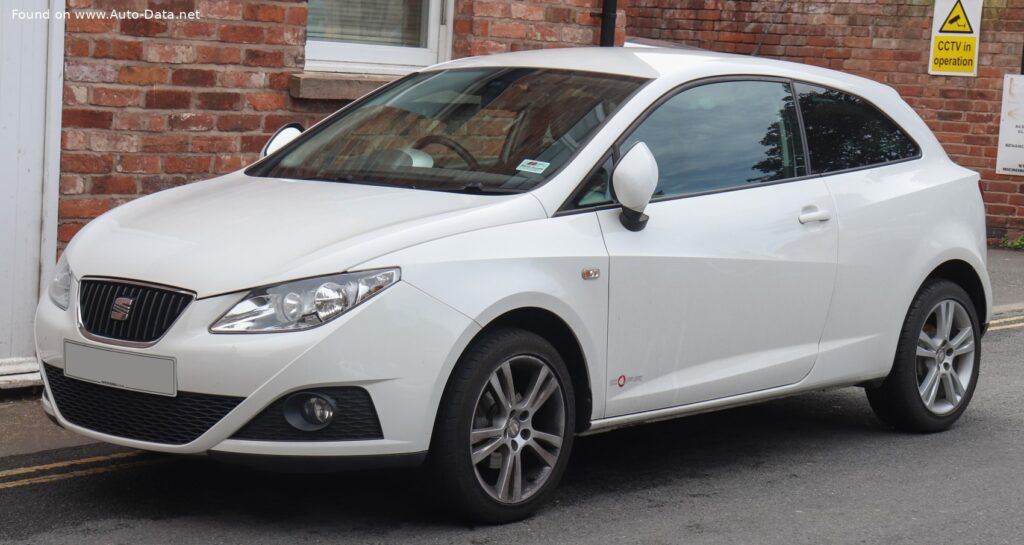
represents a significant iteration of Seat’s long-running and highly successful Ibiza line, specifically the fourth generation (6J) in its “SportCoupe” (SC) three-door body style. Produced from 2009 to 2012, this particular variant carved out a niche in the competitive European supermini segment. As a brand within the Volkswagen Group, Seat has historically positioned itself as a purveyor of stylish, sporty, and accessible vehicles, primarily targeting younger demographics and markets across Europe, Latin America, and parts of Asia. The Ibiza IV SC, though not officially sold in the United States, played a crucial role in Seat’s strategy by offering a blend of distinctive design, practical packaging, and economical performance, making it a popular choice for urban dwellers and first-time car buyers in its primary markets.
This generation of the Ibiza was based on the Volkswagen Group’s PQ25 platform, shared with contemporaries like the Volkswagen Polo Mk5 and Audi A1. The SC designation, while implying a two-door coupe, was in essence a three-door hatchback, a common body style in Europe that offered a sportier aesthetic compared to its five-door counterpart. The 1.2-liter engine, a compact three-cylinder gasoline unit, was designed for efficiency and low running costs, aligning with the stringent emission standards and fuel economy demands of the European market. This article will delve into the technical specifications, design philosophies, and market impact of this specific model, providing an in-depth look at its place in automotive history.
Engine & Performance: The
Seat Ibiza IV SC 1.2 (70 Hp)
Powertrain
Engine Specifications and Output
At the heart of the
Seat Ibiza IV SC 1.2 (70 Hp)
is a compact, naturally aspirated 1.2-liter (1198 cm³, 73.11 cu. in.) inline three-cylinder gasoline engine. Coded as BZG, CGPA, or CJLB, this powerplant was engineered for reliability and efficiency rather than outright speed. It features a Double Overhead Camshaft (DOHC) valvetrain with four valves per cylinder, a sophisticated setup for an engine of its size and era, contributing to better breathing and efficiency. Fuel is delivered via a multi-port manifold injection system, a tried-and-true method for precise fuel delivery.
The engine produces a modest but adequate 70 horsepower at 5400 revolutions per minute (rpm), translating to a power-per-liter rating of 58.4 Hp/l. Torque output stands at 112 Newton-meters (82.61 lb.-ft.) delivered at a relatively accessible 3000 rpm. This low-end torque characteristic is beneficial for urban driving, allowing for reasonable responsiveness in city traffic. The engine’s bore and stroke measurements are 76.5 mm (3.01 in.) and 86.9 mm (3.42 in.) respectively, indicating an oversquare design that often favors higher revs but in this application, is tuned for balanced performance. The compression ratio is 10.5:1, typical for a naturally aspirated gasoline engine of its time.
Performance Metrics
Power is sent to the front wheels via a five-speed manual transmission, a common and cost-effective choice for vehicles in this segment. This drivetrain architecture, coupled with the engine’s output, results in performance figures that emphasize practicality over sportiness. The
Seat Ibiza IV SC 1.2 (70 Hp)
accelerates from 0 to 60 miles per hour (0-97 km/h) in a calculated 13.2 seconds, or 0-100 km/h in 13.9 seconds. Its maximum speed is 101.28 mph (163 km/h). These figures place it firmly within the expected performance envelope for an entry-level supermini.
Fuel economy was a key selling point for this model. Under the New European Driving Cycle (NEDC), the combined fuel consumption is rated at 5.4 liters per 100 kilometers, which translates to an impressive 43.6 US miles per gallon. Urban consumption is 7.1 l/100 km (33.1 US mpg), while extra-urban driving yields 4.4 l/100 km (53.5 US mpg). CO2 emissions are a respectable 125 grams per kilometer, meeting the Euro 5 emission standard prevalent during its production years. These efficiency ratings underscore the vehicle’s design philosophy as an economical and environmentally conscious choice for European consumers.
Design and Features of the
Seat Ibiza IV SC 1.2 (70 Hp)
Exterior Styling and Body Type
The fourth-generation Seat Ibiza, particularly the SC variant, was lauded for its sharp, distinctive styling penned by Luc Donckerwolke, who also designed the Lamborghini Gallardo. The “SC” designation, while marketed as a “SportCoupe,” refers to its three-door hatchback configuration, a popular choice in European markets for its perceived sportiness and dynamic profile. Despite the “Coupe” moniker, the car features five doors – three for passenger access and a large rear hatch for cargo – a practical arrangement. Its dimensions are compact, with a length of 158.82 inches (4034 mm), a width of 66.65 inches (1693 mm), and a height of 56.22 inches (1428 mm). The wheelbase measures 97.2 inches (2469 mm), contributing to its nimble handling and tight turning circle of 34.38 feet (10.48 m). The design is characterized by its “arrow design” front end, pronounced wheel arches, and a rising beltline, giving it a dynamic and youthful appearance that set it apart from some of its more conservative rivals.
Interior Ergonomics and Practicality
Inside, the
Seat Ibiza IV SC 1.2 (70 Hp)
offered a functional and user-friendly cabin. While the data specifies “3 Seats,” which is an unusual configuration for a hatchback (typically 4 or 5), it suggests a focus on front occupant comfort and potentially a flexible rear seating arrangement, though a standard 2+2 or 2+3 layout would be more common. The interior design was contemporary for its time, featuring clear instrumentation and logically placed controls. Material quality was competitive for the segment, with a mix of hard-wearing plastics.
Despite its compact exterior, the Ibiza SC offered a practical cargo area. The minimum trunk space was 10.03 cubic feet (284 liters), expandable to a generous 32.84 cubic feet (930 liters) with the rear seats folded down, making it versatile for daily errands or weekend trips. The fuel tank capacity of 11.89 US gallons (45 liters) provided a decent range, especially considering its excellent fuel economy.
Safety and Driver Aids
Safety features for the
Seat Ibiza IV SC 1.2 (70 Hp)
included standard Anti-lock Braking System (ABS), which was crucial for maintaining steering control during emergency braking. The braking system comprised ventilated discs on the front (256×22 mm) and traditional drum brakes on the rear (200×40 mm), a common setup for cost-effective superminis. The vehicle also featured electric power steering, providing ease of maneuverability in urban environments and at low speeds, while offering more feedback at higher speeds. The suspension setup, with an independent McPherson strut system at the front and a semi-dependent beam with a stabilizer bar at the rear, provided a balance of comfortable ride quality and agile handling, characteristic of the PQ25 platform.
Technical Specifications: Seat Ibiza IV SC 1.2 (70 Hp)
| Category | Specification | Metric / US Equivalent |
|---|---|---|
| Brand | Seat | – |
| Model | Ibiza IV SC 1.2 (70 Hp) | – |
| Production Years | 2009 – 2012 | – |
| Body Type | Coupe (3-door hatchback) | 5 Doors, 3 Seats |
|
Performance Specs |
||
| Fuel Consumption – Urban (NEDC) | 7.1 l/100 km | 33.1 US mpg |
| Fuel Consumption – Extra Urban (NEDC) | 4.4 l/100 km | 53.5 US mpg |
| Fuel Consumption – Combined (NEDC) | 5.4 l/100 km | 43.6 US mpg |
| CO2 Emissions (NEDC) | 125 g/km | – |
| Fuel Type | Petrol (Gasoline) | – |
| Acceleration 0-60 mph (Calculated) | 13.2 sec | – |
| Acceleration 0-100 km/h | 13.9 sec | – |
| Maximum Speed | 163 km/h | 101.28 mph |
| Emission Standard | Euro 5 | – |
| Weight-to-Power Ratio | 13.9 kg/Hp | 71.9 Hp/tonne |
| Weight-to-Torque Ratio | 8.7 kg/Nm | 115 Nm/tonne |
|
Engine Specs |
||
| Power | 70 Hp @ 5400 rpm | – |
| Torque | 112 Nm @ 3000 rpm | 82.61 lb.-ft. @ 3000 rpm |
| Engine Layout | Front, Transverse | – |
| Engine Model/Code | BZG, CGPA, CJLB | – |
| Engine Displacement | 1198 cm³ | 1.2 liters / 73.11 cu. in. |
| Number of Cylinders | 3 | Inline configuration |
| Cylinder Bore | 76.5 mm | 3.01 in. |
| Piston Stroke | 86.9 mm | 3.42 in. |
| Compression Ratio | 10.5:1 | – |
| Valves per Cylinder | 4 | – |
| Fuel Injection System | Multi-port manifold injection | – |
| Engine Aspiration | Naturally aspirated | – |
| Valvetrain | DOHC | – |
| Engine Oil Capacity | 3 l | 3.17 US qt |
| Coolant Capacity | 5.6 l | 5.92 US qt |
|
Dimensions, Volume & Weights |
||
| Kerb Weight | 974 kg | 2147.3 lbs. |
| Max. Weight | 1500 kg | 3306.93 lbs. |
| Max Load | 526 kg | 1159.63 lbs. |
| Trunk Space (Min/Max) | 284 – 930 l | 10.03 – 32.84 cu. ft. |
| Fuel Tank Capacity | 45 l | 11.89 US gal |
| Max. Roof Load | 75 kg | 165.35 lbs. |
| Permitted Trailer Load (with brakes) | 800 kg | 1763.7 lbs. |
| Permitted Trailer Load (without brakes) | 520 kg | 1146.4 lbs. |
| Permitted Towbar Download | 50 kg | 110.23 lbs. |
| Length | 4034 mm | 158.82 in. |
| Width | 1693 mm | 66.65 in. |
| Height | 1428 mm | 56.22 in. |
| Wheelbase | 2469 mm | 97.2 in. |
| Front Track | 1465 mm | 57.68 in. |
| Rear Track | 1457 mm | 57.36 in. |
| Front Overhang | 848 mm | 33.39 in. |
| Rear Overhang | 717 mm | 28.23 in. |
| Minimum Turning Circle | 10.48 m | 34.38 ft. |
|
Drivetrain, Brakes & Suspension |
||
| Drivetrain Architecture | Internal Combustion engine drives front wheels | – |
| Drive Wheel | Front-wheel drive | – |
| Gearbox | 5 gears, manual transmission | – |
| Front Suspension | Independent, McPherson with coil spring and anti-roll bar | – |
| Rear Suspension | Semi-dependent beam with stabilizer lateral stability | – |
| Front Brakes | Ventilated discs, 256×22 mm | – |
| Rear Brakes | Drum, 200×40 mm | – |
| Assisting Systems | ABS (Anti-lock Braking System) | – |
| Steering Type | Steering rack and pinion | Electric Steering |
| Tires Size | 175/70 R14; 185/60 R15 | – |
| Wheel Rims Size | 5J x 14; 6J x 15 | – |