The SEAT Ibiza IV SC (Facelift 2015) 1.0 EcoTSI (110 Hp): A European Compact with Modern Appeal
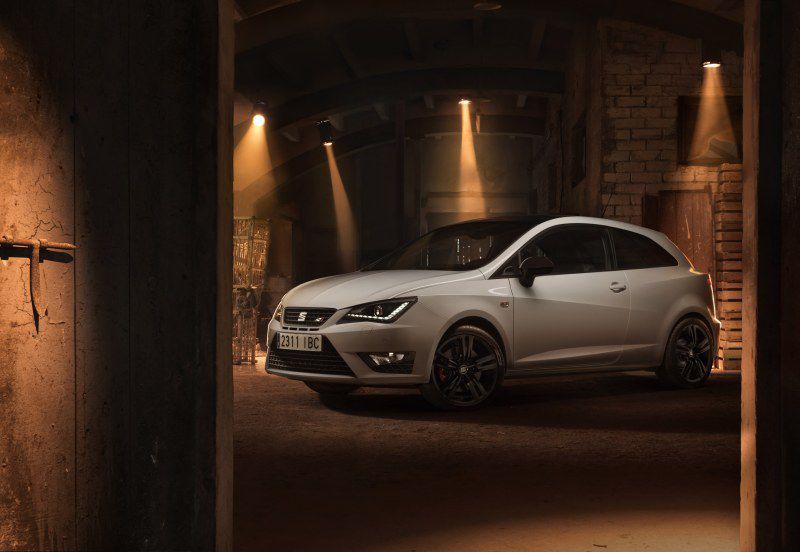
The SEAT Ibiza, a long-standing fixture in the European subcompact segment, received a significant facelift in 2015 for its fourth generation (6J/6P chassis code). Among the refreshed lineup, the Seat Ibiza IV SC variant, specifically the 1.0 EcoTSI model with 110 horsepower, represented a compelling blend of sporty design, modern efficiency, and urban practicality. The “SC” designation, standing for “SportCoupe,” highlighted its three-door body style, offering a more dynamic aesthetic compared to its five-door hatchback sibling. Produced from May 2015 until 2017, this particular iteration of the Ibiza was a testament to SEAT’s commitment to delivering engaging vehicles within the highly competitive European B-segment, a market segment not directly mirrored with the same volume and variety in the United States.
While the SEAT brand, part of the Volkswagen Group, is not officially sold in the North American market, its vehicles like the Ibiza play a crucial role across Europe, Latin America, and other international markets. The Ibiza IV SC (facelift 2015) 1.0 EcoTSI (110 Hp) was engineered to appeal to younger buyers or those seeking a nimble, fuel-efficient, and stylish compact car for navigating crowded city streets and enjoying spirited drives on winding roads. Its focus on advanced small-displacement turbocharged engines, coupled with a well-tuned chassis, positioned it as a strong contender against popular rivals in its primary markets.
Engine and Performance: The Heart of the Seat Ibiza IV SC
At the core of the Ibiza IV SC 1.0 EcoTSI model was a sophisticated and highly efficient powertrain. This variant featured a 1.0-liter (999 cubic centimeters or 60.96 cubic inches) three-cylinder inline engine, designated with the code CHZC. Despite its modest displacement, this engine was a marvel of modern engineering, boasting a turbocharger and intercooler, along with a direct fuel injection system. These technologies allowed it to punch well above its weight, generating a robust 110 horsepower (Hp) delivered between 5000 and 5500 revolutions per minute (rpm).
More impressively, the engine produced a substantial 147.51 pound-feet (lb.-ft.) of torque, available across a broad rev range from 2000 to 3500 rpm. This wide torque band was instrumental in providing excellent responsiveness and flexibility, making the car feel livelier in everyday driving conditions. Power was sent to the front wheels via a precise six-speed manual transmission, offering an engaging driving experience. This setup enabled the Ibiza IV SC to accelerate from 0 to 60 miles per hour (mph) in a respectable 8.7 seconds, with a top speed reaching 122.41 mph (197 km/h).
Beyond performance, efficiency was a key design pillar. The 1.0 EcoTSI engine delivered an impressive combined fuel economy of 54.7 US miles per gallon (mpg), equivalent to 4.3 liters per 100 kilometers. This outstanding fuel efficiency was complemented by low CO2 emissions of just 99 grams per kilometer, allowing the vehicle to meet the stringent Euro 6 emission standards. The engine’s compact size, lightweight construction, and advanced thermal management contributed significantly to the car’s overall efficiency and low operating costs, making it an attractive option in markets where fuel prices are a major consideration.
Design and Features: Sporty Aesthetics and Practicality
The “SC” in Seat Ibiza IV SC denoted its SportCoupe body style, a three-door variant that imbued the car with a more dynamic and athletic stance compared to the standard five-door hatchback. With a length of 159.17 inches (4043 mm), a width of 66.65 inches (1693 mm), and a height of 56.22 inches (1428 mm), the Ibiza SC maintained compact dimensions ideal for urban environments, yet its design language conveyed a sense of sportiness and sophistication. The facelift in 2015 brought subtle but effective aesthetic enhancements, including revised headlights, grille, and bumper designs, giving the car a fresher, more contemporary look.
Despite its coupe-like profile, the Ibiza SC was surprisingly practical. It offered seating for five occupants, making it suitable for small families or groups, although rear access in a three-door vehicle requires some compromise. The trunk space provided 10.31 cubic feet (292 liters) of cargo capacity, which could be expanded by folding down the rear seats, enhancing its versatility for carrying luggage or groceries. The interior featured a clean and ergonomic layout, typical of Volkswagen Group vehicles, with a focus on ease of use and quality materials for its segment.
In terms of chassis and safety, the Ibiza IV SC was well-equipped. It featured an independent McPherson strut front suspension with coil springs and an anti-roll bar, paired with a semi-independent rear suspension also utilizing coil springs. This setup provided a comfortable ride while maintaining agile handling characteristics. Braking duties were handled by ventilated discs at the front and disc brakes at the rear, supported by an Anti-lock Braking System (ABS) for enhanced safety and control during emergency stops. The steering system utilized a rack and pinion setup, offering direct and responsive feedback to the driver. Various tire and wheel options were available, ranging from 185/60 R15 to wider 215/40 R17 configurations, allowing for customization of both aesthetics and handling dynamics.
Technical Specifications
| Category | Specification |
|---|---|
| Brand | SEAT |
| Model | Ibiza IV SC (facelift 2015) |
| Type (Engine) | 1.0 EcoTSI (110 Hp) |
| Production Start | May, 2015 |
| Production End | 2017 |
| Powertrain Architecture | Internal Combustion Engine |
| Body Type | Coupe (3 Doors) |
| Seats | 5 |
| Performance Specs | |
| Fuel Consumption (Combined) | 4.3 l/100 km (54.7 US mpg) |
| CO2 Emissions | 99 g/km |
| Fuel Type | Petrol (Gasoline) |
| Acceleration 0-60 mph | 8.7 sec |
| Maximum Speed | 122.41 mph (197 km/h) |
| Emission Standard | Euro 6 |
| Weight-to-Power Ratio | 9.4 kg/Hp (106.4 Hp/tonne) |
| Weight-to-Torque Ratio | 5.2 kg/Nm (193.4 Nm/tonne) |
| Engine Specs | |
| Power | 110 Hp @ 5000-5500 rpm |
| Power per Liter | 110.1 Hp/l |
| Torque | 147.51 lb.-ft. (200 Nm) @ 2000-3500 rpm |
| Engine Layout | Front, Transverse |
| Engine Model/Code | CHZC |
| Engine Displacement | 1.0 liters (999 cm3 / 60.96 cu. in.) |
| Number of Cylinders | 3 |
| Engine Configuration | Inline |
| Cylinder Bore | 2.93 in. (74.5 mm) |
| Piston Stroke | 3.01 in. (76.4 mm) |
| Compression Ratio | 10.5:1 |
| Valves per Cylinder | 4 |
| Fuel Injection System | Direct Injection |
| Engine Aspiration | Turbocharger, Intercooler |
| Engine Oil Capacity | 4.23 US qt (4 l) |
| Coolant Capacity | 8.45 US qt (8 l) |
| Space, Volume and Weights | |
| Curb Weight | 2279.58 lbs. (1034 kg) |
| Max. Weight | 3527.4 lbs. (1600 kg) |
| Max Load | 1247.82 lbs. (566 kg) |
| Trunk (Boot) Space – Minimum | 10.31 cu. ft. (292 l) |
| Fuel Tank Capacity | 11.89 US gal (45 l) |
| Dimensions | |
| Length | 159.17 in. (4043 mm) |
| Width | 66.65 in. (1693 mm) |
| Height | 56.22 in. (1428 mm) |
| Wheelbase | 97.2 in. (2469 mm) |
| Front Track | 57.68 in. (1465 mm) |
| Rear Track | 57.36 in. (1457 mm) |
| Minimum Turning Circle | 32.81 ft. (10 m) |
| Drivetrain, Brakes and Suspension Specs | |
| Drivetrain Architecture | Front-wheel drive, Internal Combustion Engine |
| Drive Wheel | Front Wheel Drive |
| Number of Gears and Type | 6 gears, Manual Transmission |
| Front Suspension | Independent, McPherson with coil spring and anti-roll bar |
| Rear Suspension | Semi-independent, coil spring |
| Front Brakes | Ventilated Discs |
| Rear Brakes | Disc |
| Assisting Systems | ABS (Anti-lock Braking System) |
| Steering Type | Steering rack and pinion |
| Tires Size | 185/60 R15; 215/45 R16; 215/40 R17 |
| Wheel Rims Size | 15; 16; 17 inches |
Legacy and Market Impact
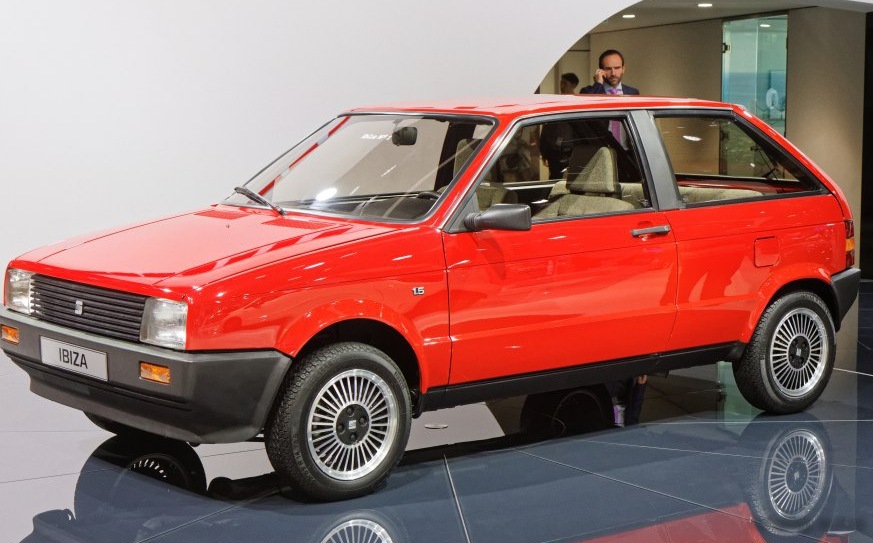
The SEAT Ibiza has been a cornerstone of the Spanish automaker’s lineup since its introduction in 1984, consistently ranking among Europe’s best-selling superminis. The fourth-generation facelift, particularly the Seat Ibiza IV SC 1.0 EcoTSI (110 Hp) from 2015-2017, continued this legacy by offering a compelling package in a segment defined by fierce competition. Its primary rivals in the European market included segment leaders like the Volkswagen Polo (with which it shared a platform), Ford Fiesta, Renault Clio, Opel Corsa, and Peugeot 208. What set the Ibiza apart was its distinctive “auto emoción” philosophy, blending Spanish passion with German engineering precision.
The 1.0 EcoTSI engine, a testament to the downsizing trend in Europe, was particularly impactful. It demonstrated that a small-displacement three-cylinder engine could deliver not only impressive fuel economy but also a surprisingly engaging driving experience, a critical factor for younger demographics. This engine configuration became a benchmark for efficiency and performance in its class, influencing other manufacturers to adopt similar strategies. The SC variant, with its three-door body and sharper styling, catered to buyers who prioritized aesthetics and a sportier feel over maximum practicality, offering a more distinctive choice in a crowded market.
The Ibiza IV SC (facelift 2015) contributed to SEAT’s reputation as a brand that offered stylish, well-built, and fun-to-drive vehicles at an accessible price point. Its strong performance in European safety tests and its adherence to strict emission standards further solidified its appeal. While never officially imported to the United States, its design language, technological advancements, and market positioning offer insights into the evolving landscape of global automotive design and consumer preferences, particularly the emphasis on efficiency, connectivity, and dynamic driving within the compact car segment. The Ibiza remains a vital model for SEAT, embodying the brand’s identity and its significant contribution to the European automotive industry.