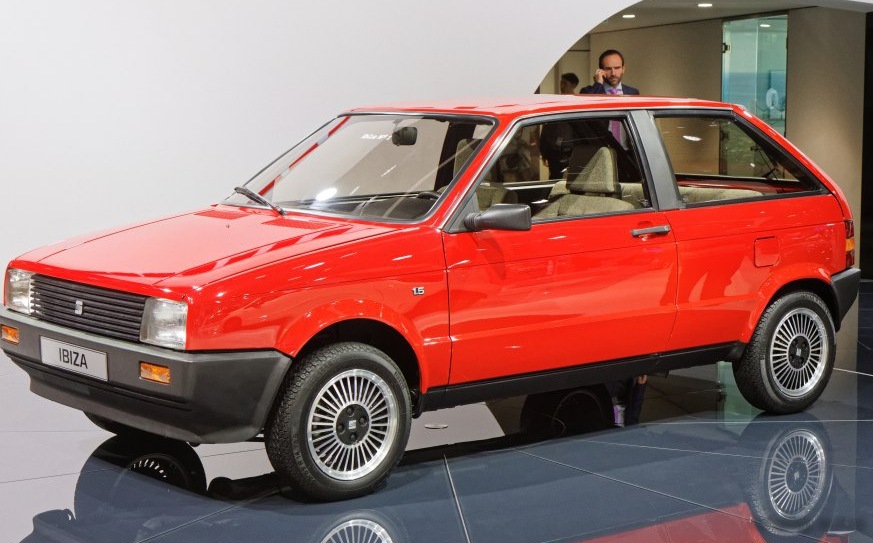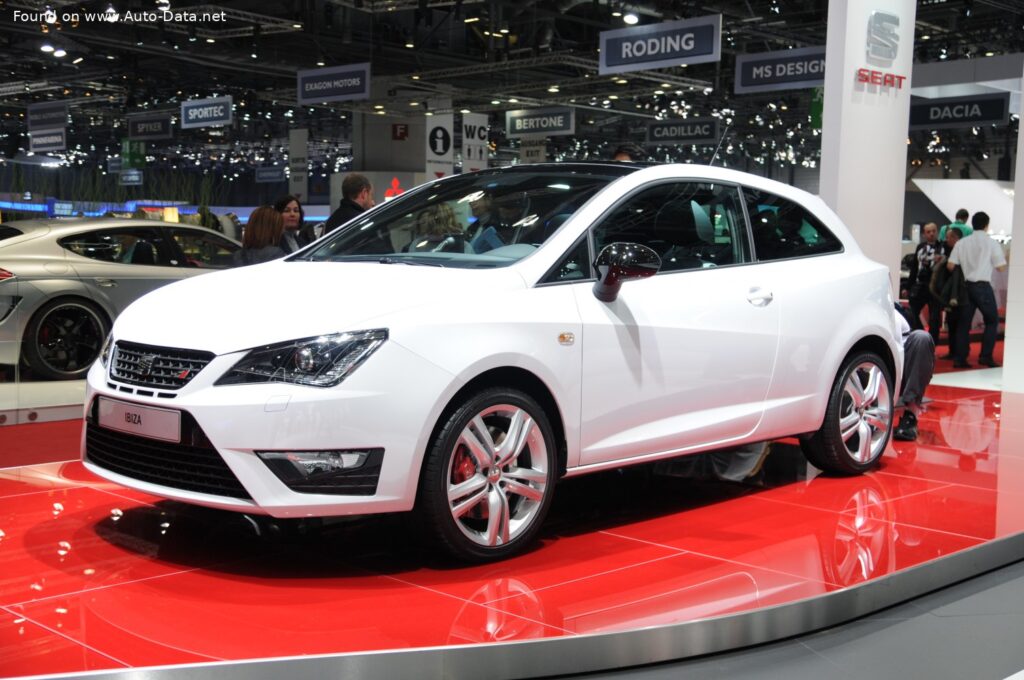
Introduction to the Seat Ibiza IV SC (facelift 2012) 1.2 TSI (105 Hp)
The Seat Ibiza IV SC (facelift 2012) 1.2 TSI (105 Hp) represents a pivotal moment for the Spanish automaker SEAT within the highly competitive European supermini segment. As a brand under the umbrella of the Volkswagen Group, SEAT has long been positioned as the more youthful, dynamic, and design-conscious choice. The fourth generation of the Ibiza, internally known as the 6J/6P, debuted in 2008, and this specific model reflects the significant facelift introduced in 2012, which brought refreshed aesthetics and powertrain refinements. The “SC” designation stands for “SportCoupé,” indicating its distinctive three-door body style, specifically crafted to appeal to buyers prioritizing style, sportiness, and a more compact footprint.
While the SEAT brand does not have an official presence in the United States, the Ibiza has been a cornerstone of the European B-segment for decades, consistently ranking among the continent’s best-selling subcompact vehicles. The 2012 facelift, produced until 2015, integrated updated styling cues and refined powertrains, with the 1.2-liter TSI engine being a prime example of the Volkswagen Group’s commitment to efficient, turbocharged gasoline technology. This particular variant offered a compelling blend of spirited performance, impressive fuel economy, and a nimble character, making it a popular choice for urban dwellers and those seeking an engaging yet practical daily driver across various European markets. Its role was to offer a more emotional and design-led alternative to its platform siblings, such as the Volkswagen Polo and Skoda Fabia, while retaining their underlying reliability and engineering prowess.
Engine and Performance: The Heart of the Seat Ibiza IV SC (facelift 2012)
At the core of the Seat Ibiza IV SC (facelift 2012) 1.2 TSI (105 Hp) lies an advanced 1.2-liter (1197 cubic centimeters) turbocharged, direct-injection gasoline engine, identified by the internal code CBZB. This inline four-cylinder unit is a quintessential example of the Volkswagen Group’s pioneering efforts in engine downsizing, a strategy aimed at delivering the robust performance typically associated with larger, naturally aspirated engines, but with the superior fuel efficiency and lower emissions of a smaller displacement unit.
The engine generates a respectable 105 horsepower at 5000 rpm, providing ample power for both city driving and highway cruising. However, its true strength lies in its torque delivery. The 1.2 TSI produces a generous 129.07 lb-ft (175 Nm) of torque, critically available across a remarkably broad rev range, from a low 1550 rpm all the way up to 4100 rpm. This wide and flat torque curve ensures exceptional responsiveness, virtually eliminating turbo lag and providing strong acceleration from low speeds. This characteristic makes the Ibiza 1.2 TSI particularly adept at navigating congested urban environments, where instant power is often required, while also facilitating relaxed highway driving with minimal need for downshifting.
Power is efficiently channeled to the front wheels through a precise and engaging 5-speed manual transmission. This gearbox, known for its smooth shifts and well-chosen ratios, allows drivers to fully exploit the engine’s capabilities. The Ibiza 1.2 TSI is capable of accelerating from 0 to 60 mph in a swift 9.3 seconds, reaching a maximum speed of 118 mph. These performance figures firmly position it as a lively and capable contender within its segment, living up to its “SportCoupé” designation.
Fuel economy was a major highlight for this powertrain. The vehicle achieved an impressive combined fuel consumption rating of 46.1 US mpg (5.1 liters per 100 km). For urban driving, it delivered 36.2 US mpg (6.5 l/100 km), while extra-urban cycles saw an exceptional 53.5 US mpg (4.4 l/100 km). With CO2 emissions rated at 119 grams per kilometer, the Ibiza 1.2 TSI met the stringent Euro 5 emission standard, underscoring its environmental consideration for the period. The engine’s advanced architecture, featuring a front, transverse layout, a compression ratio of 10:1, direct fuel injection, and a turbocharger with an intercooler, collectively contributed to its balanced performance and exemplary efficiency profile.
Design & Features: The Style of the Ibiza IV SC (facelift 2012)
The Seat Ibiza IV SC (facelift 2012), with its “SportCoupé” (SC) designation, is defined by its distinctive three-door body style, which provides a more dynamic, athletic, and visually compact profile compared to its five-door hatchback counterpart. With overall dimensions of 159.17 inches in length, 66.65 inches in width, and 56.22 inches in height, the Ibiza SC boasts compact proportions that are ideally suited for navigating the often-congested streets of European cities, while its 97.2-inch wheelbase contributes to a stable and composed ride.
The 2012 facelift introduced a series of aesthetic enhancements that sharpened the Ibiza’s already appealing design, aligning it more closely with SEAT’s evolving “Arrow Design” language. These updates included a redesigned front fascia featuring a more aggressive trapezoidal grille, updated headlights with sharper angles and, in some configurations, optional LED daytime running lights, and revised bumper styling that gave the car a more assertive stance. The rear section also received subtle tweaks to the taillights and bumper, maintaining a cohesive and modern appearance. The coupe-like silhouette, characterized by its sweeping roofline, prominent shoulder line, and neatly integrated rear spoiler, imparted a purposeful and agile demeanor to the SC model.
Inside, the Ibiza SC offered a practical yet stylish cabin. While designed to accommodate five occupants, the rear seating in a three-door vehicle is typically more comfortable for two adults on shorter journeys or for children, due to the inherent constraints of the body style. The trunk space of 10.03 cubic feet (284 liters) was competitive for the supermini segment, providing adequate capacity for daily errands, grocery shopping, or weekend getaways. The interior design focused on ergonomics and functionality, with controls intuitively placed and materials chosen to offer a blend of durability and tactile appeal.
In terms of chassis and handling, the Seat Ibiza IV SC (facelift 2012) benefited from a well-tuned suspension setup, providing a balance between ride comfort and dynamic responsiveness. The front suspension featured an independent McPherson strut system with coil springs and an anti-roll bar, while the rear utilized a trailing arm setup. This configuration, combined with precise electric power steering, delivered an engaging and nimble driving experience, a hallmark of well-engineered European subcompacts. Braking performance was ensured by ventilated discs at the front and solid discs at the rear, supported by an Anti-lock Braking System (ABS) as standard, enhancing safety and control during emergency braking maneuvers. The vehicle offered a choice of wheel and tire sizes, ranging from economical 185/60 R15 options to more performance-oriented 215/40 R17 setups, allowing for customization of both grip and aesthetic appeal.
Technical Specifications: Seat Ibiza IV SC (facelift 2012) 1.2 TSI (105 Hp)
| Category | Specification | Value |
|---|---|---|
General Information |
||
| Brand | Seat | |
| Model | Ibiza | |
| Generation | Ibiza IV SC (facelift 2012) | |
| Type (Engine) | 1.2 TSI (105 Hp) | |
| Start of production | 2012 year | |
| End of production | 2015 year | |
| Powertrain Architecture | Internal Combustion engine | |
| Body type | Coupe | |
| Seats | 5 | |
| Doors | 3 | |
Performance Specifications |
||
| Fuel consumption (urban) | 36.2 US mpg (6.5 l/100 km) | |
| Fuel consumption (extra urban) | 53.5 US mpg (4.4 l/100 km) | |
| Fuel consumption (combined) | 46.1 US mpg (5.1 l/100 km) | |
| CO2 emissions | 119 g/km | |
| Fuel Type | Petrol (Gasoline) | |
| Acceleration 0 – 60 mph | 9.3 sec | |
| Acceleration 0 – 100 km/h | 9.8 sec | |
| Maximum speed | 118.06 mph (190 km/h) | |
| Emission standard | Euro 5 | |
| Weight-to-power ratio | 10.4 kg/Hp, 96.3 Hp/tonne | |
| Weight-to-torque ratio | 6.2 kg/Nm, 160.6 Nm/tonne | |
Engine Specifications |
||
| Power | 105 Hp @ 5000 rpm | |
| Power per liter | 87.7 Hp/l | |
| Torque | 129.07 lb-ft (175 Nm) @ 1550-4100 rpm | |
| Engine layout | Front, Transverse | |
| Engine Model/Code | CBZB | |
| Engine displacement | 73.05 cu. in. (1197 cm³) | |
| Number of cylinders | 4 | |
| Engine configuration | Inline | |
| Cylinder Bore | 2.8 in. (71 mm) | |
| Piston Stroke | 2.98 in. (75.6 mm) | |
| Compression ratio | 10:1 | |
| Number of valves per cylinder | 2 | |
| Fuel injection system | Direct injection | |