The Seat Ibiza IV SC (facelift 2012) 1.4 16V (85 Hp): A European Subcompact’s Evolution
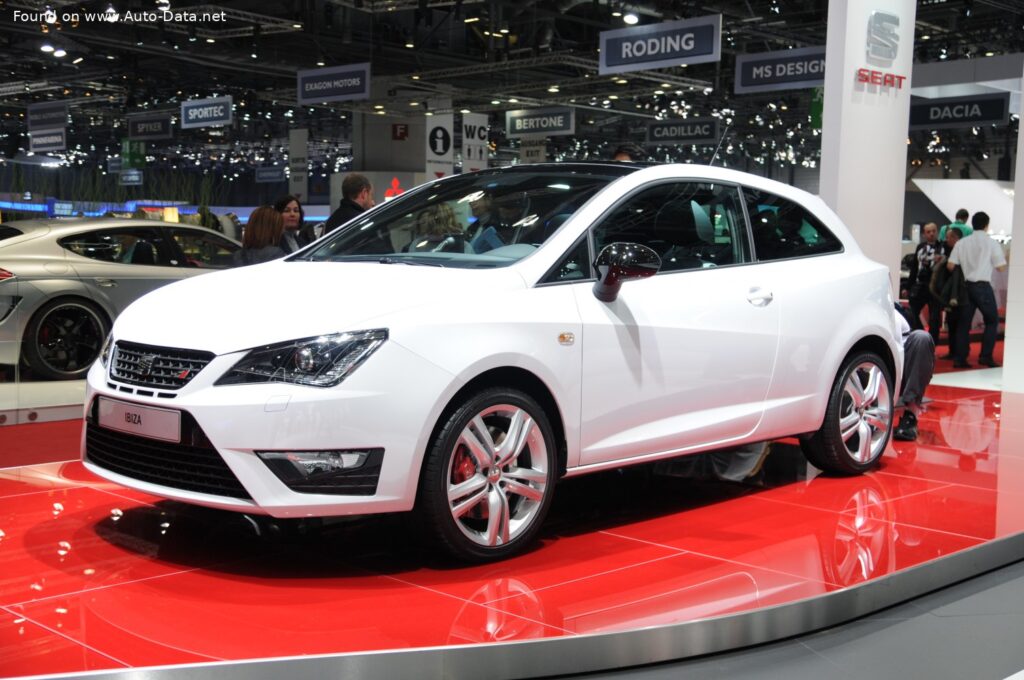
The Seat Ibiza IV SC (facelift 2012) represents a significant iteration of the popular supermini from the Spanish automaker SEAT, a marque within the vast Volkswagen Group. Launched in 2012 as a refresh of the fourth-generation Ibiza (6J series), this model solidified SEAT’s reputation for offering stylish, sporty, and practical vehicles primarily for the European market. The “SC” designation, standing for “SportCoupé,” denoted the three-door body style, emphasizing a more dynamic and youthful appeal compared to its five-door hatchback sibling. This particular variant, powered by a 1.4-liter 16-valve engine delivering 85 horsepower, was a cornerstone of the Ibiza lineup, balancing everyday usability with commendable fuel efficiency and a lively driving experience within the competitive European B-segment.
The 2012 facelift introduced a series of aesthetic and technological updates designed to keep the Ibiza fresh and competitive against a rapidly evolving field of rivals. While never officially sold in the United States, the Ibiza is a prime example of a successful European subcompact, showcasing the blend of sophisticated engineering from the Volkswagen Group with SEAT’s distinct “Auto Emoción” design philosophy. It catered to a broad demographic, from young urban drivers to small families, seeking an affordable yet engaging compact car.
Engine and Performance of the Seat Ibiza IV SC (facelift 2012)
At the heart of this particular Seat Ibiza IV SC (facelift 2012) variant was a robust and well-proven 1.4-liter (1390 cm3 or 84.82 cu. in.) naturally aspirated inline-four gasoline engine, internally designated as CGGB. This powerplant, featuring a 16-valve cylinder head (four valves per cylinder) and multi-port manifold injection, was engineered for reliability and efficiency. It delivered a peak output of 85 horsepower (Hp) at 5000 revolutions per minute (rpm), providing ample power for its lightweight chassis. Torque figures stood at 97.36 lb.-ft. (132 Nm) at 3800 rpm, ensuring responsive acceleration in city driving and adequate pulling power on the highway.
The engine’s layout was front, transverse, driving the front wheels through a precise 5-speed manual transmission. This drivetrain architecture contributed to the car’s agile handling and efficient power delivery. Performance metrics for the 1.4 16V (85 Hp) were respectable for its class: acceleration from 0 to 60 mph was achieved in a calculated 11.2 seconds, while the top speed reached 109.98 mph (177 km/h). These figures positioned the Ibiza as a capable performer for daily commutes and occasional longer journeys without being overtly sporty.
Fuel economy was a key selling point for this generation of the Ibiza. The combined fuel consumption was rated at 39.9 US mpg (5.9 liters per 100 km), with extra-urban figures reaching an impressive 50 US mpg (4.7 liters per 100 km). Urban driving saw consumption at 29.4 US mpg (8 liters per 100 km). Complementing its efficiency, the vehicle met the Euro 5 emission standard, with CO2 emissions of 139 g/km, reflecting SEAT’s commitment to environmental considerations within the Volkswagen Group’s broader strategy.
Design and Features
Exterior Aesthetics and Body Type
The Seat Ibiza IV SC (facelift 2012) was characterized by its distinctive “SportCoupé” body type, a three-door coupe that visually differentiated it from the more conventional five-door hatchback. With its sleeker profile, sloping roofline, and pronounced shoulder lines, the SC variant exuded a more dynamic and youthful character. The 2012 facelift brought subtle yet impactful changes, including redesigned front bumpers, a revised grille, and updated headlights with a sharper, more angular appearance, often incorporating LED daytime running lights on higher trims. These updates enhanced the car’s aggressive “Arrow Design” language, making it instantly recognizable on European roads.
Dimensionally, the Ibiza SC measured 159.17 inches (4043 mm) in length, 66.65 inches (1693 mm) in width, and 56.22 inches (1428 mm) in height, with a wheelbase of 97.2 inches (2469 mm). These compact dimensions contributed to its maneuverability in congested urban environments, further aided by a tight minimum turning circle of 34.38 feet (10.48 m). The available wheel sizes ranged from 15-inch to 17-inch, allowing for personalization and contributing to the car’s overall stance and handling.
Interior Comfort and Technology
Despite its compact exterior, the Ibiza SC offered a surprisingly spacious cabin designed to accommodate five occupants, though the rear seats were naturally more suited for two adults on shorter journeys. The trunk space was practical for a car of its size, providing 10.03 cu. ft. (284 liters) of cargo capacity, expandable by folding down the rear seats. The interior benefited from the facelift with updated trim materials, revised instrument cluster graphics, and enhanced infotainment options, depending on the trim level. While not a luxury vehicle, the cabin was ergonomically designed, with controls intuitively placed and materials chosen for durability and a pleasant tactile feel.
Key features included a standard anti-lock braking system (ABS) for enhanced safety, electric power steering for effortless maneuverability, and a well-tuned suspension setup. The front suspension utilized an independent McPherson strut system with coil springs and an anti-roll bar, providing a balance of comfort and dynamic handling. The rear featured a trailing arm setup, a common and effective solution for subcompacts. Braking performance was assured with ventilated discs at the front and solid discs at the rear. The car’s kerb weight of 2369.97 lbs. (1075 kg) contributed to its nimble feel and efficient performance.
Technical Specifications
| Category | Specification | US Equivalent |
|---|---|---|
| Brand | Seat | |
| Model | Ibiza | |
| Generation | Ibiza IV SC (facelift 2012) | |
| Type (Engine) | 1.4 16V (85 Hp) | |
| Start of Production | 2012 year | |
| End of Production | 2015 year | |
| Powertrain Architecture | Internal Combustion engine | |
| Body Type | Coupe | 3 Doors |
| Seats | 5 | |
| Performance Specs | ||
| Fuel Consumption (Urban) | 8 l/100 km | 29.4 US mpg |
| Fuel Consumption (Extra Urban) | 4.7 l/100 km | 50 US mpg |
| Fuel Consumption (Combined) | 5.9 l/100 km | 39.9 US mpg |
| CO2 Emissions | 139 g/km | |
| Fuel Type | Petrol (Gasoline) | |
| Acceleration 0 – 60 mph | 11.2 sec | |
| Acceleration 0 – 62 mph (0 – 100 km/h) | 11.8 sec | |
| Maximum Speed | 177 km/h | 109.98 mph |
| Emission Standard | Euro 5 | |
| Weight-to-Power Ratio | 12.6 kg/Hp | 79.1 Hp/tonne |
| Weight-to-Torque Ratio | 8.1 kg/Nm | 122.8 Nm/tonne |
| Engine Specs | ||
| Power | 85 Hp @ 5000 rpm. | |
| Power per Liter | 61.2 Hp/l | |
| Torque | 132 Nm @ 3800 rpm. | 97.36 lb.-ft. @ 3800 rpm. |
| Engine Layout | Front, Transverse | |
| Engine Model/Code | CGGB | |
| Engine Displacement | 1390 cm3 | 1.4 Liters / 84.82 cu. in. |
| Number of Cylinders | 4 | |
| Engine Configuration | Inline | |
| Cylinder Bore | 76.5 mm | 3.01 in. |
| Piston Stroke | 75.6 mm | 2.98 in. |
| Compression Ratio | 10.5:1 | |
| Number of Valves per Cylinder | 4 | |
| Fuel Injection System | Multi-port manifold injection | |
| Engine Aspiration | Naturally aspirated engine | |
| Engine Oil Capacity | 3.2 l | 3.38 US qt |
| Coolant Capacity | 5.6 l | 5.92 US qt |
| Space, Volume and Weights | ||
| Kerb Weight | 1075 kg | 2369.97 lbs. |
| Max. Weight | 1560 kg | 3439.21 lbs. |
| Max Load | 485 kg | 1069.24 lbs. |
| Trunk (Boot) Space – Minimum | 284 l | 10.03 cu. ft. |
| Fuel Tank Capacity | 45 l | 11.89 US gal |
| Dimensions | ||
| Length | 4043 mm | 159.17 in. |
| Width | 1693 mm | 66.65 in. |
| Height | 1428 mm | 56.22 in. |
| Wheelbase | 2469 mm | 97.2 in. |
| Front Track | 1465 mm | 57.68 in. |
| Rear (Back) Track | 1457 mm | 57.36 in. |
| Minimum Turning Circle (Turning Diameter) | 10.48 m | 34.38 ft. |
| Drivetrain, Brakes and Suspension Specs | ||
| Drivetrain Architecture | The Internal combustion engine (ICE) drives the front wheels of the vehicle. | |
| Drive Wheel | Front wheel drive | |
| Number of Gears and Type of Gearbox | 5 gears, manual transmission | |
| Front Suspension | Independent, type McPherson with coil spring and anti-roll bar | |
| Rear Suspension | Trailing arm | |
| Front Brakes | Ventilated discs | |
| Rear Brakes | Disc | |
| Assisting Systems | ABS (Anti-lock braking system) | |
| Steering Type | Steering rack and pinion | |
| Power Steering | Electric Steering | |
| Tires Size | 185/60 R15; 215/45 R16; 215/40 R17 | |
| Wheel Rims Size | 15; 16; 17 | |
Legacy and Market Impact
The Seat Ibiza has long been a pillar of SEAT’s product lineup, and the fourth generation, particularly the facelifted 2012 model, played a crucial role in maintaining the brand’s competitive edge in the highly contested European supermini segment. The Ibiza IV SC (facelift 2012) 1.4 16V (85 Hp) variant, with its blend of stylish design, efficient performance, and Volkswagen Group engineering, garnered a reputation as a practical yet engaging option for a diverse range of buyers.
In its primary markets across Europe, the Ibiza competed fiercely against segment leaders such as the Volkswagen Polo (its platform mate), Ford Fiesta, Renault Clio, Peugeot 208, and Opel Corsa. What set the Ibiza apart was its distinctive Spanish flair and a slightly sportier emphasis in its design and driving dynamics compared to some of its more conservative rivals. The “SC” moniker specifically appealed to younger demographics or those prioritizing aesthetics and a more coupe-like profile over maximum practicality.
Historically, the Ibiza has been instrumental in SEAT’s growth and identity within the Volkswagen Group. It consistently ranked among the best-selling models for the brand, embodying SEAT’s “Auto Emoción” slogan by offering emotional design and an enjoyable driving experience at an accessible price point. The 2012 facelift ensured that the fourth-generation Ibiza remained relevant through the mid-2010s, contributing to SEAT’s strong market presence before the introduction of the fifth-generation model. Its robust build quality, shared components with other VW Group vehicles, and strong performance for its class meant that the Ibiza 1.4 16V (85 Hp) held its value reasonably well in the used car market, continuing to serve as a reliable and economical choice for many drivers across Europe. The car’s success underscored SEAT’s ability to carve out a distinct niche within the highly competitive automotive landscape, offering a compelling alternative that combined practicality with a vibrant personality.