The Seat Ibiza IV SC (facelift 2015) 1.4 TDI (105 Hp): A European Subcompact with Sporting Flair
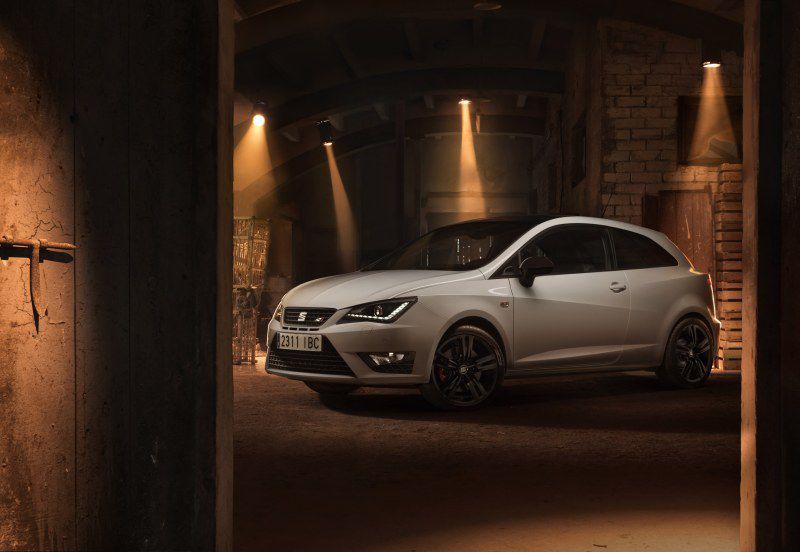
The Seat Ibiza IV SC (facelift 2015) 1.4 TDI (105 Hp) represents a compelling iteration of the Spanish automaker’s popular subcompact offering, specifically the “Sport Coupe” (SC) three-door variant. Launched in May 2015 as part of the fourth generation’s mid-cycle refresh, this particular model, available until 2017, was a significant player in the highly competitive European B-segment. While never officially sold in the United States, the Ibiza is a cornerstone of Seat’s lineup, known for blending Volkswagen Group engineering with a distinctive, youthful, and sporty Spanish design aesthetic. This facelifted model brought subtle but impactful improvements in technology, interior quality, and powertrain refinement, aiming to keep the Ibiza competitive against a multitude of rivals across the continent.
The “SC” designation denoted its three-door coupe-like body style, which offered a sleeker profile compared to the more utilitarian five-door hatchback. This version of the Ibiza was primarily targeted at younger buyers or those prioritizing style over absolute practicality. The 1.4 TDI engine, a common and highly efficient diesel choice in Europe, underscored the vehicle’s focus on low running costs and impressive fuel economy, making it a pragmatic yet spirited choice for urban commuting and longer European journeys alike.
Engine and Performance: The Efficient Heart of the Seat Ibiza IV SC (facelift 2015)
Powering the Seat Ibiza IV SC (facelift 2015) 1.4 TDI (105 Hp) was a sophisticated, transversely mounted 1.4-liter (1422 cm³ or 86.78 cu. in.) inline three-cylinder diesel engine, codenamed CUTA. This unit delivered a robust 105 horsepower at 3500 rpm, impressive for its displacement. More notably, it produced a strong 230 Nm (169.64 lb.-ft.) of torque across a broad and accessible rev range, from 1750 to 2500 rpm. This low-end torque was a key characteristic of the TDI engine, providing excellent responsiveness in city driving and effortless highway cruising, despite its relatively modest horsepower figure.
The engine’s architecture included a common rail fuel injection system, a turbocharger, and an intercooler, all working in concert to optimize power delivery and fuel efficiency. With a compression ratio of 16.2:1 and four valves per cylinder, the engine was designed for clean and potent combustion. A particulate filter was standard, ensuring compliance with the stringent Euro 6 emission standards prevalent in Europe at the time.
Performance figures for the Ibiza SC 1.4 TDI were respectable for its class. It could accelerate from 0 to 60 mph in a brisk 9.4 seconds, demonstrating its capability for quick merges and confident overtaking. The top speed was rated at 119.3 mph (192 km/h), making it perfectly suited for sustained speeds on the German Autobahn or other European motorways.
Perhaps the most compelling aspect of this powertrain was its outstanding fuel economy. The combined cycle consumption was an impressive 3.6 liters per 100 kilometers, translating to approximately 65.3 US miles per gallon. This, coupled with CO2 emissions of just 95 g/km, highlighted the vehicle’s commitment to efficiency and environmental responsibility, a critical factor for European buyers. The engine was paired with a smooth-shifting 5-speed manual transmission, driving the front wheels, offering a direct and engaging driving experience. Its lightweight construction, with a curb weight of 2394.22 lbs. (1086 kg), contributed significantly to both its agility and fuel economy, resulting in a favorable weight-to-power ratio of 10.3 kg/Hp.
Design and Features: Sporty Aesthetics Meet Practicality
The Seat Ibiza IV SC (facelift 2015) distinguished itself with its “Sport Coupe” body style, a three-door configuration that gave it a more dynamic and athletic stance than its five-door sibling. Measuring 159.17 inches (4043 mm) in length, 66.65 inches (1693 mm) in width, and 56.22 inches (1428 mm) in height, the Ibiza SC possessed compact dimensions ideal for navigating congested European city streets while still offering a substantial presence. The facelift in 2015 brought subtle refinements to the exterior, including redesigned headlights with optional LED daytime running lights, a revised grille, and updated wheel designs, enhancing its modern appeal.
Inside, the facelift focused on improving material quality and introducing new technology. While the core interior architecture remained, Seat upgraded soft-touch plastics, trim finishes, and upholstery options to create a more premium feel. A crucial addition was the updated infotainment system, often featuring a larger touchscreen, improved connectivity options like MirrorLink (for smartphone integration), and better navigation capabilities, catering to the increasingly tech-savvy European consumer. Despite its coupe designation, the Ibiza SC offered seating for five, though the rear seats were best suited for shorter journeys or children due to the inherent compromises of a three-door design.
Practicality was not entirely overlooked, with a respectable trunk capacity of 10.31 cubic feet (292 liters), sufficient for daily errands or weekend trips. The fuel tank held 11.89 US gallons (45 liters), providing an excellent range thanks to the diesel engine’s economy.
On the safety front, the Ibiza IV SC came equipped with essential features such as ABS (Anti-lock Braking System) as standard. Given its production period, it would also have included a comprehensive array of airbags, electronic stability control (ESC), and traction control, all contributing to a secure driving experience. The chassis featured an independent MacPherson strut front suspension with coil springs and an anti-roll bar, paired with a semi-independent coil spring rear suspension, a setup that provided a good balance of comfortable ride quality and agile handling, characteristic of Volkswagen Group small cars. Braking was handled by ventilated discs at the front and solid discs at the rear, ensuring confident stopping power.
Technical Specifications: Seat Ibiza IV SC (facelift 2015) 1.4 TDI (105 Hp)
| Category | Specification |
|---|---|
| General Information | |
| Brand | Seat |
| Model | Ibiza |
| Generation | Ibiza IV SC (facelift 2015) |
| Type (Engine) | 1.4 TDI (105 Hp) |
| Start of Production | May, 2015 |
| End of Production | 2017 |
| Powertrain Architecture | Internal Combustion engine |
| Body type | Coupe |
| Seats | 5 |
| Doors | 3 |
| Performance Specs | |
| Fuel consumption (economy) – combined | 3.6 l/100 km (65.3 US mpg) |
| CO2 emissions | 95 g/km |
| Fuel Type | Diesel |
| Acceleration 0 – 60 mph | 9.4 sec |
| Maximum speed | 119.3 mph (192 km/h) |
| Emission standard | Euro 6 |
| Weight-to-power ratio | 10.3 kg/Hp (96.7 Hp/tonne) |
| Weight-to-torque ratio | 4.7 kg/Nm (211.8 Nm/tonne) |
| Engine Specs | |
| Power | 105 Hp @ 3500 rpm |
| Power per liter | 73.8 Hp/l |
| Torque | 230 Nm (169.64 lb.-ft.) @ 1750-2500 rpm |
| Engine layout | Front, Transverse |
| Engine Model/Code | CUTA |
| Engine displacement | 1422 cm³ (1.4 liters, 86.78 cu. in.) |
| Number of cylinders | 3 |
| Engine configuration | Inline |
| Cylinder Bore | 79.5 mm (3.13 in.) |
| Piston Stroke | 95.5 mm (3.76 in.) |
| Compression ratio | 16.2:1 |
| Number of valves per cylinder | 4 |
| Fuel injection system | Diesel Commonrail |
| Engine aspiration | Turbocharger, Intercooler |
| Engine oil capacity | 4.1 l (4.33 US qt) |
| Coolant | 8 l (8.45 US qt) |
| Engine systems | Particulate filter |
| Space, Volume and Weights | |
| Kerb Weight | 1086 kg (2394.22 lbs.) |
| Max. weight | 1650 kg (3637.63 lbs.) |
| Max load | 564 kg (1243.41 lbs.) |
| Trunk (boot) space – minimum | 292 l (10.31 cu. ft.) |
| Fuel tank capacity | 45 l (11.89 US gal) |
| Dimensions | |
| Length | 4043 mm (159.17 in.) |
| Width | 1693 mm (66.65 in.) |
| Height | 1428 mm (56.22 in.) |
| Wheelbase | 2469 mm (97.2 in.) |
| Front track | 1465 mm (57.68 in.) |
| Rear (Back) track | 1457 mm (57.36 in.) |
| Minimum turning circle (turning diameter) | 10 m (32.81 ft.) |
| Drivetrain, Brakes and Suspension Specs | |
| Drivetrain Architecture | The Internal combustion engine (ICE) drives the front wheels of the vehicle. |
| Drive wheel | Front wheel drive |
| Number of gears and type of gearbox | 5 gears, manual transmission |
| Front suspension | Independent, type McPherson with coil spring and anti-roll bar |
| Rear suspension | Semi-independent, coil spring |
| Front brakes | Ventilated discs |
| Rear brakes | Disc |
| Assisting systems | ABS (Anti-lock braking system) |
| Steering type | Steering rack and pinion |
| Tires size | 185/60 R15; 215/45 R16; 215/40 R17 |
| Wheel rims size | 15; 16; 17 |
Legacy and Market Impact
The Seat Ibiza IV SC (facelift 2015) 1.4 TDI (105 Hp) played a crucial role in Seat’s strategy to capture the hearts of European subcompact buyers. As a brand within the vast Volkswagen Group, Seat often positions itself as the more emotional, design-led, and sporty alternative to its more conservative siblings like the Volkswagen Polo and Skoda Fabia, with which it shared its platform (PQ25). The Ibiza SC, in particular, with its three-door body and sharper styling, epitomized this brand identity.
In its primary European market, the Ibiza was a consistent bestseller, especially in its home country of Spain, but also performed strongly in the UK, Germany, and Italy. Its reputation was built on a combination of factors: reliable Volkswagen Group engineering, dynamic handling characteristics, a comfortable ride for its class, and a perceived “value for money” proposition compared to premium rivals like the Audi A1 (which also shared the same platform). The availability of highly efficient diesel engines, like the 1.4 TDI, was a significant draw for European consumers facing high fuel prices and stringent emissions regulations, making it an economical choice for daily commuting and longer trips.
Competitors in the fiercely contested B-segment included established players such as the Ford Fiesta, Renault Clio, Peugeot 208, Opel/Vauxhall Corsa, and its internal Volkswagen Group stablemates. The Ibiza carved out its niche by offering a distinct blend of practicality, style, and a slightly sportier driving feel than many of its direct rivals. The 1.4 TDI (105 Hp) variant, specifically, was lauded for its impressive torque delivery, making the car feel punchier than its horsepower figure might suggest, and its exceptional fuel economy truly stood out.
While the three-door “SC” variant eventually gave way to a more streamlined five-door-only lineup in subsequent generations, it remains an important part of the Ibiza’s history, representing an era when automakers offered more diverse body styles in the subcompact segment. The 2015 facelift ensured the fourth-generation Ibiza remained fresh and competitive in its final years of production, solidifying its legacy as a stylish, efficient, and enjoyable European supermini. Its impact was largely defined by its ability to deliver sophisticated engineering and modern features in an accessible and attractive package, cementing Seat’s position as a vibrant and youthful brand within the global automotive landscape.