Introduction to the Seat Ibiza IV SC (facelift 2015) 1.4 TDI (90 Hp)
The Seat Ibiza IV SC (facelift 2015) 1.4 TDI (90 Hp) represents a compelling iteration of the Spanish automaker’s popular subcompact car, known as a supermini in European markets. As a brand within the Volkswagen Group, Seat has historically carved out a niche for itself by offering vehicles with a sportier flair and more expressive design compared to its German and Czech stablemates. The fourth generation Ibiza, internally designated as the 6J, was initially launched in 2008 and received a significant refresh in 2012, followed by a more subtle but impactful facelift in May 2015, which is the focus of this analysis.
This particular model, the Ibiza IV SC (Sport Coupe), distinguishes itself with a three-door body style, appealing to buyers seeking a more dynamic and youthful aesthetic than the conventional five-door hatchback. The 2015 facelift brought a host of improvements, particularly in the areas of interior quality, technology, and engine efficiency, ensuring the Ibiza remained competitive in Europe’s fiercely contested B-segment. The 1.4 TDI engine variant, with its 90 horsepower output, was a cornerstone of Seat’s strategy to offer an economical yet capable powertrain option, aligning with the prevalent demand for diesel efficiency across European markets during its production run from 2015 to 2017. While the Seat brand and the Ibiza model were not officially sold in the United States, their global significance, particularly within Europe, cannot be overstated, influencing automotive design and engineering trends that resonate worldwide.
Engine and Performance: The Heart of the Seat Ibiza IV SC (facelift 2015) 1.4 TDI (90 Hp)
At the core of the Seat Ibiza IV SC (facelift 2015) 1.4 TDI (90 Hp) is a meticulously engineered 1.4-liter (1422 cm³ or 86.78 cu. in.) three-cylinder inline diesel engine, identified by the CUSB engine code. This powertrain is a prime example of Volkswagen Group’s commitment to compact, efficient diesel technology, especially tailored for the European market. Despite its modest displacement and cylinder count, this engine delivers a respectable 90 horsepower at 3500 rpm. More impressively, it produces a robust 230 Nm (169.64 lb.-ft.) of torque across a broad and accessible rev range, from 1750 to 2500 rpm. This substantial torque output for its size is largely attributable to its sophisticated engine aspiration system, which includes a turbocharger and an intercooler, ensuring optimal air density for combustion.
The engine’s architecture features a front, transverse layout, driving the front wheels through a precise 5-speed manual transmission. This combination provides a direct and engaging driving experience, characteristic of Seat’s sporty image. The power-to-weight ratio stands at an impressive 12 kg/Hp (83.3 Hp/tonne), while the torque-to-weight ratio is 4.7 kg/Nm (213 Nm/tonne), indicating a sprightly performance for its class. In terms of acceleration, the Ibiza 1.4 TDI can sprint from 0 to 60 mph in a swift 10.4 seconds, reaching a maximum speed of 113.09 mph (182 km/h).
Fuel efficiency is where this powertrain truly shines. With a combined fuel consumption rating of an outstanding 3.6 liters per 100 kilometers, it translates to an exceptional 65.3 US mpg. This remarkable economy is coupled with low CO2 emissions of just 93 g/km, allowing the vehicle to meet the stringent Euro 6 emission standard, a critical factor for its market appeal in Europe. The engine incorporates a common rail fuel injection system for precise fuel delivery and a particulate filter to reduce harmful emissions, underscoring its advanced environmental credentials. Its 16.2:1 compression ratio and four valves per cylinder further contribute to its efficiency and performance balance.
Design and Features: Sporty Aesthetics and Practicality
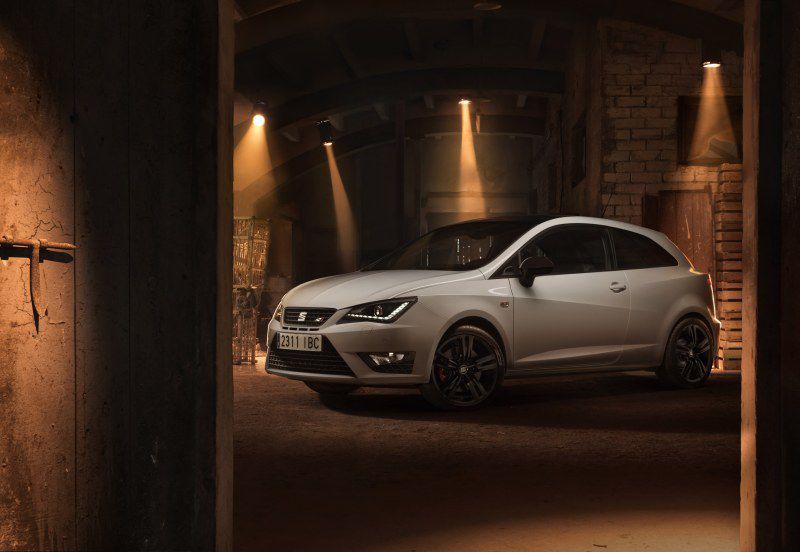
The Seat Ibiza IV SC (facelift 2015) 1.4 TDI (90 Hp) is presented in a 3-door coupe body type, which Seat designated as “SC” for Sport Coupe. This styling choice provides a more dynamic and sleek profile compared to its five-door counterpart, featuring longer doors and a more rakish roofline that tapers towards the rear. Despite its coupe designation, it comfortably accommodates five occupants, offering a blend of sporty appeal and practical interior space. The exterior dimensions measure 159.17 inches (4043 mm) in length, 66.65 inches (1693 mm) in width, and 56.22 inches (1428 mm) in height, with a wheelbase of 97.2 inches (2469 mm). These compact dimensions, coupled with a minimum turning circle of just 32.81 feet (10 meters), make the Ibiza an agile and maneuverable vehicle, ideally suited for urban environments.
The 2015 facelift brought subtle but effective design enhancements. Externally, these included revised headlight designs with optional LED daytime running lights, new alloy wheel designs, and updated color palettes, giving the car a fresher, more contemporary look. The interior saw more significant upgrades, focusing on improved material quality, a redesigned dashboard, and enhanced infotainment systems, often featuring a larger touchscreen display and smartphone integration, which were becoming standard expectations for modern cars.
In terms of practical features, the Ibiza SC offers a respectable minimum trunk space of 10.31 cu. ft. (292 liters), which is quite competitive for a subcompact coupe. Its kerb weight of 2380.99 lbs. (1080 kg) contributes to its nimble handling and efficiency, while its maximum load capacity of 1234.59 lbs. (560 kg) ensures decent utility. The fuel tank capacity of 11.89 US gallons (45 liters) provides an extensive driving range, thanks to the diesel engine’s economy.
Underneath, the Ibiza employs a well-proven suspension setup: an independent McPherson strut system with coil springs and an anti-roll bar at the front, and a semi-independent arrangement with coil springs at the rear. This configuration strikes a good balance between ride comfort and agile handling. Braking power is provided by ventilated discs at the front and solid discs at the rear, complemented by an Anti-lock Braking System (ABS) for enhanced safety and control during emergency stops. The steering system utilizes a rack and pinion setup, offering direct feedback to the driver. Various tire and wheel size options were available, ranging from 175/70 R14 to 215/40 R17, allowing buyers to customize the car’s aesthetic and handling characteristics.
Technical Specifications
| Category | Specification |
|---|---|
| Brand | Seat |
| Model | Ibiza |
| Generation | Ibiza IV SC (facelift 2015) |
| Type (Engine) | 1.4 TDI (90 Hp) |
| Production Start | May, 2015 |
| Production End | 2017 |
| Powertrain Architecture | Internal Combustion engine |
| Body type | Coupe |
| Seats | 5 |
| Doors | 3 |
| Performance Specs | |
| Fuel consumption (combined) | 3.6 l/100 km (65.3 US mpg) |
| CO2 emissions | 93 g/km |
| Fuel Type | Diesel |
| Acceleration 0-60 mph | 10.4 sec |
| Maximum speed | 113.09 mph (182 km/h) |
| Emission standard | Euro 6 |
| Weight-to-power ratio | 12 kg/Hp (83.3 Hp/tonne) |
| Weight-to-torque ratio | 4.7 kg/Nm (213 Nm/tonne) |
| Engine Specs | |
| Power | 90 Hp @ 3500 rpm |
| Power per liter | 63.3 Hp/l |
| Torque | 230 Nm (169.64 lb.-ft.) @ 1750-2500 rpm |
| Engine layout | Front, Transverse |
| Engine Model/Code | CUSB |
| Engine displacement | 1422 cm³ (86.78 cu. in.) |
| Number of cylinders | 3 |
| Engine configuration | Inline |
| Cylinder Bore | 79.5 mm (3.13 in.) |
| Piston Stroke | 95.5 mm (3.76 in.) |
| Compression ratio | 16.2:1 |
| Number of valves per cylinder | 4 |
| Fuel injection system | Diesel Commonrail |
| Engine aspiration | Turbocharger, Intercooler |
| Engine oil capacity | 4.1 l (4.33 US qt) |
| Coolant capacity | 8 l (8.45 US qt) |
| Engine systems | Particulate filter |
| Space, Volume and Weights | |
| Kerb Weight | 1080 kg (2380.99 lbs.) |
| Max. weight | 1640 kg (3615.58 lbs.) |
| Max load | 560 kg (1234.59 lbs.) |
| Trunk (boot) space – minimum | 292 l (10.31 cu. ft.) |
| Fuel tank capacity | 45 l (11.89 US gal) |
| Dimensions | |
| Length | 4043 mm (159.17 in.) |
| Width | 1693 mm (66.65 in.) |
| Height | 1428 mm (56.22 in.) |
| Wheelbase | 2469 mm (97.2 in.) |
| Front track | 1465 mm (57.68 in.) |
| Rear (Back) track | 1457 mm (57.36 in.) |
| Minimum turning circle | 10 m (32.81 ft.) |
| Drivetrain, Brakes and Suspension Specs | |
| Drivetrain Architecture | Front-wheel drive, Internal Combustion engine |
| Drive wheel | Front wheel drive |
| Number of gears and type of gearbox | 5 gears, manual transmission |
| Front suspension | Independent, type McPherson with coil spring and anti-roll bar |
| Rear suspension | Semi-independent, coil spring |
| Front brakes | Ventilated discs |
| Rear brakes | Disc |
| Assisting systems | ABS (Anti-lock braking system) |
| Steering type | Steering rack and pinion |
| Tires size | 175/70 R14; 185/60 R15; 215/45 R16; 215/40 R17 |
| Wheel rims size | 14; 15; 16; 17 |
Legacy and Market Impact
The Seat Ibiza, particularly its fourth generation, holds a significant place in the European subcompact car segment. The Seat Ibiza IV SC (facelift 2015) 1.4 TDI (90 Hp) cemented the model’s reputation as a stylish, economical, and engaging option for urban dwellers and younger drivers. Positioned within the Volkswagen Group, the Ibiza shared its platform with the highly successful Volkswagen Polo and Skoda Fabia, yet it consistently managed to carve out its own distinct identity. Seat marketed the Ibiza as the more emotional and sporty choice, a characteristic underscored by its sharp design, responsive handling, and the availability of the SC (Sport Coupe) three-door variant.
In its primary European markets, the Ibiza faced stiff competition from segment leaders like the Ford Fiesta, Renault Clio, Peugeot 208, and Opel/Vauxhall Corsa. However, its combination of Spanish flair, German engineering robustness (derived from its VW Group lineage), and competitive pricing allowed it to maintain strong sales figures. The 1.4 TDI (90 Hp) engine variant was particularly impactful, tapping into a strong European demand for highly fuel-efficient diesel vehicles. Its exceptional fuel economy of 65.3 US mpg and low CO2 emissions of 93 g/km were key selling points, offering reduced running costs and lower vehicle taxes in many European countries, especially important for commuters and fleet buyers.
The 2015 facelift played a crucial role in extending the Ibiza’s appeal during the latter half of its generation. By updating the interior with higher quality materials, improved ergonomics, and modern infotainment technology, Seat addressed feedback and kept pace with evolving consumer expectations. The enhanced connectivity features and driver-assistance systems (like the standard ABS) also contributed to its contemporary relevance. The SC body style, while perhaps less practical for some families, was a deliberate move to attract a niche market that prioritized aesthetics and a sportier image, further diversifying the Ibiza’s market reach.
Ultimately, the Seat Ibiza IV SC (facelift 2015) 1.4 TDI (90 Hp) contributed significantly to Seat’s brand image as a producer of youthful, dynamic, and value-packed cars. It showcased the brand’s ability to blend design passion with practical engineering and environmental responsibility. Its legacy is one of a highly competent and charismatic supermini that successfully navigated a competitive landscape, proving that efficiency and driving enjoyment could coexist in a compact package. While never gracing American showrooms, its influence on the global automotive landscape, particularly in demonstrating the viability of small, efficient, and stylish diesel vehicles, is undeniable.