Introduction to the Seat Ibiza IV SC (facelift 2012) 1.6 TDI (105 Hp)
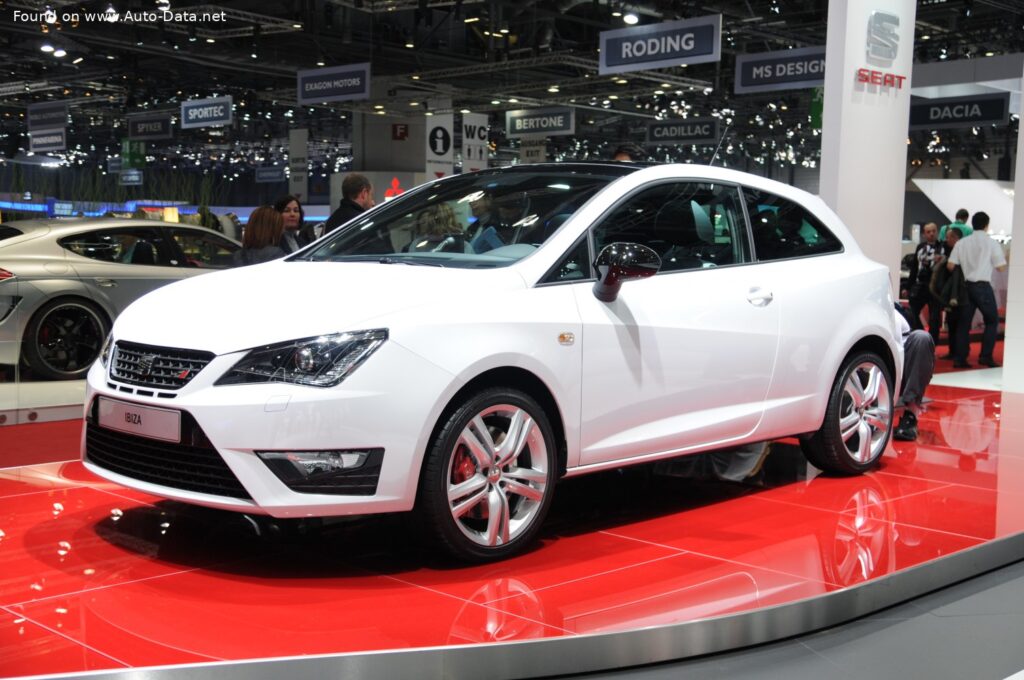
The Seat Ibiza, a pivotal model in the Spanish automaker’s lineup, has long served as a cornerstone of its presence in the highly competitive European subcompact (or supermini) segment. The fourth generation, known internally as the 6J, received a significant facelift in 2012, aiming to refresh its appeal and integrate more modern design cues and technological enhancements. This particular variant, the Seat Ibiza IV SC (facelift 2012) 1.6 TDI (105 Hp), represents the 3-door “Sport Coupe” version, emphasizing a more dynamic and youthful aesthetic compared to its 5-door sibling. Produced from 2012 to 2015, this model was a key player in its class, offering a compelling blend of style, efficiency, and driving engagement, characteristics Seat, a subsidiary of the Volkswagen Group, is known for in its primary European markets.
While the Seat brand is not officially sold in the United States, the Ibiza is an extremely recognizable and popular vehicle across Europe, Asia, and Latin America. It competes fiercely with models like the Volkswagen Polo (with which it shares a platform), Ford Fiesta, Renault Clio, and Peugeot 208. The 2012 facelift brought subtle yet effective changes, aligning the Ibiza more closely with Seat’s evolving design language and ensuring its relevance in a market segment where fresh styling and advanced powertrains are paramount. The 1.6 TDI engine, a common and highly regarded diesel unit within the Volkswagen Group, was central to this model’s proposition, offering impressive fuel economy and robust torque, making it an ideal choice for both urban commuting and longer journeys across the continent.
Engine and Performance: The Heart of the Seat Ibiza IV SC (facelift 2012)
Powertrain Architecture and Specifications
At the core of the Seat Ibiza IV SC (facelift 2012) 1.6 TDI (105 Hp) lies a highly efficient and well-proven internal combustion engine. This particular model is powered by a 1.6-liter (1598 cm³ or 97.52 cubic inches) inline four-cylinder diesel engine, designated with the model code CLNA. This powertrain architecture features a front, transverse engine layout, driving the front wheels, a standard configuration for this class of vehicle designed to maximize interior space and optimize handling dynamics.
The engine is equipped with a common rail direct injection fuel system, a sophisticated technology that precisely controls fuel delivery for optimal combustion, leading to both power and efficiency. Further enhancing its performance and environmental credentials, the engine benefits from a turbocharger and an intercooler, which significantly boost power output and improve thermal efficiency. With a compression ratio of 16.5:1 and four valves per cylinder, this unit delivers a respectable 105 horsepower at 4400 rpm. More impressively, it produces a robust 250 Newton-meters (184.39 lb.-ft.) of torque across a broad and accessible rev range, from 1500 to 2500 rpm. This strong torque delivery at low engine speeds is a hallmark of modern diesel engines and contributes significantly to the car’s responsive feel and ease of driving in everyday situations.
Performance Metrics and Efficiency
In terms of raw performance, the Ibiza IV SC 1.6 TDI is capable of accelerating from 0 to 60 mph in approximately 10 seconds, with a top speed of 116.82 mph (188 km/h). While not a sports car, these figures are more than adequate for its segment, providing confident overtaking ability and comfortable highway cruising. Where this model truly shines, however, is in its fuel economy. It boasts impressive figures, with an urban consumption of 46.1 US mpg, an extra-urban (highway) consumption of 65.3 US mpg, and a combined cycle rating of 56 US mpg (4.2 l/100 km). These figures highlight the inherent efficiency of the diesel powertrain, making it a highly economical choice for European drivers facing high fuel prices.
Environmental considerations were also key, as evidenced by its Euro 5 emission standard compliance and CO2 emissions of 109 g/km. The inclusion of a particulate filter system further demonstrates Seat’s commitment to reducing harmful emissions. Power is transmitted to the front wheels via a smooth and precise 5-speed manual transmission, offering a direct and engaging driving experience. The vehicle’s weight-to-power ratio stands at 11.1 kg/Hp (89.7 Hp/tonne), underscoring its agile character.
Design and Features
Exterior and Interior Styling
The Seat Ibiza IV SC (facelift 2012) is characterized by its “Coupe” body type, which, in the context of a supermini, refers to its 3-door hatchback configuration. This design choice lends the car a sportier and more dynamic profile compared to its more practical 5-door variant. The 2012 facelift introduced subtle but effective styling revisions, including a redesigned front bumper, updated headlights with integrated LED daytime running lights (on higher trims), and a revised grille. These changes contributed to a sharper, more contemporary look, aligning the Ibiza with Seat’s “auto emoción” design philosophy, which emphasizes expressive lines and a youthful appeal.
Dimensionally, the Ibiza SC measures 159.17 inches (4043 mm) in length, 66.65 inches (1693 mm) in width, and 56.22 inches (1428 mm) in height, with a wheelbase of 97.2 inches (2469 mm). These compact dimensions make it incredibly maneuverable in congested urban environments, a crucial attribute for European city driving. Despite its compact footprint and sporty 3-door configuration, the Ibiza SC offers seating for five occupants, though rear-seat access is naturally more restricted than in the 5-door version. The trunk (boot) space provides 10.03 cubic feet (284 liters) of cargo capacity, which is competitive for its class, making it practical for daily errands or weekend trips.
Chassis, Safety, and Convenience
The Ibiza’s chassis is designed for a balance of comfort and dynamic handling. It features an independent McPherson strut setup with coil springs and an anti-roll bar at the front, providing precise steering response and good body control. The rear utilizes a trailing arm suspension, a cost-effective and space-efficient solution common in subcompact cars. Braking is handled by ventilated discs at the front and solid discs at the rear, complemented by an Anti-lock Braking System (ABS) for enhanced safety during emergency stops.
Steering is managed by a rack and pinion system with electric power steering, offering light effort at low speeds for easy parking and more feel at higher speeds. The car was available with a range of tire and wheel sizes, from 185/60 R15 to more aggressive 215/40 R17 options, allowing buyers to customize the car’s aesthetics and handling characteristics. Other notable features for its era would have included options for climate control, various infotainment systems (though less advanced than today’s standards), and a suite of airbags, underscoring its commitment to occupant safety in line with European regulations.
Technical Specifications
| Category | Specification |
|---|---|
| Brand | Seat |
| Model | Ibiza IV SC (facelift 2012) |
| Type (Engine) | 1.6 TDI (105 Hp) |
| Production Years | 2012 – 2015 |
| Powertrain Architecture | Internal Combustion Engine |
| Body Type | Coupe (3-door hatchback) |
| Seats | 5 |
| Doors | 3 |
| Performance Specifications | |
| Fuel Consumption (Urban) | 46.1 US mpg (5.1 l/100 km) |
| Fuel Consumption (Extra Urban) | 65.3 US mpg (3.6 l/100 km) |
| Fuel Consumption (Combined) | 56 US mpg (4.2 l/100 km) |
| CO2 Emissions | 109 g/km |
| Fuel Type | Diesel |
| Acceleration 0-60 mph | 10 seconds |
| Maximum Speed | 116.82 mph (188 km/h) |
| Emission Standard | Euro 5 |
| Weight-to-Power Ratio | 11.1 kg/Hp (89.7 Hp/tonne) |
| Weight-to-Torque Ratio | 4.7 kg/Nm (213.7 Nm/tonne) |
| Engine Specifications | |
| Power | 105 Hp @ 4400 rpm |
| Power per Liter | 65.7 Hp/l |
| Torque | 184.39 lb.-ft. (250 Nm) @ 1500-2500 rpm |
| Engine Layout | Front, Transverse |
| Engine Model/Code | CLNA |
| Engine Displacement | 1.6 liters (1598 cm³ / 97.52 cu. in.) |
| Number of Cylinders | 4 |
| Engine Configuration | Inline |
| Cylinder Bore | 3.13 in. (79.5 mm) |
| Piston Stroke | 3.17 in. (80.5 mm) |
| Compression Ratio | 16.5:1 |
| Valves per Cylinder | 4 |
| Fuel Injection System | Diesel Commonrail |
| Engine Aspiration | Turbocharger, Intercooler |
| Engine Oil Capacity | 3.8 US qt (3.6 l) |
| Coolant Capacity | 5.92 US qt (5.6 l) |
| Engine Systems | Particulate filter |
| Space, Volume, and Weights | |
| Kerb Weight | 2579.41 lbs. (1170 kg) |
| Maximum Weight | 3681.72 lbs. (1670 kg) |
| Maximum Load | 1102.31 lbs. (500 kg) |
| Trunk (Boot) Space – Minimum | 10.03 cu. ft. (284 l) |
| Fuel Tank Capacity | 11.89 US gal (45 l) |
| Dimensions | |
| Length | 159.17 in. (4043 mm) |
| Width | 66.65 in. (1693 mm) |
| Height | 56.22 in. (1428 mm) |
| Wheelbase | 97.2 in. (2469 mm) |
| Front Track | 57.68 in. (1465 mm) |
| Rear Track | 57.36 in. (1457 mm) |
| Minimum Turning Circle | 34.38 ft. (10.48 m) |
| Drivetrain, Brakes, and Suspension | |
| Drivetrain Architecture | Front-wheel drive, Internal Combustion Engine |
| Drive Wheel | Front-wheel drive |
| Number of Gears/Gearbox Type | 5 gears, Manual Transmission |
| Front Suspension | Independent, McPherson with coil spring and anti-roll bar |
| Rear Suspension | Trailing arm |
| Front Brakes | Ventilated discs |
| Rear Brakes | Disc |
| Assisting Systems | ABS (Anti-lock Braking System) |
| Steering Type | Steering rack and pinion |
| Power Steering | Electric Steering |
| Tire Sizes | 185/60 R15; 215/45 R16; 215/40 R17 |
| Wheel Rim Sizes | 6J x 15; 7J x 16; 7J x 17 |
Legacy and Market Impact
The Seat Ibiza, and specifically the fourth-generation facelifted model, played a crucial role in solidifying Seat’s position as a vibrant and dynamic brand within the European automotive landscape. The Seat Ibiza IV SC (facelift 2012) 1.6 TDI (105 Hp) was particularly significant due to its blend of sporty aesthetics and outstanding fuel efficiency, a combination highly valued by consumers in its target markets. Competing against established rivals such as the Ford Fiesta, Renault Clio, and its platform-mate, the Volkswagen Polo, the Ibiza distinguished itself with its more expressive styling and a slightly sportier driving demeanor, often perceived as the more youthful and passionate choice.
The 1.6 TDI engine variant was a cornerstone of its commercial success, especially in countries where diesel powertrains were favored for their low running costs and strong torque characteristics. This engine allowed the Ibiza to offer compelling performance while delivering exceptional fuel economy, making it an attractive option for both private buyers and fleet operators. Its Euro 5 compliance and relatively low CO2 emissions were also important selling points in an era of increasing environmental awareness and stricter regulations.
The Ibiza IV SC’s legacy is one of a successful subcompact that offered a distinct personality within the Volkswagen Group’s vast portfolio. It embodied Seat’s “auto emoción” philosophy, delivering an engaging driving experience wrapped in a stylish, modern package. While not available in the United States, its impact on the European market, particularly in Spain, Germany, and the UK, was considerable. It helped maintain Seat’s sales volume and reinforced its brand image as a manufacturer of desirable, well-engineered, and affordable vehicles that appealed to a younger demographic. The 2012 facelift ensured that the Ibiza remained fresh and competitive through the latter half of its generation, paving the way for its highly anticipated successor. Its combination of practicality, efficiency, and a touch of Spanish flair ensured its place as a memorable and important model in Seat’s history.