Introduction to the Seat Ibiza IV ST 1.6 TDI (105 Hp) DPF
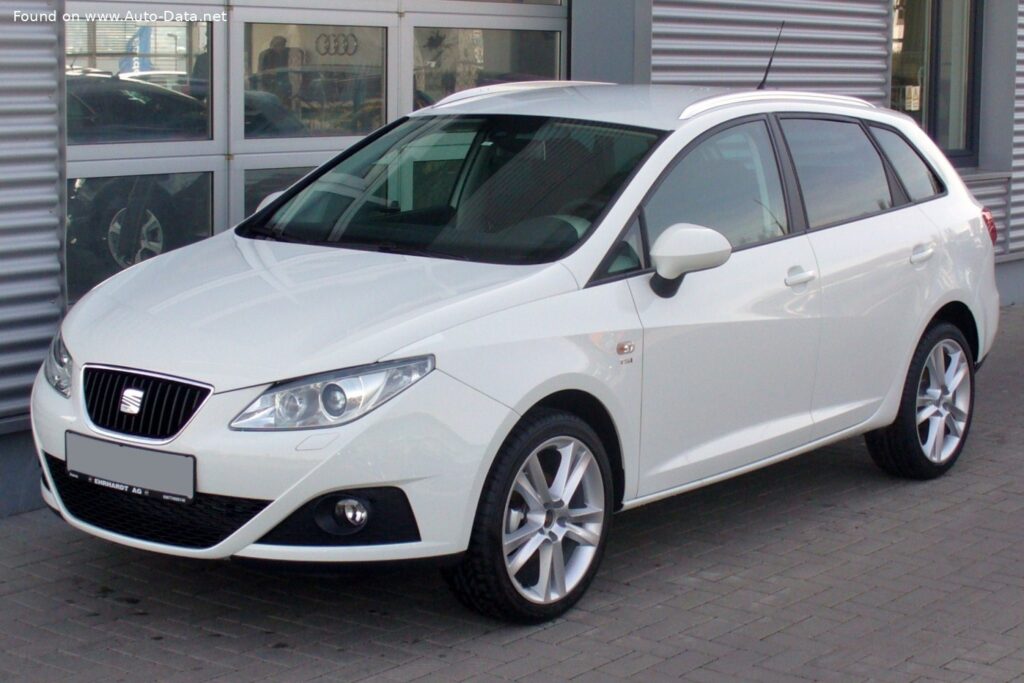
The Seat Ibiza IV ST 1.6 TDI (105 Hp) DPF represents a compelling blend of practicality, efficiency, and spirited design from the Spanish automaker Seat. As a brand within the expansive Volkswagen Group, Seat typically targets a younger, more design-conscious demographic primarily across European, Latin American, and other international markets, though it is not officially sold in the United States. This particular model, produced between 2010 and 2011, falls into the fourth generation of the Ibiza lineage and notably adopts the “ST” (Sport Tourer) designation, signifying its station wagon (estate) body style.
Positioned within the competitive European B-segment (subcompact), the Ibiza IV ST was designed to offer enhanced versatility and cargo capacity over its hatchback sibling, without significantly compromising its compact footprint or dynamic handling characteristics. The inclusion of the 1.6-liter TDI (Turbocharged Direct Injection) diesel engine, coupled with a Diesel Particulate Filter (DPF), underscored its commitment to fuel economy and compliance with increasingly stringent European emission standards, specifically Euro 5 during its production run. This article will delve into the technical specifications, design philosophy, and market impact of this distinctly European compact wagon, providing an expert American English perspective on its role and attributes.
Engine and Performance of the Seat Ibiza IV ST
At the heart of the Seat Ibiza IV ST 1.6 TDI (105 Hp) DPF lies a robust and efficient 1.6-liter (1598 cm³ or 97.52 cu. in.) inline-four diesel engine, internally designated CAYC. This powerplant, a staple across numerous Volkswagen Group models of the era, was engineered for a balance of power, torque, and exceptional fuel economy. It delivers a respectable 105 horsepower at 4400 revolutions per minute (rpm), making it a capable performer for both urban commuting and longer highway journeys.
Perhaps more impressive for its segment is the torque output: 250 Newton meters, which translates to a healthy 184.39 lb-ft, available across a broad and accessible rev range from 1500 to 2500 rpm. This low-end torque is crucial for responsive acceleration and effortless overtaking, particularly when the vehicle is loaded with passengers and cargo. The engine’s aspiration system features both a turbocharger and an intercooler, optimizing air intake for enhanced power delivery and efficiency.
Mated to a smooth-shifting 5-speed manual transmission, the Ibiza IV ST 1.6 TDI directs its power to the front wheels, a common and effective drivetrain architecture for vehicles in this class. Performance figures include an acceleration from 0 to 60 mph in a swift 10.4 seconds, and a maximum speed of 116.82 mph. These numbers highlight its competency for daily driving in the European context, where high top speeds are less critical than responsive mid-range acceleration.
One of the defining characteristics of this particular model is its remarkable fuel efficiency. The 1.6 TDI engine achieves an impressive combined fuel consumption of 4.3 liters per 100 kilometers, which translates to approximately 54.7 US miles per gallon. Urban driving yields around 43.6 US mpg, while extra-urban (highway) driving can see figures as high as 65.3 US mpg. These figures were class-leading at the time and made the Ibiza ST 1.6 TDI a very economical choice for European consumers facing high fuel prices. The inclusion of a Diesel Particulate Filter (DPF) was also vital for meeting the Euro 5 emission standard, ensuring cleaner exhaust gases and reducing particulate matter, a common concern with diesel engines.
Design and Features
The Seat Ibiza IV ST, with its station wagon (estate) body type, represented a practical evolution of the stylish Ibiza IV hatchback. While the standard Ibiza was known for its sharp lines and sporty demeanor, the ST variant extended the roofline and rear overhang to create a more capacious cargo area, transforming it into a versatile family vehicle. Despite its added utility, Seat designers managed to retain much of the Ibiza’s dynamic aesthetic, avoiding the often boxy appearance associated with traditional wagons. The five-door configuration provided easy access for both passengers and cargo.
Measuring 166.42 inches in length, 66.65 inches in width, and 56.89 inches in height, with a wheelbase of 97.2 inches, the Ibiza IV ST remained a compact vehicle by American standards, perfectly suited for navigating narrow European city streets and tight parking spaces. Its minimum turning circle of 34.38 feet further emphasized its urban agility.
Inside, the Ibiza IV ST offered seating for five occupants. The primary draw of the ST body style was its enhanced trunk space, providing a generous 15.19 cubic feet (430 liters) of cargo volume, significantly more than the hatchback. This made it an ideal choice for small families, individuals with active lifestyles, or those requiring extra utility for groceries, luggage, or equipment.
For its era, the Ibiza IV ST came equipped with standard safety and driving assistance systems. An Anti-lock Braking System (ABS) was a crucial active safety feature, enhancing control during emergency braking. The vehicle featured an independent McPherson strut front suspension and a coil spring rear suspension, a common setup designed to provide a good balance between ride comfort and handling precision. Braking power was supplied by ventilated discs at the front and solid discs at the rear. Steering was a hydraulic rack and pinion system, offering tactile feedback to the driver. Depending on trim, tire sizes ranged from 185/60 R15 to wider 215/40 R17 options, often paired with 6J x 15-inch wheel rims, influencing both grip and aesthetic appeal.
Technical Specifications
| Category | Specification | US Equivalent (where applicable) |
|---|---|---|
| General Information | ||
| Brand | Seat | |
| Model | Ibiza | |
| Generation | Ibiza IV ST | |
| Type (Engine) | 1.6 TDI (105 Hp) DPF | |
| Production Start | 2010 year | |
| Production End | 2011 year | |
| Powertrain Architecture | Internal Combustion engine | |
| Body type | Station wagon (estate) | |
| Seats | 5 | |
| Doors | 5 | |
| Performance Specs | ||
| Fuel consumption (urban) | 5.4 l/100 km | 43.6 US mpg |
| Fuel consumption (extra urban) | 3.6 l/100 km | 65.3 US mpg |
| Fuel consumption (combined) | 4.3 l/100 km | 54.7 US mpg |
| Fuel Type | Diesel | |
| Acceleration 0 – 60 mph | 10.4 sec | |
| Maximum speed | 188 km/h | 116.82 mph |
| Emission standard | Euro 5 | |
| Weight-to-power ratio | 11.7 kg/Hp | 85.7 Hp/tonne |
| Weight-to-torque ratio | 4.9 kg/Nm | 204.1 Nm/tonne |
| Engine Specs | ||
| Power | 105 Hp @ 4400 rpm | |
| Power per liter | 65.7 Hp/l | |
| Torque | 250 Nm @ 1500-2500 rpm | 184.39 lb.-ft. @ 1500-2500 rpm |
| Engine layout | Front, Transverse | |
| Engine Model/Code | CAYC | |
| Engine displacement | 1598 cm³ | 97.52 cu. in. (approx 1.6 liters) |
| Number of cylinders | 4 | |
| Engine configuration | Inline | |
| Cylinder Bore | 79.5 mm | 3.13 in. |
| Piston Stroke | 80.5 mm | 3.17 in. |
| Compression ratio | 16.5:1 | |
| Fuel injection system | Diesel Commonrail | |
| Engine aspiration | Turbocharger, Intercooler | |
| Engine oil capacity | 4.3 l | 4.54 US qt |
| Coolant capacity | 5.6 l | 5.92 US qt |
| Engine systems | Particulate filter (DPF) | |
| Space, Volume and Weights | ||
| Kerb Weight | 1225 kg | 2700.66 lbs. |
| Max. weight | 1665 kg | 3670.7 lbs. |
| Max load | 440 kg | 970.03 lbs. |
| Trunk (boot) space – maximum | 430 l | 15.19 cu. ft. |
| Fuel tank capacity | 45 l | 11.89 US gal |
| Dimensions | ||
| Length | 4227 mm | 166.42 in. |
| Width | 1693 mm | 66.65 in. |
| Height | 1445 mm | 56.89 in. |
| Wheelbase | 2469 mm | 97.2 in. |
| Front track | 1465 mm | 57.68 in. |
| Rear (Back) track | 1457 mm | 57.36 in. |
| Minimum turning circle (diameter) | 10.48 m | 34.38 ft. |
| Drivetrain, Brakes and Suspension Specs | ||
| Drivetrain Architecture | Internal combustion engine drives the front wheels. | |
| Drive wheel | Front wheel drive | |
| Number of gears and type of gearbox | 5 gears, manual transmission | |
| Front suspension | Independent type McPherson | |
| Rear suspension | Coil spring | |
| Front brakes | Ventilated discs | |
| Rear brakes | Disc | |
| Assisting systems | ABS (Anti-lock braking system) | |
| Steering type | Steering rack and pinion | |
| Power steering | Hydraulic Steering | |
| Tires size | 185/60 R15; 215/45 R16; 215/40 R17 (varies by trim) | |
| Wheel rims size | 6J x 15 (standard) | |
Legacy and Market Impact
The Seat Ibiza IV ST 1.6 TDI (105 Hp) DPF carved out a distinct niche for itself in the highly competitive European subcompact segment during its brief production run from 2010 to 2011. As a brand, Seat aims to infuse a youthful, sporty character into its vehicles, often serving as the more emotional and design-driven arm of the Volkswagen Group alongside the more conservative Volkswagen and the value-oriented Skoda. The Ibiza ST perfectly embodied this ethos, offering the practicality of a small station wagon without sacrificing the sharp styling and dynamic driving experience that Ibiza models are known for.
In its primary European markets, the Ibiza ST faced stiff competition from a variety of rivals, each offering their own take on the compact estate concept. Key competitors included the Skoda Fabia Combi (its platform sibling, offering a more utilitarian approach), the Renault Clio Estate, the Peugeot 207 SW, and the Ford Fiesta Van (though more commercially focused). What set the Ibiza ST apart was its emphasis on design and perceived sportiness, coupled with the undeniable efficiency of its 1.6-liter TDI diesel engine. This combination appealed to buyers who needed the extra cargo space but didn’t want to compromise on aesthetics or driving enjoyment.
The 1.6 TDI engine, with its impressive fuel economy and robust torque, was a significant selling point, particularly in countries where diesel fuel was prevalent and favored for its efficiency and lower running costs. The Euro 5 emission compliance, facilitated by the Diesel Particulate Filter (DPF), also ensured that the vehicle met contemporary environmental standards, a crucial factor for European consumers and regulatory bodies. This made the Ibiza ST a smart financial choice for many, balancing practicality with affordability in terms of both purchase price and running expenses.
While its production period was relatively short for this specific engine variant within the ST lineup, the Ibiza IV ST contributed to Seat’s reputation for offering versatile and well-designed vehicles. It demonstrated Seat’s ability to adapt its popular hatchback platform into a more functional form factor, catering to a broader range of customer needs. Its legacy is that of a practical, efficient, and stylish compact wagon that successfully navigated the demands of the European market, reinforcing Seat’s position as a vibrant and relevant player in the global automotive landscape, even if its presence was not felt on American roads. The Seat Ibiza IV ST 1.6 TDI (105 Hp) DPF remains a testament to European automotive engineering’s focus on compact efficiency and intelligent design for its intended audience.