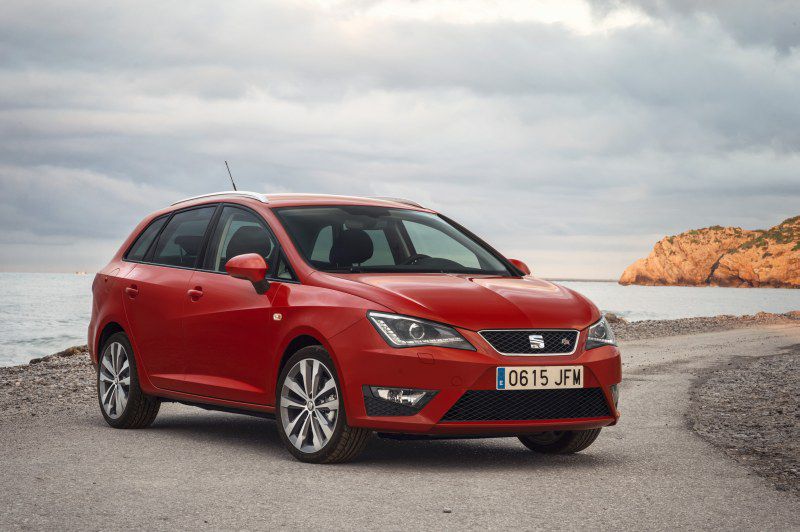
The Seat Ibiza IV ST (facelift 2015) 1.0 Eco TSI (110 Hp): A European Subcompact Wagon
The Seat Ibiza, a cornerstone of the Spanish automaker SEAT’s lineup, represents a critical entry in the highly competitive European subcompact segment. The generation in focus, the Ibiza IV, received a significant facelift in May 2015, bringing updated styling, enhanced technology, and a range of new, more efficient engines. Among these, the Seat Ibiza IV ST (facelift 2015) 1.0 Eco TSI (110 Hp) stands out as a particularly compelling offering. The “ST” designation, signifying Sport Tourer or Station Wagon (estate), highlights its practical, family-oriented design, a less common but highly valued body style in the subcompact class. Produced from May 2015 until 2017, this variant combined the practicality of a small wagon with the impressive efficiency and surprising performance of Volkswagen Group’s innovative 1.0-liter Eco TSI engine. While not marketed in the United States, the Ibiza IV ST played a crucial role in providing an accessible, versatile, and fuel-efficient option for European consumers seeking a blend of urban maneuverability and increased cargo capacity.
Engine and Performance: The Heart of the Seat Ibiza IV ST (facelift 2015)
At the core of the Seat Ibiza IV ST (facelift 2015) 1.0 Eco TSI (110 Hp) lies a sophisticated and highly efficient powertrain architecture. This model is powered by a 1.0-liter (999 cm³ or 60.96 cu. in.) inline three-cylinder engine, designated by the code CHZC. Far from being a basic unit, this engine incorporates advanced features such as a turbocharger and intercooler, along with a direct fuel injection system. These technologies are crucial in extracting a remarkable 110 horsepower (HP) from such a small displacement, available across a broad rev range from 5000 to 5500 rpm.
Equally impressive is the torque output: 200 Newton-meters (Nm), translating to 147.51 lb.-ft., delivered stoutly between 2000 and 3500 rpm. This wide torque band contributes significantly to the car’s drivability, making it feel more responsive than its displacement might suggest, particularly in city driving and during highway overtakes. The engine’s layout is front, transverse, driving the front wheels through a precise 6-speed manual transmission, a setup optimized for efficiency and engaging driver control.
Performance figures for the Ibiza IV ST 1.0 Eco TSI are competitive for its class. It accelerates from 0 to 60 mph in a respectable 9.1 seconds, and its top speed reaches 122.41 mph (197 km/h). These numbers demonstrate that while efficiency is a priority, the car doesn’t compromise on adequate performance for daily driving. The engine boasts a high power per liter ratio of 110.1 HP/l, a testament to its advanced engineering. With a compression ratio of 10.5:1 and four valves per cylinder, the engine is designed for optimal combustion and power delivery.
Fuel economy is a standout feature, with a combined consumption rating of 4.3 liters per 100 km, which translates to an impressive 54.7 US mpg. This exceptional efficiency is complemented by low CO2 emissions of just 99 g/km, allowing the vehicle to meet the stringent Euro 6 emission standard. The car’s weight-to-power ratio of 9.8 kg/Hp and weight-to-torque ratio of 5.4 kg/Nm further underscore its well-balanced engineering, providing a nimble and responsive driving experience despite its practical wagon body.
Design and Features: Practicality Meets European Style
The Seat Ibiza IV ST (facelift 2015) presents a compelling blend of practical functionality and SEAT’s characteristically sharp, sporty design language. As a station wagon (estate), it offers a more versatile profile than its hatchback sibling, catering to buyers who prioritize cargo space without stepping up to a larger, more expensive vehicle. With five doors and seating for five occupants, it’s well-suited for small families or individuals requiring extra utility.
The 2015 facelift brought subtle but effective design enhancements, including revised front and rear bumpers, updated lighting signatures, and fresh wheel designs, all contributing to a more modern and cohesive aesthetic. Its dimensions—166.77 inches (4236 mm) in length, 66.65 inches (1693 mm) in width, and 56.89 inches (1445 mm) in height—make it compact enough for urban environments while providing a surprisingly spacious interior. The 97.2-inch (2469 mm) wheelbase ensures a stable ride, and the minimum turning circle of 32.81 ft (10 m) highlights its maneuverability.
Inside, the Ibiza ST focuses on ergonomic design and usability. The key feature for the ST model is its generous trunk space, offering a minimum of 430 liters (15.19 cu. ft.) of cargo volume. This capacity is substantial for a subcompact vehicle and makes it a highly practical choice for grocery runs, luggage for road trips, or transporting gear. The interior design, while not overtly luxurious, is well-executed with quality materials and logical control placement, reflecting the Volkswagen Group’s emphasis on functional design.
In terms of chassis and suspension, the Ibiza IV ST employs a proven setup for its segment. The front suspension features an independent McPherson type with coil springs and an anti-roll bar, providing responsive handling and comfortable ride characteristics. At the rear, a semi-independent suspension with coil springs balances ride comfort with cost-effectiveness and packaging efficiency. Braking is handled by ventilated discs at the front for effective stopping power, complemented by drum brakes at the rear. An Anti-lock Braking System (ABS) comes standard, enhancing safety during emergency braking. The steering system is a rack and pinion type, offering direct and predictable feedback. Tire options ranged from 185/60 R15 to 215/40 R17, paired with 15-, 16-, or 17-inch wheel rims, allowing for a degree of customization in terms of ride and handling characteristics.
Technical Specifications
| Category | Specification | US Equivalent |
|---|---|---|
| General Information | ||
| Brand | Seat | |
| Model | Ibiza | |
| Generation | Ibiza IV ST (facelift 2015) | |
| Type (Engine) | 1.0 Eco TSI (110 Hp) | |
| Start of production | May, 2015 year | |
| End of production | 2017 year | |
| Powertrain Architecture | Internal Combustion engine | |
| Body type | Station wagon (estate) | |
| Seats | 5 | |
| Doors | 5 | |
| Performance Specs | ||
| Fuel consumption (economy) – combined | 4.3 l/100 km | 54.7 US mpg |
| CO2 emissions | 99 g/km | |
| Fuel Type | Petrol (Gasoline) | |
| Acceleration 0 – 100 km/h | 9.6 sec | |
| Acceleration 0 – 62 mph | 9.6 sec | |
| Acceleration 0 – 60 mph (Calculated) | 9.1 sec | |
| Maximum speed | 197 km/h | 122.41 mph |
| Emission standard | Euro 6 | |
| Weight-to-power ratio | 9.8 kg/Hp, 101.9 Hp/tonne | |
| Weight-to-torque ratio | 5.4 kg/Nm, 185.2 Nm/tonne | |
| Engine Specs | ||
| Power | 110 Hp @ 5000-5500 rpm. | |
| Power per liter | 110.1 Hp/l | |
| Torque | 200 Nm @ 2000-3500 rpm. | 147.51 lb.-ft. @ 2000-3500 rpm. |
| Engine layout | Front, Transverse | |
| Engine Model/Code | CHZC | |
| Engine displacement | 999 cm³ | 60.96 cu. in. |
| Number of cylinders | 3 | |
| Engine configuration | Inline | |
| Cylinder Bore | 74.5 mm | 2.93 in. |
| Piston Stroke | 76.4 mm | 3.01 in. |
| Compression ratio | 10.5:1 | |
| Number of valves per cylinder | 4 | |
| Fuel injection system | Direct injection | |
| Engine aspiration | Turbocharger, Intercooler | |
| Engine oil capacity | 4 l | 4.23 US qt |
| Coolant | 8 l | 8.45 US qt |
| Space, Volume and Weights | ||
| Kerb Weight | 1080 kg | 2380.99 lbs. |
| Max. weight | 1640 kg | 3615.58 lbs. |
| Max load | 560 kg | 1234.59 lbs. |
| Trunk (boot) space – minimum | 430 l | 15.19 cu. ft. |
| Fuel tank capacity | 45 l | 11.89 US gal |
| Dimensions | ||
| Length | 4236 mm | 166.77 in. |
| Width | 1693 mm | 66.65 in. |
| Height | 1445 mm | 56.89 in. |
| Wheelbase | 2469 mm | 97.2 in. |
| Front track | 1465 mm | 57.68 in. |
| Rear (Back) track | 1457 mm | 57.36 in. |
| Minimum turning circle (turning diameter) | 10 m | 32.81 ft. |
| Drivetrain, Brakes and Suspension Specs | ||
| Drivetrain Architecture | The Internal combustion engine (ICE) drives the front wheels of the vehicle. | |
| Drive wheel | Front wheel drive | |
| Number of gears and type of gearbox | 6 gears, manual transmission | |
| Front suspension | Independent, type McPherson with coil spring and anti-roll bar | |
| Rear suspension | Semi-independent, coil spring | |
| Front brakes | Ventilated discs | |
| Rear brakes | Drum | |
| Assisting systems | ABS (Anti-lock braking system) | |
| Steering type | Steering rack and pinion | |
| Tires size | 185/60 R15; 215/45 R16; 215/40 R17 | |
| Wheel rims size | 15; 16; 17 | |
Legacy and Market Impact of the Seat Ibiza IV ST
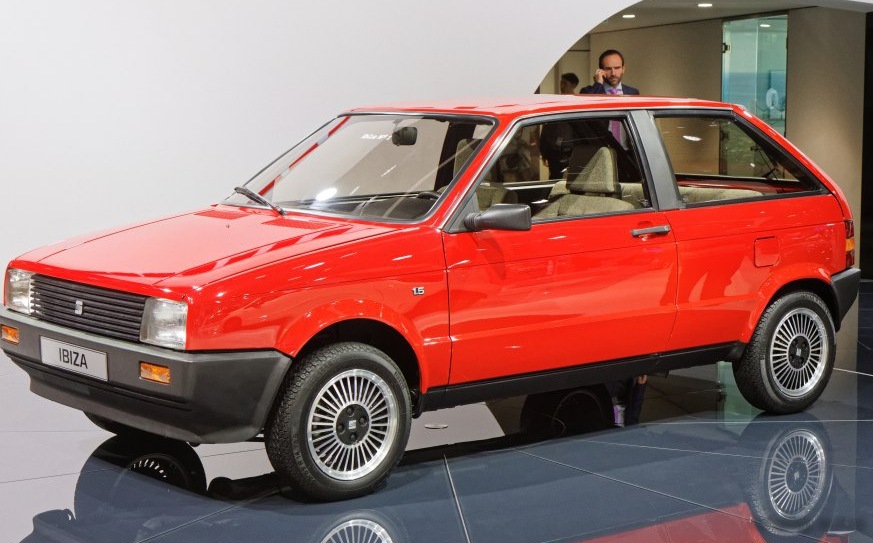
The Seat Ibiza has long been a foundational model for the Spanish brand, tracing its roots back to 1984. The fourth generation, especially after its 2015 facelift, continued this legacy by offering a compelling package of style, practicality, and modern technology. The Seat Ibiza IV ST (facelift 2015) 1.0 Eco TSI (110 Hp), in particular, carved out a niche within the European market. While the subcompact segment is dominated by hatchbacks, the ST variant provided a valuable alternative for consumers who needed more versatility without the increased footprint or cost of a larger compact wagon or SUV.
SEAT, as part of the Volkswagen Group, often positions itself as the more youthful, sporty, and value-oriented brand compared to its German counterparts like Volkswagen. The Ibiza ST embodied this philosophy, offering a dynamic driving experience and sharp styling that appealed to a younger demographic or those looking for a car with more flair than some of its more staid competitors.
In its primary European market, the Ibiza ST faced competition from a variety of rivals. Key competitors included the Skoda Fabia Combi (also from the VW Group, offering a more conservative but equally practical approach), the Renault Clio Estate, and at times, the Peugeot 207 SW (though the 207 was largely replaced by the 208 hatchback by this time, and Peugeot phased out its subcompact wagon). The Ibiza ST often stood out with its more engaging driving dynamics and distinctive design.
The introduction of the 1.0 Eco TSI engine was a significant development, reflecting a broader industry trend towards engine downsizing. This three-cylinder turbocharged unit demonstrated that small engines could deliver both impressive power and exceptional fuel economy, a critical factor for European buyers facing high fuel prices and stringent emissions regulations. Its Euro 6 compliance meant it was a future-proof choice for its time. The engine’s balance of 110 HP and 147.51 lb.-ft. of torque, combined with its lightweight chassis (kerb weight of 2380.99 lbs.), ensured that the Ibiza ST was not only economical but also agile and enjoyable to drive, whether navigating city streets or cruising on the autobahn.
The Ibiza IV ST’s market impact was largely positive, reinforcing SEAT’s reputation for producing well-engineered, stylish, and practical vehicles. It served as an intelligent choice for those who appreciated the added utility of a wagon body without sacrificing the fuel efficiency and nimble handling of a subcompact car. Its discontinuation with the subsequent generation of the Ibiza (which shifted focus entirely to hatchback and SUV models) reflected evolving market preferences away from subcompact wagons, but the Ibiza IV ST remains a testament to a period when this body style offered a compelling blend of attributes for European consumers. It cemented the Ibiza’s status as a versatile and enduring model in SEAT’s portfolio.