The Seat Ibiza IV ST (facelift 2012) 1.2 TSI (85 Hp): A European Compact Workhorse
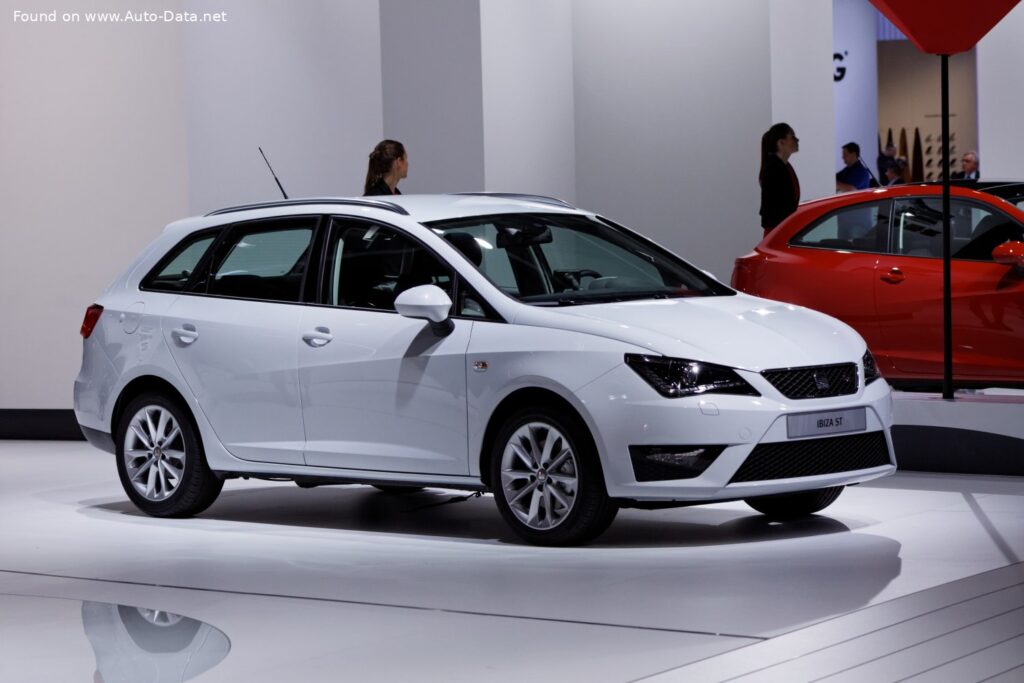
The Seat Ibiza IV ST (facelift 2012) 1.2 TSI (85 Hp) represents a key offering in the highly competitive European subcompact, or B-segment, market. Produced by the Spanish automaker SEAT, a subsidiary of the Volkswagen Group, this particular model is part of the fourth generation of the popular Ibiza lineup, specifically the “Sport Tourer” (ST) station wagon variant, which received a significant facelift in 2012. While SEAT vehicles are not officially sold in the United States, the Ibiza has long been a staple on European roads, known for its youthful styling, dynamic driving characteristics, and strong value proposition within the VW Group family. This iteration, built between 2012 and 2015, aimed to enhance the model’s appeal with updated aesthetics, improved interior materials, and a focus on efficiency, particularly with its advanced 1.2-liter turbocharged gasoline engine.
The Ibiza ST, in particular, carved out a niche by combining the compact footprint and maneuverability of a supermini hatchback with the increased practicality and cargo capacity of a small station wagon. This made it an attractive option for young families or individuals requiring more versatility than a standard hatchback could offer, without committing to a larger, more expensive vehicle. The 1.2 TSI (85 Hp) engine variant was positioned as an economical yet capable powertrain, balancing everyday performance with excellent fuel efficiency, a critical factor for European consumers.
Engine and Performance: The Heart of the Seat Ibiza IV ST (facelift 2012)
Under the hood of the Seat Ibiza IV ST (facelift 2012) 1.2 TSI (85 Hp) lies a modern and efficient powertrain that exemplifies the Volkswagen Group’s expertise in small-displacement turbocharged engines. The 1.2-liter (1197 cm3) inline-four engine, designated with the code CBZA, features direct fuel injection and is boosted by a turbocharger with an intercooler. This configuration allows the engine to produce a respectable 85 horsepower at 4800 rpm, a healthy output for its size. More importantly, it delivers a robust 118.01 lb.-ft. of torque across a broad rev range, from 1500 to 3500 rpm. This wide torque band is crucial for real-world driving, providing strong pull from low engine speeds and reducing the need for frequent downshifts, enhancing both drivability and fuel economy.
Power is sent to the front wheels via a smooth-shifting 5-speed manual transmission, a common and reliable setup for vehicles in this segment. This drivetrain architecture, coupled with the engine’s characteristics, enables the Ibiza ST to achieve a 0-60 mph acceleration time of 11.1 seconds, with a top speed of 111.85 mph. While not designed for outright speed, these figures are perfectly adequate for urban commuting and comfortable highway cruising, especially within the confines of European speed limits.
Fuel efficiency is a significant highlight of the 1.2 TSI engine. The official combined fuel consumption rating stands at an impressive 46.1 US mpg (5.1 l/100 km). In urban driving, it achieves 36.2 US mpg, while on the extra-urban cycle, it can reach up to 53.5 US mpg. These figures underscore the engine’s design philosophy: to provide a balance of usable power and excellent economy. Furthermore, the engine complies with the Euro 5 emission standard, emitting just 119 g/km of CO2, reflecting its relatively low environmental impact for its era. The engine’s oil capacity is 3.8 US quarts, and the cooling system holds 5.92 US quarts, indicating a compact and well-integrated powertrain.
Design and Features
The 2012 facelift brought subtle yet effective updates to the Ibiza IV ST’s design, refining its already attractive lines. The “ST” designation stands for Sport Tourer, signifying its station wagon body type, which offered a more practical alternative to the standard Ibiza hatchback. With five doors and seating for five occupants, the Ibiza ST was designed with versatility in mind. Its dimensions, measuring 166.77 inches in length, 66.65 inches in width, and 56.89 inches in height, with a wheelbase of 97.2 inches, positioned it squarely within the subcompact segment while maximizing interior space. The compact turning circle of 34.38 feet further enhanced its maneuverability in tight city environments.
A key selling point of the ST variant was its cargo capacity. The minimum trunk (boot) space of 15.19 cubic feet (430 liters) was generous for its class, making it suitable for grocery runs, luggage for a weekend trip, or even light commercial use. This practicality was achieved without compromising SEAT’s characteristic sporty aesthetic, which typically features sharp lines, a distinctive grille, and expressive headlights. The facelift introduced revised headlights and taillights, updated bumper designs, and new wheel options, giving the car a fresher, more contemporary look.
Inside, the Ibiza ST provided a functional and ergonomic cabin. While specific interior features can vary by trim level, the facelift generally brought improved materials and finishes, enhancing the perceived quality. Standard features for the era would typically include air conditioning, a basic audio system, and power windows. Safety was addressed with an Anti-lock Braking System (ABS), a crucial active safety feature. The car was equipped with a McPherson strut independent front suspension with a coil spring and anti-roll bar, paired with a trailing arm rear suspension. This setup provided a comfortable ride quality while maintaining SEAT’s reputation for engaging handling. Braking was handled by ventilated discs at the front and disc brakes at the rear, ensuring confident stopping power. The electric power steering system offered light and precise control, making parking and low-speed maneuvers effortless.
Technical Specifications
| Category | Specification | Value |
|---|---|---|
| Brand | Seat | |
| Model | Ibiza | |
| Generation | Ibiza IV ST (facelift 2012) | |
| Type (Engine) | 1.2 TSI (85 Hp) | |
| Start of production | 2012 year | |
| End of production | 2015 year | |
| Powertrain Architecture | Internal Combustion engine | |
| Body type | Station wagon (estate) | |
| Seats | 5 | |
| Doors | 5 | |
| Performance Specs | ||
| Fuel consumption (economy) – urban | 36.2 US mpg (6.5 l/100 km) | |
| Fuel consumption (economy) – extra urban | 53.5 US mpg (4.4 l/100 km) | |
| Fuel consumption (economy) – combined | 46.1 US mpg (5.1 l/100 km) | |
| CO2 emissions | 119 g/km | |
| Fuel Type | Petrol (Gasoline) | |
| Acceleration 0 – 60 mph | 11.1 sec | |
| Maximum speed | 111.85 mph (180 km/h) | |
| Emission standard | Euro 5 | |
| Weight-to-power ratio | 13.5 kg/Hp, 74.2 Hp/tonne | |
| Weight-to-torque ratio | 7.2 kg/Nm, 139.7 Nm/tonne | |
| Engine Specs | ||
| Power | 85 Hp @ 4800 rpm | |
| Power per liter | 71 Hp/l | |
| Torque | 118.01 lb.-ft. @ 1500-3500 rpm (160 Nm) | |
| Engine layout | Front, Transverse | |
| Engine Model/Code | CBZA | |
| Engine displacement | 1.2 Liters (1197 cm3, 73.05 cu. in.) | |
| Number of cylinders | 4 | |
| Engine configuration | Inline | |
| Cylinder Bore | 2.8 in. (71 mm) | |
| Piston Stroke | 2.98 in. (75.6 mm) | |
| Compression ratio | 10:1 | |
| Number of valves per cylinder | 2 | |
| Fuel injection system | Direct injection | |
| Engine aspiration | Turbocharger, Intercooler | |
| Engine oil capacity | 3.8 US qt (3.6 l) | |
| Coolant | 5.92 US qt (5.6 l) | |
| Space, Volume and Weights | ||
| Kerb Weight | 2524.29 lbs. (1145 kg) | |
| Max. weight | 3538.42 lbs. (1605 kg) | |
| Max load | 1014.13 lbs. (460 kg) | |
| Trunk (boot) space – minimum | 15.19 cu. ft. (430 l) | |
| Fuel tank capacity | 11.89 US gal (45 l) | |
| Dimensions | ||
| Length | 166.77 in. (4236 mm) | |
| Width | 66.65 in. (1693 mm) | |
| Height | 56.89 in. (1445 mm) | |
| Wheelbase | 97.2 in. (2469 mm) | |
| Front track | 57.68 in. (1465 mm) | |
| Rear (Back) track | 57.36 in. (1457 mm) | |
| Minimum turning circle (turning diameter) | 34.38 ft. (10.48 m) | |
| Drivetrain, Brakes and Suspension Specs | ||
| Drivetrain Architecture | The Internal combustion engine (ICE) drives the front wheels of the vehicle. | |
| Drive wheel | Front wheel drive | |
| Number of gears and type of gearbox | 5 gears, manual transmission | |
| Front suspension | Independent, type McPherson with coil spring and anti-roll bar | |
| Rear suspension | Trailing arm | |
| Front brakes | Ventilated discs | |
| Rear brakes | Disc | |
| Assisting systems | ABS (Anti-lock braking system) | |
| Steering type | Steering rack and pinion | |
| Power steering | Electric Steering | |
Legacy and Market Impact of the Seat Ibiza IV ST (facelift 2012)
The Seat Ibiza IV ST (facelift 2012) 1.2 TSI (85 Hp) played a significant role in SEAT’s product lineup and the broader European automotive market. As a brand within the Volkswagen Group, SEAT often positions itself as the more emotional, youthful, and sporty alternative to its more conservative siblings, Volkswagen and Skoda. The Ibiza, in particular, has always been SEAT’s flagship model in the supermini segment, consistently ranking among the best-selling cars in its class across Europe. The ST variant extended the Ibiza’s appeal by offering enhanced practicality, directly competing with other small station wagons like the Skoda Fabia Combi, Renault Clio Estate, and even more compact offerings from brands like Peugeot and Ford that offered similar cargo solutions.
Its reputation was built on a combination of factors: compelling design, reliable Volkswagen Group engineering, and a competitive price point. The 2012 facelift, while subtle, ensured the car remained fresh and competitive against newer rivals. The 1.2 TSI engine, in particular, was lauded for its blend of adequate performance and outstanding fuel economy, making it an ideal choice for European drivers facing high fuel prices and stringent emission regulations. This engine choice underscored a broader trend in the European market towards downsizing and turbocharging to achieve efficiency without sacrificing drivability.
For the American market, the Seat Ibiza IV ST, like all SEAT models, was never officially imported. The primary reasons for this include SEAT’s focus on European and Latin American markets, the already saturated nature of the US automotive landscape, and the distinct preferences of American consumers. Historically, the US market has shown limited demand for subcompact station wagons, favoring larger SUVs, sedans, and more robust compact cars. The Ibiza’s compact dimensions and emphasis on fuel efficiency, while highly desirable in Europe, would have found a much smaller audience in a market that traditionally values larger engines, more interior space, and a wider array of premium features in its entry-level vehicles.
Despite its absence from American showrooms, the Seat Ibiza IV ST (facelift 2012) 1.2 TSI (85 Hp) holds a meaningful place in automotive history. It represents a well-executed example of a compact, practical, and efficient vehicle tailored specifically for the demands of its primary market. Its blend of Spanish flair and German engineering made it a popular choice, contributing to the enduring success of the Ibiza nameplate and solidifying SEAT’s identity as a dynamic player in the global automotive industry. It effectively demonstrated that a small car could be both stylish and eminently practical, a testament to intelligent design and engineering.