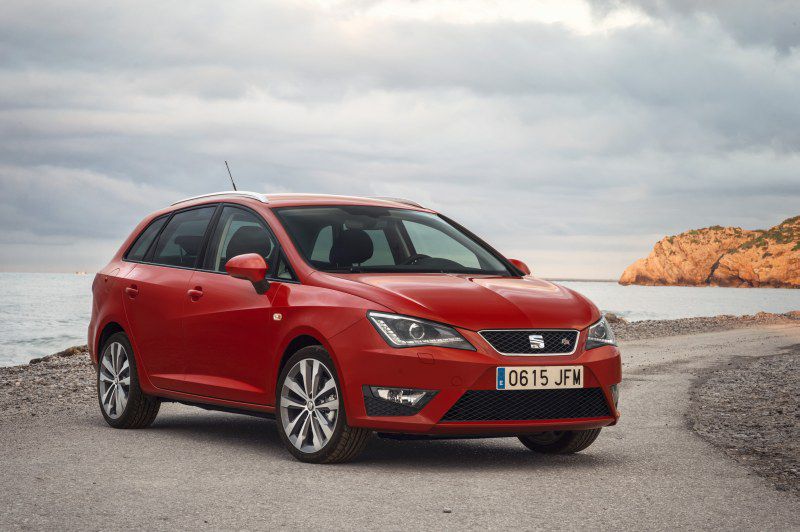
Introduction to the Seat Ibiza IV ST (facelift 2015) 1.2 TSI (90 Hp)
The Seat Ibiza IV ST (facelift 2015) 1.2 TSI (90 Hp) represents a compelling offering within the highly competitive European subcompact (or supermini) segment. As part of the fourth generation of the popular Ibiza lineup, this particular variant, introduced in May 2015 and produced until 2017, showcases Seat’s commitment to delivering a blend of practicality, efficiency, and a touch of sporty flair. The “ST” designation stands for “Sport Tourer,” indicating its station wagon (estate) body style, a less common but highly valued configuration in its class for its enhanced cargo capacity.
While the Seat brand, a member of the Volkswagen Group, is not officially sold in the United States, the Ibiza is a cornerstone model for the Spanish automaker across Europe and other international markets. The 2015 facelift brought subtle but significant updates, refreshing its exterior styling, refining the interior, and introducing more efficient powertrains like the 1.2-liter TSI engine. This model was specifically designed for European consumers who prioritize compact dimensions for urban maneuverability, excellent fuel economy for long commutes, and versatile cargo space for family duties or active lifestyles, all within an affordable package. Its platform shared commonalities with other VAG (Volkswagen Audi Group) superminis of the era, such as the Volkswagen Polo and Skoda Fabia, benefiting from established engineering and reliability.
Engine and Performance: The Heart of the Seat Ibiza IV ST (facelift 2015) 1.2 TSI (90 Hp)
Powering the Seat Ibiza IV ST (facelift 2015) 1.2 TSI (90 Hp) is a modern, turbocharged 1.2-liter four-cylinder gasoline (petrol) engine, a prime example of the Volkswagen Group’s efficient TSI technology. This compact powerplant, designated with the code CJZC, is mounted transversely at the front and features an inline configuration. It produces a respectable 90 horsepower, available across a broad rev range from 4400 to 5400 rpm, translating to a power-per-liter output of 75.2 horsepower. More impressively for its size, the engine delivers a healthy 118.01 lb.-ft. (160 Nm) of torque, which peaks early at just 1400 rpm and remains consistent up to 3500 rpm. This wide torque band is crucial for real-world drivability, offering brisk acceleration from low speeds and reducing the need for frequent downshifts.
The engine’s architecture includes direct fuel injection, a turbocharger, and an intercooler, all working in concert to optimize combustion efficiency and power delivery while minimizing emissions. With a compression ratio of 10.5:1 and four valves per cylinder, the engine is designed for both responsiveness and fuel economy. Mated to a five-speed manual transmission, the powertrain drives the front wheels, a typical and effective setup for this class of vehicle. Performance figures for the 1.2 TSI are quite competitive for its segment, with a 0 to 60 mph acceleration time of 10.5 seconds and a top speed of 114.33 mph (184 km/h).
Beyond its performance, the 1.2 TSI engine excels in efficiency. The Ibiza ST boasts a combined fuel consumption rating of 48 US mpg (4.9 liters per 100 km), which is excellent for a station wagon. This impressive economy, coupled with CO2 emissions of 116 g/km, allowed the vehicle to meet the stringent Euro 6 emission standard, underscoring its environmental consciousness. The 45-liter (11.89 US gallon) fuel tank provides a considerable driving range, making it suitable for both daily commuting and longer journeys without constant stops for refueling.
Design and Features
The Seat Ibiza IV ST (facelift 2015) maintains the sharp, angular design language characteristic of the Seat brand, often described as having a more dynamic and youthful aesthetic compared to its Volkswagen stablemates. The “ST” or Sport Tourer body type transforms the popular Ibiza hatchback into a practical station wagon, extending the rear profile to significantly enhance cargo volume without compromising the car’s overall proportions or handling. The facelift introduced subtle refinements, including updated headlamp designs, revised grille elements, and new wheel options, giving it a fresh and contemporary look that aligned with Seat’s evolving design philosophy.
Measuring 166.77 inches (4236 mm) in length, 66.65 inches (1693 mm) in width, and 56.89 inches (1445 mm) in height, with a wheelbase of 97.2 inches (2469 mm), the Ibiza ST is commendably compact, making it agile in urban environments and easy to park. Despite its modest exterior footprint, the interior packaging is efficient, offering seating for five occupants. The real highlight of the ST variant is its cargo capacity, providing a generous 15.19 cubic feet (430 liters) of trunk space with the rear seats in place, which is substantially more than the hatchback version and competitive within its subcompact wagon segment. This makes it a highly versatile option for small families or individuals requiring extra utility for luggage, groceries, or sports equipment.
Standard features for a vehicle of this era and segment typically include essential modern conveniences. The Ibiza ST comes equipped with a rack and pinion steering system, providing precise control and a responsive feel. For safety, an Anti-lock Braking System (ABS) is standard, complemented by ventilated disc brakes at the front and solid discs at the rear, ensuring confident stopping power. The suspension system features an independent McPherson strut setup with coil springs and an anti-roll bar at the front, paired with a semi-independent coil spring arrangement at the rear. This configuration strikes a balance between comfortable ride quality and agile handling. The car offers a range of tire sizes, from 175/70 R14 to more sporting 215/40 R17 options, allowing for varying levels of grip and ride comfort. The relatively light curb weight of 2345.72 lbs (1064 kg) further contributes to its nimble handling and efficiency.
Technical Specifications
| Feature | Specification |
|---|---|
| Brand | Seat |
| Model | Ibiza |
| Generation | Ibiza IV ST (facelift 2015) |
| Engine Type | 1.2 TSI (90 Hp) |
| Production Start | May, 2015 |
| Production End | 2017 |
| Powertrain Architecture | Internal Combustion Engine |
| Body Type | Station wagon (estate), 5 Doors |
| Seats | 5 |
| Fuel Consumption (Combined) | 48 US mpg (4.9 l/100 km) |
| CO2 Emissions | 116 g/km |
| Fuel Type | Petrol (Gasoline) |
| Acceleration 0-60 mph | 10.5 seconds |
| Maximum Speed | 114.33 mph (184 km/h) |
| Emission Standard | Euro 6 |
| Power | 90 Hp @ 4400-5400 rpm |
| Power per liter | 75.2 Hp/l |
| Torque | 118.01 lb.-ft. (160 Nm) @ 1400-3500 rpm |
| Engine Layout | Front, Transverse |
| Engine Model/Code | CJZC |
| Engine Displacement | 73.05 cu. in. (1197 cm3) |
| Number of Cylinders | 4, Inline |
| Cylinder Bore | 2.8 in. (71 mm) |
| Piston Stroke | 2.98 in. (75.6 mm) |
| Compression Ratio | 10.5:1 |
| Valves per Cylinder | 4 |
| Fuel Injection System | Direct Injection |
| Engine Aspiration | Turbocharger, Intercooler |
| Engine Oil Capacity | 4.23 US qt (4 l) |
| Coolant Capacity | 8.45 US qt (8 l) |
| Kerb Weight | 2345.72 lbs (1064 kg) |
| Maximum Weight | 3571.49 lbs (1620 kg) |
| Maximum Load | 1225.77 lbs (556 kg) |
| Trunk Space (Minimum) | 15.19 cu. ft. (430 l) |
| Fuel Tank Capacity | 11.89 US gal (45 l) |
| Length | 166.77 in. (4236 mm) |
| Width | 66.65 in. (1693 mm) |
| Height | 56.89 in. (1445 mm) |
| Wheelbase | 97.2 in. (2469 mm) |
| Front Track | 57.68 in. (1465 mm) |
| Rear Track | 57.36 in. (1457 mm) |
| Minimum Turning Circle | 32.81 ft. (10 m) |
| Drive Wheel | Front Wheel Drive |
| Gearbox | 5 gears, Manual Transmission |
| Front Suspension | Independent, McPherson with coil spring and anti-roll bar |
| Rear Suspension | Semi-independent, coil spring |
| Front Brakes | Ventilated Discs |
| Rear Brakes | Disc |
| Assisting Systems | ABS (Anti-lock Braking System) |
| Steering Type | Steering rack and pinion |
| Tires Size Options | 175/70 R14; 185/60 R15; 215/45 R16; 215/40 R17 |
| Wheel Rims Size Options | 14; 15; 16; 17 |
Legacy and Market Impact
The Seat Ibiza IV ST (facelift 2015) 1.2 TSI (90 Hp) played a significant role in Seat’s strategy to capture a broader audience in the European market. While the subcompact segment is typically dominated by hatchbacks, the ST variant offered a compelling alternative for consumers who needed the practicality of a larger vehicle but preferred the maneuverability and efficiency of a supermini. This specific model, with its 1.2-liter TSI engine, solidified Seat’s reputation for offering efficient, modern powertrains across its range, leveraging Volkswagen Group’s advanced engineering.
In its primary European market, the Ibiza ST competed against a diverse array of rivals, most notably the Skoda Fabia Combi (sharing its platform), the Renault Clio Estate, and at times, smaller offerings from Peugeot like the 208 SW or even budget-friendly options such as the Dacia Logan MCV. What set the Ibiza ST apart was its distinctive Spanish flair and sportier design ethos, often appealing to younger buyers or those who valued a more dynamic aesthetic compared to the more conservative styling of its VW Group siblings. Its agile handling, combined with the eager 1.2 TSI engine, made it a fun-to-drive option in its class.
The fourth-generation Ibiza, including this facelifted ST model, continued the legacy of the Ibiza nameplate as Seat’s best-selling model for many years. It demonstrated Seat’s ability to innovate within a highly competitive segment, offering a versatile body style that addressed specific market demands for space and utility. While station wagons in the subcompact class have seen fluctuating popularity, the Ibiza ST remained a strong contender due to its blend of compact dimensions, generous cargo volume, and efficient performance. Its success contributed to Seat’s overall brand strength, positioning it as a youthful and spirited alternative within the broader automotive landscape. The 2015 facelift ensured the model remained current and attractive until its eventual replacement, solidifying its place as a practical and appealing choice for European drivers.