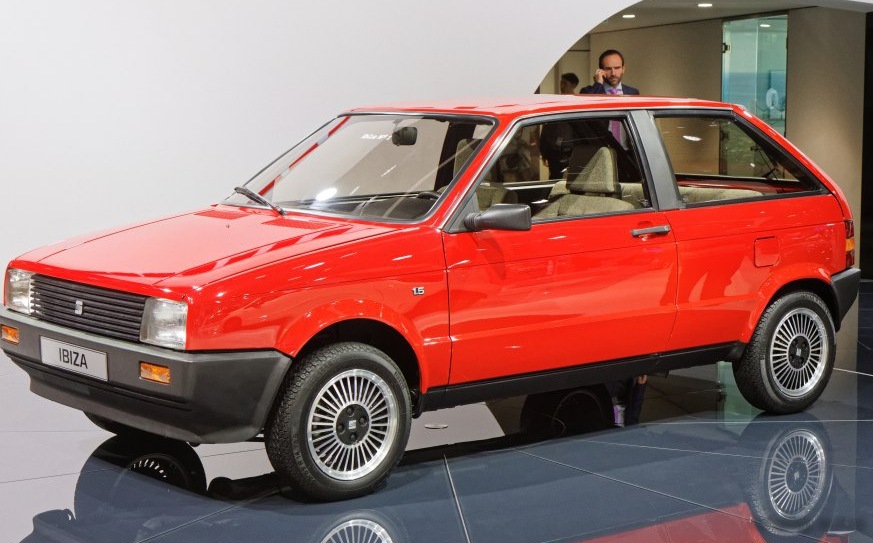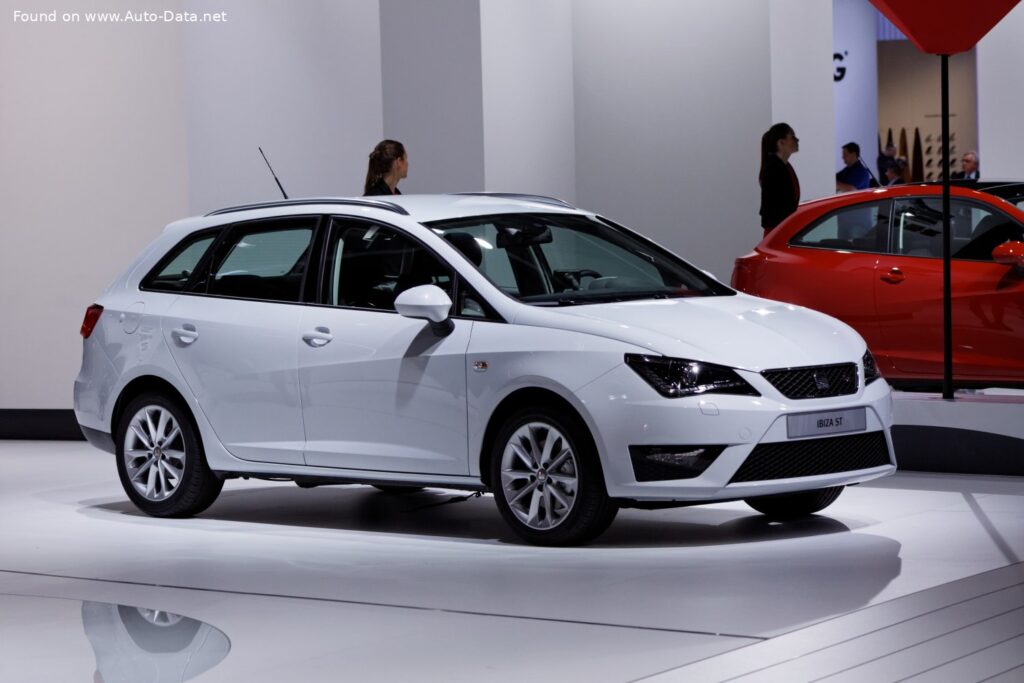
Introduction to the Seat Ibiza IV ST (facelift 2012) 1.6 TDI (90 Hp)
The Seat Ibiza, a cornerstone model for the Spanish automaker, has long represented a dynamic and practical option in the highly competitive European subcompact segment. The fourth-generation Ibiza, internally designated 6J, received a significant facelift in 2012, bringing refreshed aesthetics and updated powertrain options. Among these, the Seat Ibiza IV ST (facelift 2012) 1.6 TDI with 90 horsepower stood out as a particularly compelling choice for its blend of fuel efficiency, utility, and driving dynamics. The “ST” designation, or Sport Tourer, denoted the station wagon (estate) body style, offering enhanced cargo capacity over its hatchback siblings while retaining the compact footprint ideal for European cityscapes and country roads.
Manufactured by SEAT, a brand under the Volkswagen Group umbrella, the Ibiza shares its platform and many mechanical components with other popular European models like the Volkswagen Polo and Skoda Fabia. While SEAT vehicles are not officially sold in the United States market, understanding their engineering and market positioning provides valuable insight into global automotive trends and the diverse needs of international consumers. This specific variant, produced from 2012 to 2015, was designed to cater to European buyers prioritizing low running costs, practicality, and a comfortable ride for daily commutes and family trips.
Engine and Performance: The Efficient 1.6 TDI in the Seat Ibiza IV ST (facelift 2012)
At the heart of this particular Seat Ibiza IV ST (facelift 2012) model was the highly regarded 1.6-liter TDI (Turbocharged Direct Injection) diesel engine, a powerplant synonymous with efficiency within the Volkswagen Group. This inline four-cylinder engine, bearing the CAYB code, boasted a displacement of 1598 cubic centimeters (approximately 97.52 cubic inches or 1.6 liters). It was engineered for optimal torque delivery at low RPMs, a characteristic highly valued in diesel engines for both city driving and highway cruising.
The engine produced a respectable 90 horsepower at 4200 revolutions per minute, delivering a power-per-liter ratio of 56.3 Hp/l. More crucially for its segment, it generated a robust 230 Newton-meters (approximately 169.64 pound-feet) of torque available across a broad rev range, from 1500 to 2500 rpm. This ample torque ensured responsive acceleration and minimized the need for frequent gear changes, contributing to a relaxed driving experience. The powertrain architecture was a conventional front, transverse layout, driving the front wheels through a precise 5-speed manual transmission.
Performance figures for the Ibiza IV ST 1.6 TDI were competitive for its class and intended purpose. It could accelerate from 0 to 60 miles per hour in a brisk 11.6 seconds, with a top speed reaching 110.6 miles per hour (178 km/h). However, its true strength lay in its fuel economy. The combined fuel consumption was an impressive 4.2 liters per 100 kilometers, translating to approximately 56 US miles per gallon. Urban driving yielded about 46.1 US mpg, while extra-urban (highway) driving could achieve an outstanding 65.3 US mpg. These figures, coupled with CO2 emissions of just 109 g/km and compliance with Euro 5 emission standards, underlined its commitment to environmental responsibility and cost-effective operation, critical factors for European buyers. The engine was also equipped with a Diesel Particulate Filter (DPF) to reduce harmful emissions.
Design and Features: Practicality Meets Modernity
The 2012 facelift brought a fresh aesthetic to the Ibiza lineup, including the ST station wagon variant. While retaining the core lines of the fourth generation, the revisions focused on the front fascia, incorporating sharper headlights with optional LED daytime running lights, a redesigned grille, and a sportier bumper. These changes gave the Ibiza a more aggressive and contemporary look, aligning it with SEAT’s “auto emoción” design philosophy. The ST body type, with its five doors and seating for five occupants, was designed to maximize utility without sacrificing the compact dimensions characteristic of the segment.
Measuring 166.77 inches in length, 66.65 inches in width, and 56.89 inches in height, the Ibiza ST was nimble enough for urban environments while offering significant interior space. The wheelbase of 97.2 inches contributed to stable handling and a comfortable ride. Its most notable feature was the cargo capacity: a minimum trunk space of 430 liters (15.19 cubic feet), which could be expanded significantly with the rear seats folded down. This made it a highly practical choice for small families or individuals needing extra hauling capability beyond a standard hatchback.
Inside, the facelift introduced updated materials and minor ergonomic improvements, enhancing the cabin’s perceived quality. Standard features included electric power steering, which offered precise control and ease of maneuvering, especially in tight parking situations, evidenced by a minimum turning circle of 34.38 feet. Safety was addressed with an Anti-lock Braking System (ABS) as standard, complementing the ventilated disc brakes at the front and disc brakes at the rear. The suspension system featured an independent McPherson strut setup with coil springs and an anti-roll bar at the front, paired with a trailing arm rear suspension, a common and effective configuration for balancing ride comfort and handling in this class.
Technical Specifications
| Feature | Specification |
|---|---|
| Brand | Seat |
| Model | Ibiza |
| Generation | Ibiza IV ST (facelift 2012) |
| Engine Type | 1.6 TDI (90 Hp) |
| Production Years | 2012 – 2015 |
| Body Type | Station wagon (estate) |
| Seats | 5 |
| Doors | 5 |
| Fuel Type | Diesel |
| Fuel Consumption (Urban) | 5.1 l/100 km (46.1 US mpg) |
| Fuel Consumption (Extra Urban) | 3.6 l/100 km (65.3 US mpg) |
| Fuel Consumption (Combined) | 4.2 l/100 km (56 US mpg) |
| CO2 Emissions | 109 g/km |
| Emission Standard | Euro 5 |
| Acceleration 0-60 mph | 11.6 seconds |
| Maximum Speed | 178 km/h (110.6 mph) |
| Power | 90 Hp @ 4200 rpm |
| Power per liter | 56.3 Hp/l |
| Torque | 230 Nm (169.64 lb.-ft.) @ 1500-2500 rpm |
| Engine Layout | Front, Transverse |
| Engine Model/Code | CAYB |
| Engine Displacement | 1598 cm3 (97.52 cu. in.) |
| Number of Cylinders | 4 |
| Engine Configuration | Inline |
| Cylinder Bore | 79.5 mm (3.13 in.) |
| Piston Stroke | 80.5 mm (3.17 in.) |
| Compression Ratio | 16.5:1 |
| Valves per Cylinder | 4 |
| Fuel Injection System | Diesel Commonrail |
| Engine Aspiration | Turbocharger, Intercooler |
| Engine Oil Capacity | 4.3 l (4.54 US qt) |
| Engine Oil Specification | Manufacturer specific (requires documentation) |
| Coolant Capacity | 8 l (8.45 US qt) |
| Engine Systems | Particulate filter |
| Kerb Weight | 1225 kg (2700.66 lbs.) |
| Max. Weight | 1680 kg (3703.77 lbs.) |
| Max Load | 455 kg (1003.1 lbs.) |
| Trunk (boot) Space – minimum | 430 l (15.19 cu. ft.) |
| Fuel Tank Capacity | 45 l (11.89 US gal) |
| Length | 4236 mm (166.77 in.) |
| Width | 1693 mm (66.65 in.) |
| Height | 1445 mm (56.89 in.) |
| Wheelbase | 2469 mm (97.2 in.) |
| Front Track | 1465 mm (57.68 in.) |
| Rear Track | 1457 mm (57.36 in.) |
| Minimum Turning Circle | 10.48 m (34.38 ft.) |
| Drivetrain Architecture | Front-wheel drive, Internal Combustion engine |
| Gearbox Type | 5 gears, manual transmission |
| Front Suspension | Independent, McPherson with coil spring and anti-roll bar |
| Rear Suspension | Trailing arm |
| Front Brakes | Ventilated discs |
| Rear Brakes | Disc |
| Assisting Systems | ABS (Anti-lock braking system) |
| Steering Type | Steering rack and pinion |
| Power Steering | Electric Steering |
Legacy and Market Impact
The Seat Ibiza IV ST (facelift 2012) 1.6 TDI (90 Hp) played a crucial role in SEAT’s strategy to capture a larger share of the practical, compact family car segment in Europe. In a market where fuel efficiency and versatility were paramount, especially for young families or those needing additional cargo space without moving into a larger, more expensive vehicle, the Ibiza ST offered a compelling package. It carved out a niche as a stylish yet sensible alternative to larger, less agile vehicles.
Its reputation was built on reliability, largely due to its proven Volkswagen Group mechanicals, and its exceptional fuel economy, which made it an attractive proposition during periods of fluctuating fuel prices. The 1.6 TDI engine, in particular, was lauded for its refined operation and strong torque delivery, making it feel more capable than its 90 horsepower figure might suggest. This made it well-suited for both daily commuting and longer journeys across the continent.
In the European market, the Ibiza ST competed directly with other subcompact station wagons and small hatchbacks, including the Skoda Fabia Combi (a platform sibling), the Renault Clio Estate, and the Peugeot 207 SW. What distinguished the Ibiza ST was its more youthful and sporty design aesthetic, a hallmark of the SEAT brand, which aimed to inject “auto emoción” into everyday driving. While its competitors often prioritized sheer practicality, the Ibiza ST attempted to blend this with a more engaging visual appeal and driving experience.
Historically, the Ibiza ST represented an evolution of the traditional estate car concept, adapting it for modern urban living. It demonstrated that a compact car could still offer significant utility, challenging the notion that increased space required a larger vehicle footprint. Its production run from 2012 to 2015 marked a period where diesel engines, especially efficient smaller displacement units, were still highly favored in Europe for their low running costs and strong performance characteristics. The model’s success underscored SEAT’s ability to leverage Volkswagen Group engineering to create distinctive, market-relevant vehicles tailored to specific regional demands. The Seat Ibiza IV ST (facelift 2012) 1.6 TDI (90 Hp) thus stands as a testament to intelligent design and powertrain optimization in the competitive European automotive landscape.