The Seat Ibiza V 1.0 EcoTSI (115 Hp) Start&Stop: A European Supermini Standard-Bearer
The Seat Ibiza V 1.0 EcoTSI (115 Hp) Start&Stop represents the fifth generation of Seat’s highly successful subcompact hatchback, a staple in the European automotive market. Produced from 2019 to June 2021, this iteration of the Ibiza continued its legacy as a stylish, practical, and dynamically engaging vehicle, firmly positioned within the highly competitive B-segment (often referred to as supermini in Europe or subcompact in North America). While the Seat brand, a Spanish marque under the Volkswagen Group umbrella, does not officially distribute vehicles in the United States, the Ibiza is a critical model for understanding the trends and engineering prowess prevalent in the European market for small, efficient cars. This specific variant, powered by a 1.0-liter EcoTSI engine with 115 horsepower and equipped with Start&Stop technology, exemplifies the modern European approach to combining spirited performance with impressive fuel economy and reduced emissions.
Built on the Volkswagen Group’s MQB A0 platform, shared with siblings like the Volkswagen Polo and Audi A1, the fifth-generation Ibiza brought significant advancements in terms of space, technology, and driving dynamics compared to its predecessors. It was designed to appeal to a broad demographic, from young urban drivers to small families, seeking a versatile and economical daily driver. The Seat Ibiza V 1.0 EcoTSI (115 Hp) Start&Stop, in particular, was a popular choice for those desiring a balance of power and efficiency, making it a compelling option in its class.
Engine and Performance: The Efficient Heart of the Seat Ibiza V 1.0 EcoTSI (115 Hp) Start&Stop
At the core of this particular Ibiza variant is a sophisticated 1.0-liter EcoTSI turbocharged gasoline (petrol) engine, a prime example of modern downsizing trends. This three-cylinder inline engine, designated by codes like DKJA or DKRF, delivers a robust 115 horsepower at a flexible range of 5000-5500 rpm, translating to an impressive power output of 115.1 horsepower per liter. What truly sets this engine apart is its torque delivery: a substantial 147.51 lb.-ft. (200 Nm) available across a wide band from 2000 to 3500 rpm. This broad torque curve ensures responsive acceleration and confident overtaking maneuvers, making the car feel livelier than its displacement might suggest.
The powertrain architecture is a front, transverse-mounted internal combustion engine driving the front wheels through a precise 6-speed manual transmission. This setup contributes to the Ibiza’s agile handling and direct driving feel. Performance figures are respectable for its class, with the Seat Ibiza V 1.0 EcoTSI (115 Hp) Start&Stop accelerating from 0 to 60 mph in an estimated 8.8 seconds (0-100 km/h in 9.3 seconds) and reaching a top speed of 119.92 mph (193 km/h). These figures underscore the effectiveness of the turbocharger and intercooler system, which efficiently force-feed air into the small displacement engine, enhancing combustion and power output.
Fuel efficiency is a major highlight, a critical factor for European consumers. The car boasts a combined fuel consumption (WLTP) of 41.3-39.9 US mpg (5.7-5.9 l/100 km), with even better figures in the extra-urban cycle, achieving an impressive 56 US mpg (4.2 l/100 km). This efficiency is further bolstered by the standard Start&Stop system, which automatically shuts off the engine when the vehicle is stationary and restarts it seamlessly when the clutch is engaged, thereby reducing fuel consumption and emissions in urban traffic. With CO2 emissions ranging from 129-134 g/km (WLTP), the Ibiza meets the stringent Euro 6 DG emission standard, showcasing its commitment to environmental responsibility.
Design and Features: Form Meets Function in the Ibiza V
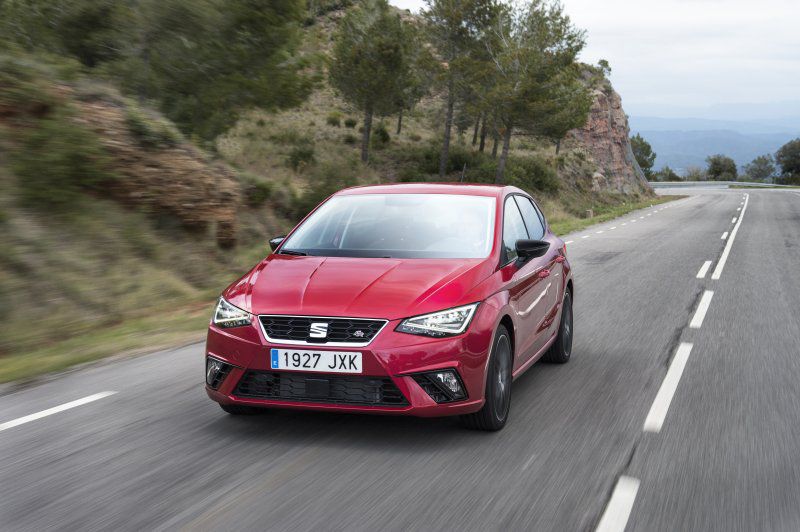
The fifth-generation Seat Ibiza maintains its characteristic youthful and dynamic design language, featuring sharp lines, sculpted surfaces, and a distinctive front fascia with Seat’s signature LED daytime running lights (where equipped). As a 5-door hatchback, it offers a practical and versatile body style, providing easy access for up to five occupants. Despite its compact exterior dimensions – measuring 159.8 inches (4059 mm) in length, 70.08 inches (1780 mm) in width (76.46 inches or 1942 mm including mirrors), and 56.85 inches (1444 mm) in height – the Ibiza V leverages its MQB A0 platform to deliver a surprisingly spacious interior.
The wheelbase of 100.94 inches (2564 mm) contributes significantly to both passenger comfort and stable handling. The interior design is driver-focused, with an emphasis on ergonomics and modern connectivity, though specific infotainment features would vary by trim level. Standard safety features include ABS (Anti-lock Braking System), a fundamental active safety system. The car features an independent McPherson strut front suspension with coil springs and an anti-roll bar, paired with a semi-independent rear suspension with coil springs, a common and effective setup for balancing ride comfort and handling in this segment.
Practicality is a strong suit for the Ibiza V. The trunk (boot) offers a generous minimum volume of 12.54 cubic feet (355 liters), expanding to an impressive 41.14 cubic feet (1165 liters) with the rear seats folded down, making it highly capable for cargo. The fuel tank capacity of 10.57 US gallons (40 liters) provides a good cruising range given its excellent fuel economy. The car’s kerb weight of 2367.76 lbs. (1074 kg) is relatively light, further aiding agility and efficiency.
Technical Specifications
| Seat Ibiza V 1.0 EcoTSI (115 Hp) Start&Stop – Technical Data | |
|---|---|
| General Information | |
| Brand | Seat |
| Model | Ibiza V |
| Type (Engine) | 1.0 EcoTSI (115 Hp) Start&Stop |
| Start of Production | 2019 year |
| End of Production | June, 2021 year |
| Powertrain Architecture | Internal Combustion engine |
| Body Type | Hatchback |
| Seats | 5 |
| Doors | 5 |
| Performance Specifications | |
| Combined Fuel Consumption (WLTP) | 41.3 – 39.9 US mpg (5.7-5.9 l/100 km) |
| CO2 Emissions (WLTP) | 129-134 g/km |
| Fuel Consumption (Urban) | 41.3 US mpg (5.7 l/100 km) |
| Fuel Consumption (Extra Urban) | 56 US mpg (4.2 l/100 km) |
| Fuel Consumption (Combined) | 50 US mpg (4.7 l/100 km) |
| CO2 Emissions (NEDC equivalent) | 107 g/km |
| Fuel Type | Petrol (Gasoline) |
| Acceleration 0 – 60 mph | 8.8 sec |
| Acceleration 0 – 100 km/h | 9.3 sec |
| Maximum Speed | 119.92 mph (193 km/h) |
| Emission Standard | Euro 6 DG |
| Weight-to-Power Ratio | 9.3 kg/Hp (107.1 Hp/tonne) |
| Weight-to-Torque Ratio | 5.4 kg/Nm (186.2 Nm/tonne) |
| Engine Specifications | |
| Power | 115 Hp @ 5000-5500 rpm |
| Power per Liter | 115.1 Hp/l |
| Torque | 147.51 lb.-ft. (200 Nm) @ 2000-3500 rpm |
| Engine Layout | Front, Transverse |
| Engine Model/Code | DKJA, DKRF |
| Engine Displacement | 60.96 cu. in. (999 cm3) |
| Number of Cylinders | 3 |
| Engine Configuration | Inline |
| Cylinder Bore | 2.93 in. (74.5 mm) |
| Piston Stroke | 3.01 in. (76.4 mm) |
| Compression Ratio | 10.5:1 |
| Number of Valves per Cylinder | 4 |
| Fuel Injection System | Direct injection |
| Engine Aspiration | Turbocharger, Intercooler |
| Valvetrain | DOHC |
| Engine Oil Capacity | 4.23 US qt (4 l) |
| Coolant Capacity | 10.57 US qt (10 l) |
| Engine Systems | Start & Stop System, Particulate filter |
| Space, Volume and Weights | |
| Kerb Weight | 2367.76 lbs. (1074 kg) |
| Max. Weight (Gross Vehicle Weight) | 3659.67 lbs. (1660 kg) |
| Max Load | 1291.91 lbs. (586 kg) |
| Trunk (Boot) Space – Minimum | 12.54 cu. ft. (355 l) |
| Trunk (Boot) Space – Maximum | 41.14 cu. ft. (1165 l) |
| Fuel Tank Capacity | 10.57 US gal (40 l) |
| Max. Roof Load | 165.35 lbs. (75 kg) |
| Permitted Trailer Load with Brakes (8%) | 2645.55 lbs. (1200 kg) |
| Permitted Trailer Load with Brakes (12%) | 2425.08 lbs. (1100 kg) |
| Permitted Trailer Load without Brakes | 1256.63 lbs. (570 kg) |
| Permitted Towbar Download | 110.23 lbs. (50 kg) |
| Dimensions | |
| Length | 159.8 in. (4059 mm) |
| Width | 70.08 in. (1780 mm) |
| Width including Mirrors | 76.46 in. (1942 mm) |
| Height | 56.85 in. (1444 mm) |
| Wheelbase | 100.94 in. (2564 mm) |
| Front Track | 60.04 in. (1525 mm) |
| Rear (Back) Track | 59.25 in. (1505 mm) |
| Front Overhang | 31.34 in. (796 mm) |
| Rear Overhang | 27.52 in. (699 mm) |
| Minimum Turning Circle (Turning Diameter) | 34.78 ft. (10.6 m) |
| Drivetrain, Brakes and Suspension Specs | |
| Drivetrain Architecture | Front-wheel drive, Internal Combustion engine |
| Drive Wheel | Front-wheel drive |
| Number of Gears and Type of Gearbox | 6 gears, manual transmission |
| Front Suspension | Independent, type McPherson with coil spring and anti-roll bar |
| Rear Suspension | Semi-independent, coil spring |
| Front Brakes | Ventilated discs |
| Rear Brakes | Disc |
| Assisting Systems | ABS (Anti-lock braking system) |
| Steering Type | Steering rack and pinion |
| Power Steering | Electric Steering |
| Tires Size | 185/65 R15; 195/55 R16; 215/45 R17; 215/40 R18 |
| Wheel Rims Size | 5.5J x 15; 6.5J x 16; 7J x 17; 7J x 18 |
Legacy and Market Impact
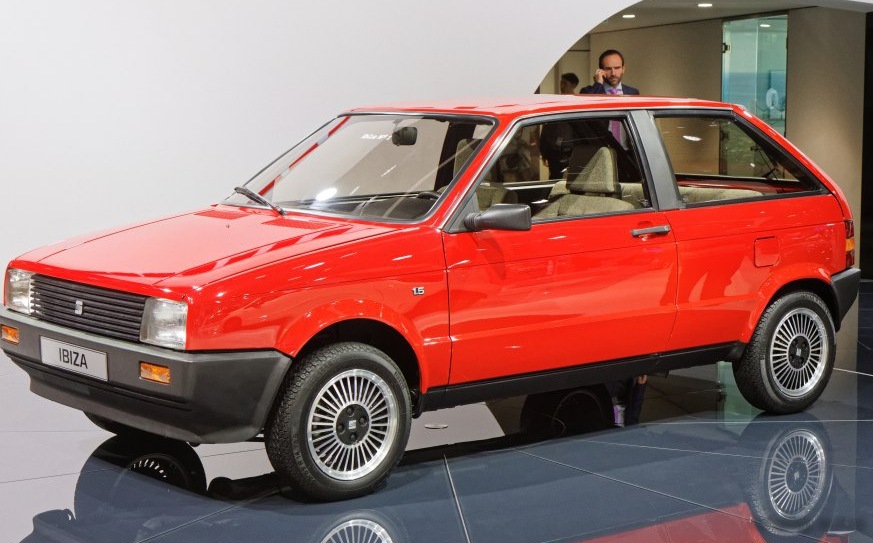
The Seat Ibiza has a long and storied history, dating back to its original launch in 1984. The fifth generation, and specifically the Seat Ibiza V 1.0 EcoTSI (115 Hp) Start&Stop, continued to build upon this robust legacy, solidifying its position as one of Europe’s most popular and recognizable subcompact cars. In its primary markets, the Ibiza faced fierce competition from segment leaders such as the Volkswagen Polo (its platform sibling), Ford Fiesta, Renault Clio, Peugeot 208, and Opel Corsa. Despite the crowded field, the Ibiza consistently carved out a niche with its sportier design, engaging driving dynamics, and a reputation for offering excellent value within the Volkswagen Group’s portfolio.
The 1.0 EcoTSI engine variant was particularly impactful, demonstrating how small-displacement, turbocharged engines could deliver both impressive performance and exceptional fuel economy. This engine technology became a benchmark for efficiency in the segment, influencing competitors to adopt similar strategies. The inclusion of Start&Stop technology and adherence to strict Euro 6 emission standards underscored Seat’s commitment to modern automotive trends and environmental responsibility, which are increasingly important to European consumers and regulators.
The Ibiza’s appeal extended beyond mere practicality; it was often lauded for its nimble handling, precise steering, and a suspension setup that struck a good balance between comfort and sportiness. This made it a favorite among drivers who appreciated a more engaging experience behind the wheel, a characteristic often associated with European hatchbacks. Its robust build quality, benefiting from its Volkswagen Group parentage, also contributed to a strong reputation for reliability and durability.
While never officially sold in the United States, the Seat Ibiza offers American automotive enthusiasts a glimpse into the diverse and highly competitive European subcompact segment. It exemplifies the blend of sophisticated engineering, stylish design, and pragmatic functionality that defines successful vehicles in that market. The Ibiza’s continued evolution, culminating in models like the 2019-2021 1.0 EcoTSI (115 Hp) Start&Stop, ensures its place as a significant player in automotive history, a testament to Seat’s ability to produce compelling and relevant vehicles for its target audience.