The SEAT Ibiza V 1.0 EcoTSI (95 Hp) Start&Stop: A Pillar of European Subcompact Engineering
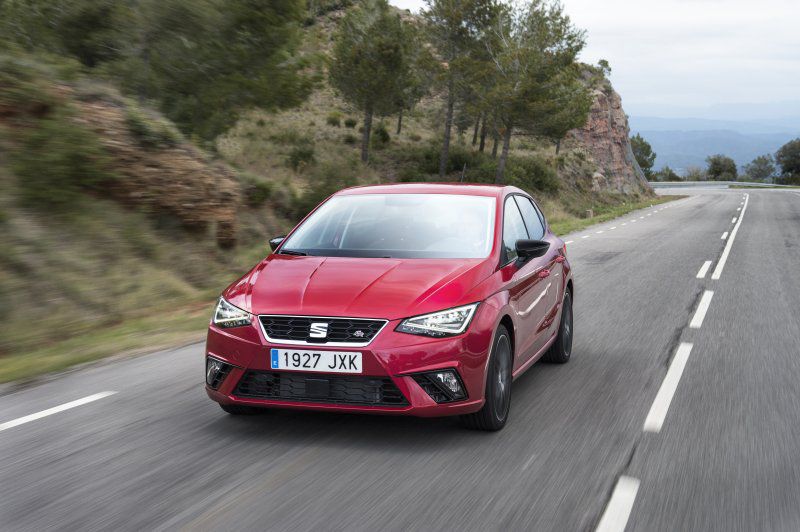
The SEAT Ibiza V 1.0 EcoTSI (95 Hp) Start&Stop represents the fifth generation of SEAT’s highly successful subcompact hatchback, a critical model for the Spanish automaker within the Volkswagen Group. Launched in 2017, this iteration of the Ibiza continued its legacy as a stylish, dynamic, and practical option in the fiercely competitive European B-segment. Designed primarily for the European and select international markets, where SEAT does not have a presence in the United States, the Ibiza V underscored SEAT’s commitment to delivering accessible, fun-to-drive vehicles packed with modern technology and efficient powertrains. This specific variant, featuring the 1.0-liter EcoTSI engine with 95 horsepower and a Start&Stop system, was engineered to offer an optimal balance of urban agility, highway capability, and impressive fuel economy, making it a popular choice for a wide range of drivers from young professionals to small families.
Engine and Performance of the SEAT Ibiza V
At the heart of the SEAT Ibiza V 1.0 EcoTSI (95 Hp) Start&Stop lies a modern, compact, and highly efficient powertrain. This particular model is equipped with a 1.0-liter (999 cm3 or 60.96 cu. in.) inline three-cylinder engine, designated by the code CHZL. This turbocharged and intercooled unit utilizes direct fuel injection and a DOHC valvetrain, showcasing advanced engineering designed to extract maximum power and efficiency from a small displacement. The engine delivers a respectable 95 horsepower, peaking between 5000 and 5500 rpm, which translates to a power-per-liter ratio of 95.1 Hp/l – an impressive figure for a non-performance-oriented engine.
More critically for daily driving, the engine produces 175 Nm (129.07 lb.-ft.) of torque, available across a broad rev range from 2000 to 3500 rpm. This wide torque band contributes significantly to the car’s drivability, providing ample pull for urban maneuvers and comfortable cruising. Power is sent to the front wheels via a precise 5-speed manual transmission, a common choice in this segment for its direct engagement and contribution to fuel efficiency.
Performance figures for the Ibiza V 1.0 EcoTSI are entirely suitable for its segment. It accelerates from 0 to 60 mph in a calculated 10.4 seconds (0-100 km/h in 10.9 seconds) and reaches a maximum speed of 113.09 mph (182 km/h). While not a performance car, these figures ensure confident merging onto highways and comfortable overtaking. The inclusion of a Start&Stop system further enhances fuel efficiency, automatically shutting off the engine when the vehicle is stationary and restarting it seamlessly when the driver is ready to move, particularly beneficial in stop-and-go city traffic.
Fuel economy is a strong suit for this Ibiza variant, a crucial factor in its primary markets. The combined fuel consumption is rated at 4.7 l/100 km, which translates to an excellent 50 US mpg. Urban driving yields 5.8 l/100 km (40.6 US mpg), while extra-urban driving achieves an outstanding 4.1 l/100 km (57.4 US mpg). With CO2 emissions of 106 g/km and compliance with the Euro 6 emission standard, the Ibiza V 1.0 EcoTSI stands as an environmentally conscious choice within its class.
Design and Features
The fifth-generation SEAT Ibiza, produced from 2017 to 2018 for this specific powertrain, adopted the advanced MQB A0 platform, shared with other Volkswagen Group subcompacts like the VW Polo and Skoda Fabia. This modular platform allowed for significant improvements in interior space, handling dynamics, and safety, despite maintaining compact exterior dimensions. The Ibiza V is exclusively offered as a 5-door hatchback, a practical configuration that emphasizes accessibility and versatility. With seating for five occupants, the cabin is surprisingly roomy for its class, benefiting from a longer wheelbase (100.94 inches or 2564 mm) compared to its predecessor.
Visually, the Ibiza V continued SEAT’s “auto emoción” design language, characterized by sharp lines, distinctive LED lighting signatures (depending on trim), and a sporty stance. Its dimensions – 159.8 inches (4059 mm) in length, 70.08 inches (1780 mm) in width (76.46 inches or 1942 mm including mirrors), and 56.85 inches (1444 mm) in height – make it agile for urban environments yet stable on the open road. The design is both contemporary and timeless, contributing to its broad appeal.
Inside, the Ibiza V offers a well-appointed and ergonomically designed cabin. While the specific trim level is not detailed in the provided data, SEAT typically offers a range of features focusing on connectivity, comfort, and driver assistance. Key features for this variant include the standard Start&Stop system, which aids in fuel efficiency, and essential safety systems like ABS (Anti-lock Braking System). The steering system is an electric power-assisted rack and pinion setup, providing light and precise control, ideal for city driving and parking maneuvers with a minimum turning circle of 34.78 feet (10.6 meters).
Practicality is a hallmark of the Ibiza. The hatchback body offers a generous trunk space of 12.54 cu. ft. (355 liters) with the rear seats up, expanding to a substantial 41.14 cu. ft. (1165 liters) when the rear seats are folded down. This impressive cargo capacity makes it highly versatile for shopping trips, luggage, or even small furniture. The vehicle’s kerb weight of 2308.24 lbs. (1047 kg) speaks to its lightweight construction, contributing to both performance and efficiency. The suspension setup features an independent McPherson strut system with coil springs and an anti-roll bar at the front, paired with a semi-independent coil spring rear suspension, providing a comfortable ride and agile handling. Braking is handled by ventilated discs at the front and drum brakes at the rear, complemented by ABS for enhanced safety.
Technical Specifications
| Category | Specification | US Equivalent |
|---|---|---|
| General Information | ||
| Brand | SEAT | |
| Model | Ibiza | |
| Generation | Ibiza V | |
| Engine Type | 1.0 EcoTSI (95 Hp) Start&Stop | |
| Production Start | 2017 | |
| Production End | 2018 | |
| Powertrain Architecture | Internal Combustion Engine (ICE) | |
| Body Type | Hatchback | |
| Seats | 5 | |
| Doors | 5 | |
| Performance Specs | ||
| Fuel Consumption (Urban) | 5.8 l/100 km | 40.6 US mpg |
| Fuel Consumption (Extra Urban) | 4.1 l/100 km | 57.4 US mpg |
| Fuel Consumption (Combined) | 4.7 l/100 km | 50 US mpg |
| CO2 Emissions | 106 g/km | |
| Fuel Type | Petrol (Gasoline) | |
| Acceleration 0-60 mph | 10.4 sec | |
| Acceleration 0-100 km/h | 10.9 sec | |
| Maximum Speed | 182 km/h | 113.09 mph |
| Emission Standard | Euro 6 | |
| Weight-to-Power Ratio | 11 kg/Hp | 90.7 Hp/tonne |
| Weight-to-Torque Ratio | 6 kg/Nm | 167.1 Nm/tonne |
| Engine Specs | ||
| Power | 95 Hp @ 5000-5500 rpm | |
| Power per Liter | 95.1 Hp/l | |
| Torque | 175 Nm @ 2000-3500 rpm | 129.07 lb.-ft. @ 2000-3500 rpm |
| Engine Layout | Front, Transverse | |
| Engine Model/Code | CHZL | |
| Engine Displacement | 999 cm3 | 60.96 cu. in. |
| Number of Cylinders | 3 | |
| Engine Configuration | Inline | |
| Cylinder Bore | 74.5 mm | 2.93 in. |
| Piston Stroke | 76.4 mm | 3.01 in. |
| Compression Ratio | 10.5:1 | |
| Valves per Cylinder | 4 | |
| Fuel Injection System | Direct injection | |
| Engine Aspiration | Turbocharger, Intercooler | |
| Valvetrain | DOHC | |
| Engine Oil Capacity | 4 l | 4.23 US qt |
| Coolant Capacity | 8 l | 8.45 US qt |
| Engine Systems | Start & Stop System | |
| Space, Volume, and Weights | ||
| Kerb Weight | 1047 kg | 2308.24 lbs. |
| Max. Weight (GVWR) | 1640 kg | 3615.58 lbs. |
| Max Load | 593 kg | 1307.34 lbs. |
| Trunk (Boot) Space – Min | 355 l | 12.54 cu. ft. |
| Trunk (Boot) Space – Max | 1165 l | 41.14 cu. ft. |
| Fuel Tank Capacity | 40 l | 10.57 US gal |
| Max. Roof Load | 75 kg | 165.35 lbs. |
| Permitted Trailer Load (with brakes, 8%) | 1100 kg | 2425.08 lbs. |
| Permitted Trailer Load (with brakes, 12%) | 1000 kg | 2204.62 lbs. |
| Permitted Trailer Load (without brakes) | 560 kg | 1234.59 lbs. |
| Dimensions | ||
| Length | 4059 mm | 159.8 in. |
| Width | 1780 mm | 70.08 in. |
| Width (incl. mirrors) | 1942 mm | 76.46 in. |
| Height | 1444 mm | 56.85 in. |
| Wheelbase | 2564 mm | 100.94 in. |
| Front Track | 1525 mm | 60.04 in. |
| Rear Track | 1505 mm | 59.25 in. |
| Front Overhang | 796 mm | 31.34 in. |
| Rear Overhang | 699 mm | 27.52 in. |
| Minimum Turning Circle | 10.6 m | 34.78 ft. |
| Drivetrain, Brakes, and Suspension | ||
| Drivetrain Architecture | Front-wheel drive, Internal Combustion Engine | |
| Drive Wheel | Front-wheel drive | |
| Gearbox Type | 5 gears, manual transmission | |
| Front Suspension | Independent, McPherson with coil spring and anti-roll bar | |
| Rear Suspension | Semi-independent, coil spring | |
| Front Brakes | Ventilated discs | |
| Rear Brakes | Drum | |
| Assisting Systems | ABS (Anti-lock Braking System) | |
| Steering Type | Steering rack and pinion | |
| Power Steering | Electric Steering | |
| Tire Size Options | 185/70 R14; 215/40 R18 | |
| Wheel Rim Size Options | 5J x 14; 7J x 18 | |
Legacy and Market Impact
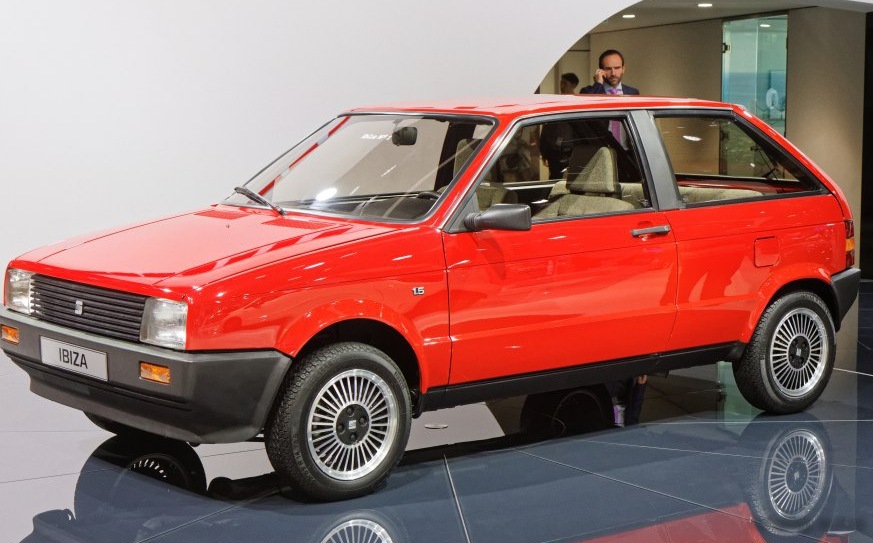
The SEAT Ibiza has been a cornerstone of the brand’s lineup since its inception in 1984, consistently ranking among Europe’s best-selling subcompacts. The fifth-generation, including the SEAT Ibiza V 1.0 EcoTSI (95 Hp) Start&Stop variant, continued this tradition, solidifying its reputation as a youthful, vibrant, and practical option in the highly competitive B-segment. In its primary European market, the Ibiza faced formidable rivals such as the Ford Fiesta, Renault Clio, Peugeot 208, Opel Corsa, and its Volkswagen Group siblings like the VW Polo and Skoda Fabia.
What set the Ibiza apart was its distinctive Spanish flair and emphasis on “auto emoción” – a blend of emotional design and engaging driving dynamics. While sharing its platform and many mechanical components with the more conservatively styled VW Polo, the Ibiza typically offered a sportier aesthetic and a slightly more agile feel, appealing to buyers looking for a car with more character. The 1.0 EcoTSI engine, common across the VW Group’s small car range, was particularly impactful for its ability to deliver surprising performance while maintaining exceptional fuel efficiency, a critical factor for European consumers facing high fuel prices and stringent emissions regulations.
The Ibiza V’s adoption of the MQB A0 platform was a significant step, allowing it to grow in interior space and sophistication, addressing previous criticisms regarding rear passenger room and luggage capacity. This move enhanced its appeal to a broader demographic, including young families who needed more practicality without sacrificing style or economy. The integration of modern technology, particularly in infotainment and safety features (though not extensively detailed for this base model, higher trims offered more), further cemented its position as a contemporary choice.
Ultimately, the SEAT Ibiza V 1.0 EcoTSI (95 Hp) Start&Stop, despite its relatively short production run for this specific engine variant (2017-2018), played a crucial role in maintaining the Ibiza’s strong market presence. It showcased SEAT’s ability to combine efficient, downsized turbocharged engines with an attractive package that offered practicality, dynamic handling, and a distinct personality. Its legacy is one of a well-engineered, value-driven subcompact that successfully navigated the demands of modern European motoring, proving that small cars could be both sensible and exciting.