The Seat Ibiza V 1.0 TGI (90 Hp) CNG: A Focus on Sustainable Urban Mobility
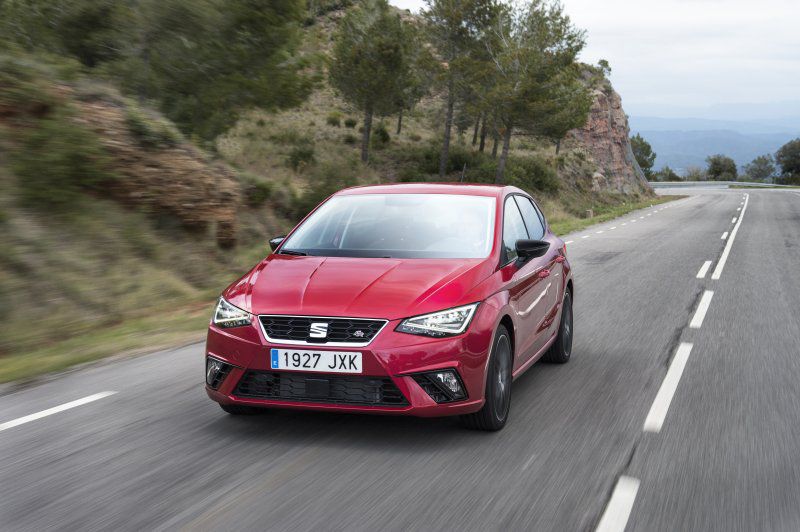
The Seat Ibiza V 1.0 TGI (90 Hp) CNG represents a significant stride in sustainable urban and suburban mobility within the European market. Unveiled as part of the fifth generation of the popular Ibiza hatchback, this particular variant, produced from 2019 to June 2021, distinguished itself with its innovative bi-fuel powertrain, capable of running on both gasoline and Compressed Natural Gas (CNG). While the Seat brand, a subsidiary of the Volkswagen Group, is not directly sold in the United States, the Ibiza has long been a cornerstone of the European B-segment, competing fiercely in the compact hatchback category. The TGI (Turbo Gas Injection) designation highlights Seat’s commitment to offering greener alternatives, leveraging the benefits of CNG for reduced emissions and potentially lower running costs, a crucial factor for European consumers navigating stringent environmental regulations and varying fuel prices.
This generation of the Ibiza, built on the Volkswagen Group’s MQB A0 platform, shared its underpinnings with siblings like the Volkswagen Polo and Audi A1, ensuring a solid foundation of engineering and technology. The 1.0 TGI (90 Hp) CNG model specifically catered to a growing demand for economical and environmentally conscious vehicles, without significantly compromising on the agile handling and youthful design for which the Ibiza is known. Its role in the primary European market was to provide an accessible, practical, and eco-friendly option for daily commuting and city driving, embodying Seat’s “auto emoción” philosophy with a responsible twist.
Engine and Performance: The Innovative 1.0 TGI Powertrain
At the heart of the Seat Ibiza V 1.0 TGI (90 Hp) CNG lies a sophisticated 1.0-liter (999 cm3 or 60.96 cu. in.) inline three-cylinder engine, designated by the code DBYA. This powerplant is a testament to modern downsizing trends, combining a modest displacement with forced induction via a turbocharger to deliver a respectable output. It generates 90 horsepower (Hp) across a broad rev range of 4500-5800 rpm, and a robust 118.01 lb.-ft. (160 Nm) of torque available between 1900-3500 rpm. This low-end torque is particularly beneficial for city driving, providing eager acceleration from a standstill and flexibility in traffic.
The engine’s bi-fuel capability is its most defining characteristic. Primarily designed to run on CNG, it can seamlessly switch to gasoline when the CNG tanks are depleted. The TGI system employs direct injection, a common feature in modern engines for optimizing fuel delivery and efficiency. With a compression ratio of 10.3:1 and four valves per cylinder, the engine is engineered for both performance and efficiency. Power is channeled to the front wheels through a precise 6-speed manual transmission, offering driver engagement and allowing for optimal gear selection to maximize fuel economy or performance.
While not a performance car, the Ibiza 1.0 TGI delivers adequate acceleration for its class, achieving 0-60 mph in a calculated 11.5 seconds (0-100 km/h in 12.1 seconds) and reaching a top speed of 111.85 mph (180 km/h). Its true strength, however, lies in its fuel economy and environmental credentials. The combined fuel consumption on CNG is remarkably low, rated at 3.3 kg/100 km (or 3.9-4.0 kg/100 km on the WLTP cycle), with CO2 emissions as low as 92 g/km (106-108 g/km WLTP), meeting the stringent Euro 6 DG emission standard. This impressive efficiency is aided by features like a Start & Stop System and a particulate filter, which further reduce emissions and fuel consumption in urban environments.
Design and Features: Practicality Meets Contemporary Style
The Seat Ibiza V, including the 1.0 TGI variant, sports a contemporary and dynamic design that aligns with Seat’s youthful brand image. As a 5-door hatchback, it offers a practical body type popular across Europe, blending compact exterior dimensions with a surprisingly spacious interior. The car measures 159.8 inches (4059 mm) in length, 70.08 inches (1780 mm) in width (76.46 inches or 1942 mm including mirrors), and 56.85 inches (1444 mm) in height, making it agile for urban maneuvering while providing comfortable seating for up to five occupants.
Despite its compact footprint, the Ibiza V maximizes interior space thanks to its efficient MQB A0 platform. The wheelbase of 100.94 inches (2564 mm) contributes to stable handling and a comfortable ride. The trunk (boot) space is practical for daily use, offering a minimum of 9.25 cu. ft. (262 liters), expandable to 37.86 cu. ft. (1072 liters) with the rear seats folded down. It’s worth noting that the CNG tanks typically occupy some trunk space compared to gasoline-only models, a common trade-off for bi-fuel vehicles.
In terms of technology and safety, the Ibiza V benefits from the Volkswagen Group’s extensive portfolio. Standard features for the era would include power steering (electric), a rack and pinion steering type, and a robust braking system with ventilated discs at the front and disc brakes at the rear, supported by ABS (Anti-lock Braking System). The car could be optioned with various wheel sizes, from 15-inch to 17-inch, affecting both aesthetics and ride quality. While specific interior tech features are not detailed in the provided data, modern conveniences like infotainment systems, connectivity options, and advanced driver-assistance systems were typically available on this generation of the Ibiza, depending on the trim level.
Technical Specifications: Seat Ibiza V 1.0 TGI (90 Hp) CNG
| Category | Specification | Metric / US Equivalent |
|---|---|---|
| General Information | ||
| Brand | Seat | |
| Model | Ibiza | |
| Generation | Ibiza V | |
| Type (Engine) | 1.0 TGI (90 Hp) CNG | |
| Start of Production | 2019 year | |
| End of Production | June, 2021 year | |
| Powertrain Architecture | Internal Combustion engine | |
| Body type | Hatchback | |
| Seats | 5 | |
| Doors | 5 | |
| Performance Specs | ||
| Combined Fuel Consumption (WLTP) (CNG) | 3.9-4.0 kg/100 km | |
| CO2 Emissions (WLTP) | 106-108 g/km | |
| Fuel Consumption (Urban) (CNG) | 4.4 kg/100 km | |
| Fuel Consumption (Extra Urban) (CNG) | 2.7 kg/100 km | |
| Fuel Consumption (Combined) (CNG) | 3.3 kg/100 km | |
| CO2 Emissions (CNG) | 92 g/km | |
| Fuel Type | Petrol / CNG | |
| Acceleration 0 – 60 mph | 11.5 sec | |
| Acceleration 0 – 100 km/h | 12.1 sec | |
| Maximum Speed | 180 km/h | 111.85 mph |
| Emission Standard | Euro 6 DG | |
| Weight-to-Power Ratio | 13.1 kg/Hp | 76.1 Hp/tonne |
| Weight-to-Torque Ratio | 7.4 kg/Nm | 135.4 Nm/tonne |
| Engine Specs | ||
| Power | 90 Hp @ 4500-5800 rpm | |
| Power per liter | 90.1 Hp/l | |
| Torque | 160 Nm @ 1900-3500 rpm | 118.01 lb.-ft. @ 1900-3500 rpm |
| Engine Layout | Front, Transverse | |
| Engine Model/Code | DBYA | |
| Engine Displacement | 999 cm3 | 1.0 liters / 60.96 cu. in. |
| Number of Cylinders | 3 | |
| Engine Configuration | Inline | |
| Cylinder Bore | 74.5 mm | 2.93 in. |
| Piston Stroke | 76.4 mm | 3.01 in. |
| Compression Ratio | 10.3:1 | |
| Number of Valves per Cylinder | 4 | |
| Fuel Injection System | Direct injection | |
| Engine Aspiration | Turbocharger | |
| Engine Oil Capacity | 4 l | 4.23 US qt | 3.52 UK qt |
| Coolant Capacity | 10 l | 10.57 US qt | 8.8 UK qt |
| Engine Systems | ||
| Start & Stop System | Yes | |
| Particulate filter | Yes | |
| Space, Volume and Weights | ||
| Kerb Weight | 1182 kg | 2605.86 lbs. |
| Max. Weight | 1690 kg | 3725.81 lbs. |
| Max Load | 508 kg | 1119.95 lbs. |
| Trunk (boot) space – minimum | 262 l | 9.25 cu. ft. |
| Trunk (boot) space – maximum | 1072 l | 37.86 cu. ft. |
| Fuel Tank Capacity (Petrol) | 9 l | 2.38 US gal | 1.98 UK gal |
| CNG Cylinder Capacity | 13.8 kg | |
| Max. Roof Load | 75 kg | 165.35 lbs. |
| Dimensions | ||
| Length | 4059 mm | 159.8 in. |
| Width | 1780 mm | 70.08 in. |
| Width including mirrors | 1942 mm | 76.46 in. |
| Height | 1444 mm | 56.85 in. |
| Wheelbase | 2564 mm | 100.94 in. |
| Front Track | 1525 mm | 60.04 in. |
| Rear (Back) Track | 1505 mm | 59.25 in. |
| Front Overhang | 796 mm | 31.34 in. |
| Rear Overhang | 699 mm | 27.52 in. |
| Minimum Turning Circle (Turning Diameter) | 10.6 m | 34.78 ft. |
| Drivetrain, Brakes and Suspension Specs | ||
| Drivetrain Architecture | The Internal combustion engine (ICE) drives the front wheels of the vehicle. | |
| Drive Wheel | Front wheel drive | |
| Number of Gears and Type of Gearbox | 6 gears, manual transmission | |
| Front Brakes | Ventilated discs | |
| Rear Brakes | Disc | |
| Assisting Systems | ABS (Anti-lock braking system) | |
| Steering Type | Steering rack and pinion | |
| Power Steering | Electric Steering | |
| Tires Size | 185/65 R15; 195/55 R16; 215/45 R17 | |
| Wheel Rims Size | 5.5J x 15; 6.5J x 16; 7J x 17; 7J x 18 | |
Legacy and Market Impact: The Seat Ibiza V in the European Landscape
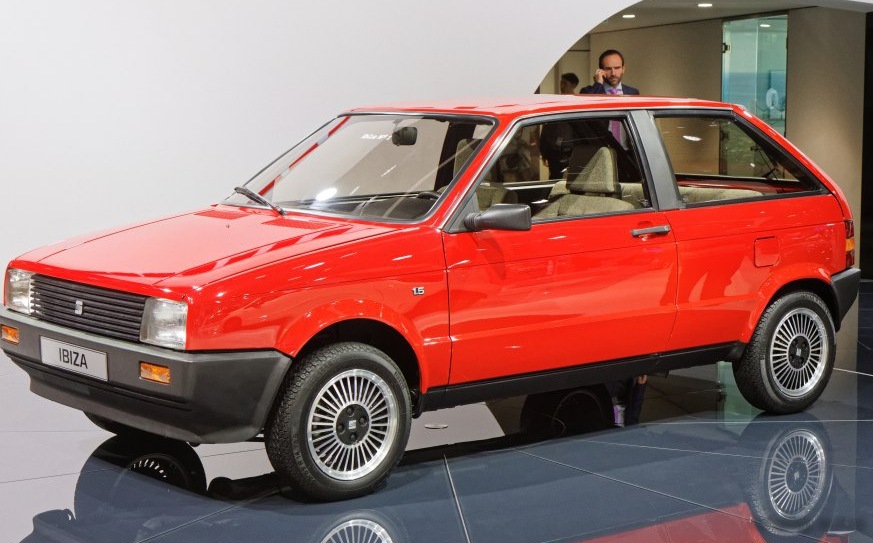
The Seat Ibiza has a long and storied history in Europe, dating back to its original launch in 1984. The fifth-generation Ibiza, introduced in 2017, continued this legacy, becoming a critical model for Seat, consistently ranking among the best-selling cars in its segment in several European countries. Its appeal stemmed from a blend of Spanish flair in design, German engineering reliability (courtesy of the VW Group), and competitive pricing. The Ibiza V 1.0 TGI (90 Hp) CNG variant carved out a specific niche within this successful lineup, playing a vital role in demonstrating Seat’s commitment to alternative fuels.
In the highly competitive European B-segment, the Ibiza faced formidable rivals such as the Volkswagen Polo (its platform mate), Ford Fiesta, Renault Clio, Peugeot 208, and Opel Corsa. What set the 1.0 TGI apart was its unique bi-fuel CNG powertrain. While CNG vehicles are not widespread globally, they have a dedicated following and infrastructure in certain European countries, particularly Italy, Germany, and Spain, where government incentives and a network of refueling stations make them a viable alternative to traditional gasoline or diesel cars. The TGI variant offered lower running costs in regions with subsidized CNG prices and significantly reduced particulate and nitrogen oxide emissions compared to gasoline or diesel equivalents, making it an attractive option for environmentally conscious buyers and fleet operators.
The market impact of the Ibiza V 1.0 TGI was not about volume leadership but about offering a differentiated, sustainable choice. It helped position Seat as a brand that not only delivers stylish and engaging vehicles but also embraces greener technologies. For consumers, it represented a practical solution to rising fuel costs and increasing environmental concerns, without sacrificing the everyday usability expected from a compact hatchback. The car’s Euro 6 DG emission standard compliance also ensured its longevity in cities with increasingly strict emission zones. While its production run concluded in June 2021, the Ibiza TGI’s tenure highlighted the potential of CNG as a clean, efficient fuel source and underscored Seat’s adaptive strategy in a rapidly evolving automotive landscape, influencing future powertrain decisions within the brand and the broader Volkswagen Group for niche, eco-friendly offerings.