Seat Ibiza V 1.6 TDI (115 Hp) Start&Stop: A European Supermini Analysis
The Seat Ibiza V 1.6 TDI (115 Hp) Start&Stop represents a key offering in the highly competitive European supermini segment, a class of vehicles often referred to as subcompacts in the United States. Produced by the Spanish automaker SEAT, a subsidiary of the Volkswagen Group, the fifth generation Ibiza, launched in 2017, marked a significant evolution for the model line. While not officially sold in the North American market, the Ibiza plays a crucial role in Europe, Asia, and Latin America as SEAT’s entry into the B-segment, offering a blend of youthful styling, practical dimensions, and efficient powertrains. This specific variant, the 1.6 TDI with 115 horsepower and Start&Stop technology, was available for a brief production window in 2018, highlighting SEAT’s commitment to diesel efficiency and performance within the stringent European emission standards of the time.
Engine & Performance: The Heart of the Seat Ibiza V 1.6 TDI (115 Hp) Start&Stop
At the core of this particular Ibiza model is a sophisticated 1.6-liter (1598 cm3 or 97.52 cu. in.) inline four-cylinder TDI (Turbocharged Direct Injection) diesel engine, designated with the code DGTA. This powerplant is a testament to the Volkswagen Group’s expertise in diesel technology, engineered to deliver a balance of robust performance and exceptional fuel economy. It produces a healthy 115 horsepower at a relatively low 3250-4000 rpm, which is impressive for an engine of this displacement. More significantly for daily driving, it generates a substantial 250 Nm (184.39 lb.-ft.) of torque across a broad rev range, specifically from 1500 to 3200 rpm. This ample torque at low engine speeds translates into strong acceleration from a standstill and confident overtaking capabilities, making it well-suited for both city driving and highway cruising.
The engine’s performance figures underscore its capabilities. The Seat Ibiza V 1.6 TDI (115 Hp) Start&Stop can accelerate from 0 to 60 mph in a brisk 9.5 seconds, with a 0-100 km/h sprint completed in 10 seconds. Its top speed reaches 195 km/h (121.17 mph), which is more than adequate for European highway speeds. Mated to a smooth-shifting 6-speed manual transmission, the front-wheel-drive architecture ensures predictable handling and efficient power delivery. The inclusion of Start&Stop technology further enhances efficiency by automatically shutting off the engine when the vehicle is stationary, such as at traffic lights, and restarting it seamlessly when the driver intends to move. This system, along with the diesel particulate filter, contributed to the vehicle meeting the Euro 6 emission standard, a crucial factor for its market viability in Europe.
Fuel economy is a standout feature of this diesel variant. The combined fuel consumption is an impressive 3.9 liters per 100 kilometers, translating to approximately 60.3 US miles per gallon. Urban driving sees around 4.5 l/100 km (52.3 US mpg), while extra-urban (highway) driving can achieve an outstanding 3.6 l/100 km (65.3 US mpg). These figures highlight the inherent efficiency advantages of modern diesel engines, particularly for drivers who cover significant mileage. With CO2 emissions of just 102 g/km, the Ibiza 1.6 TDI was positioned as an environmentally conscious choice within its segment during its production year.
Design & Features of the Ibiza V
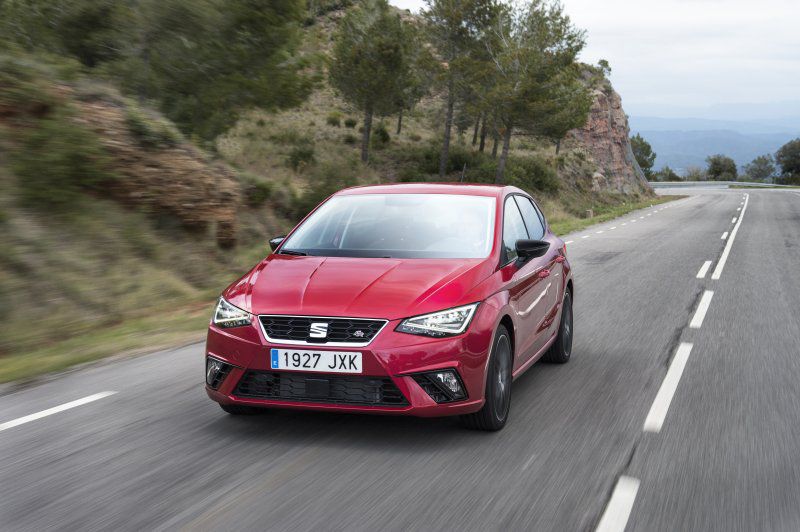
The fifth-generation Ibiza, including the Seat Ibiza V 1.6 TDI (115 Hp) Start&Stop, is built on the Volkswagen Group’s MQB A0 platform, a modular transverse matrix specifically designed for smaller cars. This platform not only provides excellent structural rigidity and crash safety but also allows for optimized packaging, contributing to the Ibiza’s spacious interior for its class. The body type is a practical 5-door hatchback, offering easy access to both the front and rear seats, accommodating five occupants comfortably.
Visually, the Ibiza V adopted SEAT’s sharp, angular design language, giving it a sporty and dynamic appearance. Its dimensions are compact yet well-proportioned: a length of 159.8 inches (4059 mm), a width of 70.08 inches (1780 mm), and a height of 56.85 inches (1444 mm). The wheelbase of 100.94 inches (2564 mm) contributes to a stable ride and generous interior space. The exterior features could include various wheel and tire sizes, ranging from 185/65 R15 up to 215/40 R18, allowing for customization and enhancing its athletic stance.
Inside, the Ibiza V prioritizes ergonomics and connectivity, typical of modern European subcompacts. While specific trim levels would dictate the exact feature set, common amenities would include a touchscreen infotainment system, smartphone integration, and various driver-assistance systems. Safety features are paramount, with the Ibiza typically equipped with ABS (Anti-lock Braking System), multiple airbags, and a robust chassis. The steering system is an electric power-assisted rack and pinion, providing light effort at low speeds for city maneuvering and more feedback at higher speeds. Suspension consists of an independent McPherson strut setup with a coil spring and anti-roll bar at the front, and a semi-independent coil spring system at the rear, a common and cost-effective solution for this segment that balances comfort and handling.
Practicality is also a strong suit. The trunk (boot) offers a minimum of 12.54 cubic feet (355 liters) of cargo space, expanding to a substantial 41.14 cubic feet (1165 liters) with the rear seats folded down, making it highly versatile for shopping or weekend trips. The fuel tank capacity of 10.57 US gallons (40 liters) combined with its excellent fuel economy provides a significant driving range.
Technical Specifications: Seat Ibiza V 1.6 TDI (115 Hp) Start&Stop
| Category | Specification |
|---|---|
| General Information | |
| Brand | Seat |
| Model | Ibiza |
| Generation | Ibiza V |
| Type (Engine) | 1.6 TDI (115 Hp) Start&Stop |
| Start of Production | 2018 year |
| End of Production | 2018 year |
| Powertrain Architecture | Internal Combustion engine |
| Body type | Hatchback |
| Seats | 5 |
| Doors | 5 |
| Performance Specs | |
| Fuel consumption (economy) – urban | 4.5 l/100 km (52.3 US mpg) |
| Fuel consumption (economy) – extra urban | 3.6 l/100 km (65.3 US mpg) |
| Fuel consumption (economy) – combined | 3.9 l/100 km (60.3 US mpg) |
| CO2 emissions | 102 g/km |
| Fuel Type | Diesel |
| Acceleration 0 – 60 mph | 9.5 sec |
| Acceleration 0 – 100 km/h | 10 sec |
| Maximum speed | 195 km/h (121.17 mph) |
| Emission standard | Euro 6 |
| Weight-to-power ratio | 10.3 kg/Hp (97.2 Hp/tonne) |
| Weight-to-torque ratio | 4.7 kg/Nm (211.3 Nm/tonne) |
| Engine Specs | |
| Power | 115 Hp @ 3250-4000 rpm |
| Power per liter | 72 Hp/l |
| Torque | 250 Nm (184.39 lb.-ft.) @ 1500-3200 rpm |
| Engine layout | Front, Transverse |
| Engine Model/Code | DGTA |
| Engine displacement | 1598 cm3 (97.52 cu. in.) |
| Number of cylinders | 4 |
| Engine configuration | Inline |
| Cylinder Bore | 79.5 mm (3.13 in.) |
| Piston Stroke | 80.5 mm (3.17 in.) |
| Compression ratio | 16.2:1 |
| Number of valves per cylinder | 4 |
| Fuel injection system | Diesel Commonrail |
| Engine aspiration | Turbocharger, Intercooler |
| Engine oil capacity | 4.7 l (4.97 US qt) |
| Coolant | 8 l (8.45 US qt) |
| Engine systems | Start & Stop System, Particulate filter |
| Space, Volume and Weights | |
| Kerb Weight | 1183 kg (2608.07 lbs.) |
| Max. weight | 1760 kg (3880.14 lbs.) |
| Max load | 577 kg (1272.07 lbs.) |
| Trunk (boot) space – minimum | 355 l (12.54 cu. ft.) |
| Trunk (boot) space – maximum | 1165 l (41.14 cu. ft.) |
| Fuel tank capacity | 40 l (10.57 US gal) |
| Max. roof load | 75 kg (165.35 lbs.) |
| Permitted trailer load with brakes (12%) | 1200 kg (2645.55 lbs.) |
| Permitted trailer load without brakes | 620 kg (1366.87 lbs.) |
| Permitted towbar download | 50 kg (110.23 lbs.) |
| Dimensions | |
| Length | 4059 mm (159.8 in.) |
| Width | 1780 mm (70.08 in.) |
| Width including mirrors | 1942 mm (76.46 in.) |
| Height | 1444 mm (56.85 in.) |
| Wheelbase | 2564 mm (100.94 in.) |
| Front track | 1525 mm (60.04 in.) |
| Rear (Back) track | 1505 mm (59.25 in.) |
| Front overhang | 796 mm (31.34 in.) |
| Rear overhang | 699 mm (27.52 in.) |
| Minimum turning circle (turning diameter) | 10.6 m (34.78 ft.) |
| Drivetrain, Brakes and Suspension Specs | |
| Drivetrain Architecture | Front-wheel drive, Internal Combustion Engine (ICE) |
| Drive wheel | Front wheel drive |
| Number of gears and type of gearbox | 6 gears, manual transmission |
| Front suspension | Independent, type McPherson with coil spring and anti-roll bar |
| Rear suspension | Semi-independent, coil spring |
| Front brakes | Ventilated discs |
| Rear brakes | Disc |
| Assisting systems | ABS (Anti-lock braking system) |
| Steering type | Steering rack and pinion |
| Power steering | Electric Steering |
| Tires size | 185/65 R15; 195/55 R16; 215/45 R17; 215/40 R18 |
| Wheel rims size | 5.5J x 15; 6.5J x 16; 7J x 17; 7J x 18 |
Legacy & Market Impact
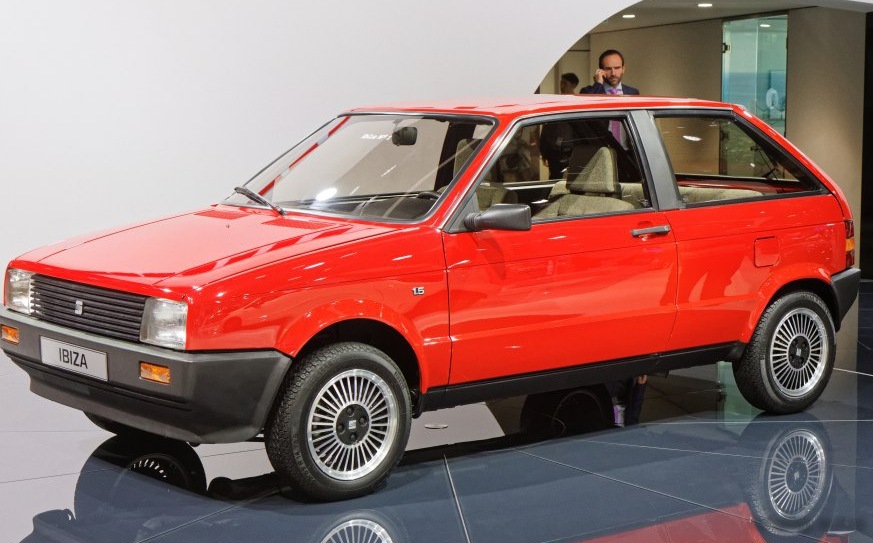
The SEAT Ibiza has a rich history dating back to its first generation in 1984, establishing itself as a cornerstone of the Spanish brand’s lineup. The fifth generation, and specifically the Seat Ibiza V 1.6 TDI (115 Hp) Start&Stop, continued this legacy by positioning itself as a youthful, sporty, and technologically advanced option in the fiercely competitive European B-segment. This segment is dominated by popular models such as the Volkswagen Polo (its platform sibling), Ford Fiesta, Renault Clio, Peugeot 208, and Opel Corsa (Vauxhall Corsa in the UK).
In its primary markets, the Ibiza is renowned for its dynamic driving characteristics, attractive styling, and strong value proposition. The 1.6 TDI variant, while representing a declining trend in diesel popularity in the late 2010s, offered a compelling package for drivers prioritizing long-distance efficiency and strong low-end torque. Its brief production window for this specific engine in 2018 reflects the rapid shifts in automotive emissions regulations and consumer preferences towards gasoline and electrified powertrains. However, for that period, it stood out for its ability to deliver energetic performance without sacrificing fuel economy.
The Ibiza’s impact extends beyond just sales figures; it has been instrumental in shaping SEAT’s brand identity as a producer of vibrant, engaging, and accessible vehicles. The use of the MQB A0 platform also highlights its integration into the broader Volkswagen Group strategy, benefiting from shared technologies and economies of scale. While the future of diesel engines in small cars remains uncertain due to evolving environmental policies, the 1.6 TDI (115 Hp) Start&Stop variant of the Ibiza V stands as a significant example of how modern diesel technology delivered impressive efficiency and performance in a compact, stylish package, catering to a specific demographic of European buyers.
The car’s reputation for reliability, coupled with its practical features and engaging driving experience, ensured its continued relevance in a challenging market. It demonstrated SEAT’s ability to offer a distinct flavor within the VW Group’s portfolio, appealing to a demographic that values expressive design and a spirited drive. Its contribution to the segment, even in a short-lived specific configuration, underscores the continuous innovation required to succeed in the global automotive landscape.