Introduction to the SEAT Ibiza V (Facelift 2025) 1.0 MPI (80 Hp)
The SEAT Ibiza, a cornerstone of the Spanish automaker’s lineup, has consistently been a strong contender in the highly competitive European subcompact (B-segment) market. For decades, it has represented SEAT’s youthful spirit, offering a blend of sharp design, agile handling, and practicality. The model under scrutiny here is the SEAT Ibiza V (facelift 2025) 1.0 MPI (80 Hp), representing the latest evolution of its fifth generation. This refreshed iteration, slated for production in October 2025, aims to keep the Ibiza at the forefront of its segment by integrating updated aesthetics, enhanced features, and a focus on efficiency.
While SEAT vehicles, including the popular Ibiza, are not typically sold in the United States, their influence and design philosophy resonate globally within the automotive industry. The Ibiza primarily targets European and other international markets, where it serves as a versatile option for urban dwellers, young professionals, and families seeking an economical yet stylish daily driver. The 1.0 MPI (80 Hp) variant, in particular, positions itself as an accessible entry point into the Ibiza range, prioritizing fuel efficiency and lower running costs, making it an ideal choice for city commuting and regional travel. This article delves into the technical prowess and market positioning of this significant European hatchback.
Engine and Performance: The Heart of the SEAT Ibiza V (Facelift 2025)
At the core of the SEAT Ibiza V (facelift 2025) 1.0 MPI (80 Hp) lies a naturally aspirated 1.0-liter (999 cm3 or 60.96 cu. in.) inline three-cylinder engine, designated by the code DSGD. This powertrain architecture emphasizes reliability and efficiency, perfectly suited for the urban environments where the Ibiza is expected to thrive. The engine delivers a modest but adequate 80 horsepower at 6300 rpm, translating to 80.1 horsepower per liter, a respectable figure for a non-turbocharged unit of this displacement.
Torque output stands at 68.59 lb.-ft. (93 Nm), available across a broad rev range between 3700 and 3900 rpm. This characteristic torque delivery ensures decent responsiveness in city traffic and at lower speeds, making the car feel nimble and easy to maneuver. Power is channeled to the front wheels via a smooth-shifting 5-speed manual transmission, a choice that underscores the model’s focus on driver engagement and cost-effectiveness. The drivetrain architecture is straightforward: the internal combustion engine drives the front wheels, a common and efficient layout for this segment.
In terms of performance, the Ibiza 1.0 MPI (80 Hp) is designed for practicality rather than outright speed. It accelerates from 0 to 60 mph in a calculated 14.5 seconds (0-100 km/h in 15.3 seconds), with a maximum speed of 108.74 mph (175 km/h). These figures are competitive within its class for an entry-level engine, providing sufficient capability for highway cruising while excelling in urban settings. The engine’s multi-port manifold injection system and a 12:1 compression ratio contribute to its efficient combustion process. Furthermore, the inclusion of modern engine systems such as a Start & Stop System and a particulate filter highlights SEAT’s commitment to reducing fuel consumption and emissions, meeting stringent Euro 6EB emission standards. The combined fuel consumption (WLTP) is impressive, ranging from 41.3 to 45.2 US mpg (5.2-5.7 l/100 km), with CO2 emissions between 119-128 g/km.
Design and Features: Modern Aesthetics and Urban Practicality
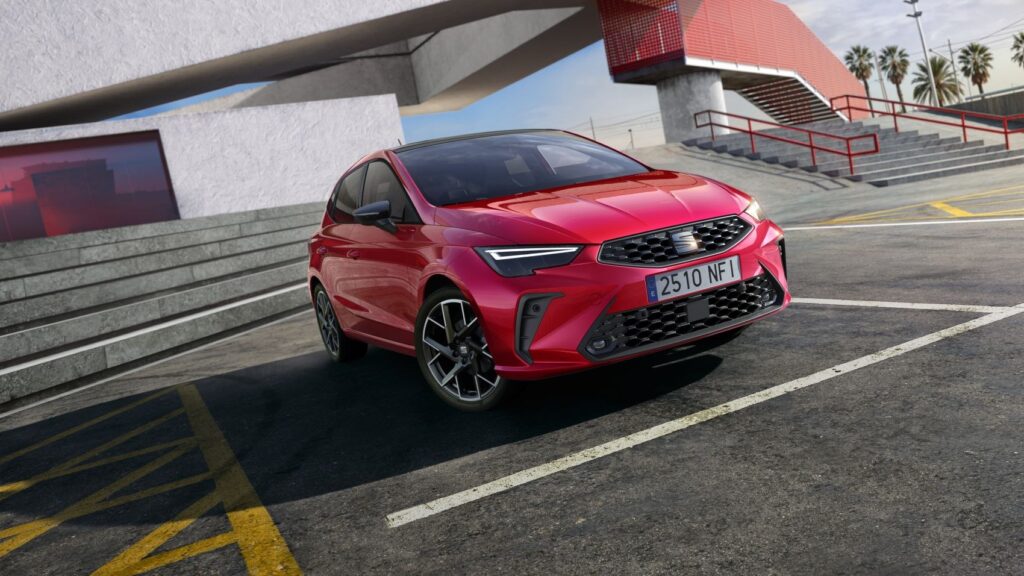
The SEAT Ibiza V (facelift 2025) retains its characteristic 5-door hatchback body type, a design that has proven immensely popular for its blend of style and utility. The facelift brings subtle yet impactful changes, likely including revised front and rear bumpers, updated lighting signatures (potentially full LED technology for higher trims), and new wheel designs to refresh its contemporary appeal. Measuring 160.24 inches in length, 70.08 inches in width (76.46 inches including mirrors), and 56.97 inches in height, the Ibiza maintains its compact footprint, making it highly adept at navigating congested city streets and tight parking spaces. A wheelbase of 100.94 inches contributes to a stable ride and generous interior packaging.
Despite its compact exterior, the Ibiza offers a surprisingly spacious cabin designed to comfortably accommodate five occupants. The practical nature of the hatchback is evident in its trunk space, which offers a minimum of 12.54 cu. ft. (355 liters), expandable by folding the rear seats, making it suitable for grocery runs, luggage, or sports equipment. The car’s curb weight of 2283.99 lbs. (1036 kg) contributes to its agile feel and fuel efficiency, while a maximum load capacity of 1309.55 lbs. (594 kg) ensures it can handle passengers and cargo with ease. The 10.57 US gallon (40 liter) fuel tank provides a good cruising range given its excellent fuel economy.
Underpinning the Ibiza’s dynamic capabilities are its well-tuned chassis and suspension setup. The front utilizes independent McPherson struts with coil springs, a common and effective design for precise steering and ride comfort. The rear features an elastic beam (torsion beam) with coil springs, a space-efficient and robust solution for a compact car. Braking is handled by ventilated discs measuring 256×22 mm at the front and traditional drum brakes (203×38 mm) at the rear, complemented by an Anti-lock Braking System (ABS) for enhanced safety. Electric power steering, with a rack and pinion system, provides light and responsive handling, crucial for urban driving. The car rides on either 185/65 R15 or 195/55 R16 tires, offering a balance of grip and ride comfort.
Technical Specifications
| Category | Specification |
|---|---|
| Brand | SEAT |
| Model | Ibiza |
| Generation | Ibiza V (facelift 2025) |
| Type (Engine) | 1.0 MPI (80 Hp) |
| Start of Production | October, 2025 |
| Powertrain Architecture | Internal Combustion Engine |
| Body Type | Hatchback |
| Seats | 5 |
| Doors | 5 |
| Performance Specifications | |
| Combined Fuel Consumption (WLTP) | 5.2-5.7 l/100 km (45.2 – 41.3 US mpg) |
| CO2 Emissions (WLTP) | 119-128 g/km |
| Fuel Type | Petrol (Gasoline) |
| Acceleration 0-60 mph | 14.5 sec (Calculated) |
| Acceleration 0-62 mph (0-100 km/h) | 15.3 sec |
| Maximum Speed | 175 km/h (108.74 mph) |
| Emission Standard | Euro 6EB |
| Weight-to-Power Ratio | 13 kg/Hp, 77.2 Hp/tonne |
| Weight-to-Torque Ratio | 11.1 kg/Nm, 89.8 Nm/tonne |
| Engine Specifications | |
| Power | 80 Hp @ 6300 rpm |
| Power per Liter | 80.1 Hp/l |
| Torque | 93 Nm (68.59 lb.-ft.) @ 3700-3900 rpm |
| Engine Layout | Front, Transverse |
| Engine Model/Code | DSGD |
| Engine Displacement | 999 cm3 (60.96 cu. in.) |
| Number of Cylinders | 3 |
| Engine Configuration | Inline |
| Cylinder Bore | 74.5 mm (2.93 in.) |
| Piston Stroke | 76.4 mm (3.01 in.) |
| Compression Ratio | 12:1 |
| Number of Valves per Cylinder | 4 |
| Fuel Injection System | Multi-port manifold injection |
| Engine Aspiration | Naturally aspirated engine |
| Engine Oil Capacity | 3.9 l (4.12 US qt) |
| Coolant Capacity | 8 l (8.45 US qt) |
| Engine Systems | Start & Stop System, Particulate filter |
| Space, Volume, and Weights | |
| Kerb Weight | 1036 kg (2283.99 lbs.) |
| Max. Weight (Gross Vehicle Weight) | 1630 kg (3593.53 lbs.) |
| Max Load | 594 kg (1309.55 lbs.) |
| Trunk (Boot) Space – Minimum | 355 l (12.54 cu. ft.) |
| Fuel Tank Capacity | 40 l (10.57 US gal) |
| Permitted Trailer Load with Brakes (8%) | 1000 kg (2204.62 lbs.) |
| Permitted Trailer Load with Brakes (12%) | 800 kg (1763.7 lbs.) |
| Permitted Trailer Load without Brakes | 550 kg (1212.54 lbs.) |
| Dimensions | |
| Length | 4070 mm (160.24 in.) |
| Width | 1780 mm (70.08 in.) |
| Width Including Mirrors | 1942 mm (76.46 in.) |
| Height | 1447 mm (56.97 in.) |
| Wheelbase | 2564 mm (100.94 in.) |
| Front Track | 1521 mm (59.88 in.) |
| Rear (Back) Track | 1505 mm (59.25 in.) |
| Front Overhang | 807 mm (31.77 in.) |
| Rear Overhang | 699 mm (27.52 in.) |
| Ride Height (Ground Clearance) | 138 mm (5.43 in.) |
| Minimum Turning Circle (Turning Diameter) | 10.6 m (34.78 ft.) |
| Drivetrain, Brakes, and Suspension Specifications | |
| Drivetrain Architecture | Front wheel drive. Internal Combustion engine. |
| Drive Wheel | Front wheel drive |
| Number of Gears and Type of Gearbox | 5 gears, manual transmission |
| Front Suspension | Spring Strut, Coil spring, Independent type McPherson |
| Rear Suspension | Spring Strut, Coil spring, Elastic beam |
| Front Brakes | Ventilated discs, 256×22 mm |
| Rear Brakes | Drum, 203×38 mm |
| Assisting Systems | ABS (Anti-lock braking system) |
| Steering Type | Steering rack and pinion |
| Power Steering | Electric Steering |
| Tires Size | 185/65 R15 88H; 195/55 R16 91V XL |
| Wheel Rims Size | 5.5J x 15 ET40; 6.5J x 16 ET47 |
Legacy and Market Impact of the SEAT Ibiza V (Facelift 2025)
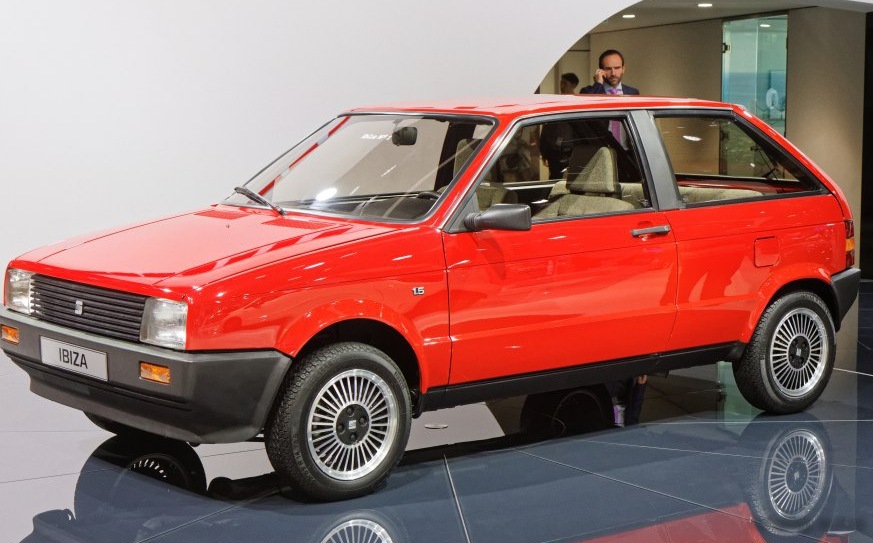
The SEAT Ibiza holds a significant place in the brand’s history, having been introduced in 1984 and quickly becoming SEAT’s best-selling model globally. Its consistent evolution through five generations has seen it adapt to changing market demands, embodying SEAT’s commitment to design, technology, and driving dynamics. The SEAT Ibiza V (facelift 2025) continues this legacy, aiming to reinforce its position in a segment teeming with fierce competition.
In its primary European markets, the Ibiza faces off against a formidable roster of rivals, including its Volkswagen Group stablemates like the Volkswagen Polo and Skoda Fabia, as well as key competitors such as the Renault Clio, Peugeot 208, and Opel Corsa. What sets the Ibiza apart is often its distinctive, more expressive styling and a sportier driving feel, aligning with SEAT’s brand identity as the “sporty” arm of the Volkswagen Group. The 2025 facelift ensures the Ibiza remains visually fresh and technologically relevant, a crucial factor in attracting new buyers and retaining its existing loyal customer base.
The 1.0 MPI (80 Hp) variant plays a vital role in the Ibiza’s market strategy. It serves as an accessible entry point, making the Ibiza attainable for a wider audience, including first-time car buyers, young drivers, and those prioritizing low running costs and environmental responsibility. Its naturally aspirated engine, while not offering exhilarating performance, provides a dependable, fuel-efficient, and easy-to-maintain option. This makes it particularly attractive in regions where fuel prices are a significant consideration and urban driving is the norm.
The Ibiza’s impact extends beyond just sales figures; it has helped shape the perception of SEAT as a modern, design-led brand. Its success has paved the way for other popular SEAT models, influencing their design language and technological integration. The 2025 facelift of the fifth generation Ibiza is not just an update; it’s a reaffirmation of SEAT’s commitment to its most iconic model, ensuring it remains a relevant, desirable, and competitive choice in the evolving landscape of compact automobiles. Its blend of Spanish flair, German engineering, and practical efficiency solidifies its standing as a truly international automotive success story, even if its direct presence isn’t felt on American roads.