Overview of the Seat Ibiza V (facelift 2025)
The Seat Ibiza V (facelift 2025) represents the latest evolution of Seat’s venerable subcompact hatchback, a cornerstone of the Spanish automaker’s lineup for decades. As a prominent player in the highly competitive European B-segment (often referred to as the supermini segment), the Ibiza has consistently offered a blend of sporty design, agile handling, and practical usability. This specific iteration, featuring a significant facelift for the 2025 model year, continues to build on the fifth generation’s established platform, introducing updated aesthetics, enhanced technology, and refined powertrains to maintain its appeal in a rapidly evolving market.
The Seat brand, a subsidiary of the Volkswagen Group, positions itself as the youthful and sporty arm of the conglomerate, and the Ibiza perfectly embodies this philosophy. While the Seat brand is not officially sold in the United States, the Ibiza is a critically important model in Europe, Latin America, and other international markets, serving as an entry point for many customers into the Volkswagen Group’s ecosystem. The 2025 facelift focuses on keeping the Ibiza fresh and competitive against rivals like the Volkswagen Polo, Ford Fiesta, Renault Clio, and Peugeot 208, emphasizing efficiency, connectivity, and a contemporary driving experience.
Powertrain and Performance of the Seat Ibiza V (facelift 2025)
Engine Characteristics and Drivetrain
Under the hood, the Seat Ibiza V (facelift 2025) continues to leverage the Volkswagen Group’s highly regarded engine technology. The specific variant under review is equipped with the 1.5 TSI (Turbocharged Stratified Injection) engine, a modern four-cylinder inline gasoline unit designed for a compelling balance of power and fuel efficiency. With an engine displacement of 1,498 cubic centimeters (approximately 91.41 cubic inches or 1.5 liters), this powertrain delivers a robust 150 horsepower, achieved across a broad RPM range of 5,000 to 6,000 revolutions per minute. This specific output translates to an impressive 100.1 horsepower per liter, showcasing the engine’s advanced engineering.
Torque output is equally significant for real-world driving. The 1.5 TSI generates 250 Newton meters, which converts to approximately 184.39 pound-feet of torque. This peak torque is available from a low 1,500 RPM and extends up to 3,500 RPM, providing a wide and accessible powerband that ensures strong acceleration and flexible performance in various driving conditions, from city commuting to highway cruising. The engine employs direct fuel injection, a turbocharger, and an intercooler, all working in concert to optimize combustion, reduce turbo lag, and enhance overall efficiency. A compression ratio of 12:1 further contributes to its efficiency.
Power is channeled to the front wheels via a sophisticated 7-speed automatic transmission, specifically the renowned DSG (Direct Shift Gearbox) unit. This dual-clutch transmission is celebrated for its rapid, smooth gear changes and its ability to contribute to both performance and fuel economy. The front-wheel-drive architecture is standard for the segment, providing predictable handling and efficient packaging.
Performance Metrics and Efficiency
The performance figures for the Seat Ibiza V (facelift 2025) 1.5 TSI (150 Hp) DSG are competitive within its class. The hatchback can accelerate from 0 to 60 miles per hour in a swift 7.7 seconds. Its maximum speed is rated at 136.7 miles per hour (220 km/h), demonstrating its capability for sustained highway speeds.
Fuel economy is a critical consideration in the European market, and the Ibiza excels in this regard. According to WLTP (Worldwide Harmonized Light Vehicles Test Procedure) standards, the combined fuel consumption ranges from 5.5 to 6.0 liters per 100 kilometers. In American units, this translates to an impressive 39.2 to 42.8 US miles per gallon. CO2 emissions are equally competitive, ranging from 125 to 134 grams per kilometer, allowing the vehicle to meet the stringent Euro 6EB emission standard. The inclusion of a Start & Stop System and a particulate filter further underscores Seat’s commitment to environmental responsibility and efficiency.
Design, Features, and Technology
Exterior and Interior Design
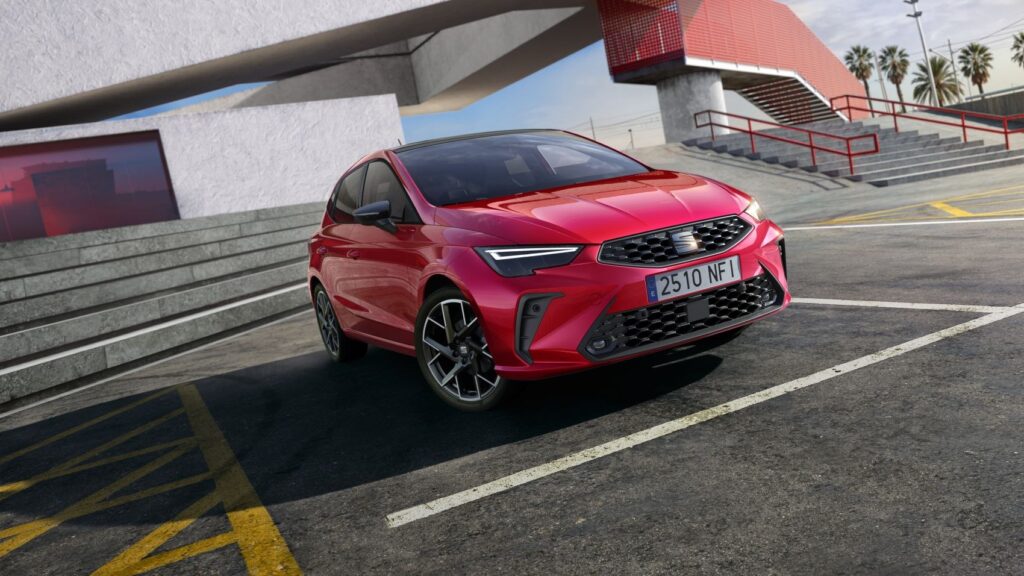
As a facelifted model, the Seat Ibiza V (facelift 2025) retains the core silhouette of the fifth generation but introduces refreshed styling cues to give it a more modern and assertive presence. Expect updated front and rear fascias, potentially featuring revised LED lighting signatures, a redesigned grille, and new bumper treatments. The crisp lines and dynamic proportions that define the Ibiza’s character are maintained, reinforcing its sporty appeal. The body type remains a practical 5-door hatchback, offering easy access for passengers and cargo.
Inside, the Ibiza offers seating for five occupants. While specific details on the facelift’s interior changes are not fully provided, typical updates for a modern subcompact facelift include improved materials, new trim options, and a more integrated approach to technology. The trunk space is a respectable 355 liters (12.54 cubic feet), providing ample room for daily errands or weekend getaways. The compact dimensions – a length of 160.24 inches, a width of 70.08 inches (76.46 inches including mirrors), and a height of 56.97 inches – make it highly maneuverable in urban environments, complemented by a minimum turning circle of just 34.78 feet.
Technology and Safety Features
For a 2025 model year vehicle, even in the subcompact segment, a comprehensive suite of technology and safety features is expected. While the data specifically mentions ABS (Anti-lock Braking System), it is safe to assume the Seat Ibiza V (facelift 2025) will come equipped with a full array of modern driver-assistance systems and connectivity options. This would typically include features like electronic stability control, multiple airbags, tire pressure monitoring, and potentially advanced systems such as adaptive cruise control, lane-keeping assist, and blind-spot monitoring, depending on the trim level.
The vehicle features a steering rack and pinion system with electric power steering, providing precise control and ease of maneuverability. Braking performance is handled by ventilated discs at the front (276×24 mm) and solid discs at the rear (230×9 mm), ensuring confident stopping power. Various tire and wheel size options are available, ranging from 185/65 R15 to 215/40 R18, allowing customers to customize the balance between ride comfort and dynamic handling.
Comprehensive Technical Specifications
| General Information | |
|---|---|
| Brand | Seat |
| Model | Ibiza |
| Generation | Ibiza V (facelift 2025) |
| Type (Engine) | 1.5 TSI (150 Hp) DSG |
| Start of Production | October, 2025 |
| Powertrain Architecture | Internal Combustion engine |
| Body type | Hatchback |
| Seats | 5 |
| Doors | 5 |
| Performance Specifications | |
| Combined Fuel Consumption (WLTP) | 39.2 – 42.8 US mpg (5.5-6.0 l/100 km) |
| CO2 Emissions (WLTP) | 125-134 g/km |
| Fuel Type | Petrol (Gasoline) |
| Acceleration 0 – 60 mph | 7.7 sec |
| Maximum Speed | 136.7 mph (220 km/h) |
| Emission Standard | Euro 6EB |
| Weight-to-Power Ratio | 7.7 kg/Hp (129.8 Hp/tonne) |
| Weight-to-Torque Ratio | 4.6 kg/Nm (216.3 Nm/tonne) |
| Engine Specifications | |
| Power | 150 Hp @ 5000-6000 rpm |
| Power per liter | 100.1 Hp/l |
| Torque | 184.39 lb.-ft. @ 1500-3500 rpm (250 Nm) |
| Engine Layout | Front, Transverse |
| Engine Model/Code | DPCA |
| Engine Displacement | 1.5 liters (1498 cm3 / 91.41 cu. in.) |
| Number of Cylinders | 4 |
| Engine Configuration | Inline |
| Cylinder Bore | 2.93 in. (74.5 mm) |
| Piston Stroke | 3.38 in. (85.9 mm) |
| Compression Ratio | 12:1 |
| Number of Valves per Cylinder | 4 |
| Fuel Injection System | Direct injection |
| Engine Aspiration | Turbocharger, Intercooler |
| Engine Oil Capacity | 5.07 US qt (4.8 l) |
| Engine Systems | Start & Stop System, Particulate filter |
| Dimensions, Volume, and Weights | |
| Kerb Weight | 2548.54 lbs. (1156 kg) |
| Max. Weight | 3791.95 lbs. (1720 kg) |
| Max Load | 1243.41 lbs. (564 kg) |
| Trunk (Boot) Space – Minimum | 12.54 cu. ft. (355 l) |
| Fuel Tank Capacity | 10.57 US gal (40 l) |
| Permitted Trailer Load with Brakes (8%) | 2645.55 lbs. (1200 kg) |
| Permitted Trailer Load with Brakes (12%) | 2645.55 lbs. (1200 kg) |
| Permitted Trailer Load without Brakes | 1344.82 lbs. (610 kg) |
| Length | 160.24 in. (4070 mm) |
| Width | 70.08 in. (1780 mm) |
| Width Including Mirrors | 76.46 in. (1942 mm) |
| Height | 56.97 in. (1447 mm) |
| Wheelbase | 100.94 in. (2564 mm) |
| Front Track | 59.88 in. (1521 mm) |
| Rear (Back) Track | 59.25 in. (1505 mm) |
| Front Overhang | 31.77 in. (807 mm) |
| Rear Overhang | 27.52 in. (699 mm) |
| Ride Height (Ground Clearance) | 5.43 in. (138 mm) |
| Minimum Turning Circle (Turning Diameter) | 34.78 ft. (10.6 m) |
| Drivetrain, Brakes, and Suspension | |
| Drivetrain Architecture | Front-wheel drive (Internal Combustion engine drives front wheels) |
| Drive Wheel | Front wheel drive |
| Number of Gears and Type of Gearbox | 7 gears, automatic transmission DSG |
| Front Suspension | Spring Strut, Coil spring, Independent type McPherson |
| Rear Suspension | Spring Strut, Coil spring, Elastic beam |
| Front Brakes | Ventilated discs, 276×24 mm |
| Rear Brakes | Disc, 230×9 mm |
| Assisting Systems | ABS (Anti-lock braking system) |
| Steering Type | Steering rack and pinion |
| Power Steering | Electric Steering |
| Tires Size Options | 185/65 R15 88H; 195/55 R16 91V XL; 215/45 R17 91W XL; 215/40 R18 91W XL |
| Wheel Rims Size Options | 5.5J x 15 ET40; 6.5J x 16 ET47; 7J x 17 ET51; 7J x 18 ET51 |
Market Position and Legacy of the Seat Ibiza V (facelift 2025)
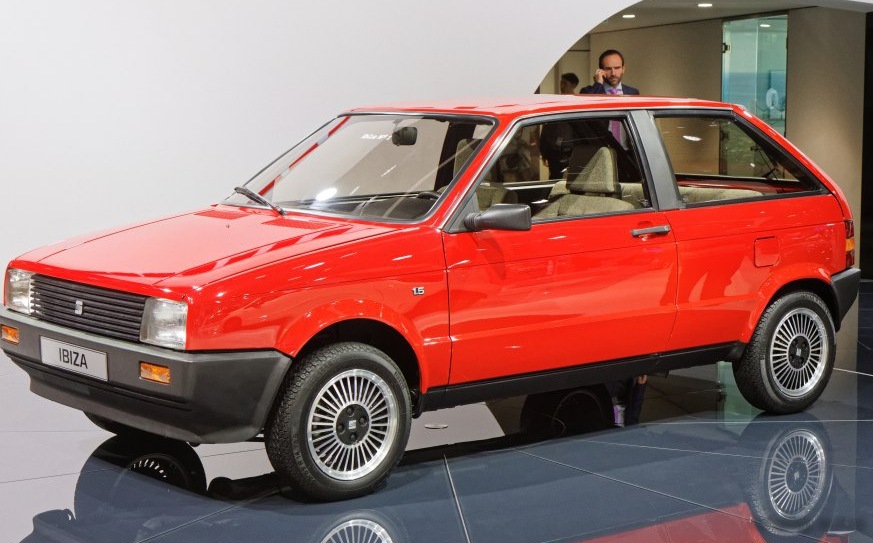
The Seat Ibiza holds a significant legacy as one of the most successful models in Seat’s history, having sold millions of units across its five generations since its inception in 1984. It has consistently been a top seller for the brand, embodying Seat’s core values of design, dynamic performance, and accessibility. The Seat Ibiza V (facelift 2025) continues this tradition, serving as a critical volume model that attracts a broad demographic, particularly younger buyers and those seeking a stylish, practical, and fun-to-drive compact car.
In its primary European market, the Ibiza faces stiff competition from a well-established roster of rivals. Its main competitors include its platform-mate, the Volkswagen Polo, which often shares mechanicals but targets a slightly more conservative audience. Other key contenders are the ever-popular Ford Fiesta (though its future is uncertain), the stylish Renault Clio, the sophisticated Peugeot 208, and the practical Skoda Fabia. The Ibiza distinguishes itself with its distinctly Spanish flair, offering a sharper, more expressive design and often a sportier driving feel compared to some of its more understated counterparts from the Volkswagen Group.
The 2025 facelift is strategically important for the Ibiza, allowing it to remain competitive in a segment increasingly challenged by the rise of compact SUVs and the accelerating shift towards electrification. By refreshing its design, integrating the latest connectivity features, and maintaining a highly efficient and capable powertrain like the 1.5 TSI DSG, Seat aims to reinforce the Ibiza’s reputation for modern technology and engaging driving dynamics. Its agility, compact footprint, and reasonable running costs make it an ideal choice for urban dwellers and those who value a lively driving experience without compromising on practicality. The Ibiza’s continued evolution showcases Seat’s commitment to offering compelling internal combustion engine options while gradually transitioning towards a more electrified future.